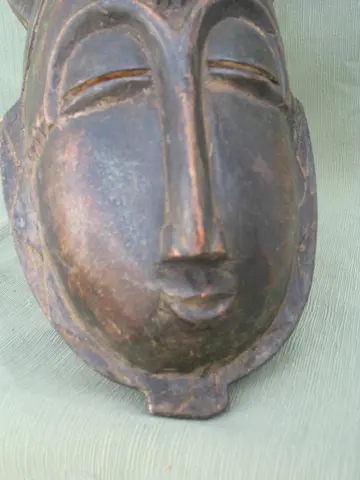
Mask Lomane Anoman
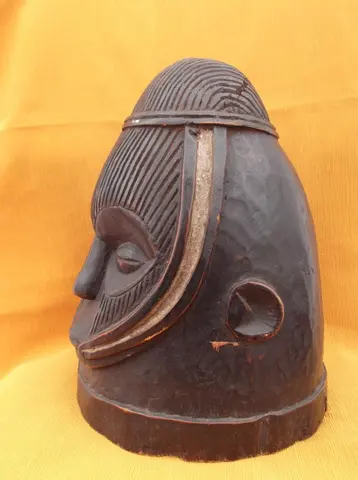
The Lomane mask, the fourth mask of Dje's masks, has a human face and a bird rises on its head.
MFAZ-120

List of the historical catalogue
Text and organisation of the original catalogue · Jesús Arrimadas Saavedra
FOR ENLARGEMENT SEE “NEGRO-AFRICA ARTISTICAL EthOGRAPHY”, upper right tab. FUNERARY AND CULTURE MASCARAS TO THE BACKGROUND. All the masks that participate in the cult of ancestors and that accompany their dances at burials are sacred masks. Sacred masks are the incarnation of divinities, nature geniuses or ancestors. The cult of ancestors should not be confused with cults or funeral rites. The latter occur on the occasion of the death of a person. The liturgical celebrations by the notables and elders are of a special character. Rites vary according to ethnicity. The most common are funerals, which are held shortly after death. In some places the wafers accompany the deceased with their cries and prayers while he is present and the masks, on the day of the burial, accompany the deceased until his last abode. In some cultures the corpse is exposed on a high pyre and cremated within two to three days. Another important funeral ceremony is the lifting of mourning, which, although usually around the forty days of burial, also varies according to the peoples. Usually masks do not participate in this rite. Although there are commemorative ceremonies for the deceased, they should not be confused with the cult of ancestors, as the ancestor and the deceased cannot be identified. Not all the deceased become ancestors, as we have explained elsewhere in this Catalogue, there are differences that manifest themselves even in the statues that represent them, offering those of the ancestors a more perfect finish. The cult of ancestors can be summed up in the word “everything” because, in animistic societies, everything worships ancestors. The ancestor is the central figure, he is present in all the activities of the village, he presides over the life of the peoples. No decision shall be made or any project undertaken without consultation, through the priests, the corn, oracles or rites. There are different categories of forefather masks: those that embody his spirit, which are the most sacred, those that he has left as an inheritance, those whose realization he has inspired in some dream or those that exclusively dance in his honor.
129 objects · page 6 of 6
The Lomane mask, the fourth mask of Dje's masks, has a human face and a bird rises on its head.
MFAZ-120
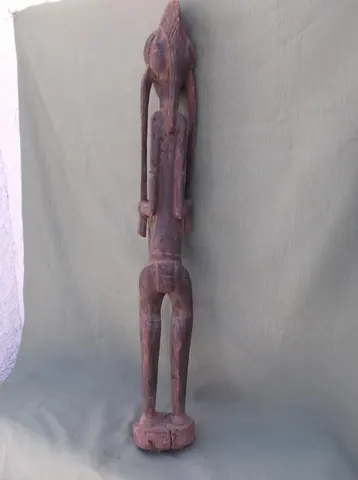
These sculpturesparticipate especially in funerals of the Pore members who have received the last degree of initiation or.
EFM-139
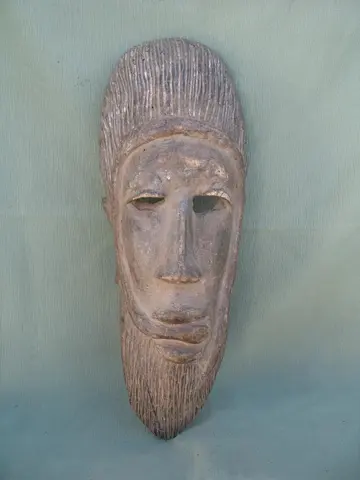
Mask used for ceremonies intended to worship the deceased.
MFAZ-121
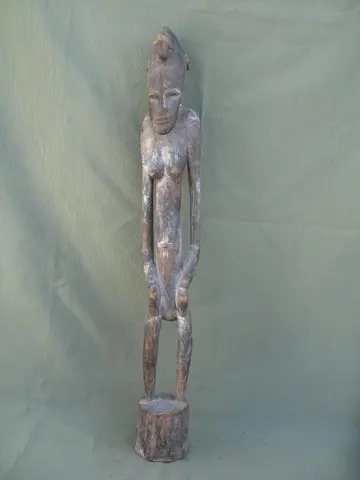
In the rites dedicated to the cult of the ancestors and in the funeral honors of the members of the Pore participate…
ESFE-10
Although they are mostly Muslim, the Igala, they also practice the cult of the spirit of the Egu dead during the feasts…
MCYC-61

The monkey, orangutan or gorilla, called Ngi, are the figures most represented by the Bulu, especially in small or medium-sized statues.
-51

These masks have been used mainly to celebrate ancestors and also in harvests so that by their intercession the vintage is good.
MPR-3

Mask acquired in Zambia in the 1960s or 1970s by a Spanish diplomat stationed in Tanzania.
1

Although we catalogue this Ngoin mask as a bamún mask because it is the ethnic group in which it is most represented,…
1


