Ritual art
Art in Africa is closely linked to its traditions. Traditions are deeply rooted in religious beliefs. Religions are intimately animated by the spirits of ancestors.
Until the arrival of Islam and Christianity Africa did not know the revealed religions. Their religions were as numerous as their different societies and cultures and in them there was such a mixture of concepts, magic, fetishism, witchcraft, sorcery, animism, paganism that common sense has imposed the expression of traditional religions. Except for some areas where the so-called traditional religions dominate in polytheism, they are monotheistic and animistic, in which the cult of ancestors occupies the central place.
In all of them a founding hero of the clan or a civilizing hero, constitutes the basis of most of its myths. Nature is part of the essence of these religions, along with vital forces and spiritual beings. A mixture of beings and forces of all kinds, vegetables, animals, minerals, intermediate divinities, geniuses, spirit of ancestors form a whole, that is, a whole hierarchy of beings that Griaule describes as follows: From the creator god to the garbage dump in the village.
The supernatural world and nature are intimately united, as are the world of the living and that of the dead. Man respects nature and all its components for they are an emanation of the divine essence and all these beings have a soul and respect the dead whose spirits actively participate in the life of society.
Contrary to what many people believe, animists are monotheistic. They believe in a unique, supreme, creative God. For the African animist man is so small, so mean and miserable and God so immense and omnipotent and so far apart between God and man that he cannot commit the offense of addressing himself directly to Him. It is not even addressed directly to the king or to a notable, but always through an intermediary.
But considering that the intervention of God is indispensable for obtaining a great number of benefits, abundant rains, healing of diseases, fertile crops…, men turn to intermediate powers, secondary divinities, geniuses of nature or forces of the hereafter, or as they are called, always being their closest mediators the ancestor. All elements of nature have a soul, everything is inhabited by a spirit, placed there by the Supreme God at the time of Creation. These spiritual beings are embodied in various objects, masks, fetishes, statues, which will serve as intermediaries and defend their causes before God. How can some condemn these beliefs and yet entrust themselves to the saints, angels and archangels, cherubim and seraphim?
However, in order to obtain divine graces, through the intercession of their mediators, men must observe a number of rites and prescriptions and make sacrifices and libations, resulting in numerous more or less secret ceremonies in which, most often, the diviner or the priest present themselves as interpreters of the occult and in which it is difficult to separate the realms of magic and religion.
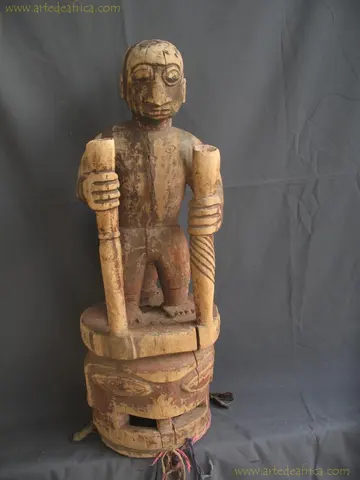
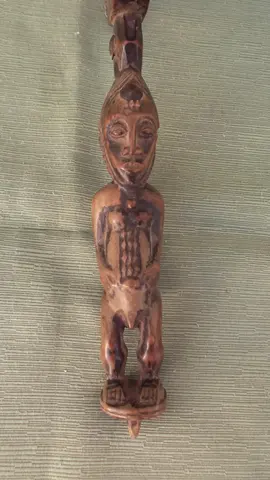
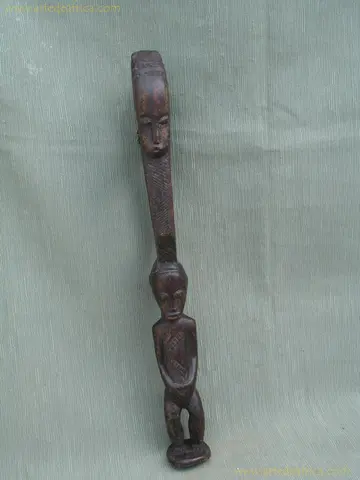
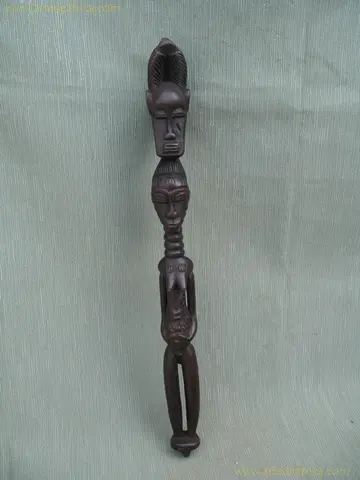
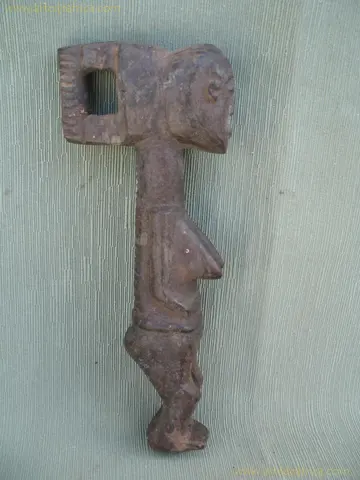
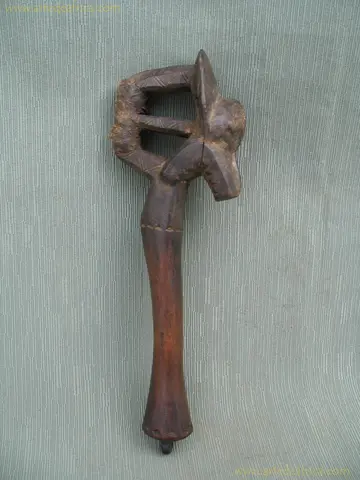
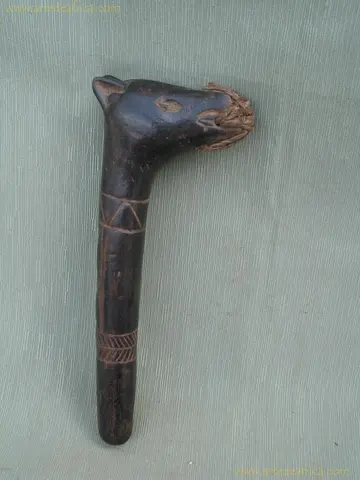
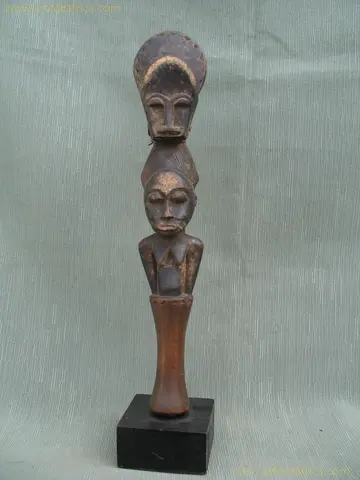
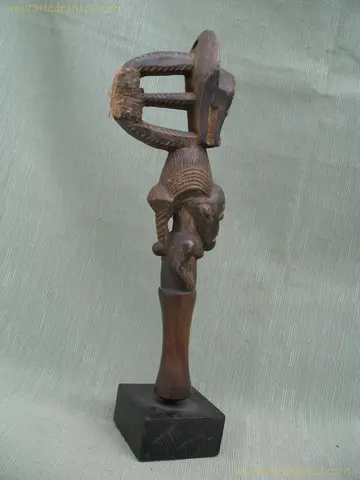
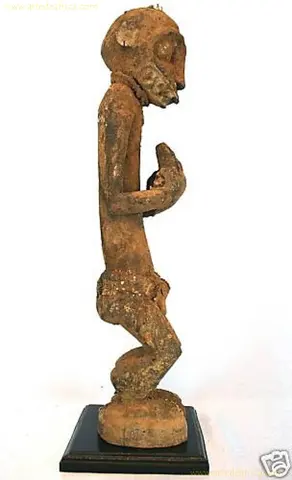
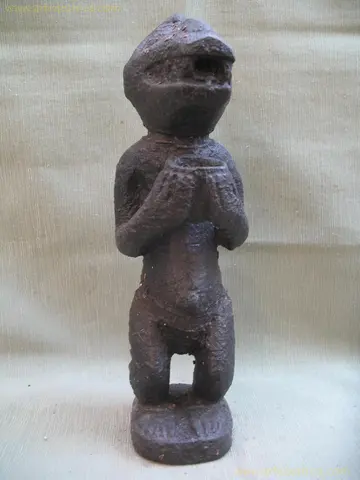
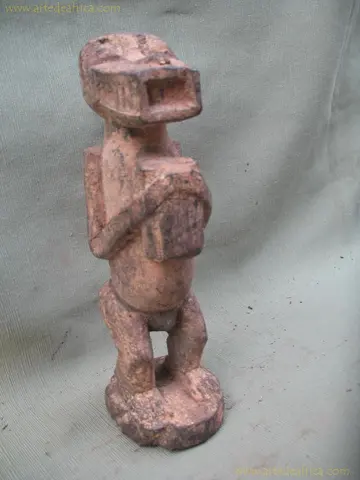
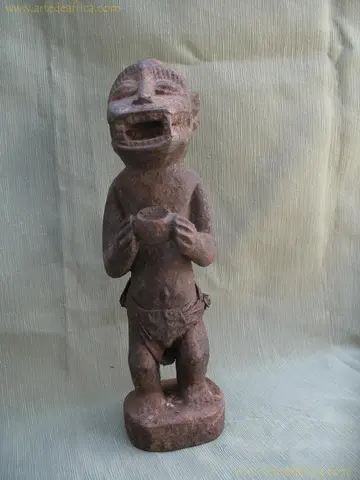
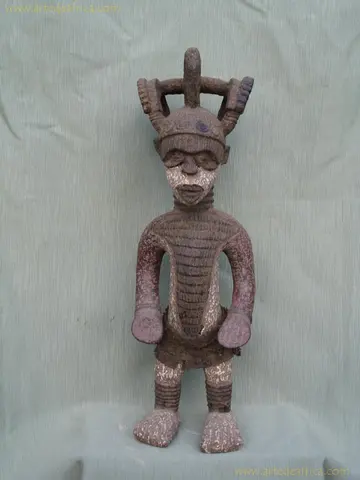
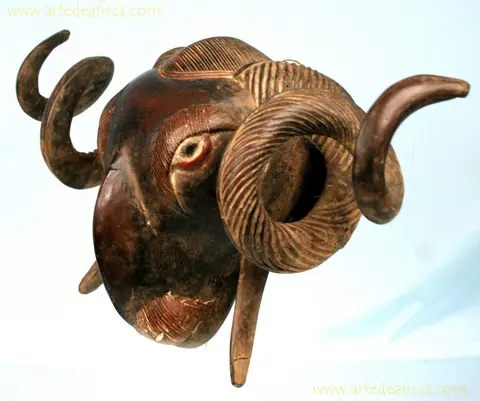
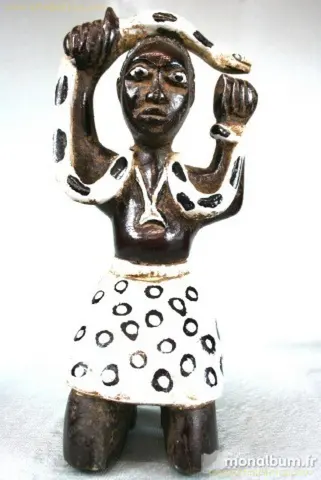
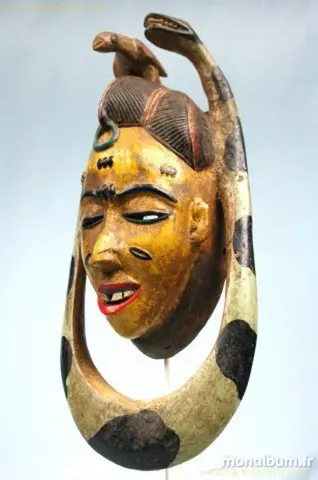
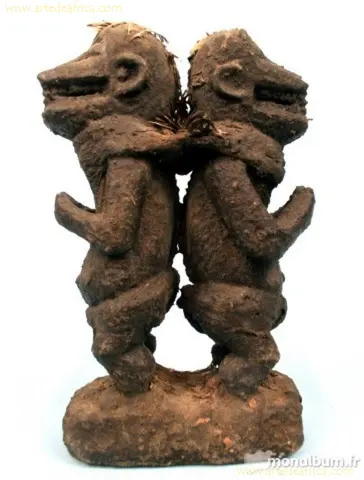
These intermediate divinities or spirits of nature are often represented in the form of statues or masks in which they are incarnated during certain rites or ceremonies. These vital forces manifest themselves in different ways and to varying degrees, depending on the divinity from which they come, whether they come directly from the Supreme God, from the mediating divinities, or from the spirits of the ancestors. However, the Supreme God, Creator, is never represented in African art.
The ancestors form the first link in the chain that goes from man to God through the geniuses or the intermediate divinities, mediators in him and the Supreme Being whom out of respect they will never address directly nor represent in their masks and statues.
Religion is the bond that unites society. All human activities have a religious connotation, which is why art in Africa cannot be understood without at the same time studying the traditions, social environment and beliefs of its peoples.
Separated from its religious dimension, African art loses its quality. A statue, no matter how beautiful it may be, or so to us” is a “dead” statue when it has ceased to perform its function. Museums or masks hung as decoration in some homes cannot reflect what African “art” is. It cannot be dissociated from its cultural environment. Ritual effectiveness prevails over aesthetic feeling.
The African artist does not consider his work of art from an aesthetic point of view. His work, mask or statue, has an eminently religious value. After their consecration and the reception of sacrificial blood will only count the spiritual or magical strength that comes from them. Magic and religion are intimately united.
The African object, taken from its natural environment, must at least be understood in its social, magical or religious family context, never as a simple decorative object.
The African objects found in museums have become “art objects by metamorphosis” because this was not their original conception. The ritual, playful or utilitarian pieces have been transformed according to the original conception into museum or collection pieces.
The aesthetics of art, in Africa, cannot be conceived without taking into consideration that magical force that moves the artist to sculpt ritual objects.
In Africa art has always been in the service of religious and kingly worship or in the service of a social cause. That is, that the “beautiful” is achieved through the “ritual” or the “useful”.
The cult of ancestors is not “a cult of the dead”, it is simply a “cult of the ancestors”. The ancestors are there, present, in another dimension. To die, for Africans, is to take “a step” towards another way of life, just as birth is a “step” from “no life” to life. In many African societies, three “step” or “transit” rites are held. They are like gateways that unite different areas of life: that of birth, initiation, access to adult life, and death, through which, if certain circumstances are fulfilled, the rank of ancestor is accessed.
Nowhere else are the world of the living and the world of the dead so united. The dead have detached themselves from their material clothing but remain present in every order of life. The interaction between the two worlds is permanent. Most objects of traditional Africa are intimately related to the spirit world. They are a means of communication to honor the beings of the ultraworld, obtain their favors and endure their memory.
Jesús Arrimadas Saavedra