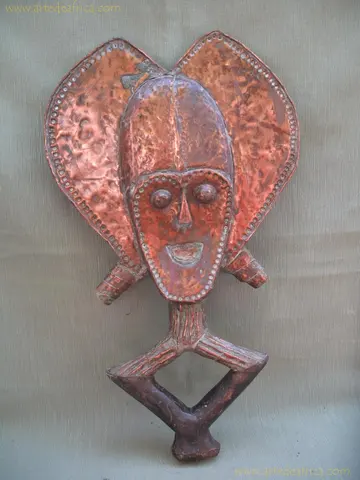
Reliquary Kota Obamba
Together with the Mahongwes are the best known manifestations of the reliquaries Kota.
RLC-1

List of the historical catalogue
Text and organisation of the original catalogue · Jesús Arrimadas Saavedra
Some African peoples, and especially Gabon, are used to making raffia or bark containers to preserve the relics of one or more ancestors in order to worship them. The cult of ancestors is based on the relationship between the offering of the living to the deceased and the protection of the deceased to the living. Some of the most important mortal remains, mainly part of the skull and pieces of other bones, are kept in the reliquaries of the ancestors. These are usually the remains of the nearest ancestors. They are venerated at the same time that they are feared because they can be dangerous to the living, which is why it is advisable to place them under the tutelage of a protective spirit. Often next to or on this box is placed a figure that evokes the ancestors and that is called the keeper of reliquary. This figure is associated with the reliquaries and considers as a true reliquary, having been in contact with the relics. In other villages, as in Cameroon, it is a hut that serves as a reliquary, since in it the skull of ancestors is preserved. Some ethnic groups have statues that are reliquarys. These figures carry a hollowness on their backs to keep the relics. Many of the African reliquaries are venerated in the altars and in certain events brought out in procession. Irrespective of lockets such as Byeri, Bakota or M’Bete or other statues of other ethnic groups within which part of the bones of the ancestors are preserved, which could be considered as family reliquaries, there is another much smaller type of reliquary. It is common, in many ethnic groups, to break a small piece of a sacred object, a piece of the foot of a Byeri or a cult statuette to divide it into small plots with which to make small reliquary bags that will serve as a souvenir and protection to its bearer. These little relics are not to be confused with grey-grey or magical amulets. Grey-grey is a small wrapping of animal skin that contains magical substances intended to protect its bearer from evil spirits or negative physical or spiritual forces that attack his person. These objects are manufactured by the sorcerer and “charged” with strength after reciting ritual enchantments. RELICARIOS AMBETE The Mbetes, Ambete or Mbedé, related to the Bakota of those who seem to descend, are settled in the upper Ogooué basin, almost on the border between Gabon and the Democratic Republic of the Congo. Like the Fang and the Kota For them too, relic worship is an important cult. His best known work, the reliquaries, occupy are linked to the cult of the Ngoye, cult to relics practiced by a secret society of chiefs who attributed supernatural powers to the relics of their ancestors, mainly the bones of the head, fingers and also some objects closely related to them. These relics were kept in anthropomorphic statues of a rather cylindrical body, head between ovoid and triangular, with apparent teeth and arms usually folded and glued to the sides. An eye on the back of these statues served as receptacles of the relics. They usually present several square holes, two under the armpits and two under the elbows that cross the figure from part to part, possibly destined to carry the figure in angarillas during the processions and to hang it when it is out of use RELICARIOS BAKOTA (GABON) The term Bakota, is a plural of Kota, comprises all the Kota, the northern Mahongwe, with patriotic social system and the southern Obamba, with matrilineal social system, in addition to the various subgroups related to ethnicity. The style of the reliquaries, even with certain similarities, is as varied as the groups, but they always have a more or less sculpted wooden body or base covered with sheets or brass or copper threads. Most are formed by a stylized anthropomorphic figure associated with the basket containing the relics. All of them, located mainly in Gabon, were used to preserve the remains of the ancestors of high lineage, part of the skull and other bones, deposited in a cylindrical box made from barks or in a braided basket of vegetable fibers. About them, like the Byeri of the FangThe anthropomorphic figure of the keeper of the reliquary was placed. His function was, therefore, to guard the relics. The important decisions of the clan were made in the presence of the initiates and during the ceremonies in which these relics were also given worship, in funeral ceremonies intended to honor the ancestors. They were also used in divinatory or curative processes. The foundry of the ore and alloys for obtaining these metals was known to the Kotaprobably since the 10th century, although it dominates the production obtained from European metal. These metals, considered rare and precious, have been indicators of the social rank and authority of the owner. For centuries, in the form of bars or small ingots, they have been used as coins. a.- KOTA MAHONGWE The Mahongwe, located to the east of Gabon, in the Makotu and Mekambo regions, achieved a high degree of stylization, reducing the body to a simple support with a more or less flattened head covered with thin copper or brass sheets, apparently concave for women and convex for men. Copper and brass, wired or in the form of thin sheets, are systematically part of these reliquary guards. These lockets seem to have given rise to the other lockets Kota. His name, Bweté, is more popularly known as “reliquary cobra” because of its resemblance to the head of this serpent. Some researchers see them as Egyptian influences. The Mbulu Viti reliquaries have two sides, both coated with copper foils, so they say they can eat different foods. They are reliquaries to the Janus. b.- K0TA OBAMBA Together with the Mahongwes are the best known manifestations of the reliquaries Kota. Like its northern neighbours, its use by the Obamba can come from the 10th century approximately, developing from the century onwards. XV with the first contact with Europeans, which facilitate the provisioning in brass and copper. These metals, yellow and red, were symbols of wealth and their employment seemed appropriate to honor the dead. They are characterized mainly by a kind of “croisant” that crowns the hairstyle, with large ears or lateral fins of which hang a kind of pendant. His body is formed by a rhombus parallel to his face. These lockets are named after Ngulu-Mbulu and have only one face. In the Shamaye style the lateral parts were appearing in a discreet way, rather to the sides of the face. While the Ndassa, more southern, seem to have achieved the highest degree of perfection in the Obamba style. The style Sangu o Masango reduces the proportions of the head and suppresses the lateral parts, although it retains the rhombus and copper splashing. They always appear in the center of a basket braided with vegetable fibers. These figures are named after Mbumba. RELICARIOS BYERI (GABON) Fang, village of hunters, each family has a byeri or box in which the relics of the most notable ancestors are preserved. The so-called Byeri cult or Melan rite is a family ceremony that initiates neophytes into the cult of ancestors following purification ceremonies. The byeri is separated from the box, the skull of the ancestors is exposed and the young people are exposed by a hallucinogenic drug, the wing, come into contact with the ancestors and dance in their honor. The byeri is not nor represents the ancestor, he is the guardian who guards his relics, pieces of skull essentially, with some small piece of other bones as well as some small personal object. It can be a simple carved head with a kind of stem or trunk, nlo byeri, which is inserted into the box or a true statue, eyema byeri, which is placed on the box of relics of vegetable bark and sometimes of fibers called nsekh byeri. These reliquaries were preserved by the Esa, the oldest old man in the family. Fang sculptures are in most cases linked to the cult of byeri, as guards of reliquary. They usually represent men sitting down although there may also be female statues, with bent legs and elongated torso, hands together that sometimes hold a cup, and with stylized head features. Often, from the first moment of their manufacture they were introduced into a palm oil bath or periodically and profusely covered by this oil. These sculptures, custodians or guardians of the reliquaries may, on certain occasions, be separated from their boxes of relics and be strolled through the village, in order to honor the deceased. For this purpose the statue is removed from its support and installed on a kind of platform based on braided straw to facilitate its transport during ritual wanderings. Sometimes, the Byeri carry copper or brass inlays, mainly Cameroonians, which gives them a bright look and at the same time their brightness drives away potential enemies and evil forces. The initiation into the byeri cult involves a whole series of purifying rites that neophytes receive in a closed enclosure. For hours, in a trance state, they sing and dance after having drunk elan, hallucinogenic plant that helps them to the trance during which they come into contact with the ancestors of those who receive life advice and slogans that they must transmit to the elders. Recovered from the trance, they enter the sanctuary in which the Byeri are found, where they recite this prayer: “You, Father, who never die, Who will never know death, And whose breath is always alive, Without ever suffering the cold of sleep, All your children have returned here, They are united around you. Cover them with your strength, O father, penetrate them with your shadow, Thou, father, who never die, Thou, father of our lineage! According to R.P. Trilles 1912
69 objects · page 1 of 3
Together with the Mahongwes are the best known manifestations of the reliquaries Kota.
RLC-1
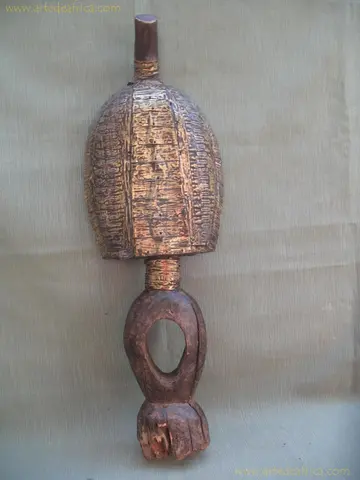
The Mahongwelocated in eastern Gabon, in the regions of Makotu and Mekambo, achieved a high degree of stylization, reducing the body to…
RLC-3
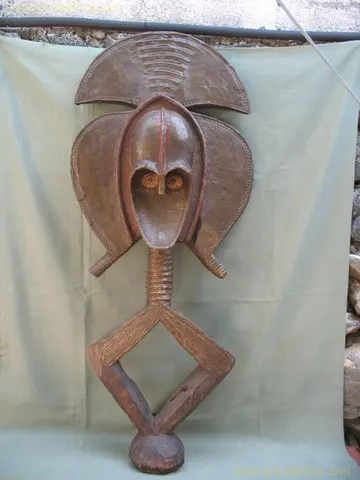
Together with the Mahongwes are the best known manifestations of the reliquaries Kota.
RLC-5
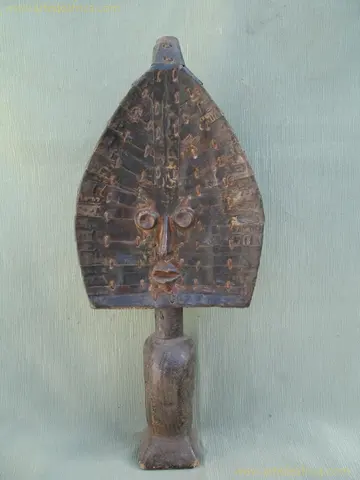
The Mahongwelocated in eastern Gabon, in the regions of Makotu and Mekambo, achieved a high degree of stylization, reducing the body to…
RLC-6
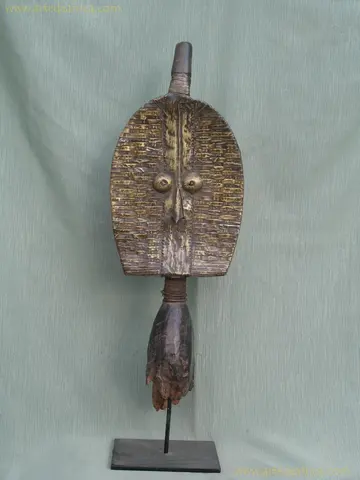
The Mahongwelocated in eastern Gabon, in the regions of Makotu and Mekambo, achieved a high degree of stylization, reducing the body to…
RLC-7
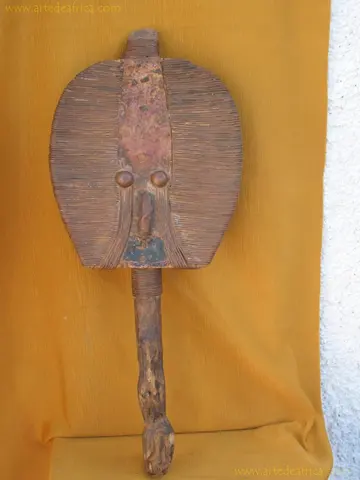
The Mahongwelocated in eastern Gabon, in the regions of Makotu and Mekambo, achieved a high degree of stylization, reducing the body to…
RLC-8
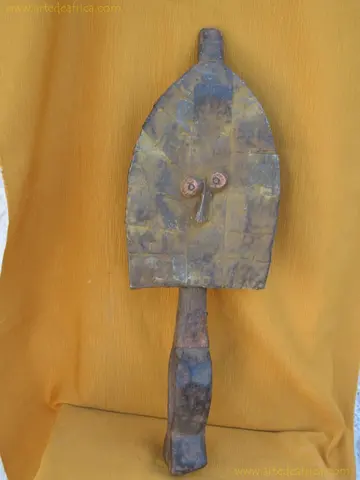
The Mahongwelocated in eastern Gabon, in the regions of Makotu and Mekambo, achieved a high degree of stylization, reducing the body to…
RLC-9
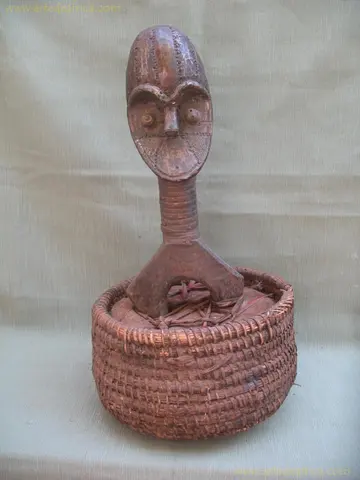
The style Sangu or Masango reduces the proportions of the head and suppresses the lateral parts, although it retains the rhombus and…
RLC-10
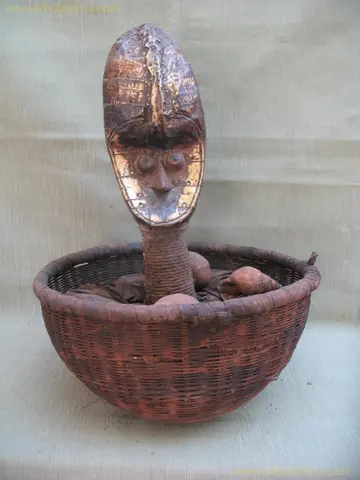
The style Sangu or Masango reduces the proportions of the head and suppresses the lateral parts, although it retains the rhombus and…
RLC-11
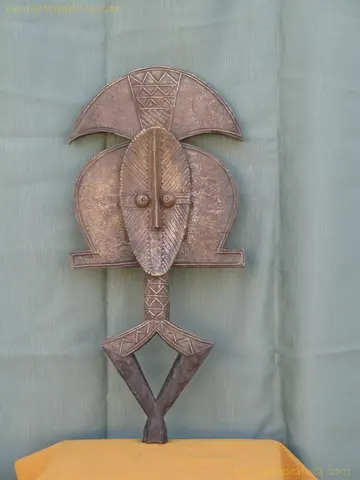
Together with the Mahongwes are the best known manifestations of the reliquaries Kota.
RLC-12
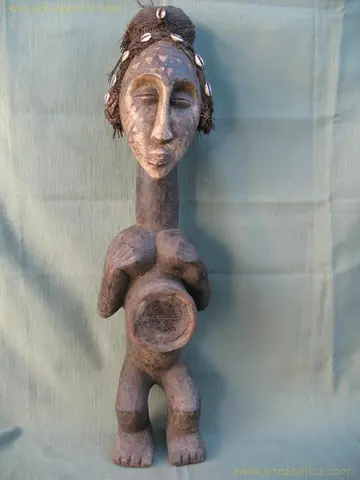
Reliquary representing A Ngaady a mwaashsister and wife of Woot, ancestor of the Bushongos, i.e.
RLC-13
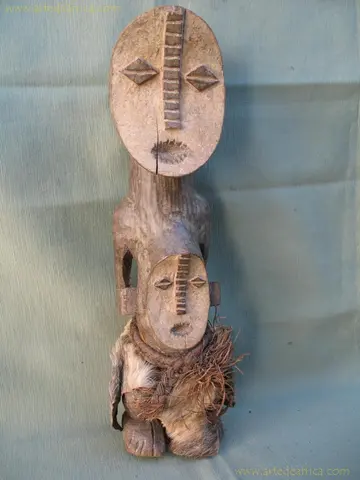
Statues with overlapping heads representing the different degrees within the “Bwamé” society.
RLC-14
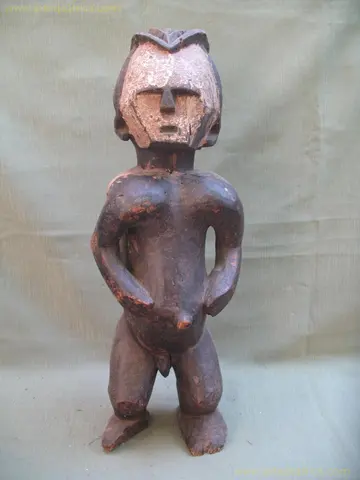
The Ambete or Mbete are located on the borderline of Gabon with the Republic of the Congo.
RLC-15
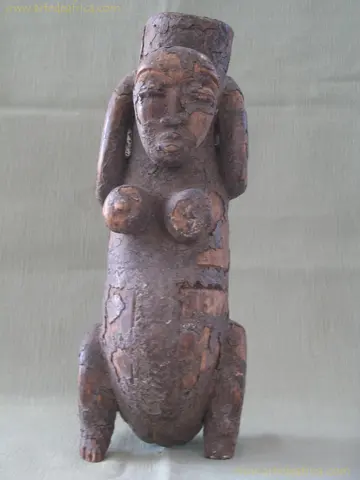
This village is formed by the symbiosis of two ethnic groups, the Ngata, traditionally blacksmiths and forgers and the Ntomba, farmers.
RLC-16
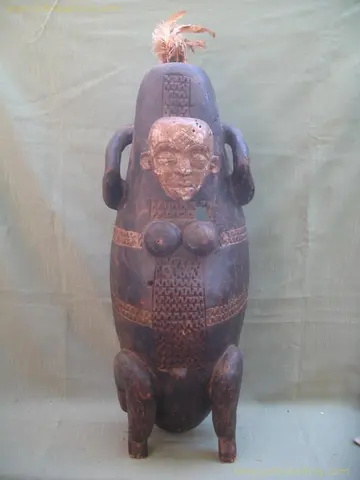
This village is formed by the symbiosis of two ethnic groups, the Ngata, traditionally blacksmiths and forgers and the Ntomba, farmers.
RLC-18
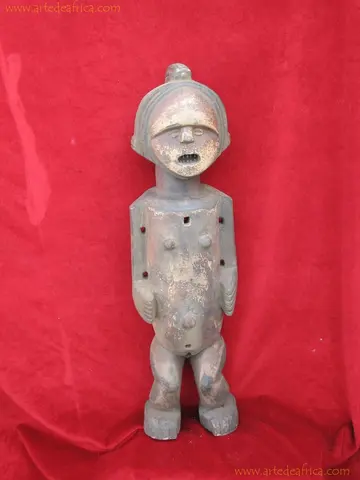
The Ambete are located along the border between the People’s Republic of Congo and Gabon.
RLC-19
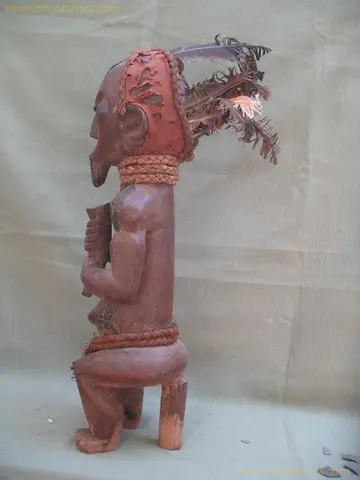
Reliquary guard sitting, holding the horn of magic substances with both hands.
RLC-22
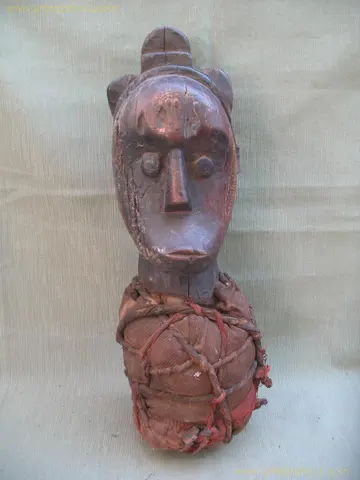
Among the Fang, village of hunters, each family owns a Byeri or box in which the relics of the most notable ancestors…
RLC-23
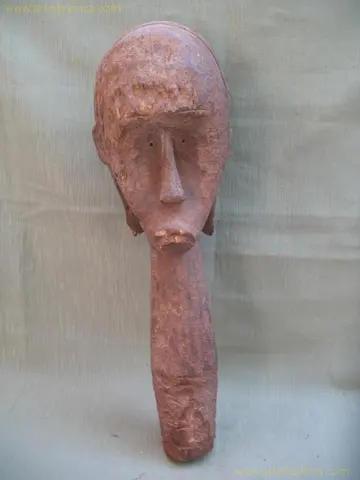
the Byeri He is not or represents the ancestor, he is the guardian who guards his relics, pieces of skull essentially, with…
RLC-24
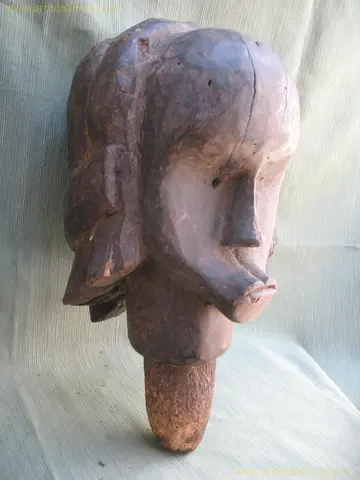
the Byeri He is not or represents the ancestor, he is the guardian who guards his relics, pieces of skull essentially, with…
RLC-25
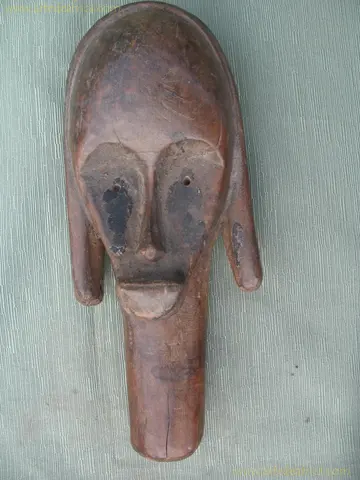
the Byeri He is not or represents the ancestor, he is the guardian who guards his relics, pieces of skull essentially, with…
RLC-26
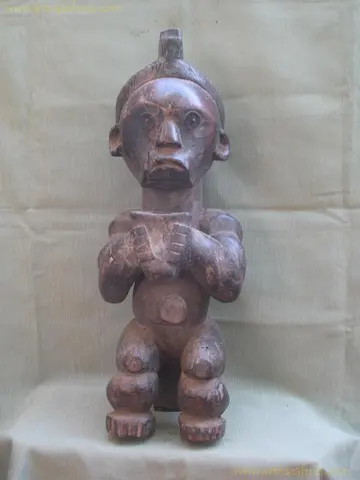
The so-called cult of Byeri o rite Melan It is a family ceremony that initiates neophytes in the cult of ancestors after…
RLC-27
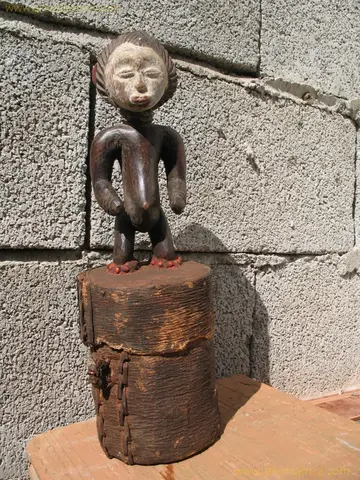
Like the Bakota and the Fang a Punu character acts as guardian of the relics of an ancestor contained within the recipient.
RLC-28
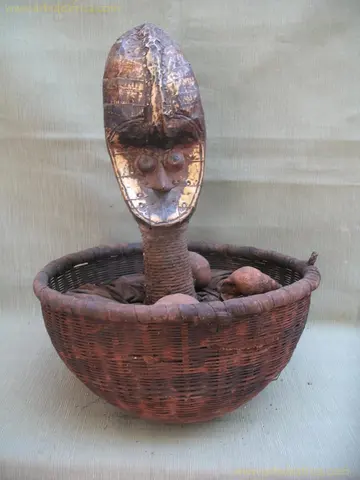
Cessus intended to contain relics of ancestors, usually some piece of bone.
RLC-29


