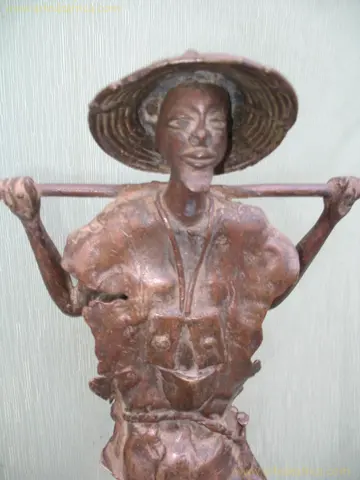
Pastor
Manufactured sculpture made by the procedure of lost wax.
BRN-25

List of the historical catalogue
Text and organisation of the original catalogue · Jesús Arrimadas Saavedra
The technique of bronze smelting reaches its maximum splendor in Ife and Benin, whose sculpted heads were thought by the first anthropologists who were the work of the Greek and Roman civilizations. The bronze plates of Benin are famous, with cutting scenes, covering walls and columns of the royal palace looted in 1885 This metal was attributed to a benefactor force capable of warding off evil. The bracelets and slaves of many peoples of Africa are very often bronze as are many amulets. If there is a technique that can characterize the work of metals and especially of bronze it is that of lost wax. This process of manufacturing small, and not so small, bronze sculptures has been practiced in almost all of Africa, mainly in coastal areas for having greater ease in obtaining raw materials. Different procedures are used, the simplest is the following: The artist sculpts or works a small wax figure, until the desired shape is achieved. At the top, several wax ducts are also attached; the artist covers the interior and the exterior with damp refractory clay or mud and tries to make the outer layer thicker, to give greater solidity to the whole. It is allowed to dry in the sun or in an oven, depending on the degree of technique achieved by the artist. When it has dried well, heat the part to melt the wax and there remains a vacuum into which the metal is introduced into melting. There are those who do not previously remove the wax because it will melt and come out through the ejecting nozzles as the molten metal is poured. In some places, the artist places his head in such a way that the molten metal spreads first over his face, as a delicate model had more chances of being successfully realized. The metal extends to occupy all the reveques of the mold. Two holes are practiced, one through which the bronze or molten metal is drawn and the other through which the wax escapes, which will be covered at the right time allowing, then, to cool the mold. Once cold the mold is broken and the figure obtained will be finished with chisel or other incisors instruments. For the most important pieces the artist models a figure, hollow, of wax of approximately one centimeter thick covering with a layer of clay both the outside and the interior, but the interior will then be filled with wood and charcoal, being more or less the same the rest of the procedure. Many of the objects made with this procedure were more or less realistic portraits of the chiefs, kings and great characters. Some informants say that these portraits were made after the model’s death. They were placed on family altars and received family offerings. Some of these figures represent the Ony of Ife, spiritual leader of all Yoruba. The so-called “African bronze”, given its composition, is closer to brass than to the European bronze concept, contains no zinc. The bronzes of some Akan ethnic groups, such as the Ashantis and the Anyis, contain a small percentage of gold.
78 objects · page 2 of 4
Manufactured sculpture made by the procedure of lost wax.
BRN-25
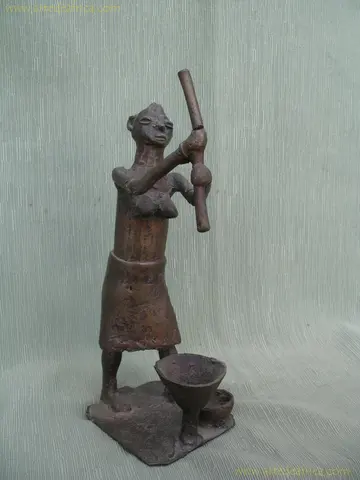
A regular scene of every village of savannah, a woman grinding millet or other cereals for daily food.
BRN-26
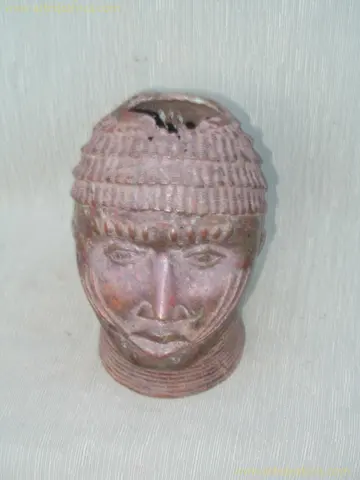
Oba head performed by the procedure of lost wax.
BRN-27
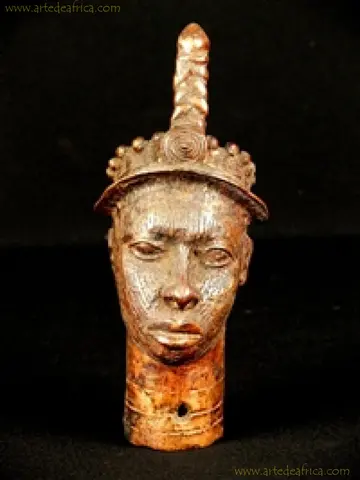
Ife's art is characterized by the beauty and balance of its lines and by a penetrating realism and a swrenity that seems…
BRN-29
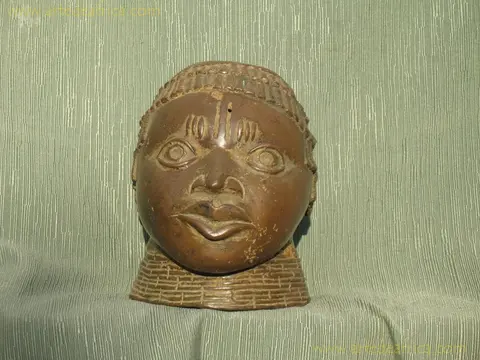
Little head of Oba, afrivan bronze, brass, light patina. The back has a hole intended to receive an elephant tusk.
BRN-30
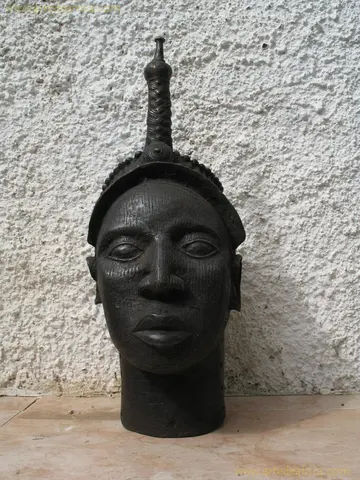
Ife's art is characterized by the beauty and balance of its lines and by a penetrating realism and serenity that seems to…
BRN-31
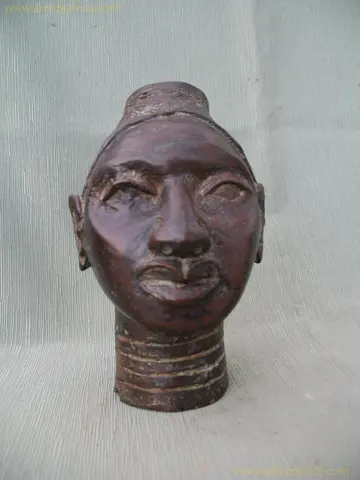
Queen head of small dimensions that realistically presents all the beauty traits of the Yoruba woman.
BRN-32
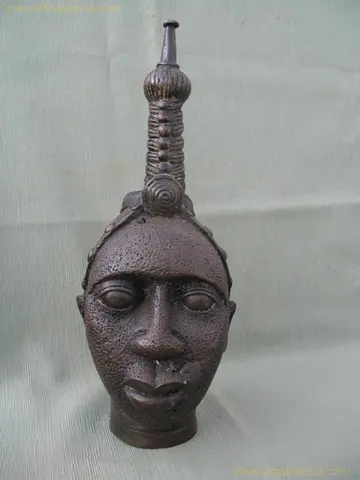
Ife's art is characterized by the beauty and balance of its lines and by a penetrating realism and serenity that seems to…
BRN-33
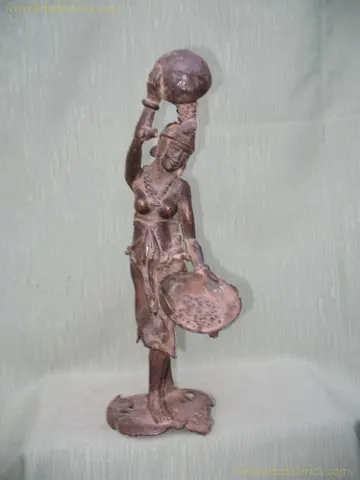
Delicate and beautiful statue of a woman fanning the grain using two half pumpkins.
BRN-36
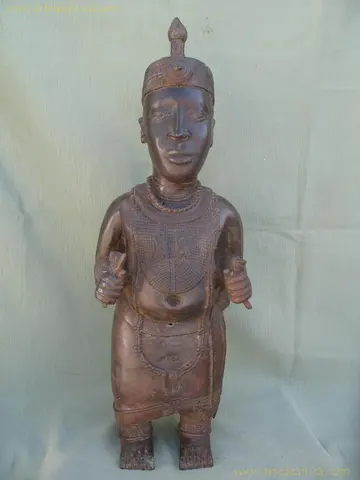
Unpublished and rare statue of an Oni de Ife. One of the few statues known to the present whole body.
BRN-37
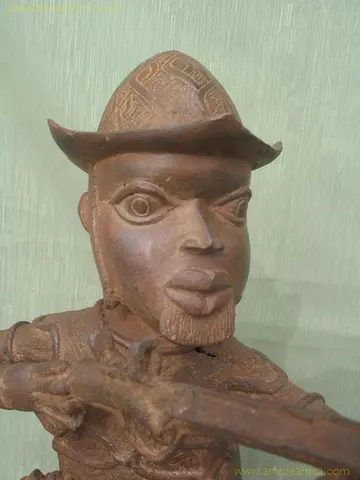
Magnificent exhibition of the art of foundry mastered to perfection by the artists of Benin.
BRN-38
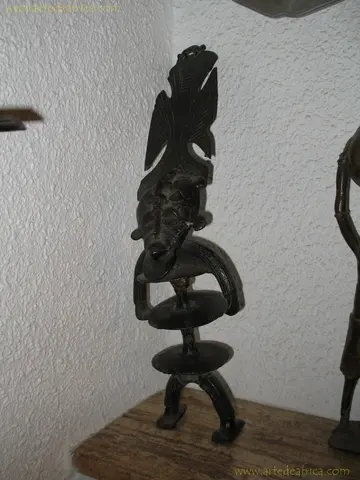
Former bronze figure who seems to represent a reverent snupho king in his ritual attire.
BRN-39
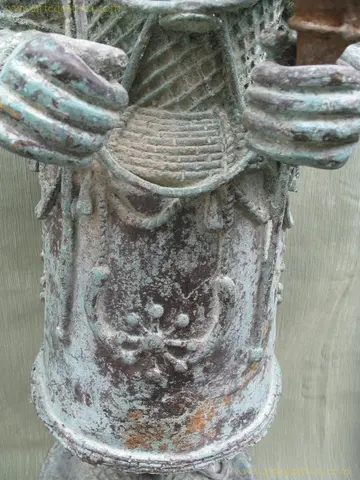
Beautiful exhibition of the realistic art of Benin.
BRN-40
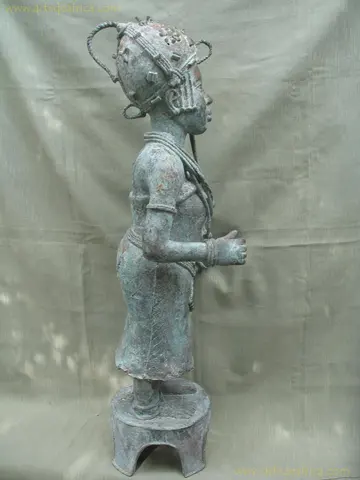
Once again, the realism of the art of Benin's castors is confirmed by this figure of queen.
BRN-41
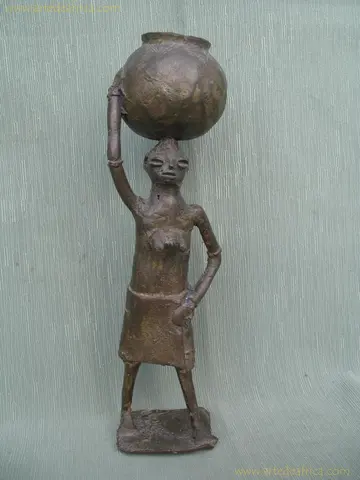
Figure made by the procedure of lost wax that represents a typical scene in the African people, a woman who, sometimes, travels…
BRN-43
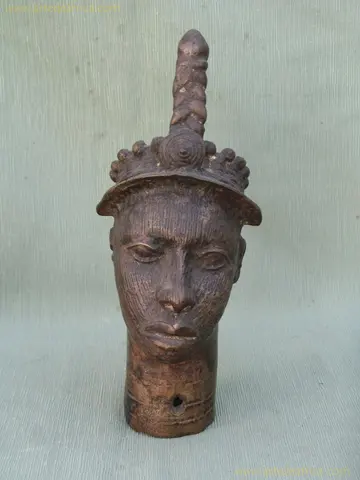
Reproduction of a head of Oba, king of Ife, probably from the beginning of the century XX.
BRN-53
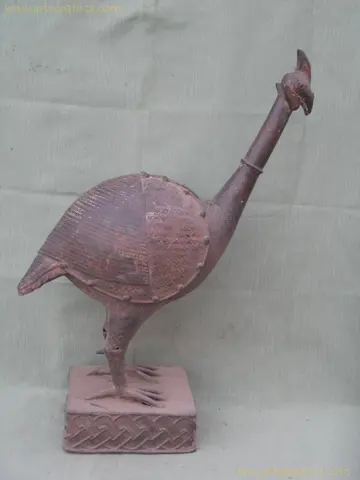
Painted designed, like the Okpa cocks, to adorn the altars of the powerful Queen Mother in the Oba palaces in Benin City.
BRN-56
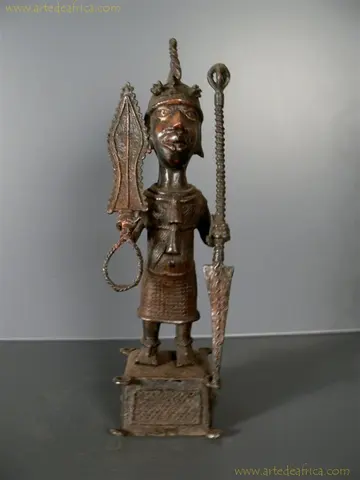
The artistic pieces from Benin are symbols of power intended to extol the divine sovereignty of the Oba.
BRN-58
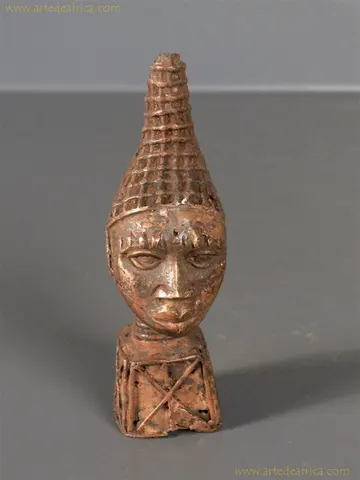
The commemorative heads seem to date from the time of the Ogiso, as the kings of Igodomigodo were called, the name given…
BRN-59
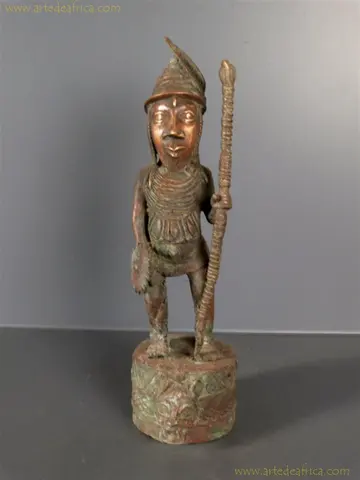
The artists in Binin City were organized into corporations living in opposite neighborhoods.
BRN-62
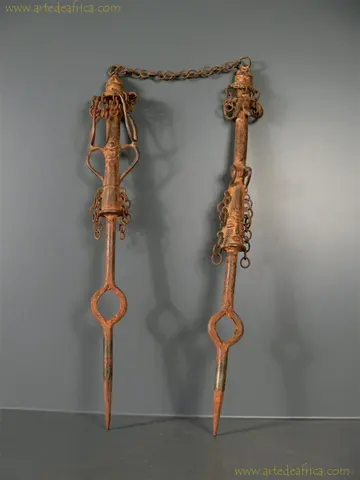
African art object that means the last love bond between two people.
BRN-63
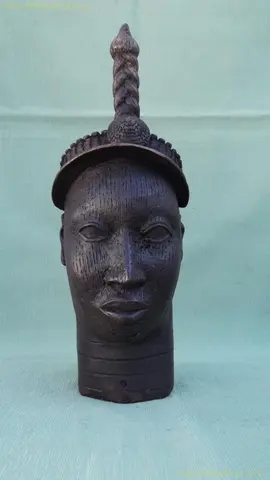
Commemorative heads seem to date back to the time of Ogiso.
BRN-64
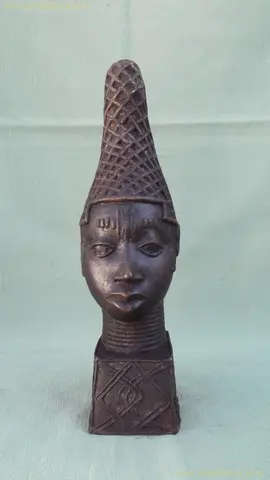
Representation of a queen mother iyoba head on a pedestal.
BRN-65
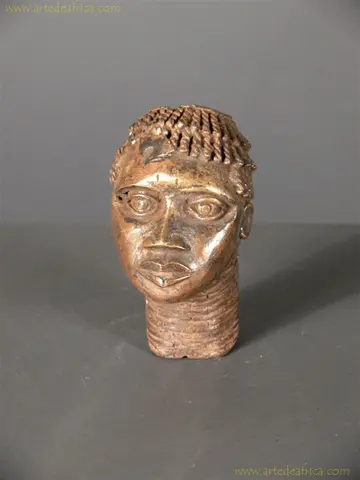
Commemorative heads seem to date back to the time of Ogiso.
BRN-66


