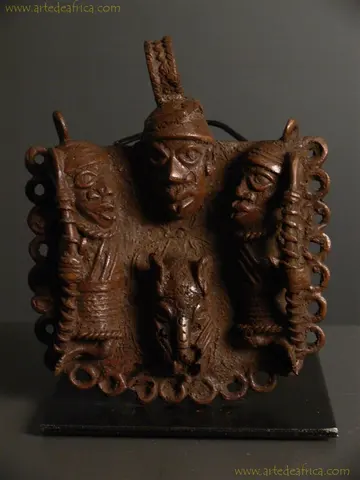
Royal Plate
They began to be manufactured from the century on. XVI.
BRN-70

List of the historical catalogue
Text and organisation of the original catalogue · Jesús Arrimadas Saavedra
The technique of bronze smelting reaches its maximum splendor in Ife and Benin, whose sculpted heads were thought by the first anthropologists who were the work of the Greek and Roman civilizations. The bronze plates of Benin are famous, with cutting scenes, covering walls and columns of the royal palace looted in 1885 This metal was attributed to a benefactor force capable of warding off evil. The bracelets and slaves of many peoples of Africa are very often bronze as are many amulets. If there is a technique that can characterize the work of metals and especially of bronze it is that of lost wax. This process of manufacturing small, and not so small, bronze sculptures has been practiced in almost all of Africa, mainly in coastal areas for having greater ease in obtaining raw materials. Different procedures are used, the simplest is the following: The artist sculpts or works a small wax figure, until the desired shape is achieved. At the top, several wax ducts are also attached; the artist covers the interior and the exterior with damp refractory clay or mud and tries to make the outer layer thicker, to give greater solidity to the whole. It is allowed to dry in the sun or in an oven, depending on the degree of technique achieved by the artist. When it has dried well, heat the part to melt the wax and there remains a vacuum into which the metal is introduced into melting. There are those who do not previously remove the wax because it will melt and come out through the ejecting nozzles as the molten metal is poured. In some places, the artist places his head in such a way that the molten metal spreads first over his face, as a delicate model had more chances of being successfully realized. The metal extends to occupy all the reveques of the mold. Two holes are practiced, one through which the bronze or molten metal is drawn and the other through which the wax escapes, which will be covered at the right time allowing, then, to cool the mold. Once cold the mold is broken and the figure obtained will be finished with chisel or other incisors instruments. For the most important pieces the artist models a figure, hollow, of wax of approximately one centimeter thick covering with a layer of clay both the outside and the interior, but the interior will then be filled with wood and charcoal, being more or less the same the rest of the procedure. Many of the objects made with this procedure were more or less realistic portraits of the chiefs, kings and great characters. Some informants say that these portraits were made after the model’s death. They were placed on family altars and received family offerings. Some of these figures represent the Ony of Ife, spiritual leader of all Yoruba. The so-called “African bronze”, given its composition, is closer to brass than to the European bronze concept, contains no zinc. The bronzes of some Akan ethnic groups, such as the Ashantis and the Anyis, contain a small percentage of gold.
78 objects · page 3 of 4
They began to be manufactured from the century on. XVI.
BRN-70
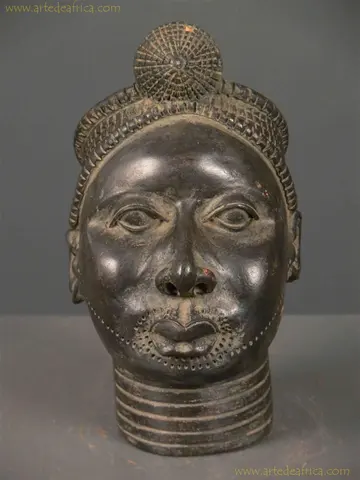
Commemorative heads seem to date back to the time of Ogiso.
BRN-71
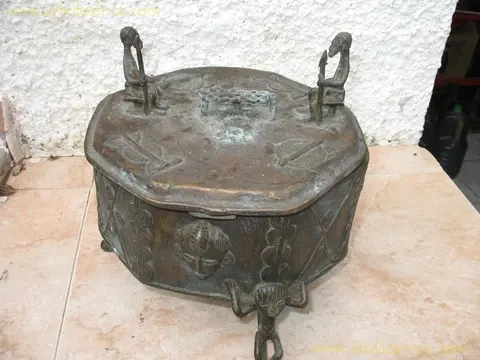
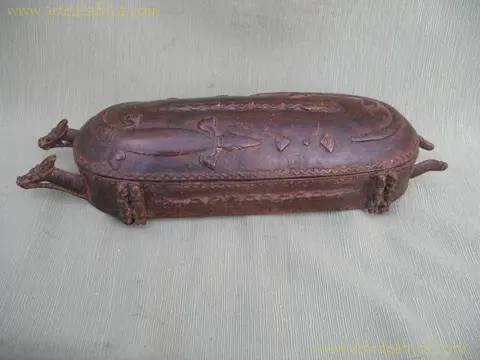
Box intended to store the tail nuts offered to the visitor, as a symbol of hospitality, on arrival visiting a house.
BRN-72
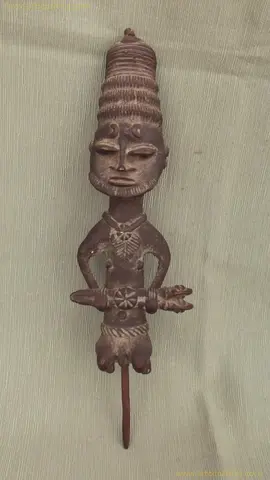
The Ogboni society, eS without a doubt,the one that has exerted the greatest influence among the Yorubaboth from its religious function and…
BRN-75
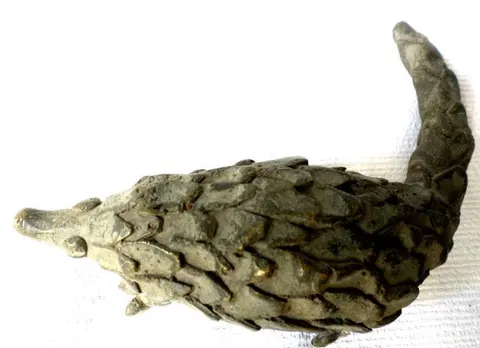
Pangolin is an anteater with its body covered with hard scales.
BRN-76
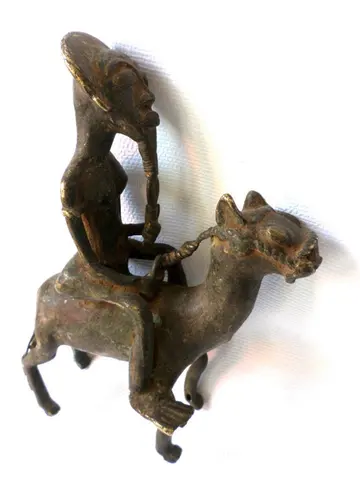
Relatively small but heavy statue of a gentleman I drank..
BRN-77
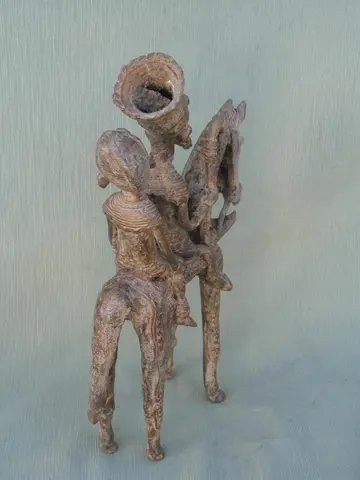
Notable dogon riding with his wife in the group.
BRN-82
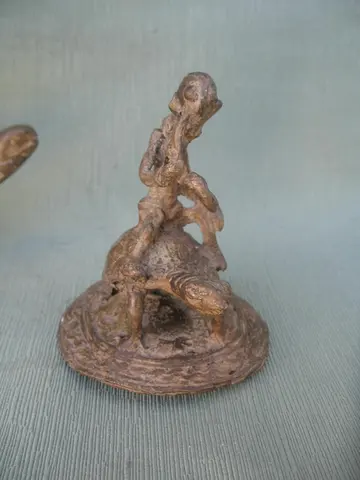
Box of spherical offerings seated on a crocodile. The body of the box has a smooth part and a geometric decoration.
BRN-83
The first Nommo, the first ancestor who came down to earth, obtained permission and thanks from God Amma to embark on his…
RCPT-26
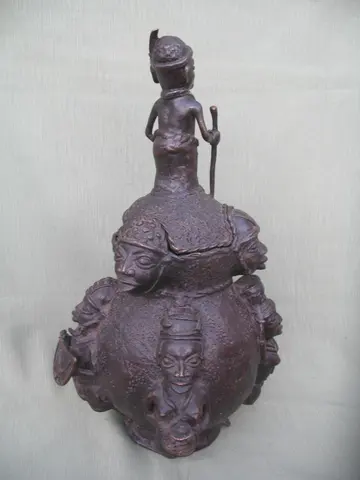
Bronze box to offer welcome queue to brand visitors.
BRN-84
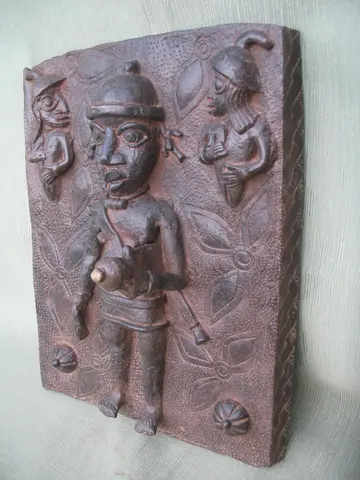
It belongs to the so-called cutting art. These plates began to be made from the century onwards.
BRN-85
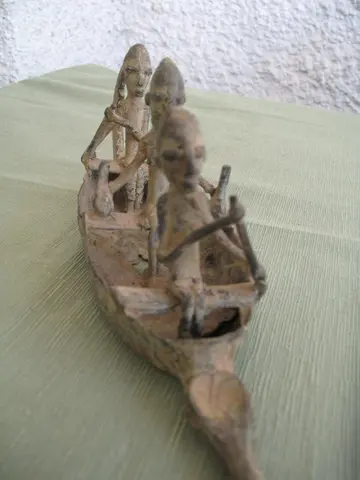
The rivers offer the basic food to the ethnic groups settled next to their banks.
BRN-86
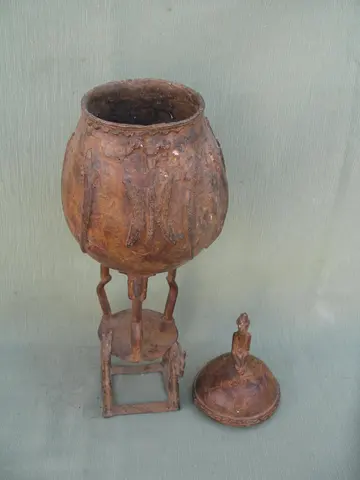
Box of offerings formed by four levels: horses, nomos, container body and lid.
BRN-88
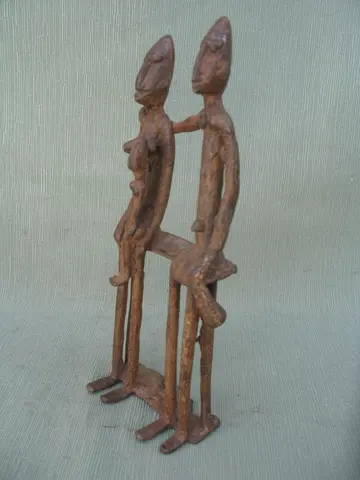
Dogon primordial couple, in the classic position of primordial couples in which the man who carries his right hand to the right…
BRN-89
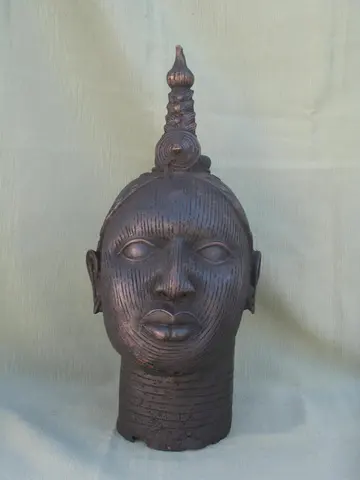
Ife was the holy city of the Yoruba populations.
BRN-90
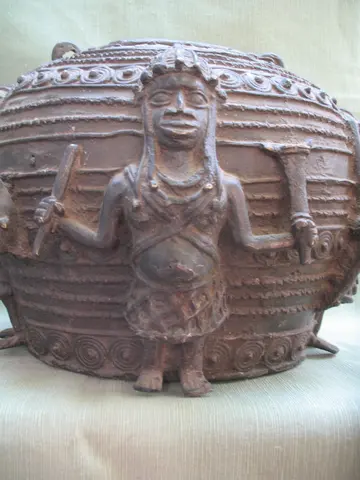
Tail box for use of the royal house. It is decorated with warriors and court servants.
BRN-91
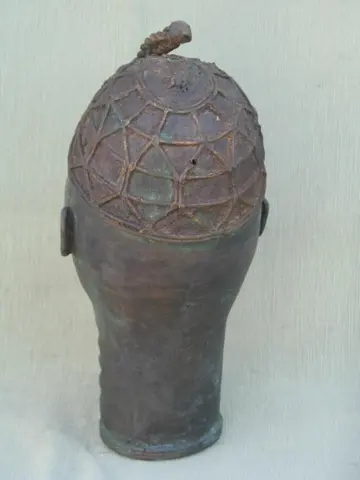
Head of a princess or a young queen.These heads are a symbol of the continuity and permanence of royalty.
BRN-120
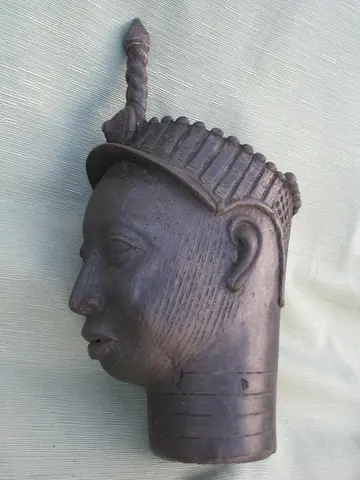
Ife's art is characterized by the beauty and balance of its lines and by a penetrating realism and serenity that seems to…
BRN-121
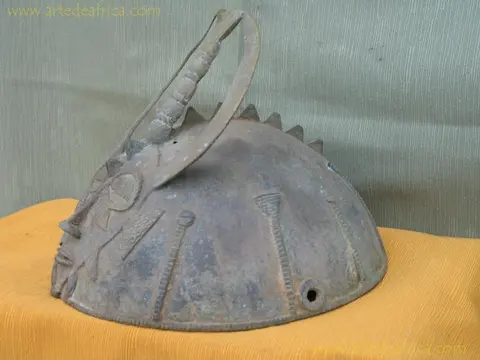
Helmet mask with a representation of the kpelié mask. It belongs to the secret society of healers.
CBR-1
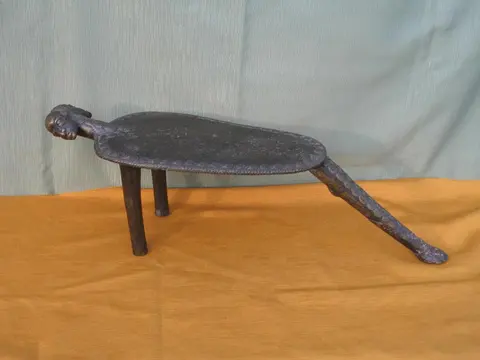
Object, coming from the region of Gaona, called interchangeably wedding stool or courtship, since it has a symbolic use during the celebration…
BRN-124
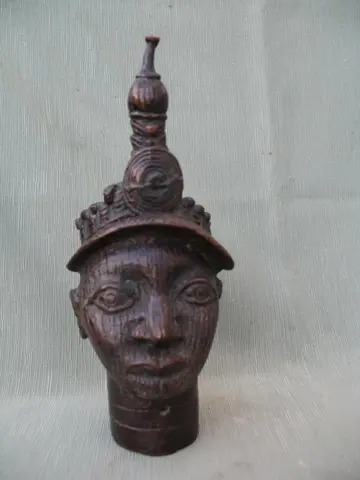
A reduced head of an Oni, king of ife, with its characteristic crown on the head on whose forehead stands a plume.
BRN-130
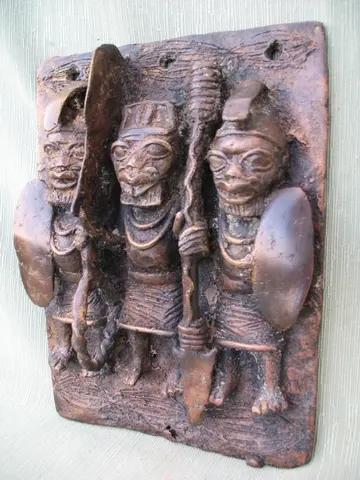
This plaque represents a remarkable warrior's dress flanked by two servers, at the top, of which only the torso and head appear.
BRN-129
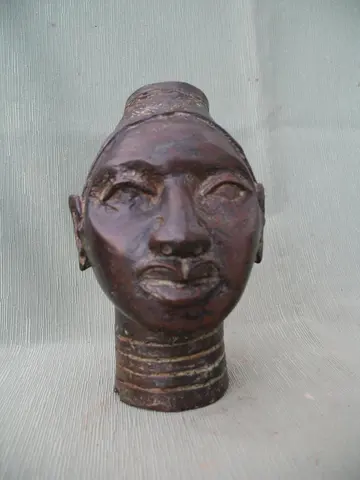
These heads representing Queen Mother Oba were the replica of the owner's face, in a size equivalent to about two thirds of…
BRN-136
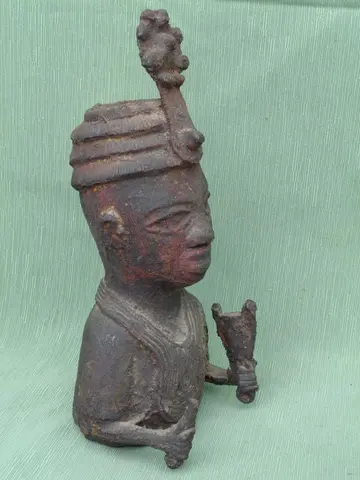
Oba Bust dating hard to define. It is a very rusty piece with some small cast defects.
BRN-140


