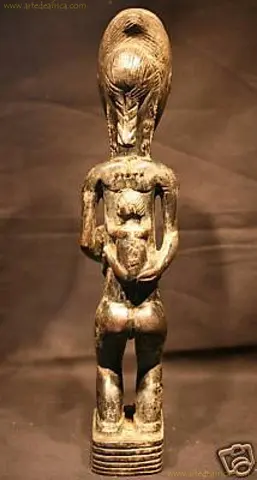
Mother With Two Twins
Motherhood from the Sakassou region.
MTR-3

List of the historical catalogue
Text and organisation of the original catalogue · Jesús Arrimadas Saavedra
Women are represented in African art under the figure of a maternity. Motherhood is one of the oldest and most representative figures in Africa. She is represented with one or two children she is giving or has just breast-feeding. At other times, she carries her daughter behind her back, although she does not need to be accompanied by a son, the protrusion of her breasts or belly evokes fertility. They do not usually represent a particular woman, but a woman who dispenses life and food, since their primary function is to give life and preserve it. Women are a symbol of social life as they are the essential link in the lineage, the backbone of the family and often an essential element in the transmission of inheritance and, always, the protective element of children. Breast milk is not only a food of life, it is the sap that carries out the transmission of fundamental human values. In many cultures, women are the depository of tradition and the safeguarding of genealogies. He is often, divine, healer and connoisseur of the mysteries of nature clothed with great magical powers. The African woman, and especially the mother, is far from the image of her in the West. Almost in a generalized way in these African representations of motherhood the essential figure, enhanced by its forms or the fineness of its strokes, is the mother. She is the center of the composition. The son is either disproportionately minor or his strokes are so elemental that they serve only to indicate the presence of the creature. All the prominence has been given to the mother. The wise and eminent African writer Amadou Hampâté Bâ says: “Everything we are and everything we have, we owe it only once to our father, but twice to our mother. Man, they say in our country (Mali), is nothing more than a distracted sower, while the mother is considered as the divine workshop where the Creator works directly, without intermediaries, to form and bring to maturity a new life. This is why in Africa the mother is respected almost as a divinity.” The maternities of the Democratic Republic of the Congo are notable. Its face is characterized by beautiful almond eyes often covered with glass on which stands a black pupil who looks over the child’s head. His lips are open and open, and the teeth are thinned and carved at the end, a beauty note of the Mayombé women.
69 objects · page 1 of 3
Motherhood from the Sakassou region.
MTR-3
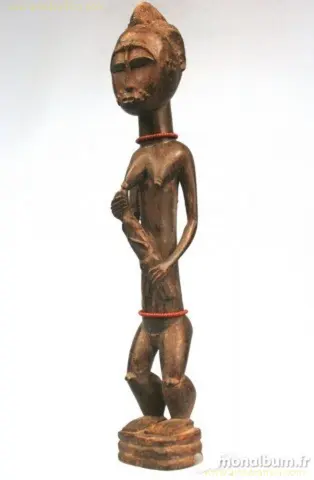
A woman's figure breastfeeding her child, longline and detached that breaks with the ballet aesthetic canons.
MTR-4
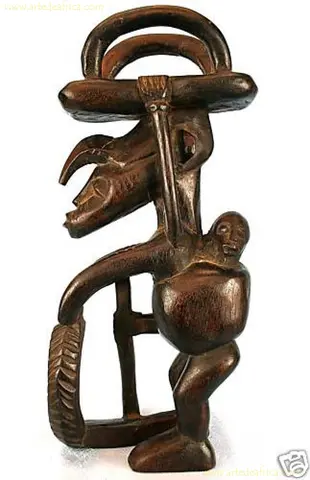
Rare motherhood that represents a mother who goes to the country with her son behind her back, in the traditional African position,…
MTR-5
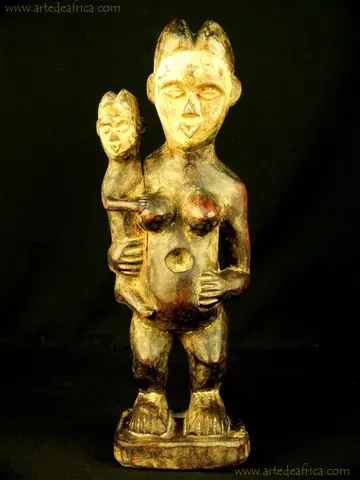
This statue has a great resemblance between the face of the mother and the child, The bows of the eyebrows and the…
MTR-6
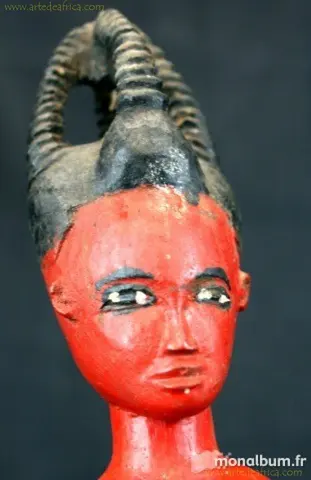
Beautiful face of pregnant woman with a sophisticated style of ceremonies that appears very rarely in statues and baulé masks.
COL-9
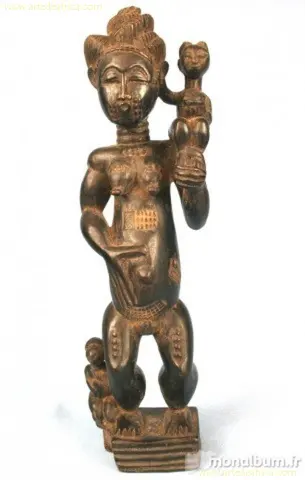
Mother with a child sitting at one end of her man leaning the right nao on her head while a second child…
MTR-9
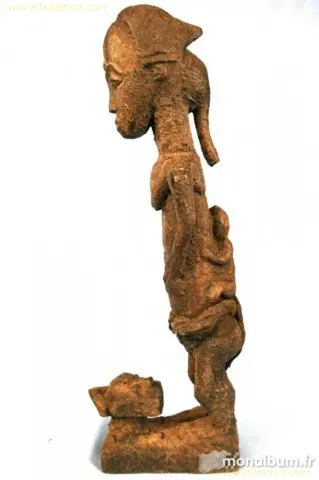
Original sculpture presenting a maternity, with the child behind his back in the traditional way of the African woman, but that keeps…
MTR-10
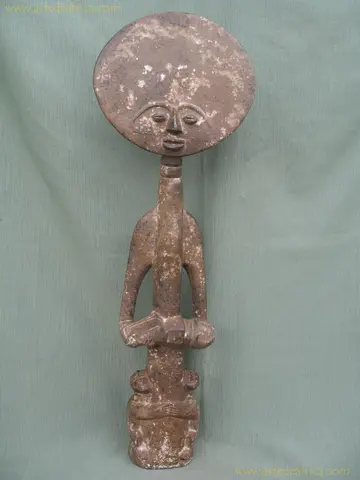
Mother accompanied by her triplets.
MTR-11
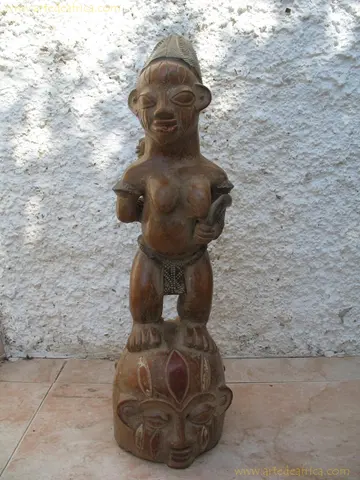
The Gelede cult, practiced mainly by the Yoruba Westerners, it is a cult in honor of living or deceased elderly women.
TRRC-11
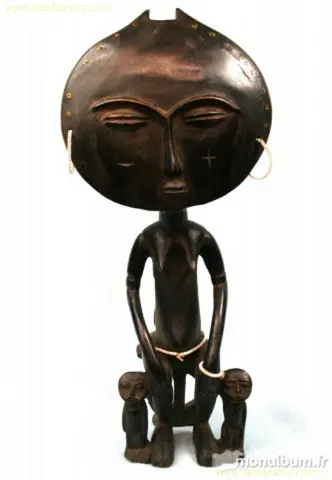
Curious ashanti fertility doll “Akwa Ba”, “welcome” in most ethnic groups of the group Akan.
MTR-12
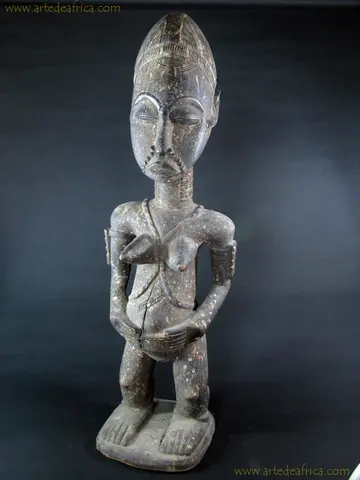
Statue of Asie Usu or genius of nature embodied in the form of a pregnant woman.
MTR-13
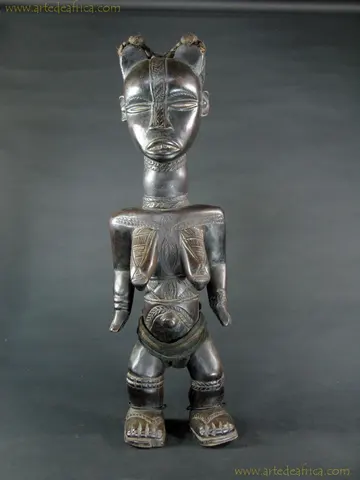
This statue with abundant scarifications throughout the body and on the face constitutes a beautiful sample of the statuery Dan.
MTR-14
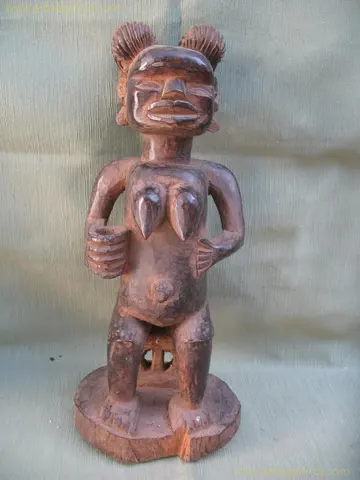
Curious figure of hard and heavy wood bakongo woman.
EFM-16
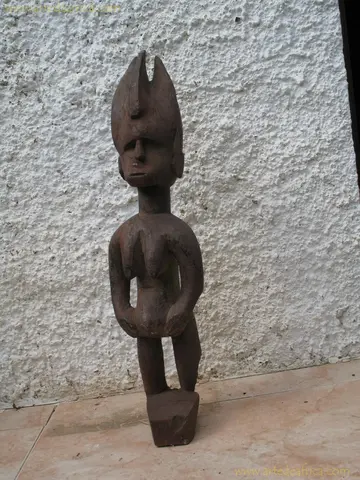
The Tagbana they have a very poor statuery so this statue has an unusual aesthetic for this ethnic group in what is…
EFM-19
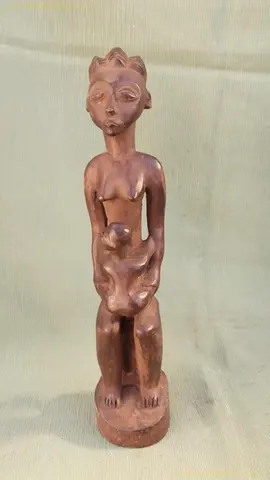
The figure of motherhood is one of the oldest and most representative in Africa.
MTR-20
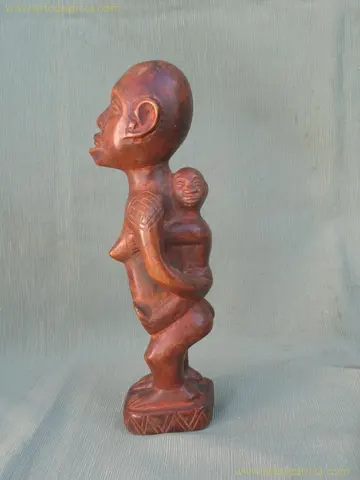
The figure of motherhood is one of the oldest and most representative in Africa.
MTR-21
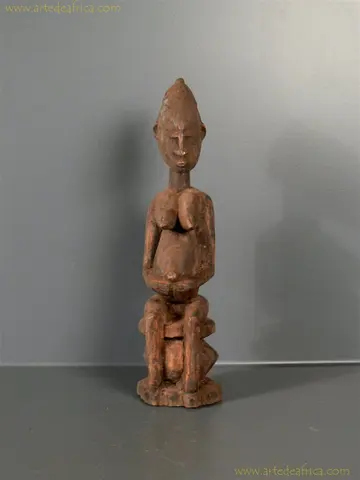
The statue of pregnant African woman, although she has not yet had other children, is considered maternity.
MTR-23
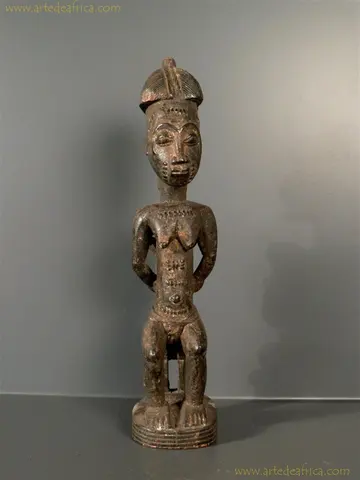
Maternity sitting on a stool Akan with the child behind his back, the mother holding the nuño with her arms back.
MTR-24
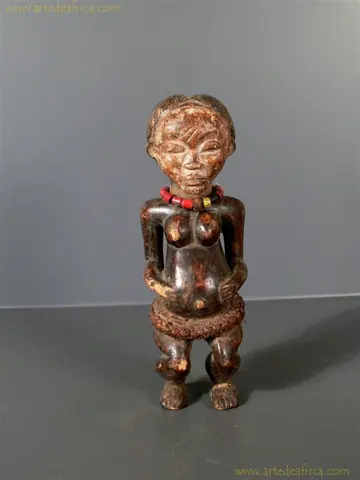
Character of pregnant woman with a prominent belly.
MTR-25
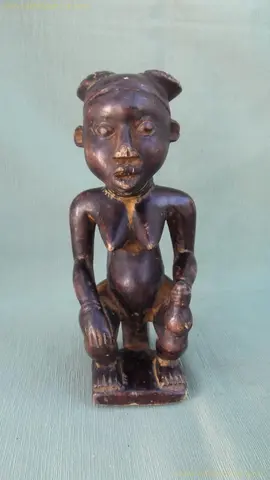
The woman who is expecting a child is considered a maternity.
MTR-26
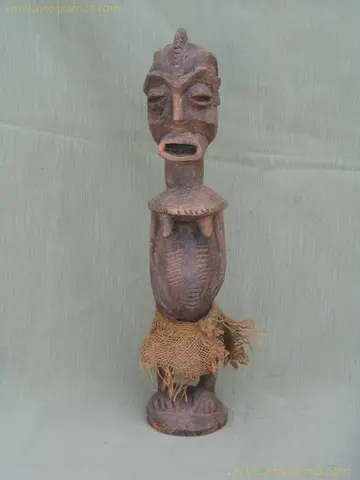
Curious and ancient motherhood that breaks the common pattern of the songyé figures.
MTR-27
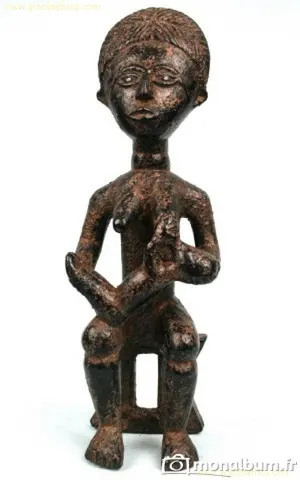
Maternity sitting on a stool Akanbreastfeeding your child on your knees.
MTR-28
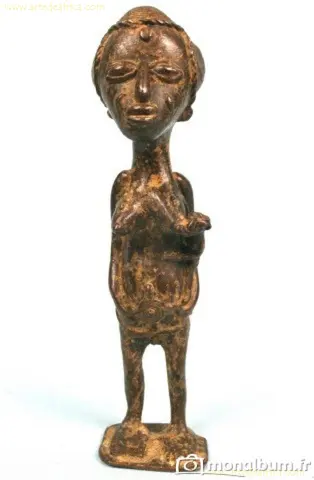
Old maternity elaborated by the lost wax system.
MTR-29
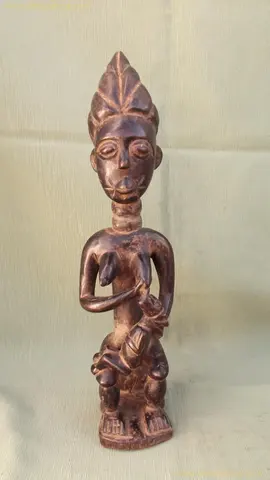
The figure of motherhood is one of the oldest and most representative in Africa.
MTR-30


