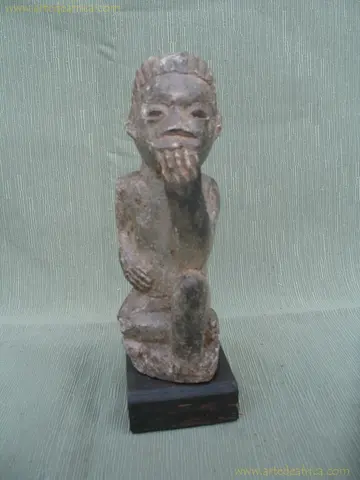
Mintadi
The Mintadi or Bitumba, in singular Ntadi, are small stone statues, usually steatite or soapstone, carved by the Mboma living on the…
PDR-1

Text of the original catalogue
The Mendi Country of Sierra Leone, the Kissi Guinea, the former Congo or the Democratic Republic of the Congo and Nigeria are the exponential sites of stone art in Africa. Stone has been a very little used material in Africa, both in architecture and sculpture. We highlight the most important areas in which stonework has appeared. In sculpture, in Rodesia, stones representing birds or cups have been found. a.- Piedras Mendi The country Mendi has a population of 2.000.000 The Mendi as they worked the land were finding heads or stone figurines. Looks like they're from the century. XVII Although its date to this day is very imprecise due to certain elements similar to those carried by the Portuguese represented in some pieces of Benin. And, these objects do not belong to the population that currently uses them. Mendi stones have been found in Sierra Leone, north of present-day Guinea Conakry and the Sherbo Islands, opposite Sierra Leone. These stones were appearing in the fields and present a wide variety of styles so it also seems that they could have been made over different periods. Also appear figures with the most varied forms, standing, crouching, etc. In the local language they are called “nomdi”. They are carved in soft stones, steatites, and almost all of them represent characters, rarely animals. These characters present an aguileña nose, a rare morphological faction in black Africa. For all these reasons it can be said that the mendi were not the authors of these stones. When harvests are abundant, offerings are made to these stones. But, if the rains take long after planting, then the owner of the fields inflicts severe punishment on the stone, beats it with the whip, or breaks it into pieces. b – Stones Kissi The Kissi are a population of farmers established in Upper Guinea. Its city in the Malinké language is called Kissidugú. They are essentially rice growers, although the land also works. Their stones have been appearing in the fields, in the same conditions as the Mendi stones. Statues of steatite, shale and volcanic tuff have been found. These figures represent characters in all positions, sitting, in fetal position, etc. and some double-sided characters. Could not date. In the places where the stone has been found, polished axes have often appeared. The name of these stones in the Kissi language is “pondo”, in singular and “pomta” in plural. Its translation is “dead” or “image” of the dead.” In addition, each stone has its own name, that of the ancestor, which in dreams manifests itself to a inhabitant of the village or to someone who claims a stone during a divination session. There are also a variety of “pomdo” stones that are naked statues and not personified, which do not bear the name of an ancestor. When it comes to stones representing an ancestor they are called “Pom-Kandya” or dressed statues. They are placed on the altars of families. At the time of the ceremonies the statue of the ancestor receives the offering and homage of the descendants and of the whole family. You are offered the most recent seeds and the firstfruits of the harvest. The population considers these stones to be divinities of rice. The person guarding these stones is a member of the ancestor's family and usually a fortune teller. During the ceremony the statue is placed in a sort of small angarillas placed on the head of the fortune teller, which holds them with both hands. Meanwhile the present members of the family as well as their relatives, can ask questions to the statue. To an affirmative answer, the statue will bow to the right side. If the answer is negative, to the left side. It detects and betrays the person who has committed an evil. The “Pom-Kadya” are never left alone, they are locked in a bag containing several amulets. It is the stock exchange on which sacrifices are made; The clotted blood has been giving a black color to this bag. The figure, inside the sac, is placed in a small container and the whole is wrapped in a cotton fabric. To represent twice the ancestor, he must wear a badge or ornament belonging to him, e.g. a necklace of stone beads, bracelet, brass ring, panther teeth or often a small brooch. Bronze pieces have also been found inside wooden containers in the shape of bottles whose gallows represent a human face. c.- The stones of the Congo (R.D.C.) We owe the most important discoveries to Verly who in 1.955 He went through several places occupied by former Congolese cemeteries to collect these stone pieces. He collected more than eight hundred pieces. “Find these pieces from the north of the Congo River to Angola. All the stones are carved in steatite. Verly thinks they are very old since documents dating from the 1.545 they indicate the presence of these stones, but believe that they have ceased to be produced from 1.910. Therefore, its production extends over several centuries. They are of medium size, with dimensions that vary between 30 and 50 centimetres. These stones have posed quite a few problems to African art specialists, they are not symmetrical, the axis of the back is not always vertical. The head is often oblique to the body axis. Almost all of them wear headdresses or hairstyles on top of which there are some patterns of panther claws. The presence of these claws indicates that they belonged to kings or dignitaries of the former empire of the Congo. They occur in different forms, often sitting, with crossed legs and one hand holding the head. These are funeral statues, but no special rituals are known. d - Nigerian stones have been found in Esie, province of northern Yoruba country, in Ilorin, a 65 kilometers from Ife. A set of more than a thousand pieces appeared in the middle of a forest. Specialists think these pieces could be Yorubas, because of the similarity they offer with some Ife heads. Others think that they could be former inhabitants of Nupé before their conversion to Islam. These are pieces of a naturalistic tendency, with a certain resemblance to Ife's art. They are carved in soft stone. Their dating is inaccurate. Some of these stones are more damaged than those of Ife, which might incite people to think that they are older works. These stones are still being worshiped. They receive offerings during certain periods of the year. They are combed, with finely done work and wear necklaces of various rows of pearls around the neck. Everything tends to think that these are representations of ancestors or divinities; Some statues have the same dimensions as a man's head. Very little information is available on Nigerian stones.
12 objects · page 1 of 1
The Mintadi or Bitumba, in singular Ntadi, are small stone statues, usually steatite or soapstone, carved by the Mboma living on the…
PDR-1
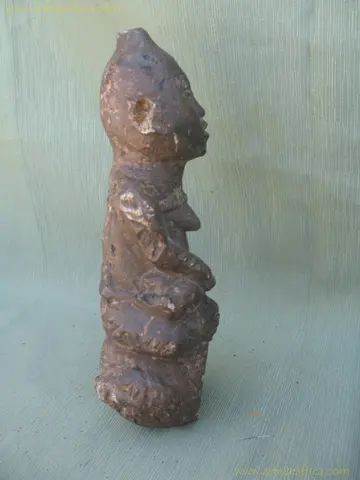
They are small maternity homes, which do not usually go beyond 30 centimeters, in which the mother sitting has her child on…
PDR-2
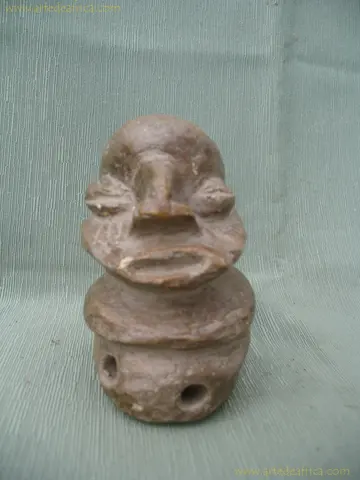
Anthropomorphic fifura of garn head resting on a disc that simulates the shoulders and that together with the base constitutes the whole…
PDR-3
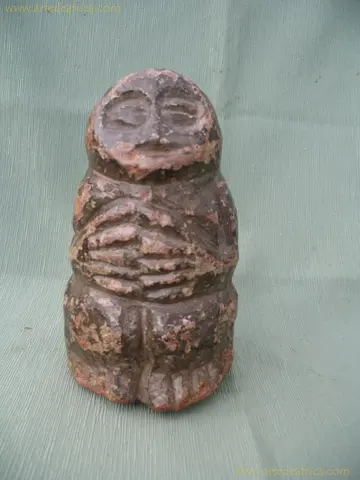
These funeral stelae were placed in the tombs of deceased elderly people.
PDR-4
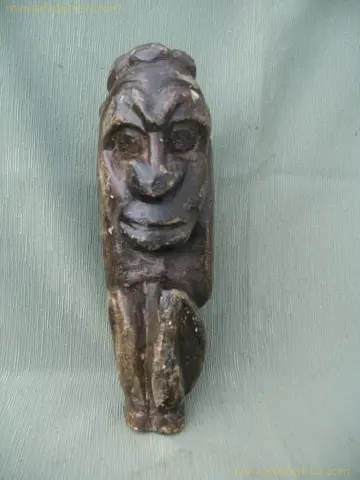
The Kissi they grow the land and mainly rice. Kissi are steatite funeral statuettes that appear in a fetal position.
PDR-5
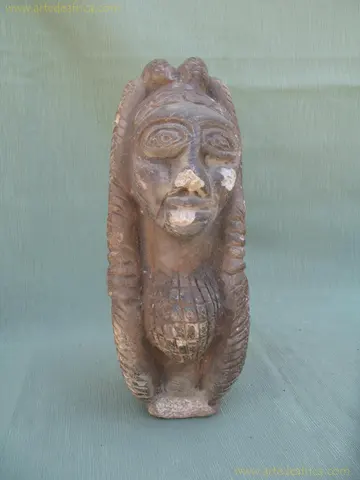
The Kissi they grow the land and mainly rice. Kissi are steatite funeral statuettes that appear in a fetal position.
PDR-6
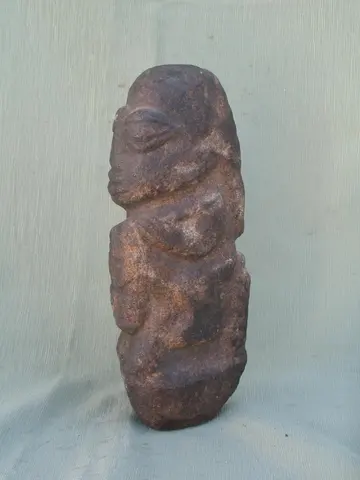
Curious couple of stone of origin and dating indeterminate, but that by the jumping eyes of the characters and being pieces coming…
PDR-7
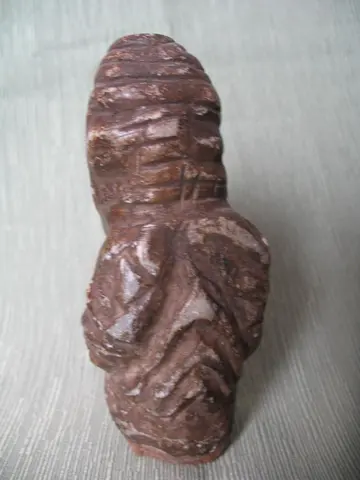
The Kissi they grow the land and mainly rice. Kissi are steatite funeral statuettes that appear in a fetal position.
PDR-8
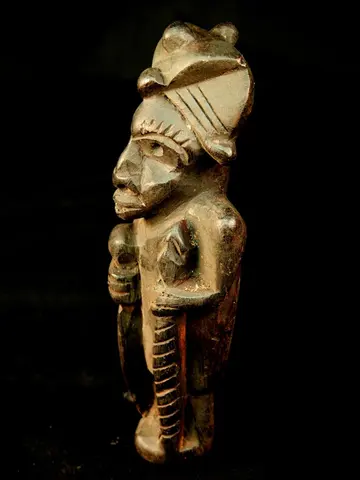
Stone
PDR-9
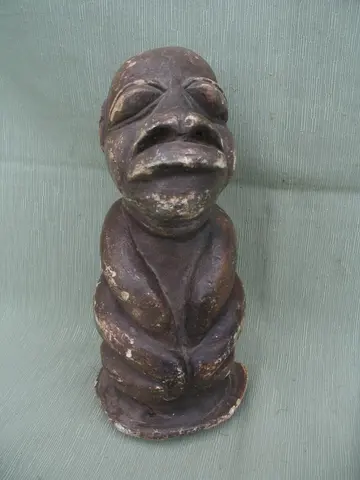
Mendi stones have been found in Sierra Leone, north of present-day Guinea Conakry and the Sherbo Islands, opposite Sierra Leone.
PDR-10
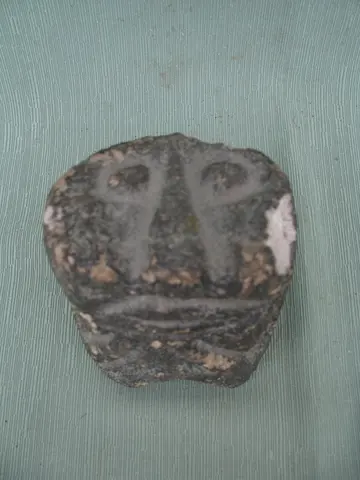
Small and rare stone depicting a character with his hands together in the chest, under the big head, in imploratory attitude.
PDR-11

The Mintadi or Bitumba, in singular Ntadi, are small stone statues, usually steatite or soapstone, carved by the Mboma living on the…
PDR-12


