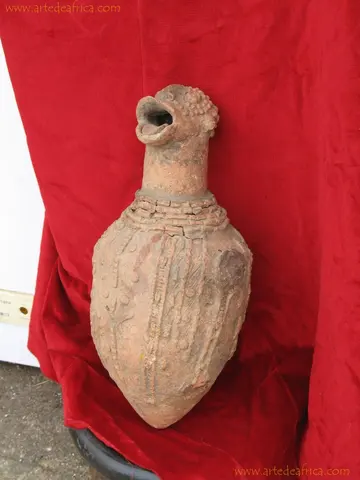
Cantaro
Coming from the Cameroonian border with Nigeria this pitcher is several centuries old, probably from the centuries XIV a XVI Because of…
TRRC-1

Text of the original catalogue
Small ethnic group with only 30.000 persons on the Cameroonian border with Nigeria, occupying the Donga Valley. It seems that the current mambila descend from the people who two thousand years ago gave rise to the birth of the Bantu language. The cult of the ancestors that occupies the center of their religion gives origin to the production of various sculptures of wood and terracotta and masks. They practice agrarian rites to promote the fertility of crops, in which the masks of secret societies participate. Mambila art focuses on a secret society called Suaga. Their statues represent the ancestors responsible for the group's prosperity. Quite primary, they are characterized by flattened faces of their heart-shaped faces. They offer a static and heavy look that contrasts with the power and strength of their masks, mostly zoomorphs, taking precedence over dog heads. They have a large production of terracotta objects that has been influenced since very remote times by the São, located further north and also in the Tchad.
27 objects · page 1 of 2
Coming from the Cameroonian border with Nigeria this pitcher is several centuries old, probably from the centuries XIV a XVI Because of…
TRRC-1
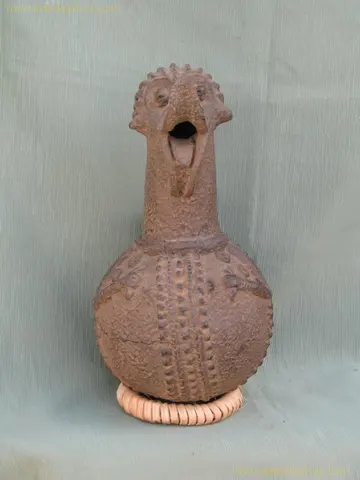
These vessels are characterized by this anthropomorphic figure always with an open mouth.
TRRC-2
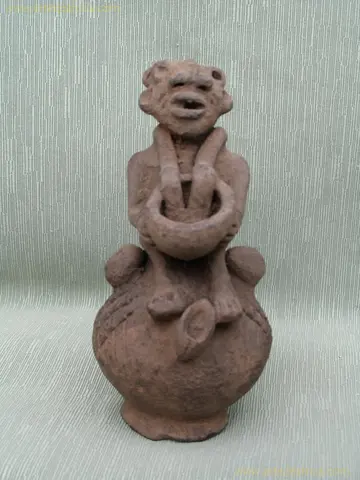
Small offering vessel in which the character appears seated, contrary to the usual African posture in which the bearer of the offering…
MYA-1
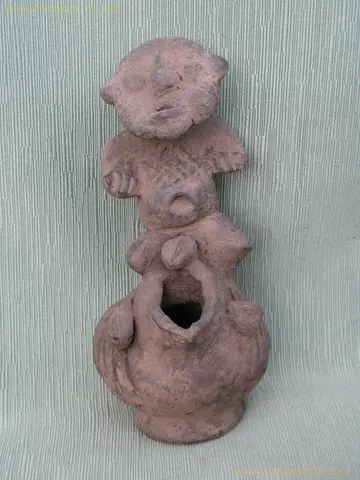
This small container is intended for divinatory practices.
MYA-2
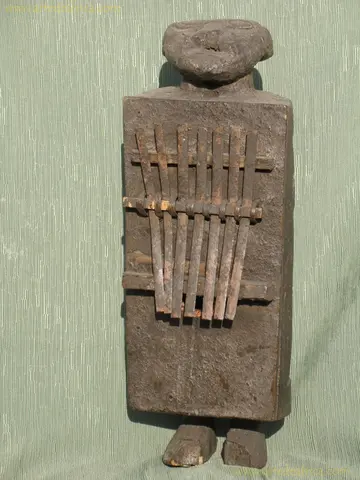
Music, or even better, rhythm, is something inherent in the African, as inseparable as the music of the word is.
INM-2
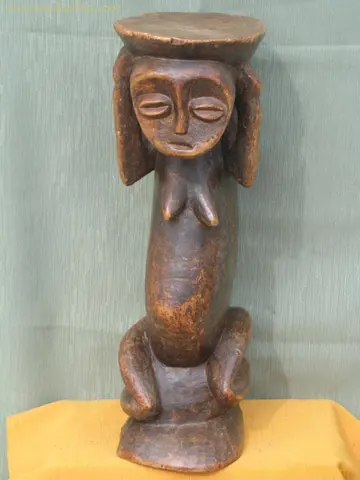
Given its former owner, a minister of one of Cameroon's first governments, everything suggests that this stool is from the end or…
TAB-1
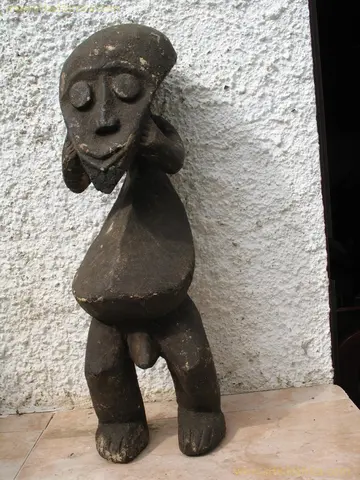
Former statue with costrosa patina formed by libations and sacrificial offerings.
EMS-1
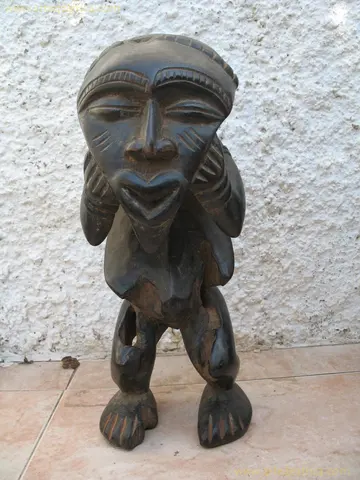
Statue from the Cameroonian border with Nigeria.
EMS-2
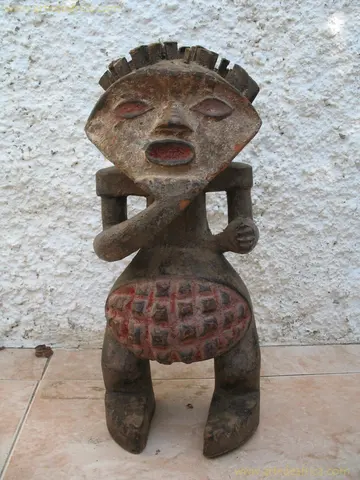
The usual thought is that these rough statues of the Mambila Although it is true, recent studies seem to show that they…
26
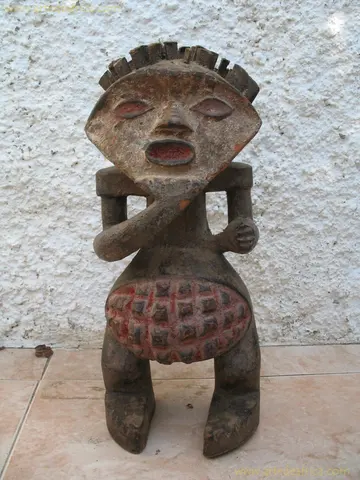
Polychrome statuette, red eyes, mouth and belly.
EMS-3
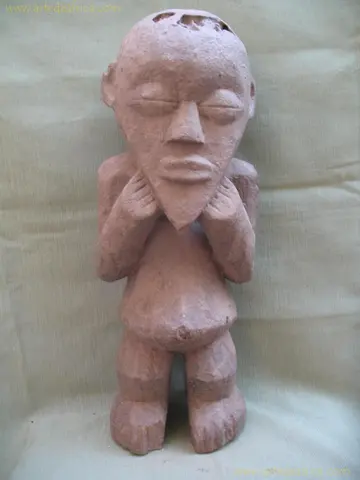
Old statue with whitish due to an indigenous conservation treatment.
EMS-4
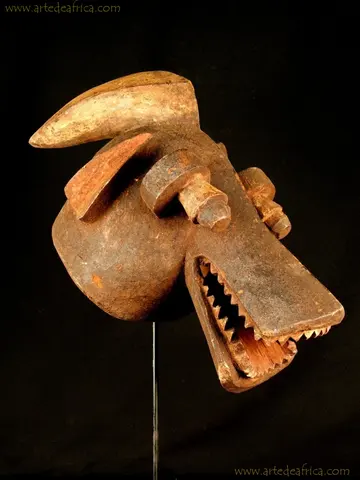
Curious stylization of this dog mask typically MambilaA pronounced jaw that keeps thinking about the crocodile's jaws.
MFZ-1
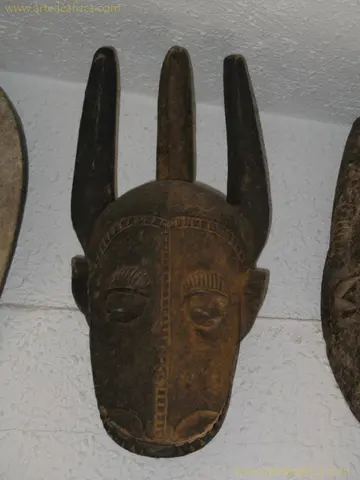
The dog mask, in its different varieties, is one of the most representative of the Mambila.
MFAZ-1
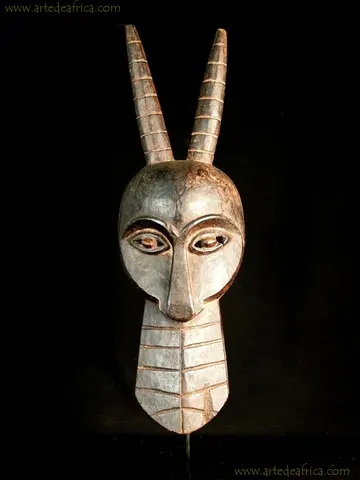
Stylized dog mask in which the top of the face has been able to respect the heart shape of the typical face…
MFAZ-2
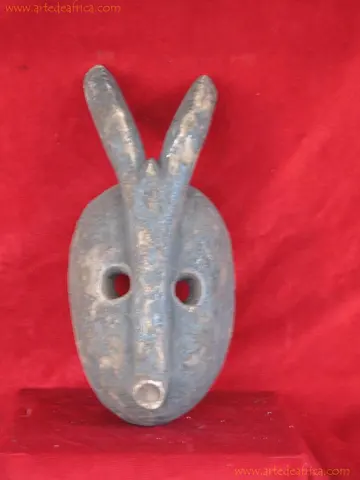
Curious hare mask, which leaves the line of dog head masks, ovoid face on which stands out a raised Greek "Y" that…
MFZ-2
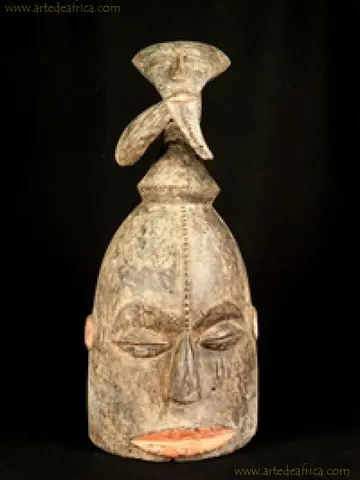
Only the small upper figure allows us to guess that this is the mambila mask.
MCYC-6
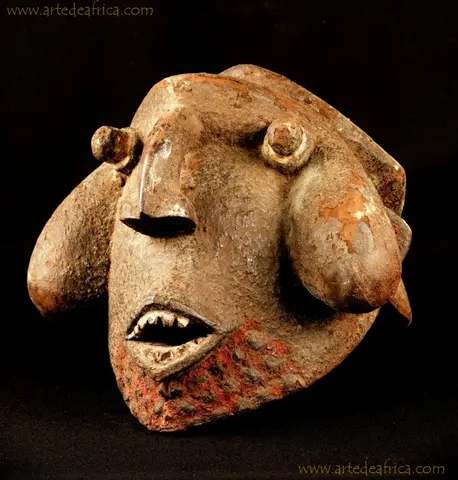
Rare mambila mask with voluminous and hanging ears.
MCYC-14
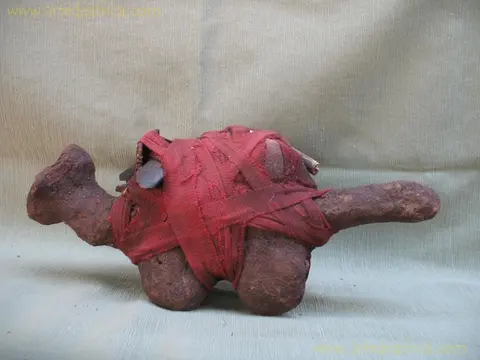
Curious anthropomorphic fetish Mambila which like fetishes Bakongo It carries a magical load.
FET-29
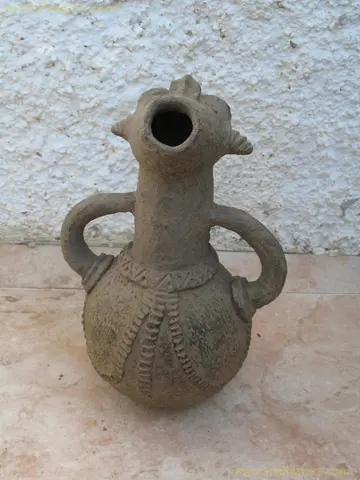
Terracotta jug of anthropomorphic forms whose handles are the arms, exaggerated, of the character and the vessel his body.
TRRC-4
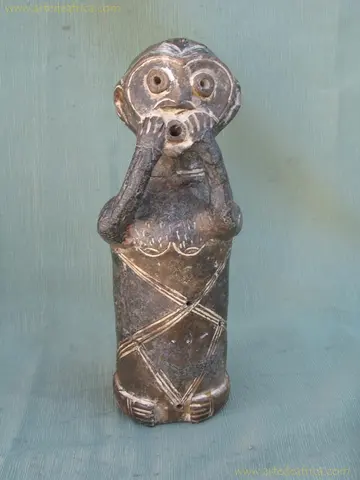
They live in northern Cameroon east of Nigeria. Your statues tThey are recognizable by their heart-shaped faces and their disproportionate heads.
TRRC-45
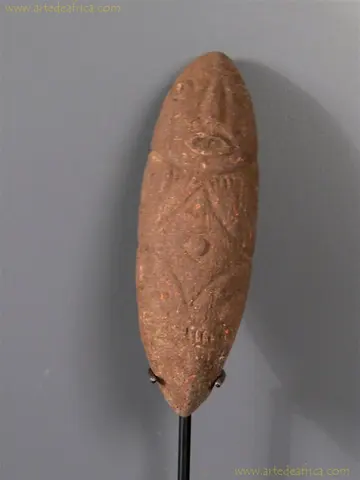
Terracotta figures that do not usually exceed 25 centimetres and which are intended to commemorate an ancestor or a founding hero of…
TRRC-47
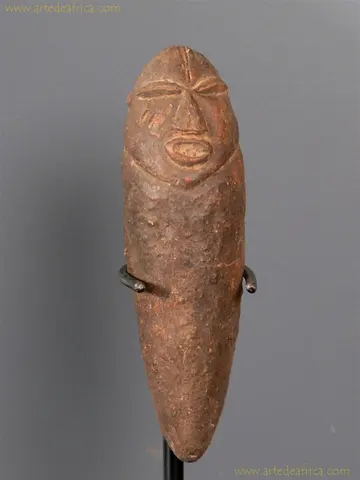
Terracotta figures that do not usually exceed 25 centimetres and which were intended to commemorate an ancestor or a founding hero of…
TRRC-48
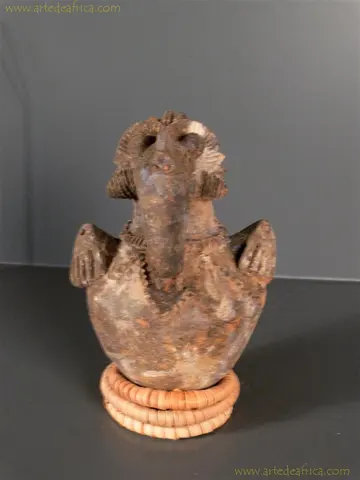
Vase with human features and bird beak. The handles of the container are formed by hands and very short arms.
TRRC-51
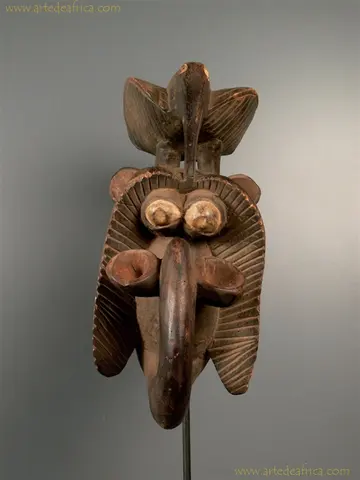
Small ethnic group with only 30.000 persons along the Cameroonian border with Nigeria, occupying the Donga.
MFZ-26


