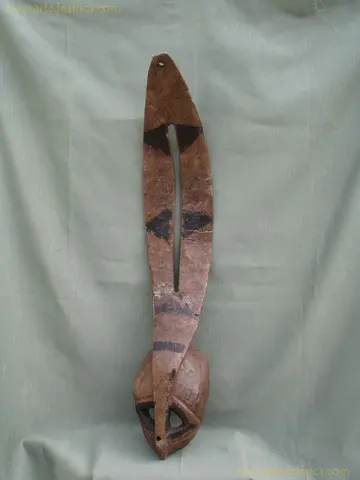
Siluro mask
It is one of the best known masks of the group Yatenga, very similar to the karanga masks and are part of…
MFG-35

Text of the original catalogue
It seems confirmed that the Gurunsi already occupied the lands on which they are still implanted today from the century onwards XII after leaving the Sudan.Gurunsi“ is used to designate a group of related but different ethnic groups living in the southwest of the plateau Mossibut it does not correspond to any particular ethnic group, it is a name given by the Mossi to these populations that they have never succeeded in subjugating. These ethnic groups include Winiama, Lela, Nunuma, Nuna, Nankala, Sisana, among others. These populations have been marked since the century XVI for the bloody slave trade that continued until the abolition of slavery at the end of the century XIX. They have also suffered repeated attacks from the Mossi But they have always managed to preserve their independence. The leaders of these communities are the so-called “heads of the earth”, descendants of the founding ancestors of each community. The Gurunsi They generally live in groups under the authority of the elders, priests of the earth, who are descendants of the founding lineage of the village. They inhabit artistically decorated huts with geometric lines, similar to those of their masks, made with natural pigments. They are hospitable and famous among their neighbors for their peculiar greetings, “frafra”, “good luck, or good luck”, which constantly repeat the traveler or whoever crosses them. The initiation of the boys takes place from the age of ten and during initiation ceremonies the masks play an important role. While this “school of the jungle” lasts, young people learn the history of their community and the moral rules necessary to access the adult world. Initiation reveals to them the meanings of the mask that constitutes the basis of his teachings. The initiatory journey of each young man is sown with obstacles consisting of physical, moral and spiritual trials that must overcome, among them the struggles against the masks, so feared by the young initiates. His best known artistic productions are those of the Winiama, Lela, Nuna and Nunuma, mainly masks with rich polychrome, very similar to those of his neighbors. Bwa and Mossi. The belonging of a mask to one group or another is difficult to differentiate. They believe in a supreme creator of the world Yi, who moves away from men after creation leaving in his place His divine spirit, which is the spiritual force incarnated in his masks and who will be in charge of protecting men in the name of Yi. They have two types of sacred masks: Wamu, who participates in the playful and profane feasts of the different villages and also in funerals and other ritual ceremonies. The most sacred masks, the Wankr, are the oldest and were revealed to the ancestors. They participate only in the most sacred ceremonies and when they do not dance they are kept in the sanctuary and become altars for the worship of His. Like most burkinabese masks, they participate in a special way during the initiation of young people, a period dedicated to the formation of both their character and the knowledge they must acquire related to the cosmogonies of ethnicity, the world of ancestors, the rules of conduct in the community and especially the knowledge of masks. As in all initiations they have to face very harsh moral and physical tests if they want to access adult society. Most of their masks belong to secret societies of hunters. The Gurunsi They have numerous masks, usually zoomorphs or anthropozoomorphs. Most of these masks represent the main animals of their surroundings, birds, lizard, chameleon, buffalo, facocero and also domestic animals such as the rooster or ram, although in reality it is not a matter of representing a person or a particular animal but rather representing an imaginary being. These masks, mostly belonging to hunter societies, participate in the agricultural rites, which take place in April, intended for obtaining good harvests and rituals that are celebrated to alienate the powers from evil.
9 objects · page 1 of 1
It is one of the best known masks of the group Yatenga, very similar to the karanga masks and are part of…
MFG-35
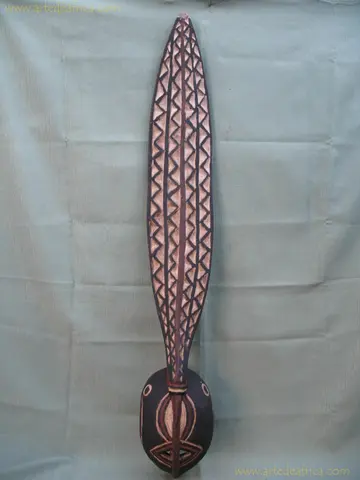
It is one of the best-known masks of the Yatenga group, very similar to the karanga and are part of those known…
MFG-36
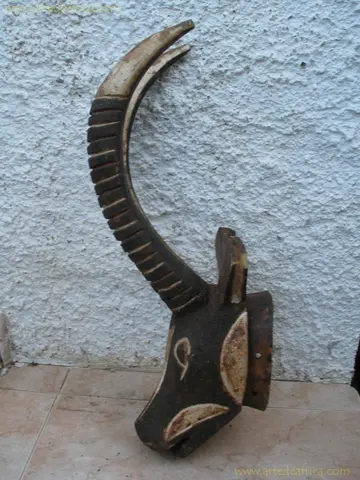
Mask representing a male horse hypothragus or antelope, also known as sable antelope.
MCYC-28
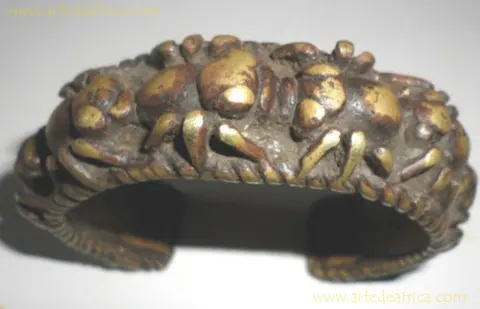
Open bracelet carrying a spider decoration. The spider is a symbol of work and intelligence.
PYB-25
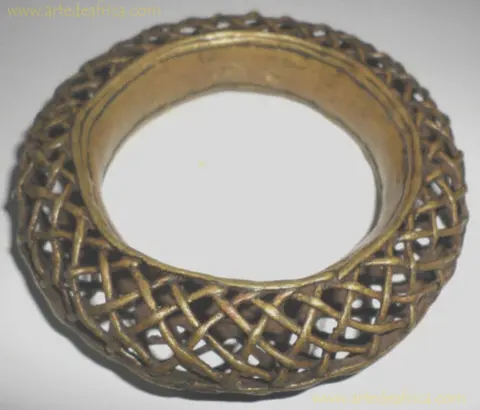
Armband closed with a decoration of braided cordoncillo forming filigree.
PYB-26
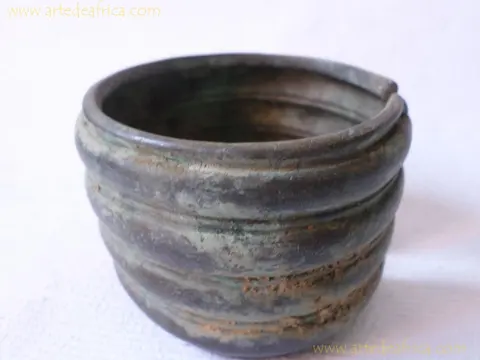
Old bracelet formed by four large rings and small joint rings.
MND-9
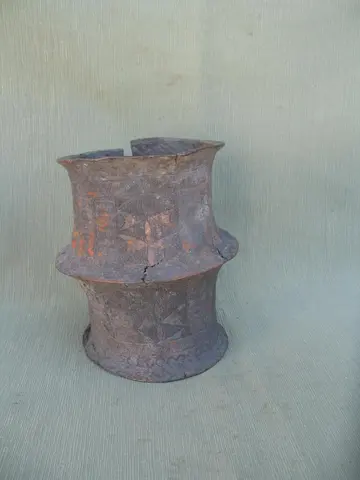
Good size tobillera formed by two pieces, almost symmetrical, joined by the center with a double tangle.
PYB-29

Stool in which women sit for delivery.
FRT-51
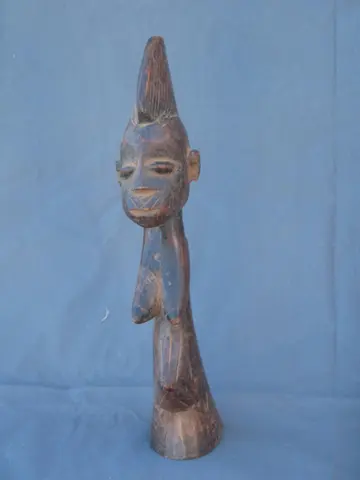
This piece represents a woman with large breasts and bulging belly that are two of the most important signs to express female…
FRT-52


