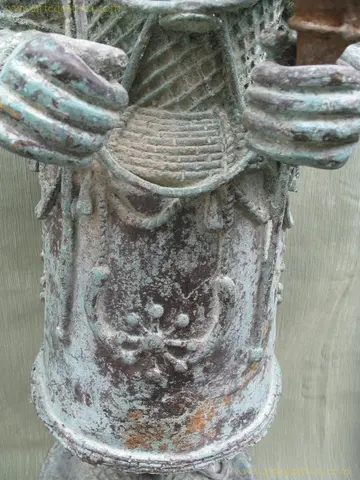
Oba de Benin
Beautiful exhibition of the realistic art of Benin.
BRN-40

Text of the original catalogue
THE ART OF BENIN Benin owes its name to the Portuguese who upon its arrival during the last third of the century XV they gave him the name Beny, which would later be transformed into Benin. Benin is located west of the country Yoruba. Only in a single city of this country, in the city of Binin City, appeared the artistic objects of ivory and bronze that we know today. They are remarkable, among other pieces, their heads of Oba and their pendants. For the binis the kings are Obas, originally from Ife, who were their conquerors. Towards 1.140 The binis ask Oba Oguolo to send them artists from Ife. The bronze sculptor and castor Iguegha will be in charge of teaching his art to the binis. At first the art of Benin represents kings and queens. Later, he specializes in making plaques covering the pillars of the royal palace and depicting hunting and cutting scenes, kings and notables in ceremonial and war suits. The artists in Binin City were organized into corporations living in opposite neighborhoods. The corporation that worked bronze was called Iguneromwo, and the corporation that worked ivory Igbesamwan. The Portuguese Sequeira discovered these plates in the city of Binin City, 1472. Later the Dutch navigator Dapper, and later Nyedal in 1702. In 1846 the Consul General of Great Britain Philippe having read the accounts of other sailors wanted to present himself in Binin City, on a day of ceremony, despite the fact that the Oba rejected the proposed date for the visit. The Consul will fall into a trap laid by the binis. In 1847 Admiral Rawson organizes a punitive expedition; the king of the time, Oba Ovenramwe was taken prisoner and deported. The expedition protects itself from all the treasures of the binis. More than 3000 Mostly today at the British Museum in London and many others sold in their day to European antique dealers. Ife's art was realistic, while Benin's art, at the end of the reign, will be oriented towards expressionism. In Europe the art of Benin is known after the plundering of the English. It is notoriously an art of cutting, intended to beautify the dependencies of the Oba, the king, who although not considered a divinity, did enjoy divine favors. The Oba had a monopoly on precious metals, ivory and bronze. Kings, high court figures and royal servants are the most frequently represented figures, as are warriors in their military attire.
56 objects · page 2 of 3
Beautiful exhibition of the realistic art of Benin.
BRN-40
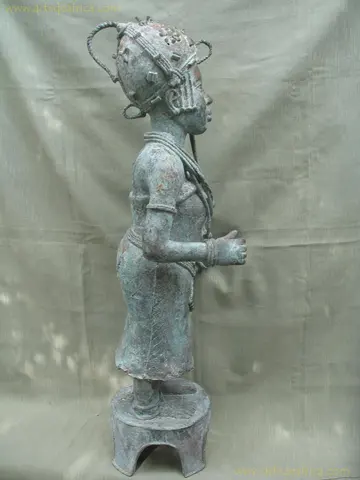
Once again, the realism of the art of Benin's castors is confirmed by this figure of queen.
BRN-41
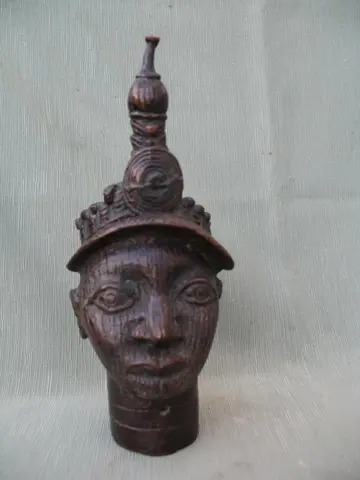
A reduced head of an Oni, king of ife, with its characteristic crown on the head on whose forehead stands a plume.
BRN-130
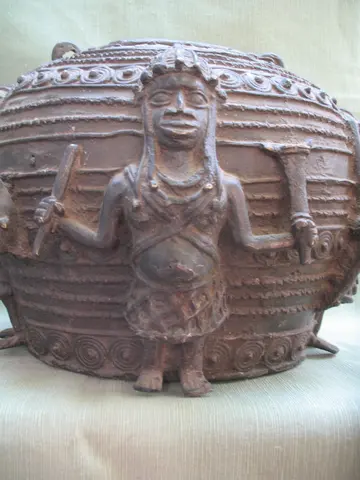
Tail box for use of the royal house. It is decorated with warriors and court servants.
BRN-91
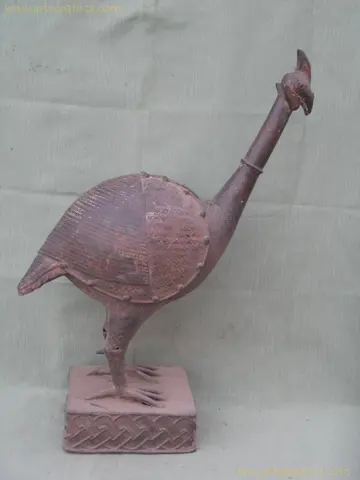
Painted designed, like the Okpa cocks, to adorn the altars of the powerful Queen Mother in the Oba palaces in Benin City.
BRN-56
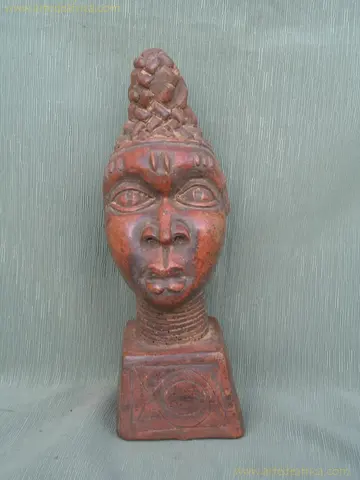
Queen's head mother of terracotta with pointed headdress. It is a reproduction of the classic bronze heads.
TRRC-6
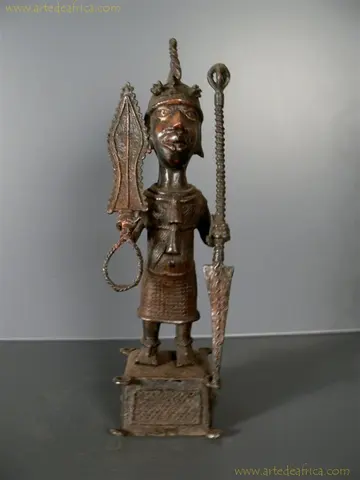
The artistic pieces from Benin are symbols of power intended to extol the divine sovereignty of the Oba.
BRN-58
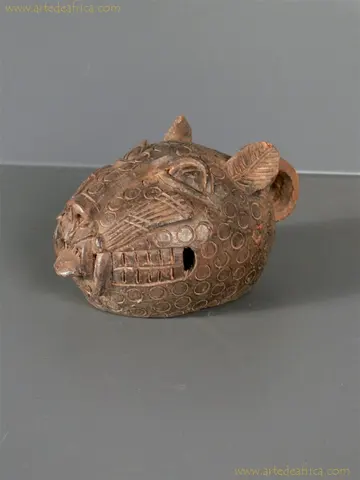
The leopard is an attribute of royalty, only the king can use this symbol, which represents strength, agility, beauty and intelligence.
TRRC-46
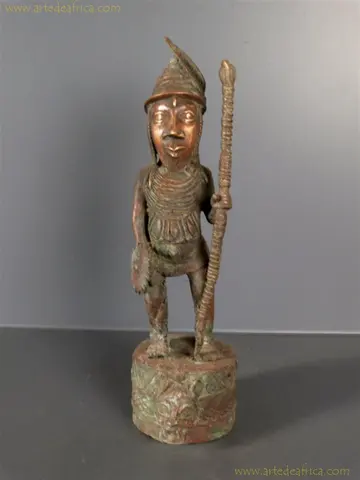
The artists in Binin City were organized into corporations living in opposite neighborhoods.
BRN-62
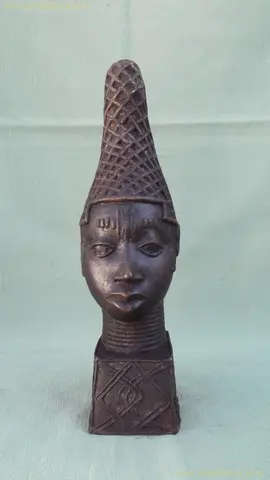
Representation of a queen mother iyoba head on a pedestal.
BRN-65
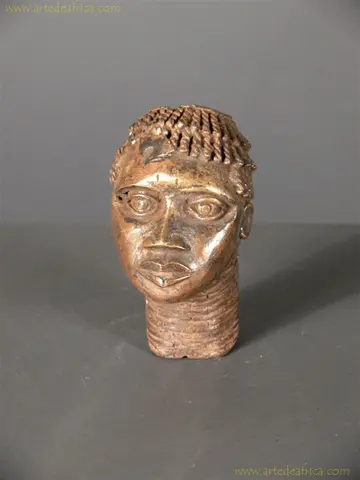
Commemorative heads seem to date back to the time of Ogiso.
BRN-66
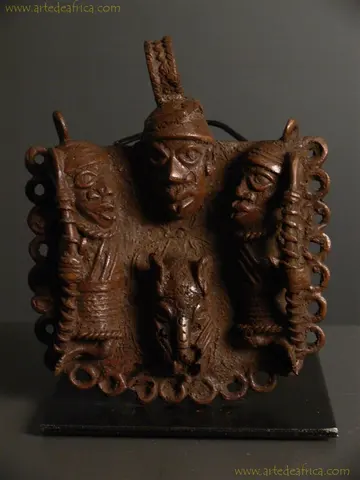
They began to be manufactured from the century on. XVI.
BRN-70
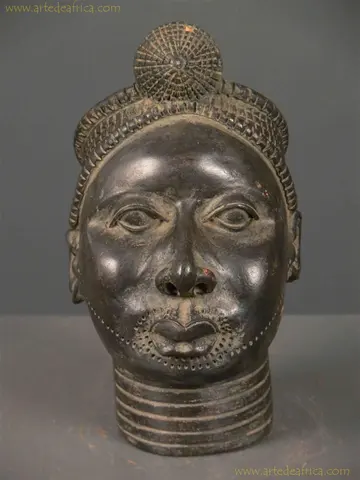
Commemorative heads seem to date back to the time of Ogiso.
BRN-71
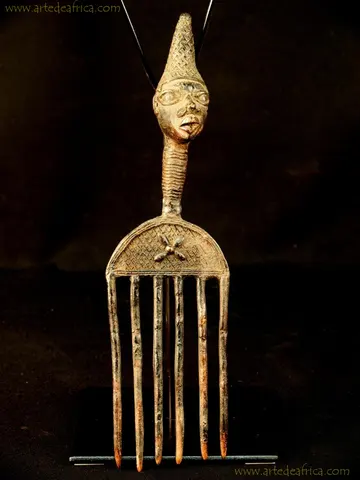
PINE DE RESIGIO WITH THE EFIGIE OF A MOTHER QUEEN.
PNS-16
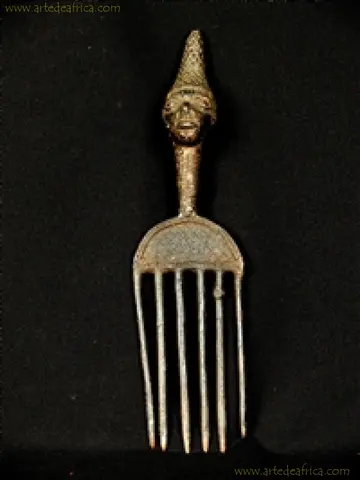
A prestigious comb with the head of a queen mother. Old weld on a spike.
PNS-17
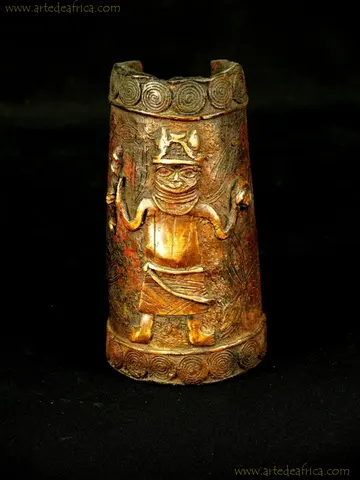
Bracelet with the embossed drawing of a high court dignitary.
PYB-17
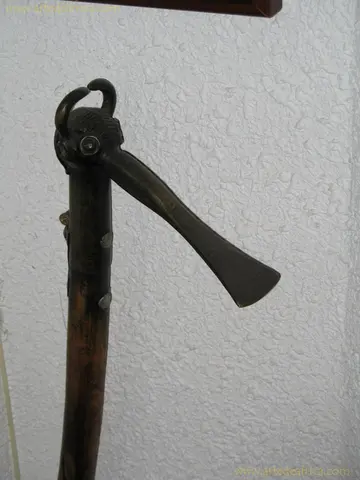
Curious scepter that has the shape of the zuelas used by the sculptors.
BST-31
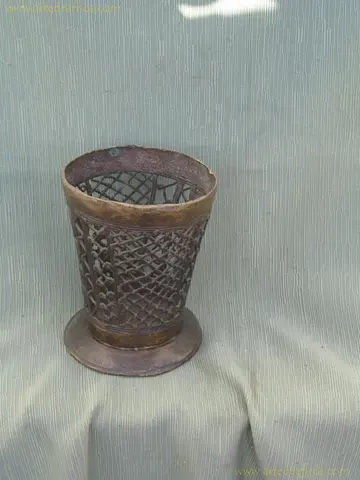
Cup intended to offer the cola nuts to the guests, made of bronze filigree.
RCPT-25
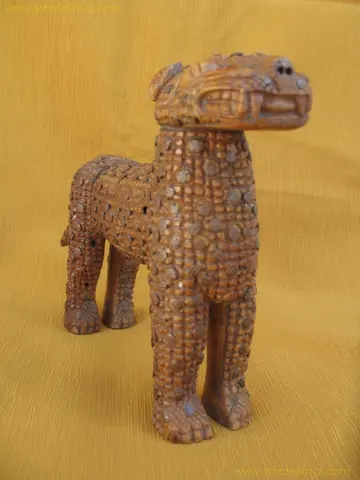
In bronze or ivory, leopard is an attribute of royalty, only the king can use this symbol, which represents strength, agility, beauty…
MRF-20
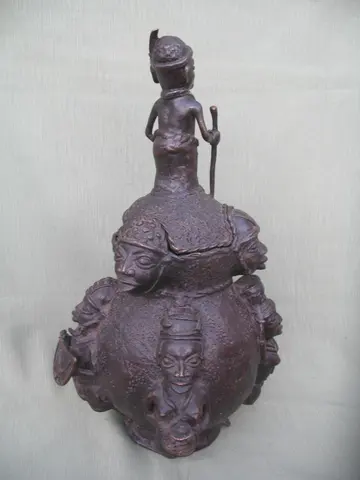
Bronze box to offer welcome queue to brand visitors.
BRN-84
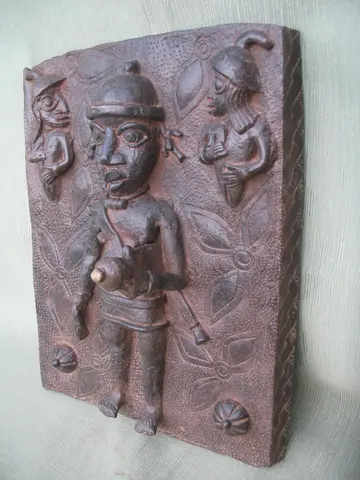
It belongs to the so-called cutting art. These plates began to be made from the century onwards.
BRN-85
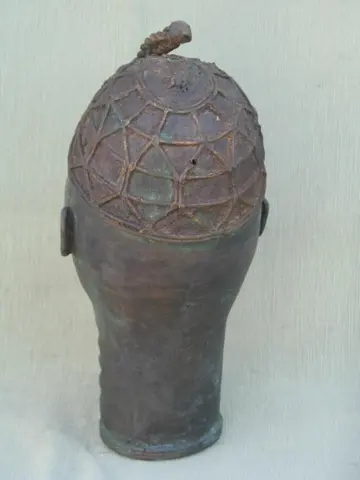
Head of a princess or a young queen.These heads are a symbol of the continuity and permanence of royalty.
BRN-120
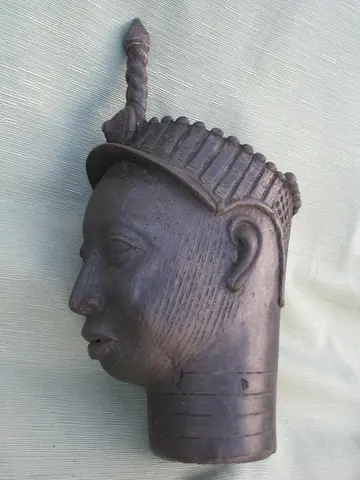
Ife's art is characterized by the beauty and balance of its lines and by a penetrating realism and serenity that seems to…
BRN-121
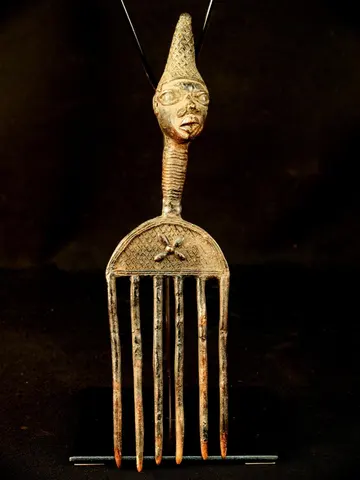
Prestigious comb representing a queen mother of Benin.
RGL-1


