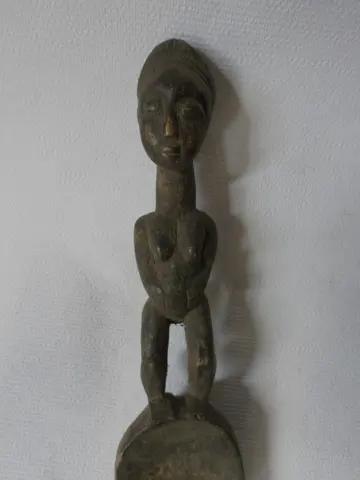
Ceremony Spoon
The baulé spoon, of small capacity, whose handle represents a female character with a serene face and that fulfills the stylistic canons…
CHR-31

Text of the original catalogue
According to legend, at the end of the century XVIIIan Akan group, related to the Anyis, led by Queen Abla Pokou, niece of King Ashanti OsaiTutu, flees Ghana and tries to take refuge in Ivory Coast. He went to the death of the monarch when a war broke out over the succession to the throne between Abla and his brother Dako. Persecuted by Dako's troops, Abla is forced to flee to the neighbouring territory of Côte d'Ivoire as far as the river Comoé, infested with crocodile, west of Abenguru. Braking in their flight by this raging river and following the advice of their fortune-teller, the queen did not hesitate, to save her people and to be able to cross the river, to sacrifice her newborn son in order to obtain the help of the gods. Holding his son with both arms and lifting him over his head he threw him into the river shouting “baouli” (the child has died), thus giving a new name to his people. The crocodiles pelotated to get a part of the dam forming a compact and solid surface that allowed them to cross the river to their people. And this is how the people were born on this other shore of the Comore. BauléThe Baulé are located in the centre of Ivory Coast, in its capital Yamusukro and in the cities of Tiebisú, Tumodi, Dimbokro, Beumí and Sikasso, considered the moral capital of the Baulé, where legend tells that Queen Poku came with her people from Gana. They have ruled the country for forty years in the second half of the century XX. They learned, apparently, to carve the wood of the gourd and the aesthetic feeling that emerges from their masks and statues is unparalleled. For them, at birth, each individual leaves a family in the other world. In adulthood jealousy comes to the couple, instilled by the spouse of the afterlife. That is why the fortune teller orders to make a statue, as beautiful as possible, that will be welcomed as if the husband or wife of the other world came to reconcile with the spouse of the earth. After a ceremony, sort of a wedding, the statue will be kept in the bridal chamber, decorated and fed regularly. Blolo Bian is the husband and Blolo Blah the wife of the hereafter, our origin and our destiny. Therefore for I baulé their statues more than in relation to the world of ancestors are with the realm of divination. The Asian usu represent the spirits or geniuses of nature. They are intermediate divinities that can be favorable or harmful. In order to be favorable, the fortune-teller orders to carve an effigy as beautiful as possible, so that the genius will be at ease in his new cabin. He is usually depicted as a bearded man, of beautiful factions, sitting on a throne. Akan, often with an egg in hand, symbol of the universe. He will receive sacrifices and libations from families or from those possessed who will thus obtain his favors and protection. These statues will be transmitted from generation to generation to ensure the well-being of families.
608 objects · page 15 of 26
The baulé spoon, of small capacity, whose handle represents a female character with a serene face and that fulfills the stylistic canons…
CHR-31
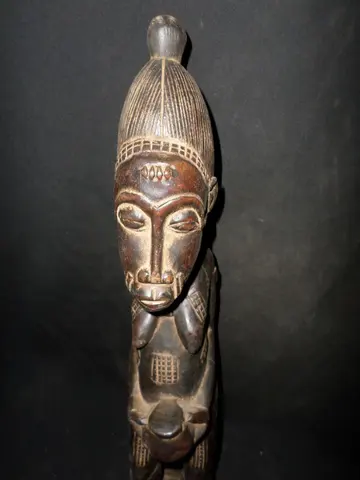
Motherhood without a child with a cup of offerings in hand.
MTR-61
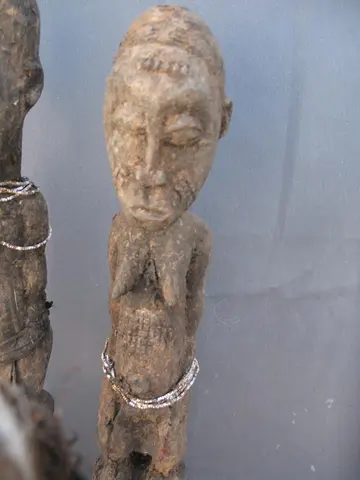
Altar formed by a couple of baulé in an attitude of recollection before the drum destined to call the spirits.
OYA-12
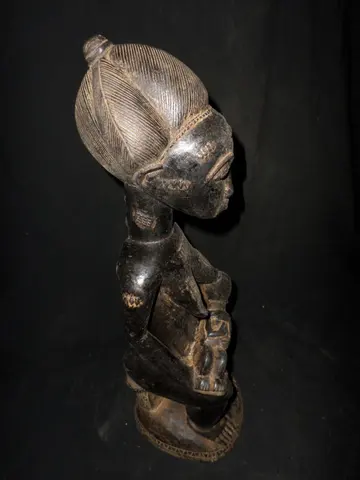
Finely sculpted maternity giving of sucking her child, placed on her lap.
MTR-62
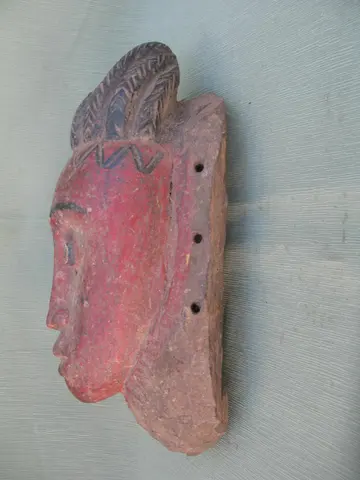
Face mask, settler type, painted red with industrial paint. The eyebrows and hair painted black, and eyes in black and white.
MFANT-168
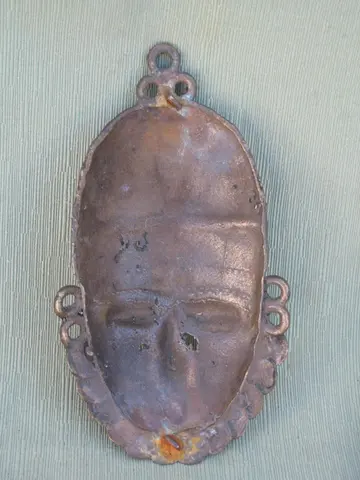
Bronze mask of the type passport that could also be destined to be hung.
BR-16
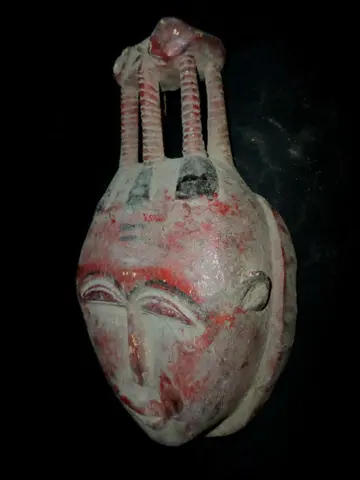
Ancient and curious baulé mask of the so-called "colonial type" for its color painted red with which African loa identified Europeans. gives…
MFANT-171
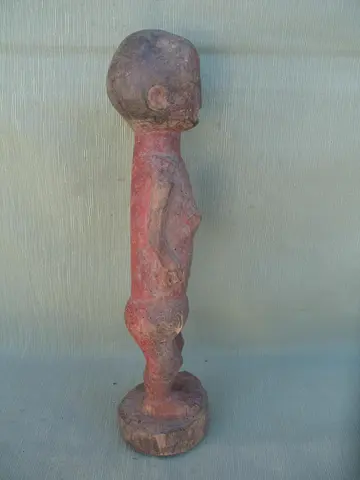
A settler statuette representing a young woman with incipient breasts.
COL-45
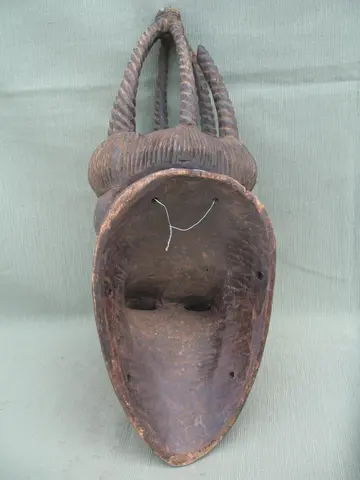
Mask with a human face that looks like a woman with scarifications and sometimes carrying amulets on her headdress.
MFAZ-80
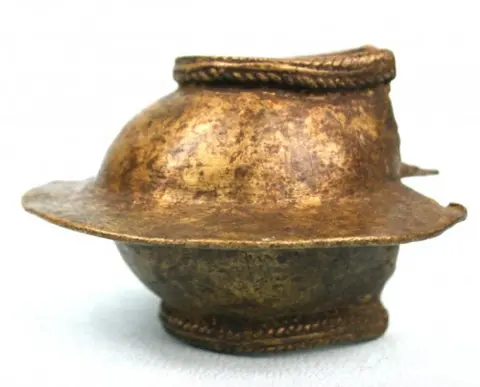
Spherical bracelet, with a wide section on the poles, whose borders are decorated and reinforced with a bow in the shape of…
PYB-30
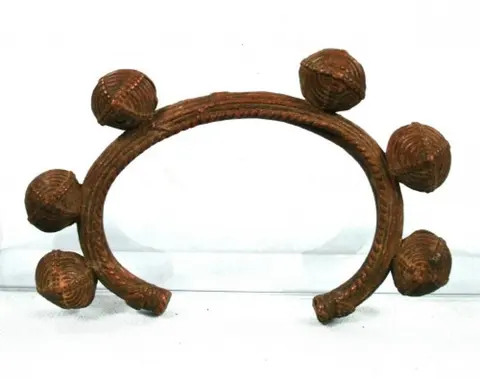
Soy-type ankle bracelet that has been used.
PYB-31
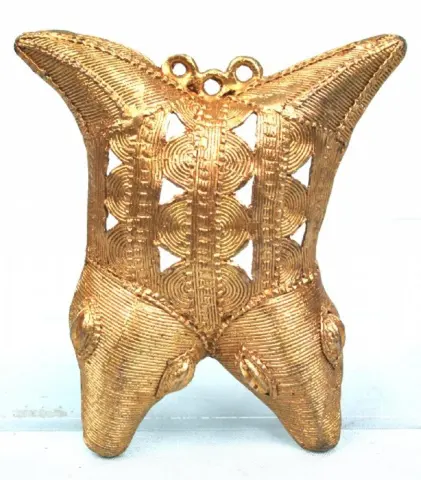
Pendant that has been used by a remarkable in ceremonies.
CYA-13
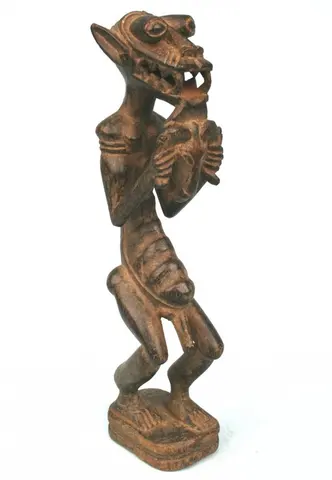
These are the names with which the so-called “monkey beggar” is known.
FSB-2
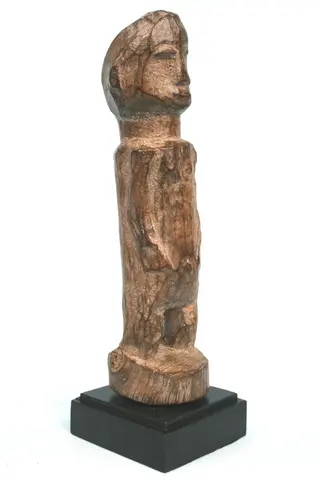
The statues, offerings, votive figures and exvotes are not in Africa an offering dedicated to God or to the gods for a…
FIV-23
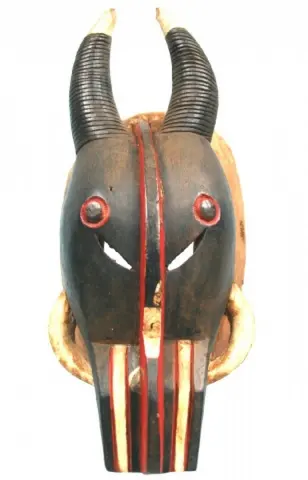
Mask called "buffalo" although in reality, as on numerous occasions in African art, is a mask composed of features of different animals.
MFZ-37
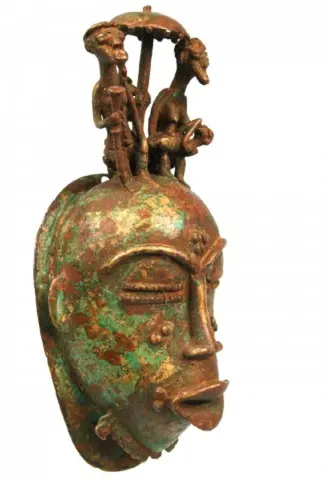
Small bronze mask that demonstrates a great mastery of sculpture and foundry by its filmmaker.
BR-18
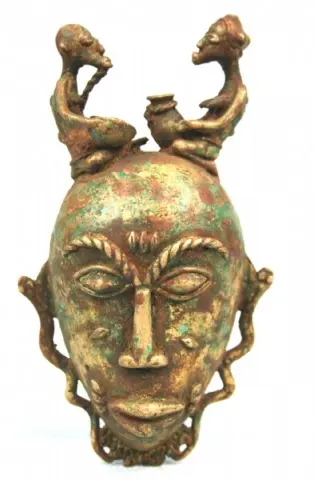
Small bronze mask intended to receive the protection of the ancestors on it represented.
BR-19
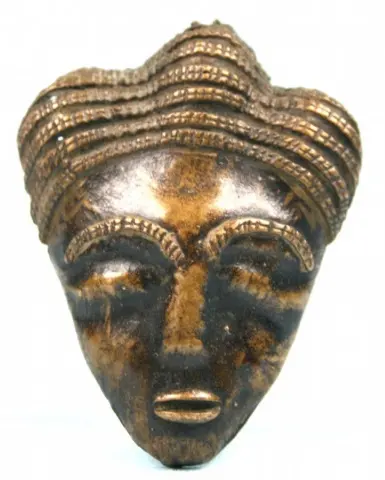
Small masks also called “San Cristóbal”. They are employed by travellers travelling abroad or outside their region.
BR-20
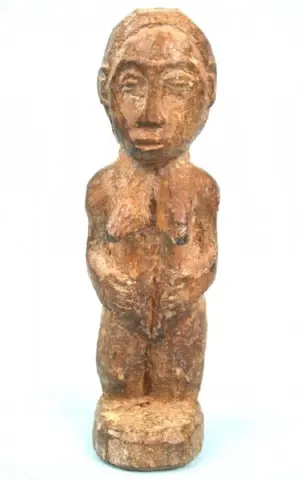
The statues, offerings, votive figures and exvotes are not in Africa an offering dedicated to God or to the gods for a…
FIV-29
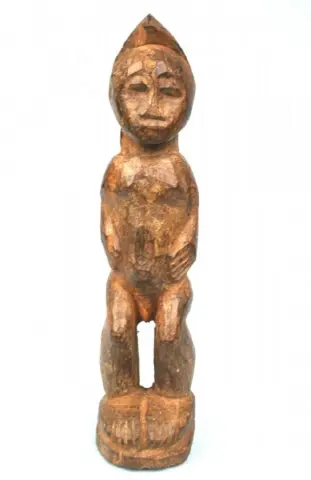
The statues, offerings, votive figures and exvotes are not in Africa an offering dedicated to God or to the gods for a…
FIV-30
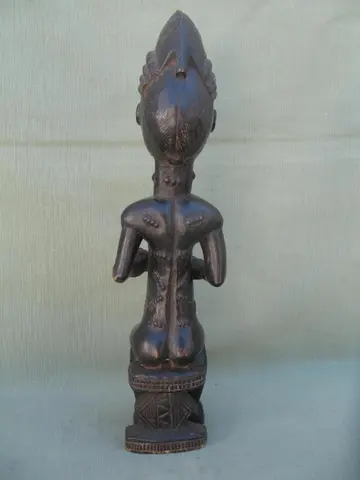
Maternity Baulé Subgroup akouéinstalled in the Yamusukro region, the current political capital of Côte d'Ivoire.
MTR-64
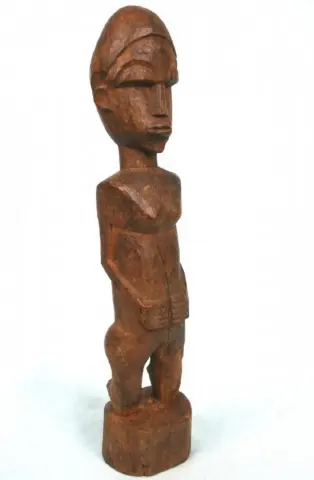
The Baulélike other peoples in Africa, they believe that everyone has a husband or wife in the other world and that they…
EMS-109
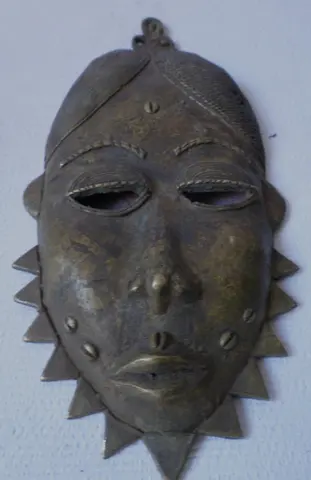
Among the enormous multiplicity of African ethnic groups few have made metal masks.
BR-21
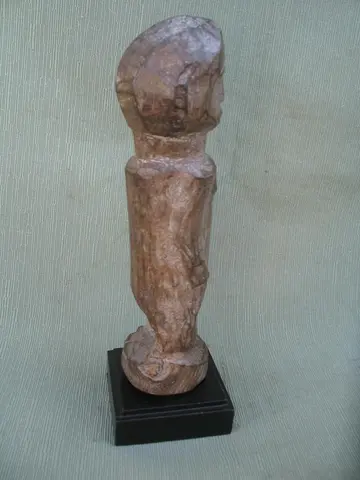
The statues, offerings, votive figures and exvotes are not in Africa an offering dedicated to God or to the gods for a…
FIV-34


