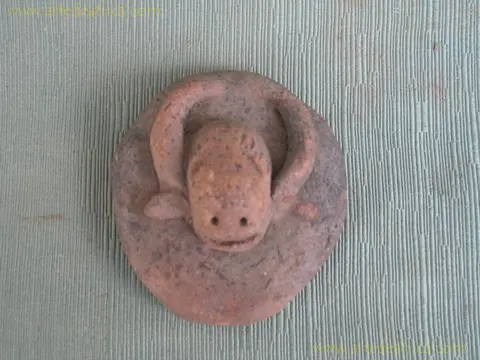
Anthropozoomorph figure
Small terracotta used in divinatory practices, on which a figure with an indefinite character sits, whose head could be that of an…
MYA-18

Text of the original catalogue
The force that is handled in the practice of magic is supernatural but not sacred. It requires a technique and a ritual. Geniuses of nature, the spirits of ancestors, supernatural powers and different divinities are continually manifested to men, but it is necessary that they know how to interpret these manifestations. Spirits can know the mysteries of the supernatural world and as there are many things that escape the knowledge of the common mortals and it is not possible to dialogue with the spirits or ask them the right questions and even less to establish a contact with them, the diviners will be commissioned to perform these tasks in their name, for they are prepared and know the techniques that allow them to establish a contact with beings and forces of the hereafter. The techniques employed are numerous and very different. From oracles of all kinds and ordeals to divination by means of small bones of animals, small sticks or seeds which according to the disposition they acquire on the ground or board when thrown by fortune teller will render the relevant interpretation. Yoruba boards become true works of art. Known are the oracles baulé of mice and divination by means of the footprints left on the sand by the pale fox of the dogon. The fortune teller has drawn on the sand a complicated board with a series of cabalistic signs arranged according to an established order. Attracted by bait, the raven will trample the sand at night leaving traces that will be interpreted by the soothsayer. Reading the entrails of animals or the signs produced by tail nuts or cauris arranged on the different divinatory trays or the movements of a candle flame are some of the many forms of geomance that are commonly used among traditional African societies. The fortune teller knows the technique that allows him to ask the right questions so that he can read and interpret the answers properly. The fortune teller is an important character in traditional, feared and respected societies who earn a living from his work. It is usually independent despite being very close to the court of some kings. They will come to him for all kinds of consultations concerning life and death, the health of animals as well as of people, the fertility of fields as of mothers, about travel, wars, wealth and poverty, all issues that may affect man or nature are within their competence. He is a deep psychologist, a connoisseur of the nature and medicinal virtues of plants, of astrology and especially of mythology. It enjoys great prestige.
51 objects · page 2 of 3
Small terracotta used in divinatory practices, on which a figure with an indefinite character sits, whose head could be that of an…
MYA-18
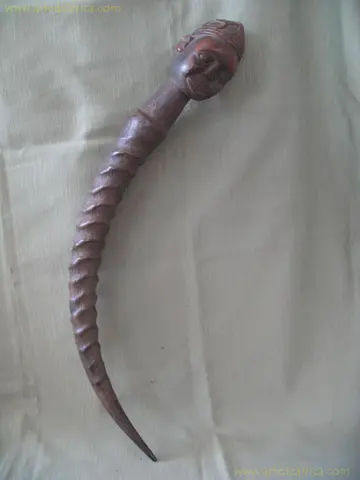
Horn of koba or male hypothragus, antelope horse, which carries inside seeds to mark divinatory rhythms.
MYA-19
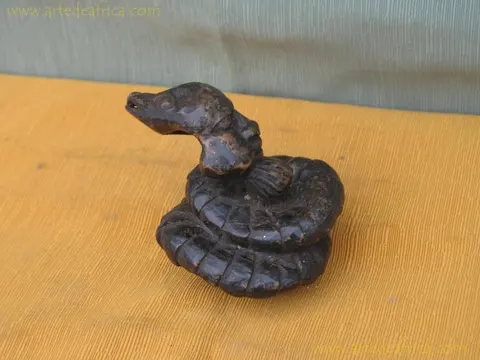
Snake used in divinatory practices. It is the abundant spitting cobra in the West African.
MYA-20
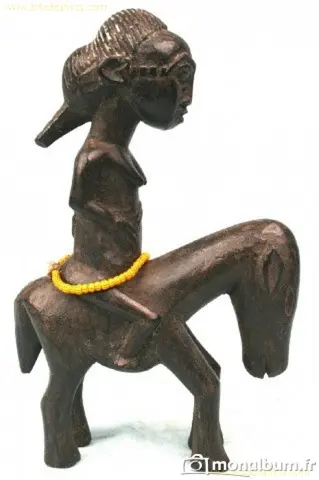
Woman mounted on a horse ride. Ventral escapes and yellow beads necklace at the waist.
MYA-22
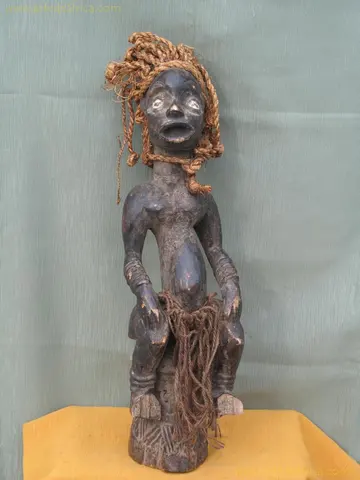
The sacerodotise, like the diviner and the healer or the sorcerer, is responsible for establishing contact with the spiritual forces and beings…
MYA-23
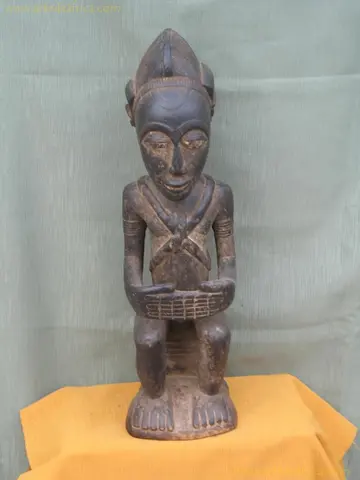
For animistic peoples, most things, especially the elements of nature, have a spirit or a soul.
MYA-24
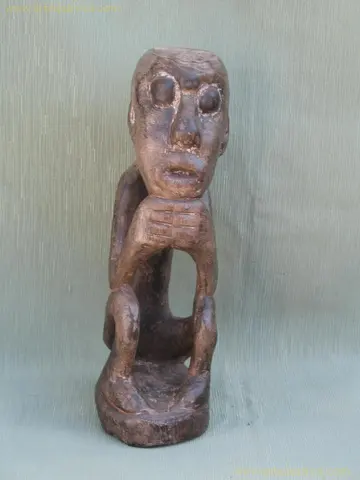
For animistic peoples, most things, especially the elements of nature, have a spirit or a soul.
MYA-25
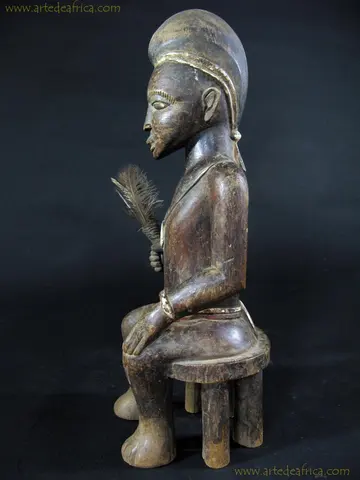
Sitting on his stool, with white tabarrabos and red and white belt is covered with his headdress of fortune teller and healer…
MYA-26
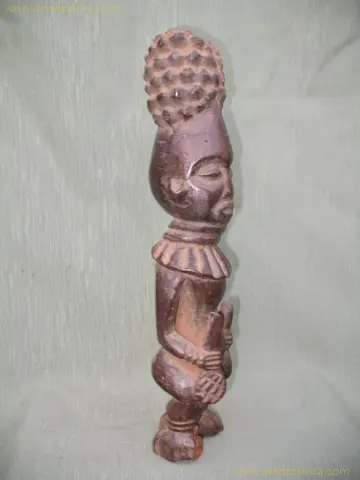
I guess with two bowls of pumpkin that contain the magic pocymes and, in turn, little androgynous figure.
MYA-27
Hat used by sorcerer Dan in its magical-religious and divinatory riatuals.
MYA-37
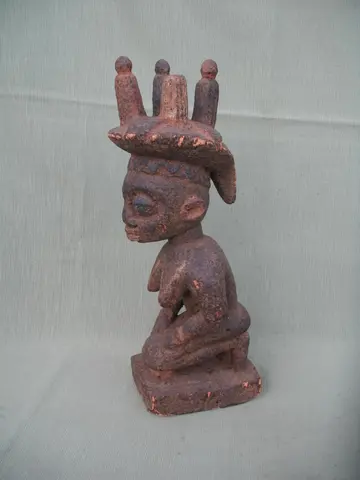
The Gelede cult, practiced mainly by the Yoruba Westerners, it is a cult in honor of living or deceased elderly women.
MYA-30
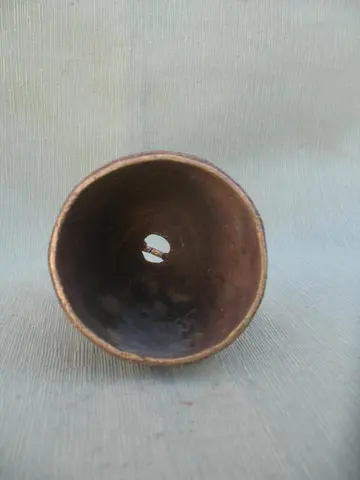
Bronze bell intended for ritual and divinatory uses. He's missing the badass.
MYA-28
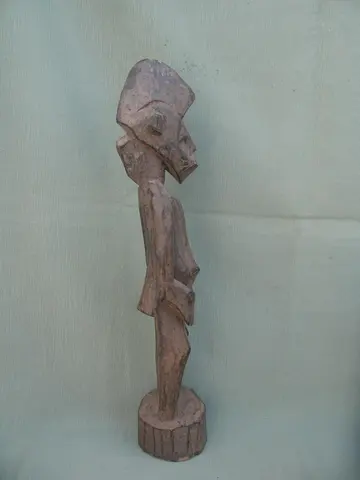
Small statue Ndebele or Pombibele. These small statues ndebele are used by female society fortune tellers Sandogo.
MYA-29
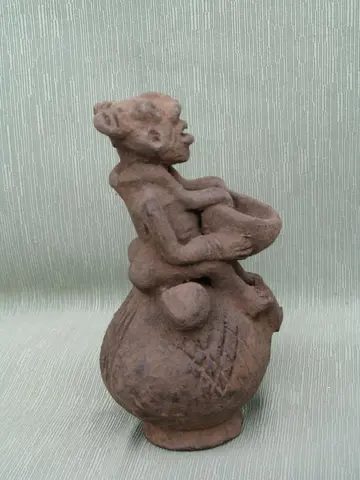
Small supply vessel, provided from western Cameroon, in which a small genius of the earth, prospector, appears sitting, contrary to the usual…
MYA-31
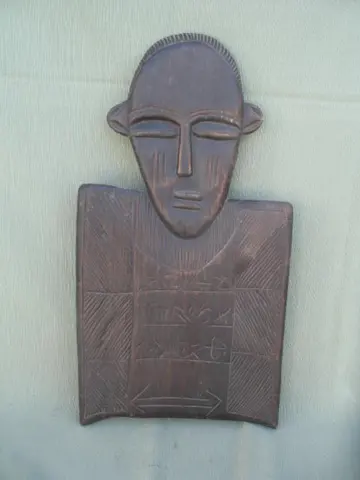
By means of this table the fortune teller consults the spirits whose answers will help him to know and solve multiple problems…
MYA-33
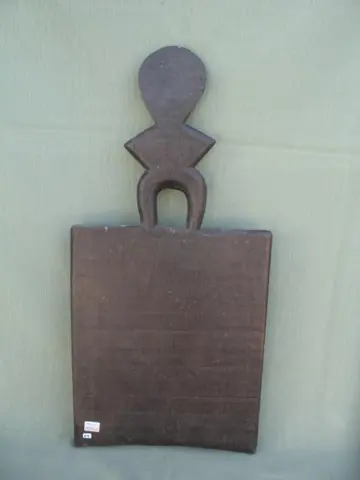
By means of this table the fortune teller consults the spirits whose answers will help him to know and solve multiple problems…
MYA-34
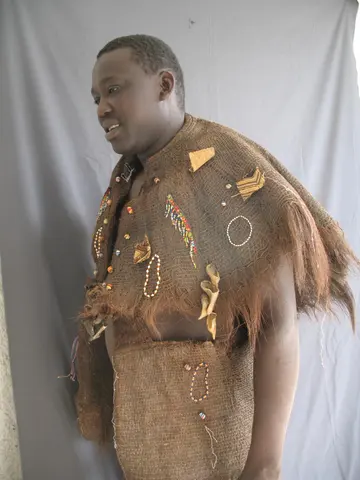
Chaqueton woven with roots and adorned with amulets of animal nails and beads, worn by the sorcerer for his magic sessions.
MYA-35
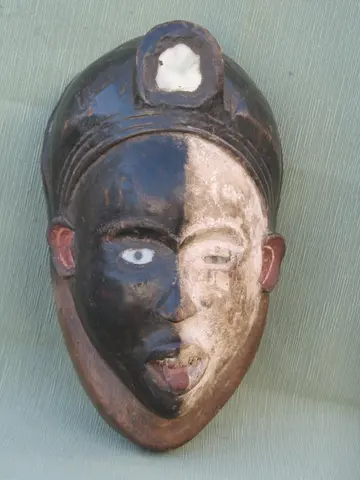
This sorcerer mask features two totally different half-faces, not only the black or white color but the factions of each half-face, highlighting…
MYA-36
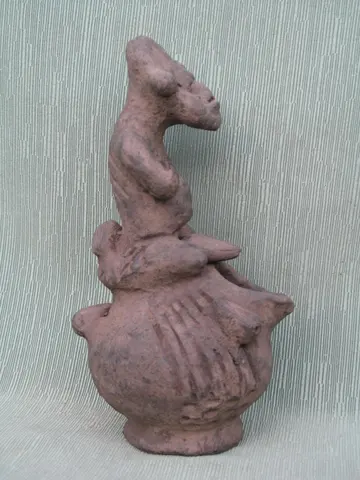
Small container from western Cameroon. Tikar are a small Pygmy village that stands out for its practices of magic, especially its women.
MYA-38
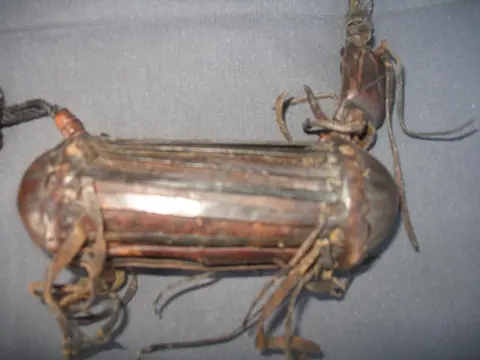
Gri-gri or hunter amulet of a great rarity, formed by a leather cylinder decorated with thin sheets of the same material. is…
MYA-39
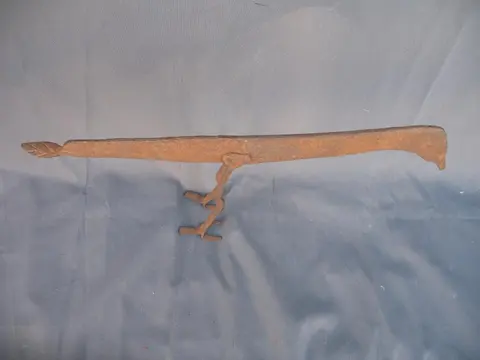
Forged iron bird intended for divinatory practices. The legs are attached to the body by means of iron rivets.
MYA-40
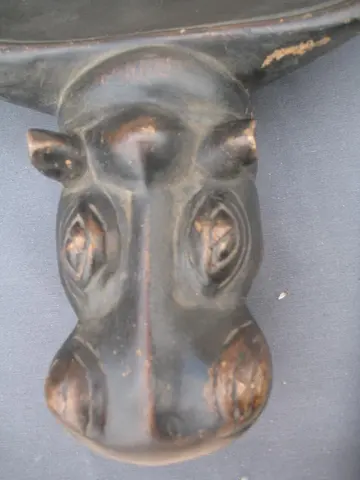
Tray for divinatory practices topped by a large hippopotamus head, an animal that like all those related to water has a great…
MYA-41

The archer is an important character in African ethnicities.
MYA-42

Some of the great African animals are protagonists of many myths.
MYA-43


