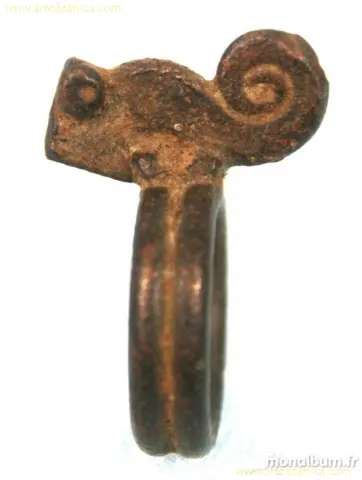
Ring With Camaleon
An ancient bronze snupho ring, adorned with a chameleon, one of the five primordial animals of its cosmogony, symbol of wisdom and…
JYS-1

List of the historical catalogue
Text and organisation of the original catalogue · Jesús Arrimadas Saavedra
Ornamentation is not just a female symbol. Kings and notables make abundant use of gold, copper or brass jewels in addition to other metals. The jewels denote the importance of the wearer. Female ankle bracelets, depending on their weight and size, indicate that the range of their wearers frees them from ordinary household chores while forcing them to walk in a special way that increases their appeal and seduction power. Arms, legs and ankles as well as neck, forehead or nose, or size and torso can be adorned with bracelets, necklaces and other jewelry. There are pearls and necklaces exclusively reserved for the use of kings and high dignitaries, as is the case in Benin. Brass and copper jewelry, the so-called African bronze, manufactured by the method of lost wax, are widely used in Africa, as are garments or ornaments decorated with cauris or beads and beads bracelets and beads of ceramic. These are often recovery metals. The cauri, has served as currency, in some places, until well into the century XX. It is a symbol of female fertility, indispensable element in divinatory and magical rites, and habitual ornament of statues, masks and garments. The bracelets, like the other jewels, are part of the family heritage, they are part of the dowry in most cases and customary barter currency in almost all regions. Likewise many bronze bracelets are coin, part of the dowry and always family heritage.
81 objects · page 1 of 4
An ancient bronze snupho ring, adorned with a chameleon, one of the five primordial animals of its cosmogony, symbol of wisdom and…
JYS-1
Pin intended to hold the hair on the hairstyles of the mossi woman.
JYS-2
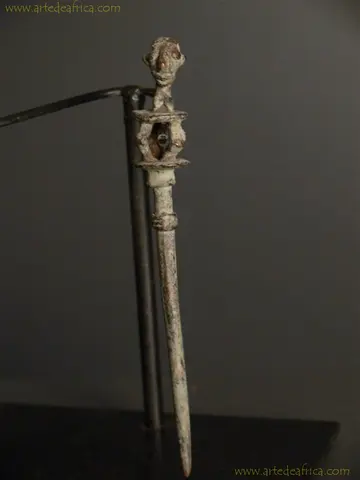
Pin intended to hold the hair of women, used in important ceremonies.
JYS-3
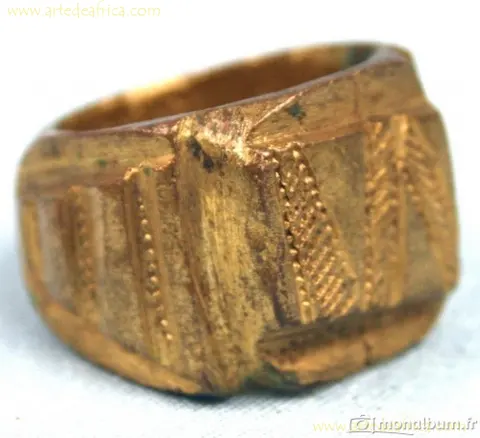
Golden ring of dignitary Akan. Old object that has been used.
ANLL-1
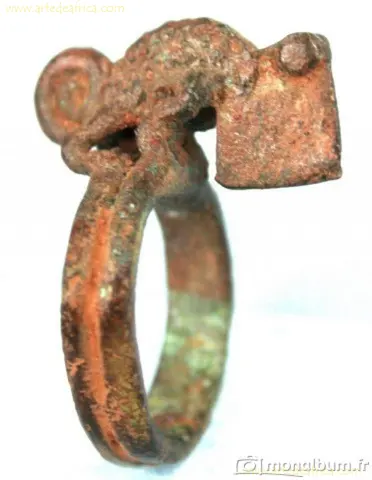
Old bronze ring whose end represents a chameleon, one of the mythical animals of the senufo cosmogony.
ANLL-2

This type of ring represents Sankofa, a migrador bird that is the symbol of the wisdom, knowledge and memory of peoples.
ANLL-3
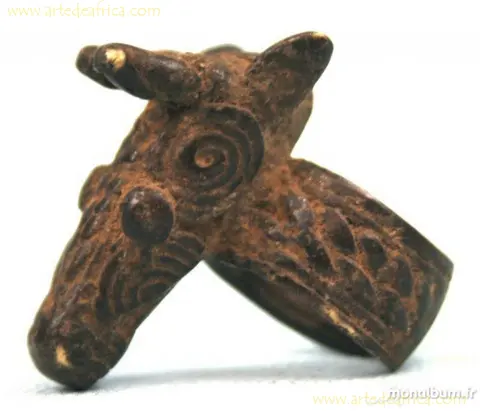
Old bronze ring depicting the head of a horse, with numerous details.
ANLL-4
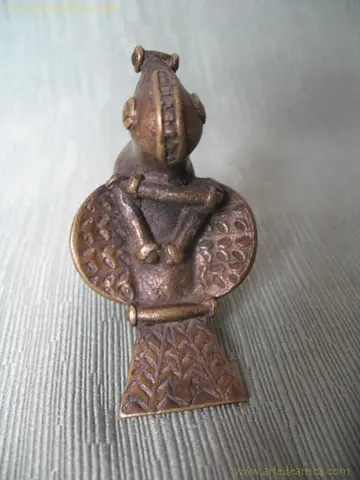
Ancient bronze ring from the village of Sakassou, bastion of the Baule culture.
ANLL-5
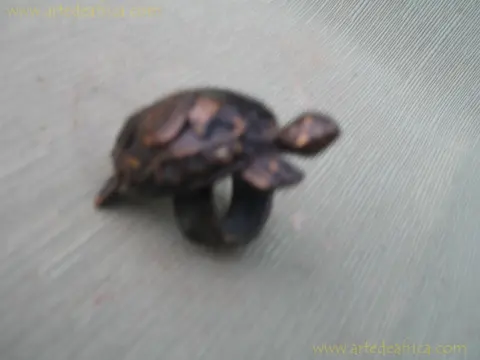
Ring with a turtle, one of the primordial animals of the dogon cosmogon.
ANLL-6
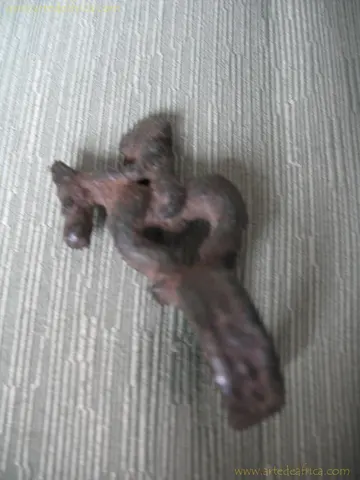
Large ring with a small base or platform on which stands a man riding a horse representing the Hogon, the dogon's religious…
ANLL-7
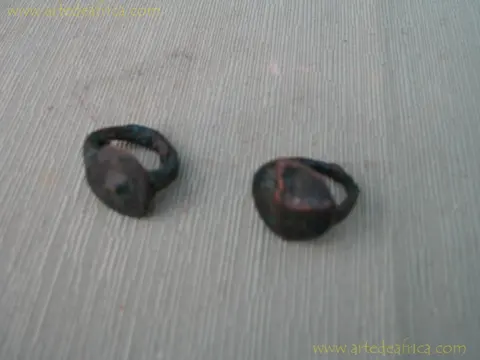
Old dogon rings topped with circular seals.
ANLL-8
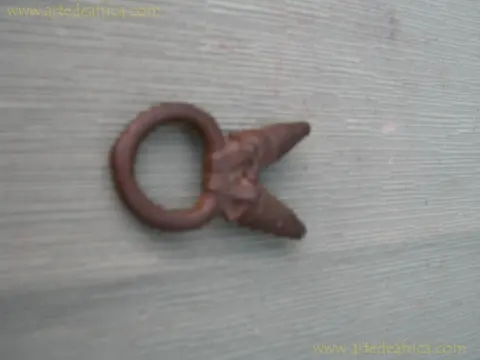
Ring of dignitary presenting two striated cones looking in the opposite direction.
ANLL-9
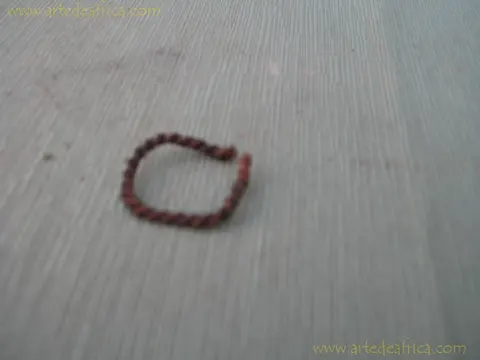
Simple ring made of two twisted copper threads. This type of amulet ring is used in most ethnicities of West Africa.
ANLL-10
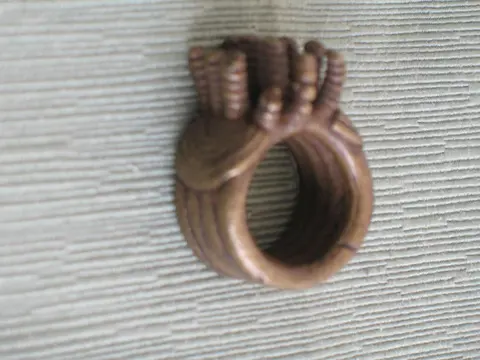
Remarkable ring, formed by twelve small ringed bars of difficult interpretation.
ANLL-11
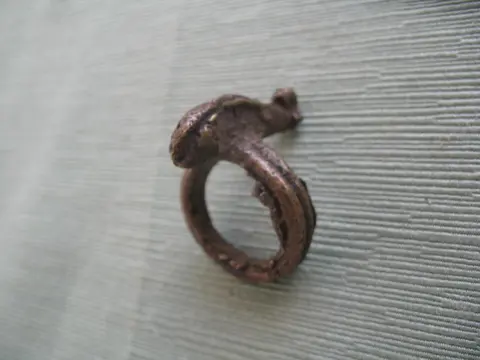
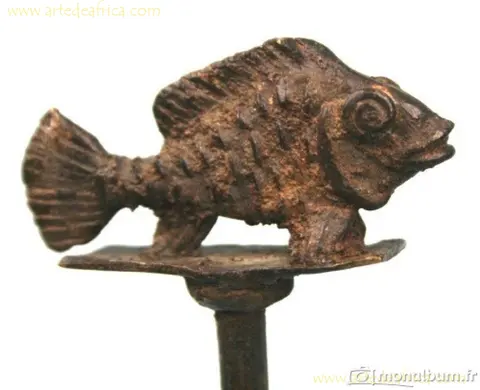
Ring of double ring, rough realization, representing a fish.
ANLL-12
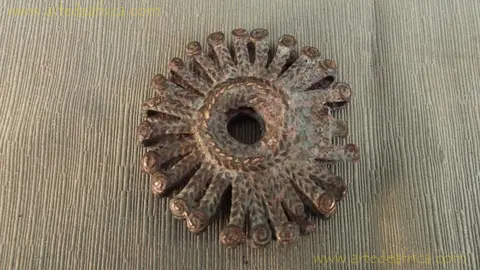
These small pieces have for the Dogon the same sacred value as large wooden statues or masks or other iron objects.
CYA-1
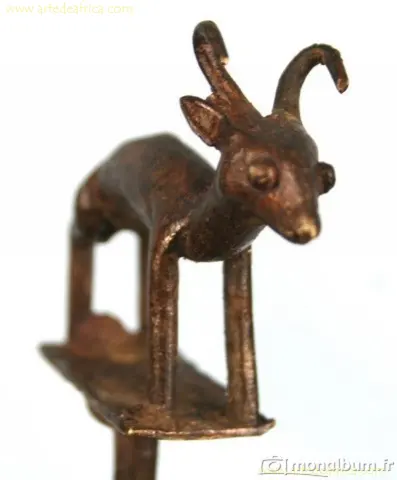
Pin for holding the hairstyles of the Mossi woman, topped by a small figure representing a gazelle.
CYA-2
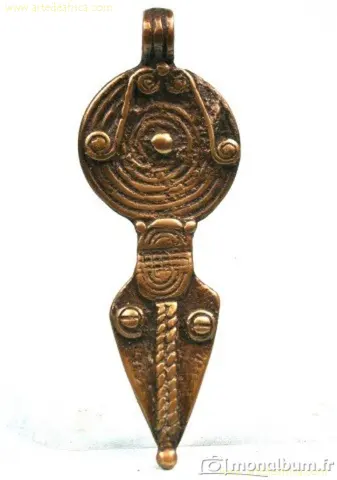
The Gan, former kingdom in southwestern Burkina Faso, apparently originally from Ghana, arrived at the place led by their king Kerumono in…
CYA-3
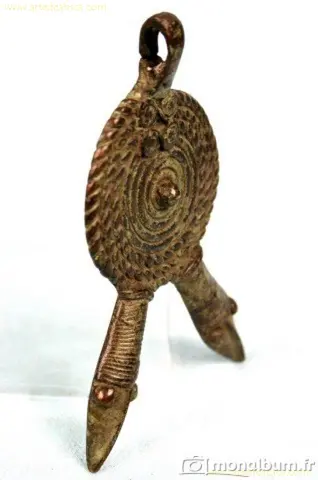
The Gan, former kingdom in southwestern Burkina Faso, apparently originally from Ghana, arrived at the place led by their king Kerumono in…
CYA-4
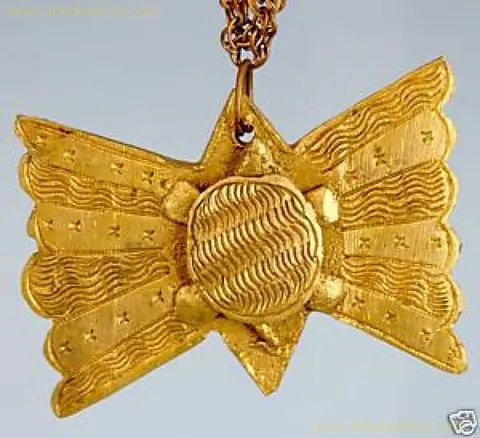
Royal necklace of ceremony intended for the dignitaries of the court at important ceremonies.
CYA-5
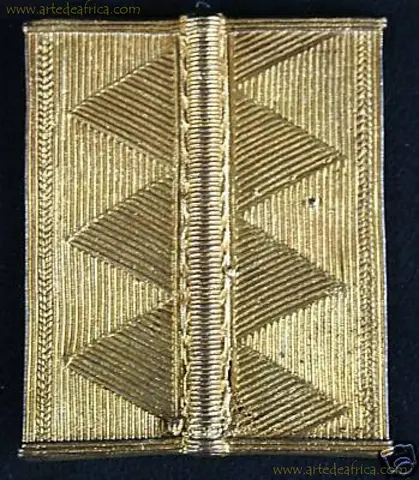
Fine work to the wax ordered and filigree. Rectangles with geometric akan motifs.
CYA-6
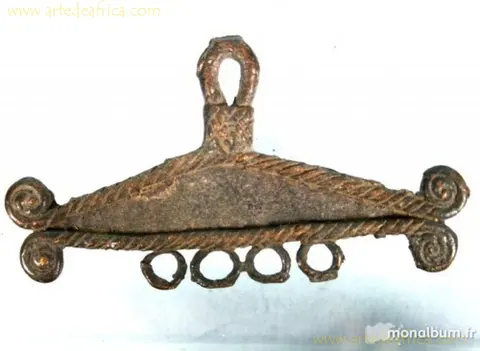
Pendant used by the Lobi women to ensure protection against dangers and diseases while serving as ornament that enhances their rank.
CYA-7
Pin intended to hold the hairstyles of women, consisting of three circles in the form of a tree with spiral drawings.
CYA-8
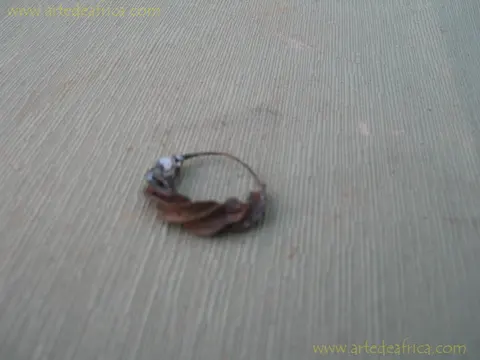
Simple brass slope used by women peul.
CYA-9


