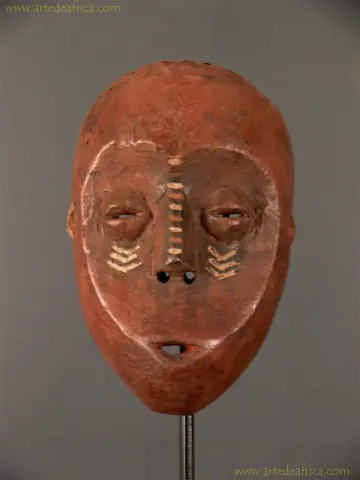
Facial Mask
Small initiation mask like, it indicates the reddish color of your wood.
MFANT-154

List of the historical catalogue
Text and organisation of the original catalogue · Jesús Arrimadas Saavedra
We grouped all these categories of masks so as not to repeat the explanations contained in the part “Black-African artistic ethnography”. Agricultural masks are part of fertility masks. Fertility of fields and women are very united values in the animistic world. On many agricultural festivities the rites are destined to ask for the fertilizing rain of the fields to obtain good harvests or to thank the fruits received from nature and the masks dance as an integral part of these rites, but they also celebrate the fertility of the woman, dispenser of life, worker and caretaker of the fields. A large majority of masks participate in these festivities without being exclusively agrarian masks, as are the Ty Wara masks of the Bamana or BambaraThe same applies to initiation masks, although there is greater specialization in this case. Hunter masks, despite this name, do not mean that they are used during hunting, but belong to the hunters’ powerful secret societies. These dances participate both in the agrarian festivities and in funeral ceremonies and in the cults of ancestors. Many zoomorphic and anthropozoomorphic masks are agrarian and hunter masks and, contrary, most initiation masks are anthropomorphic masks. Over time many masks have evolved and changed functions. Masks that were sacred in their day have become playful masks. In some cases, less frequent, playful masks have become sacred masks by making them ported or owned by a notable ancestor. But it is difficult to chant the masks in a single category, as many of them participate in the most varied activities. Ventral masks celebrate and parody the different phases of female fertility while those of disease have the negative effects of some evil spirit. Today, most of the masks have lost their sacredness and participate in playful activities on the occasion of local festivities or the visit of important characters as young generations have moved away from the traditions of their ancestors. The passport masks identify their owner as a member of a designated secret society or ethnic group while allowing him access to ceremonies held in sacred forest or accompanying him in the journeys with a protective value.
171 objects · page 5 of 8
Small initiation mask like, it indicates the reddish color of your wood.
MFANT-154
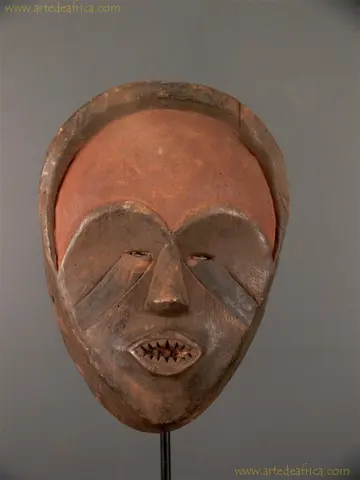
It dominates the Tukula red and brown pigmentation on which stand out large eyebrows in the form of swallow with wings deployed,…
MFANT-156
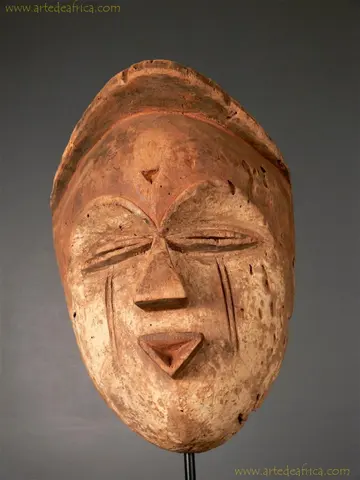
The masks of the Vuvi they are characterized by the sobriety of the style of their masks in which no important quality…
MFANT-157
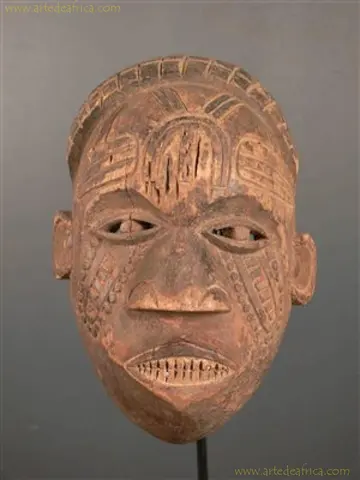
Facial mask that participates in the initiation of adolescents and funeral ceremonies.
MFANT-158
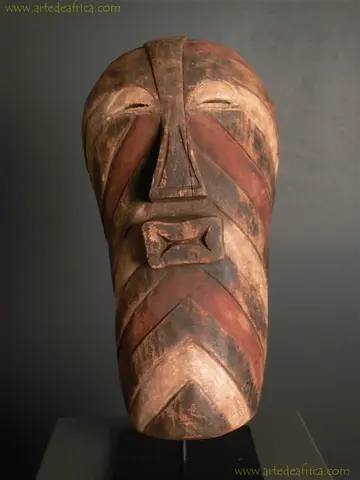
These striated masks dominated by the red colors of strength and blood, white of purity and the dead and black of shadows…
MFANT-159
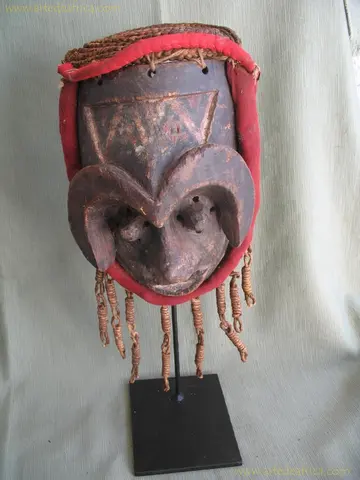
Its great ciliary arches are an evocation of the ancient buffalo horns that adorned the warriors' heads.
MFANT-166
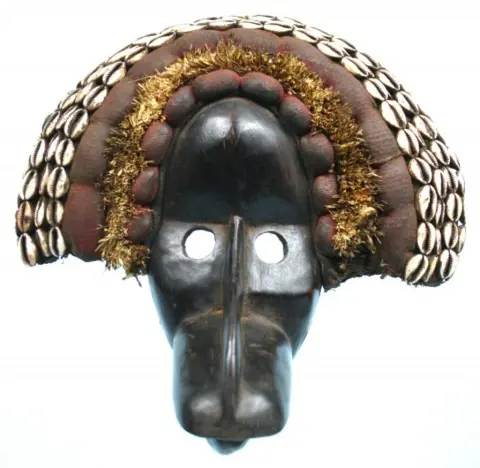
It is a mask of the society of hunters that mainly participates in the initiation rites of adolescents.
MFZ-38
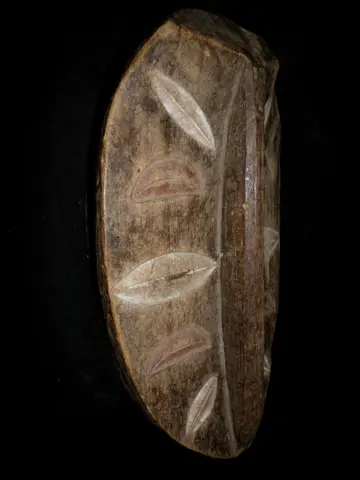
This mask is characterized by three pairs of eyes placed symmetrically two to two.
MFZ-39
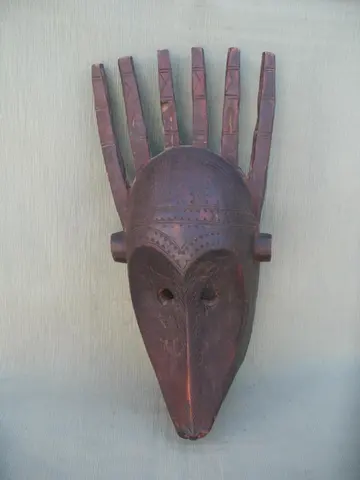
Animism among the Bambara is characterized by its secret societies of “N’Tomo” and “Koré”. “N’Tomo” is the masculine spirit that protects…
MFAZ-81
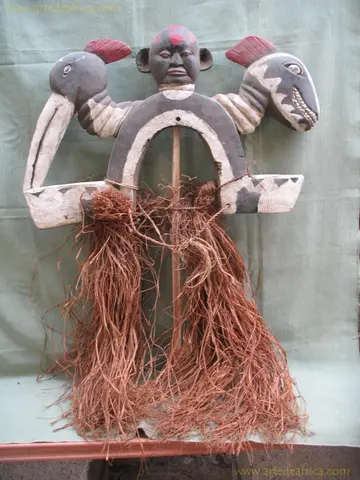
The Bidjogo always present in their masks an animal or a fish.
MFG-21
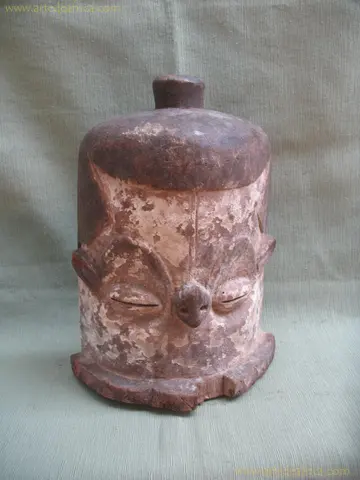
Although the appearance of this mask is that of a face mask it is actually a helmet mask like all Kipoko masks.
MYL-13
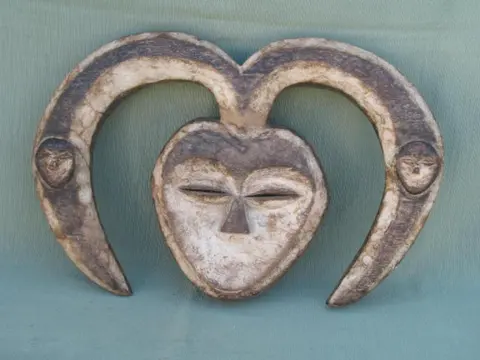
The mask called Ekuk, heart-shaped, represents a forest genius in the form of an antelope of great horns.
MFAZ-82
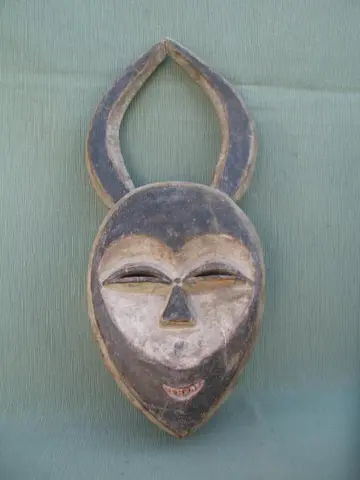
The mask called Ekuk, heart-shaped, represents a forest genius in the form of an antelope of great horns.
MFAZ-83
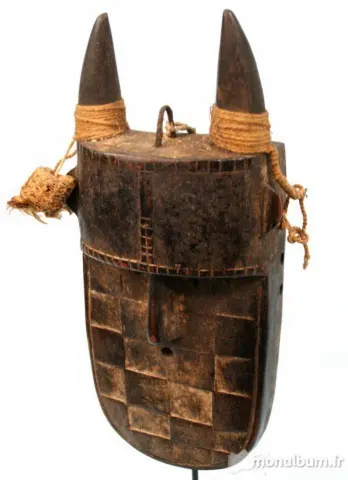
These masks are used interchangeably in Liberia and Sierra Leone.
MFAZ-86
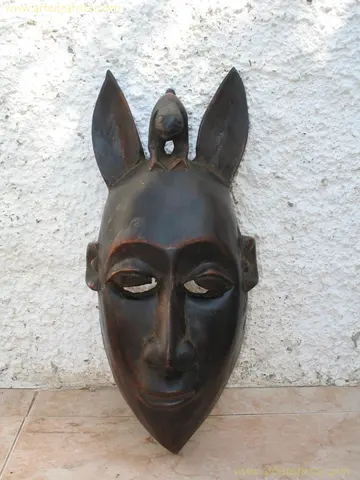
“Koré” is the spirit of the waters.
MFAZ-53
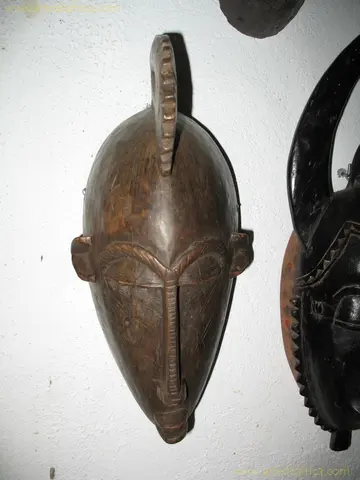
The Bambara treat their masks as if they were people.
MFAZ-12
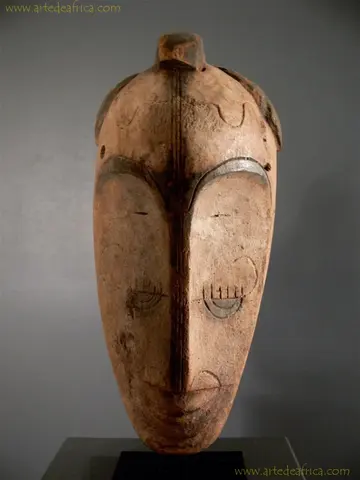
This type of anthropomorphic mask was used by male society Ngil This secret society was in charge of initiations and fought against…
MFANT-153
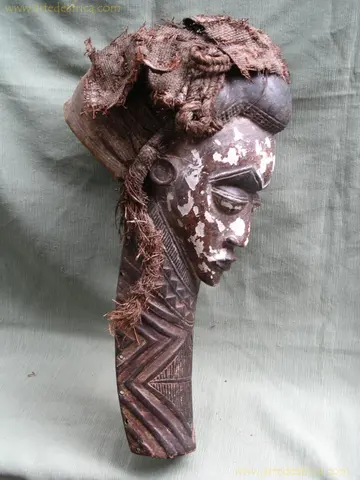
Former mask hangs from the Democratic Republic of the Congo, Zaire for many years.
MFANT-127
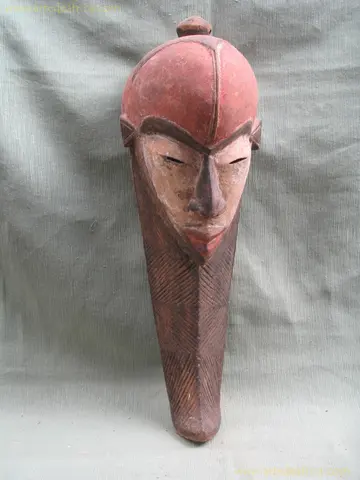
Male figure with slight occipital deformation, buffed front.
MFANT-128
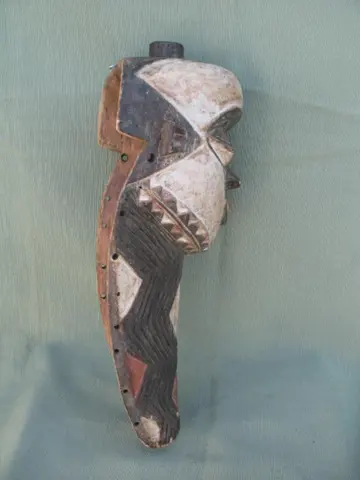
Former mask hangs from the Democratic Republic of the Congo, Zaire for many years.
MFC-5
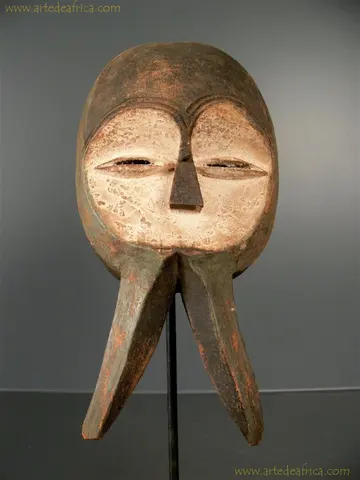
Related to the Kota They live in the north of the People's Republic of Congo.
MFAZ-70
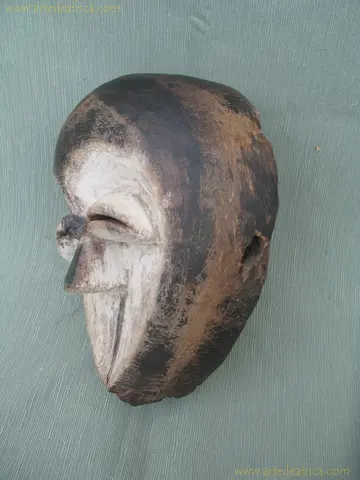
The masks pibibuzeare flat, often heart-shaped, like many of the masks of this African region, dominates the white color, which can alternate…
MFANT-110
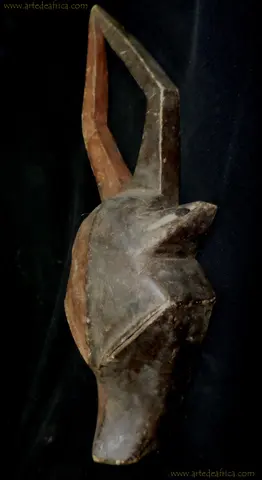
Zoomorpha mask representing the spirit of the antelope. is a flat mask with rhombus-shaped horns.
MFZ-34
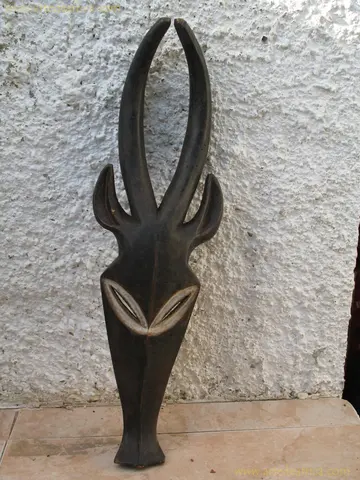
Related to the Kota They live in the northern part of the People's Republic of Congo and in the eastern part of…
MFZ-6


