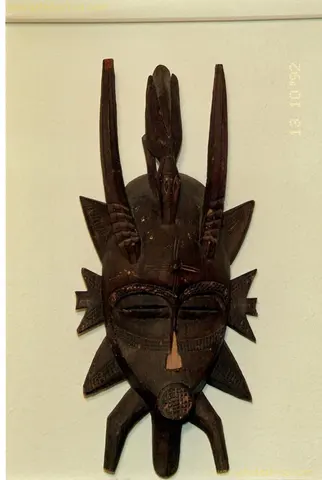
Kpelie mask
Not in all regions call Kpelié These masks, some of them.
MFAZ-34

List of the historical catalogue
Text and organisation of the original catalogue · Jesús Arrimadas Saavedra
We grouped all these categories of masks so as not to repeat the explanations contained in the part “Black-African artistic ethnography”. Agricultural masks are part of fertility masks. Fertility of fields and women are very united values in the animistic world. On many agricultural festivities the rites are destined to ask for the fertilizing rain of the fields to obtain good harvests or to thank the fruits received from nature and the masks dance as an integral part of these rites, but they also celebrate the fertility of the woman, dispenser of life, worker and caretaker of the fields. A large majority of masks participate in these festivities without being exclusively agrarian masks, as are the Ty Wara masks of the Bamana or BambaraThe same applies to initiation masks, although there is greater specialization in this case. Hunter masks, despite this name, do not mean that they are used during hunting, but belong to the hunters’ powerful secret societies. These dances participate both in the agrarian festivities and in funeral ceremonies and in the cults of ancestors. Many zoomorphic and anthropozoomorphic masks are agrarian and hunter masks and, contrary, most initiation masks are anthropomorphic masks. Over time many masks have evolved and changed functions. Masks that were sacred in their day have become playful masks. In some cases, less frequent, playful masks have become sacred masks by making them ported or owned by a notable ancestor. But it is difficult to chant the masks in a single category, as many of them participate in the most varied activities. Ventral masks celebrate and parody the different phases of female fertility while those of disease have the negative effects of some evil spirit. Today, most of the masks have lost their sacredness and participate in playful activities on the occasion of local festivities or the visit of important characters as young generations have moved away from the traditions of their ancestors. The passport masks identify their owner as a member of a designated secret society or ethnic group while allowing him access to ceremonies held in sacred forest or accompanying him in the journeys with a protective value.
171 objects · page 3 of 8
Not in all regions call Kpelié These masks, some of them.
MFAZ-34

Not in all regions call Kpelié These masks, some of them.
MFAZ-35
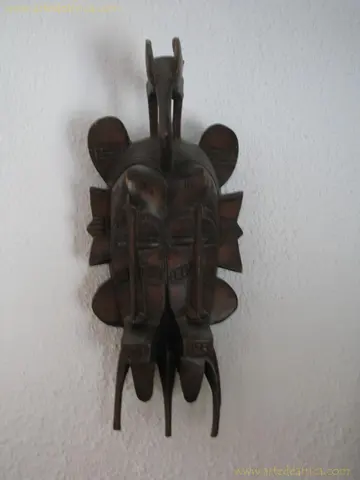
Not in all regions call Kpelié These masks, some of them.
MFAZ-36

The ekoi or ejagam are a Bantu village established in Cameroon and mainly in Nigeria, in the Cross River area.
MCYC-36
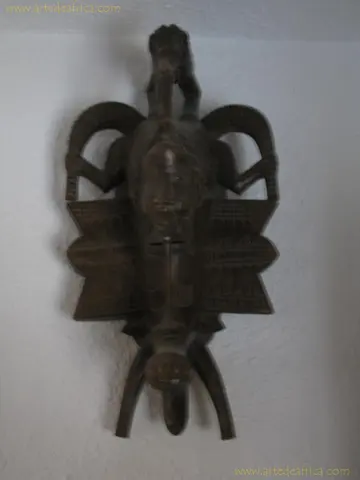
Not in all regions call Kpelié These masks, some of them.
MFAZ-37

Male head of skin. ekoiThey once made these heads out of their enemies and human skins.
MCYC-37

Not in all regions call Kpelié These masks, some of them.
MFAZ-38
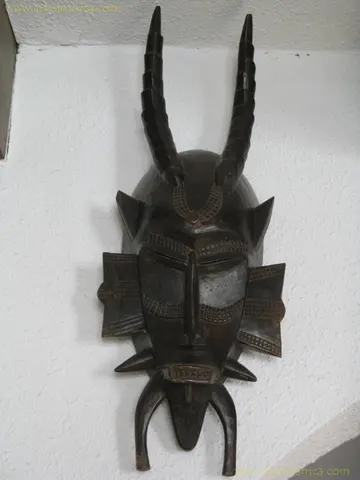
Not in all regions call Kpelié These masks, some of them.
MFAZ-39

Mask used in initiation and circumcision ceremonies.
MFANT-40

Related to the senufo, they have such a similar style that they often confuse both creations.
MFAZ-40
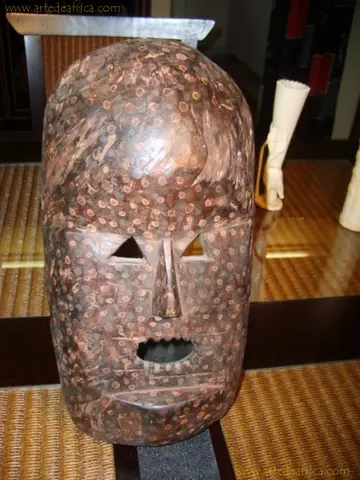
Mask from the north of the Kivu region, which takes its name from Lake Kivu. west of Congo.
MFANT-41

Related to the senufo, they have such a similar style that they often confuse both creations.
MFAZ-41
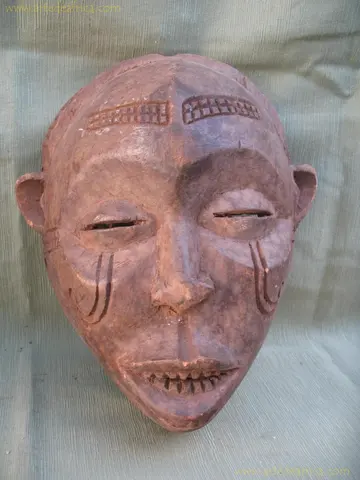
Pale burgundy mask.It has an oval figure, narrower at the bottom.
MFANT-42

The Lengola are part of the big family Mbole and like them, they are installed on the left bank of the Zaire…
MFANT-43

They are quite rare masks, highlighting an elongated mouth mask and rounded eyes in the middle of concave eye orbits that resemble…
MFANT-44

The Lega They have different types of masks, some are worn by the head or shoulder, or hand masks or on the…
MFANT-45
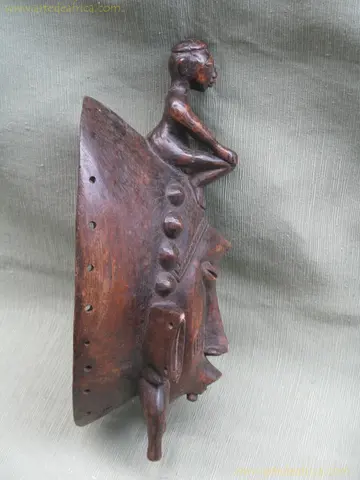
Kpelié mask topped by the figure of a teenager, indicating his employment in initiation rites.
MFAZ-45

N’TomoIt is the masculine spirit that protects children from the male sex before their integration into the adult world and society.
MFANT-46

The secret Bwiti association ensures the union of the group.
MFAZ-47

Loa Djimini They paid an expensive tribute for opposing Samory's canquest, which is why very few artistic manifestations have come to us,…
MFAZ-52

A five-horn mask belonging to the secret society of the Ntomo, which represents that the human being is obliged to work to…
MFAZ-54

The mask of initiation, of the so-called Lukungun, that is, they can belong to private owners and be transmitted between relatives who…
MFANT-57

Initiating mask, with stratifications in the temples and in the eyebrow.
MFANT-58

Related to the Kota They live in the north of the People's Republic of Congo and in the northeast of Gabon.
MFANT-59


