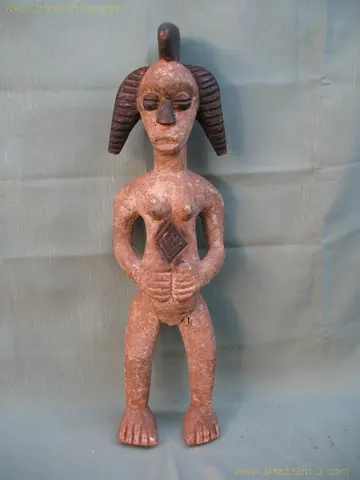
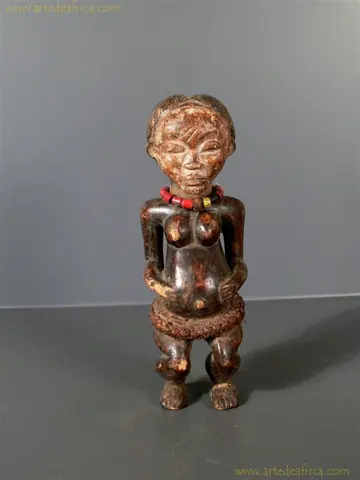
Naked woman
Statue of a naked woman who can represent an initiated young woman.
EFM-10

Text of the original catalogue
Originally from the Congolese region of Kassai, the Punu or Bapunu (plural of Punu), Bantu people, emigrated in the century XVIII to the south of Gabon progressively occupying areas of savannah and Ngunié basins. And although they are still present in a good number in the Congo it is mainly in Gabon where they are most represented, reaching the 25% of the total population of the country, which makes them the second ethnic group after FangFor a long time ethnologists have confused them with the Mpongwé because of the mukuyi masks. The social structure of the Punu is based on the exogamic clans that form independent villages, under the direction of a village chief or head of the land. The family regime is matrilineal and at the same time patrilocal, that is to say that the marriage lives in the house of the husband's father. But if the father of the family dies then they will go to live at the mother's uncle's house. It is the uterine uncle who is responsible for the education of the children of the marriage. The marriage is mainly contracted with a niece of the father's family and in that case the uncle of the bride recovers the dowry that she invested in her education. The inheritance was also transmitted by the uterine uncle. Each of the nine Punu clans, represented by the front rhombus of the mukuyi masks, are presided over by an ancestor. And these masks represent the mothers of the clan and their function is to establish a bond between the living and the dead by capturing the spiritual strength of the latter. They practice the cult of ancestors and protective geniuses and to establish social cohesion they resort to the initiatic societies being the mukuyi the most important. These secret societies help village chiefs to maintain social order and fight sorcery. As in many other villages, the twins, water geniuses, are the subject of special attention even though in times past one of them was killed to compensate for this disorder of nature and buried with many attentions to prevent it from the afterlife from harming the living.
28 objects · page 1 of 2
Statue of a naked woman who can represent an initiated young woman.
EFM-10
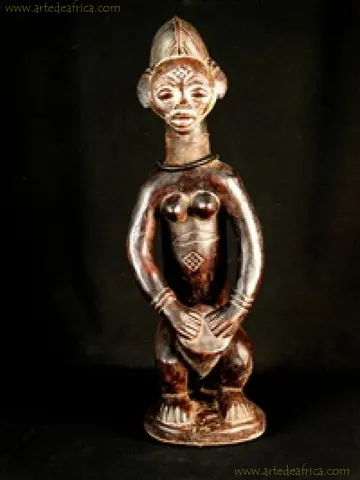
Strange figure of a slender woman playing the drum since it is the men who usually play this instrument both in ceremonies…
EFM-14
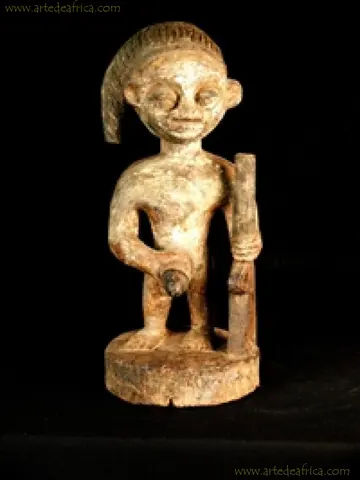
The hunter is one of the most important characters in traditional African societies.
EMS-26
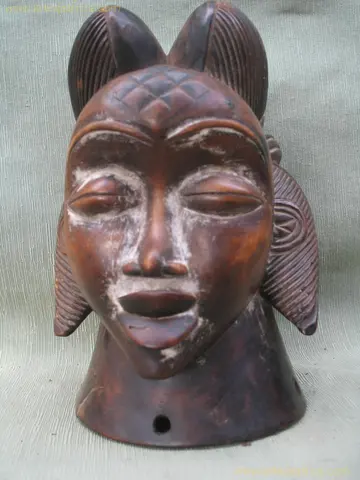
Small Njabi scimer of great beauty of lines and dark honey color.
MCYC-17
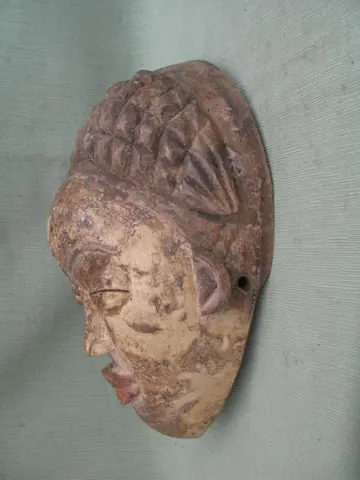
Curious mukuyi mask lacking the usual romboidal scarifications in front and temples.
MFANT-101
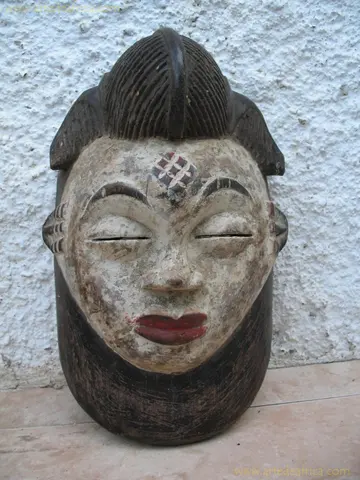
It's a mask that represents the female face of a young woman.
MFANT-104
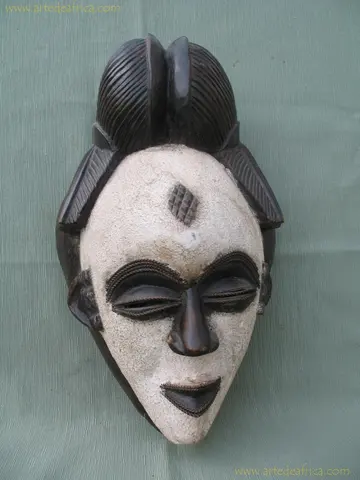
Curious punu mask that differs considerably from the usual mukuyi masks.
MFANT-108
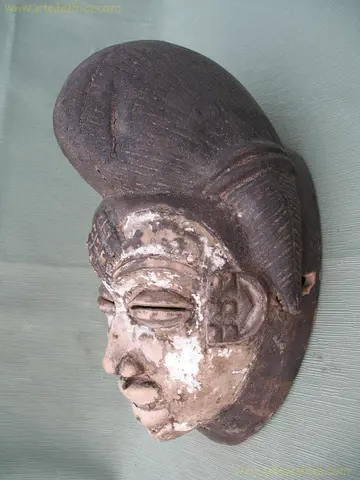
Ancient punu mascra that accuses the passage of time and use, with great loss of the pigmentation of kaoli letting see the…
MFANT-109
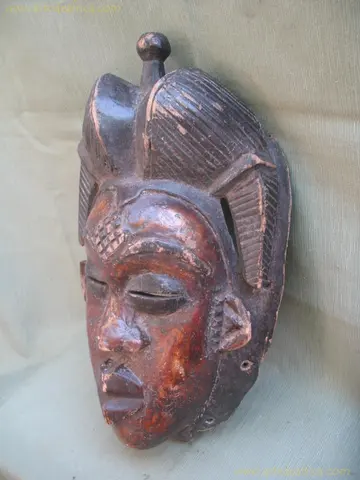
An old punu mask that expresses a majestic serenity. black hair in two cokes and two sidetails.
MFANT-113
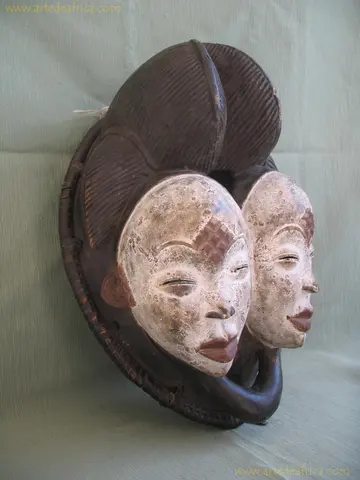
Mask intended to worship the twins, is front page by the initiated members of society Moukouji on the occasion of the funerals.
GML-4
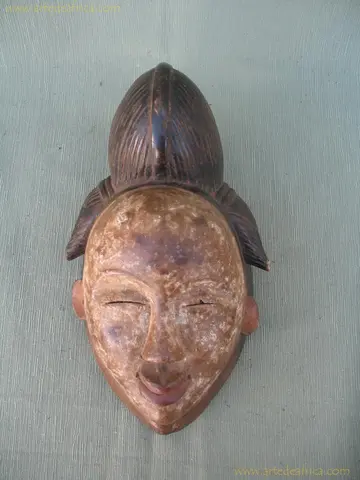
It's a mask that represents the female face of a young woman.
MFANT-124
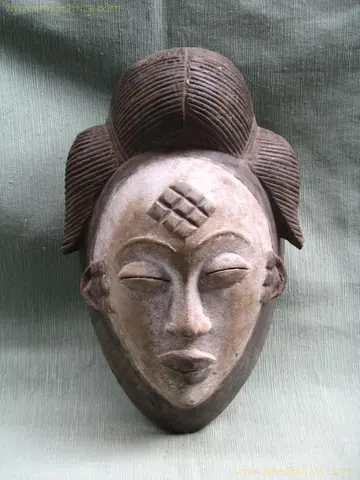
It's a mask that represents the female face of a young woman.
MFANT-126
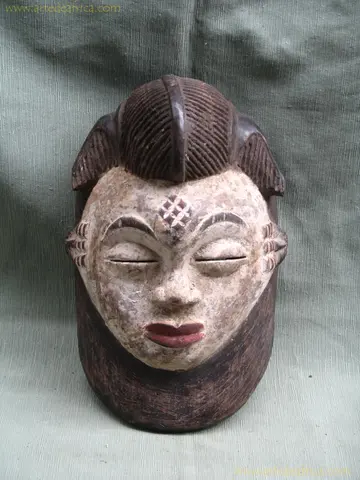
The Lumbo masks are characterized by a central bow and two side hairstyles.
MFANT-129
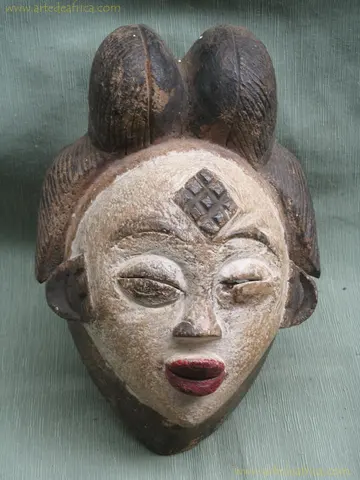
It's a mask that represents the female face of a young woman.
MFANT-131
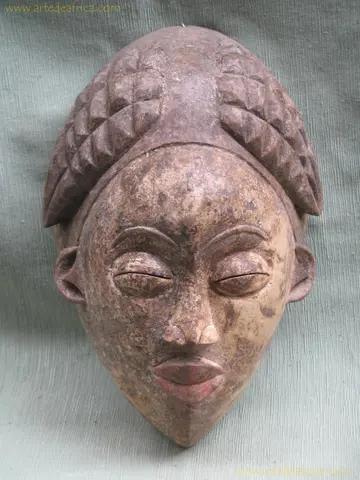
Curious mask that breaks with the canons of the ethnic group by not presenting scarifications or the classic style of coca.
MFANT-132
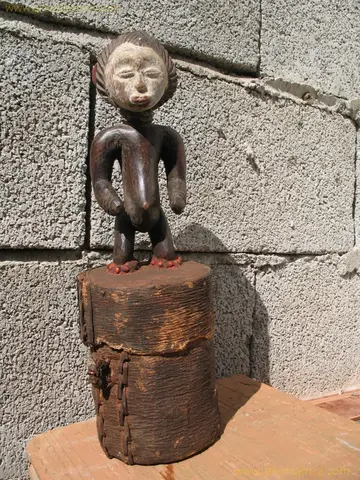
Like the Bakota and the Fang a Punu character acts as guardian of the relics of an ancestor contained within the recipient.
RLC-28
Character of pregnant woman with a prominent belly.
MTR-25
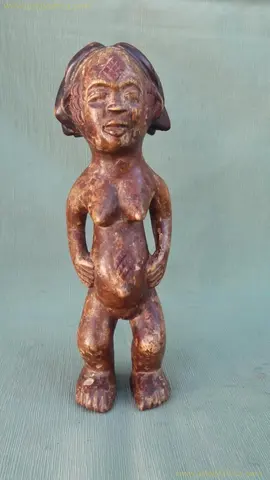
Statue of an initiate, naked woman who can represent an ancestor.
FIV-2
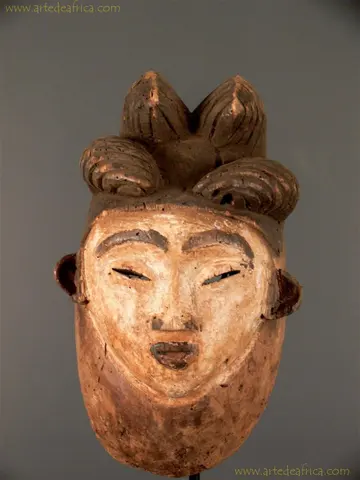
It's a mask that represents the female face of a young woman.
MFANT-155
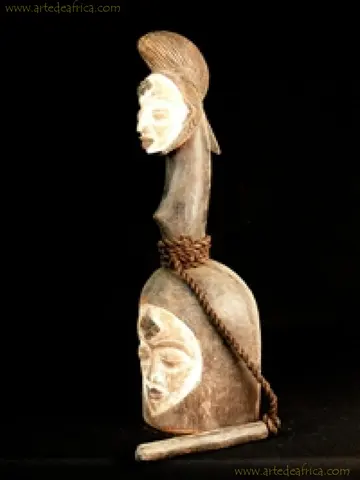
Bells and bells, both metallic and wooden, besides having their use in playful and religious ceremonies are a valuable instrument used by…
IDIOF-13
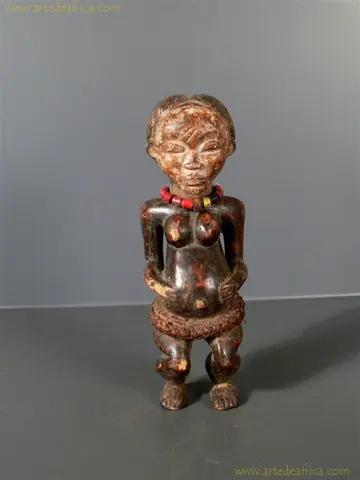
Little statue of a young punu with her hands in her belly indicating a next maternity.
EFM-76
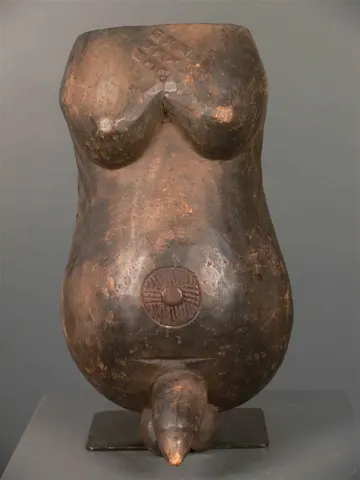
Hermaphrodite-sized ventral mask. Hermaphrodite is a figure that often appears in the statuary and African masks.
MVT-7
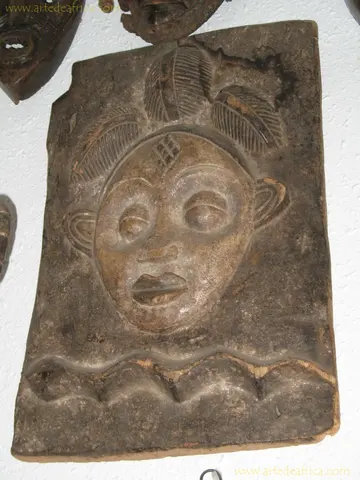
In almost all of Africa, well-filled barns represent material wealth, security and well-being.
PRYCR-16
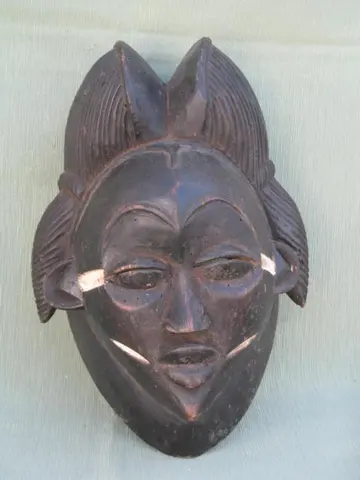
These masks of justice are very similar to the masks mukuyi with the only difference that these masks are black instead of…
MFANT-177


