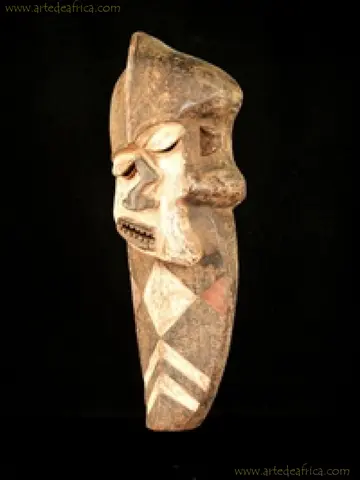
Mbangu illness face mask
Face mask with ochre tones with the usual symbology of this category of masks.
MFE-1

List of the historical catalogue
Text and organisation of the original catalogue · Jesús Arrimadas Saavedra
We grouped all these categories of masks so as not to repeat the explanations contained in the part “Black-African artistic ethnography”. Agricultural masks are part of fertility masks. Fertility of fields and women are very united values in the animistic world. On many agricultural festivities the rites are destined to ask for the fertilizing rain of the fields to obtain good harvests or to thank the fruits received from nature and the masks dance as an integral part of these rites, but they also celebrate the fertility of the woman, dispenser of life, worker and caretaker of the fields. A large majority of masks participate in these festivities without being exclusively agrarian masks, as are the Ty Wara masks of the Bamana or BambaraThe same applies to initiation masks, although there is greater specialization in this case. Hunter masks, despite this name, do not mean that they are used during hunting, but belong to the hunters’ powerful secret societies. These dances participate both in the agrarian festivities and in funeral ceremonies and in the cults of ancestors. Many zoomorphic and anthropozoomorphic masks are agrarian and hunter masks and, contrary, most initiation masks are anthropomorphic masks. Over time many masks have evolved and changed functions. Masks that were sacred in their day have become playful masks. In some cases, less frequent, playful masks have become sacred masks by making them ported or owned by a notable ancestor. But it is difficult to chant the masks in a single category, as many of them participate in the most varied activities. Ventral masks celebrate and parody the different phases of female fertility while those of disease have the negative effects of some evil spirit. Today, most of the masks have lost their sacredness and participate in playful activities on the occasion of local festivities or the visit of important characters as young generations have moved away from the traditions of their ancestors. The passport masks identify their owner as a member of a designated secret society or ethnic group while allowing him access to ceremonies held in sacred forest or accompanying him in the journeys with a protective value.
22 objects · page 1 of 1
Face mask with ochre tones with the usual symbology of this category of masks.
MFE-1
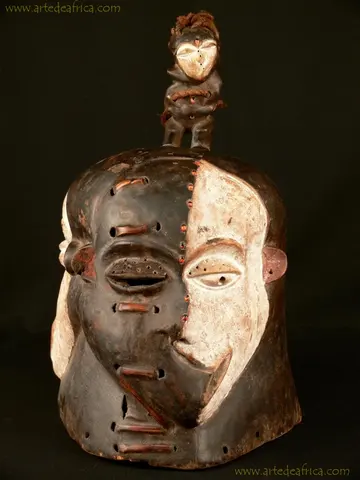
It has the same symbolism as the mask. Mbangu.
MFE-2
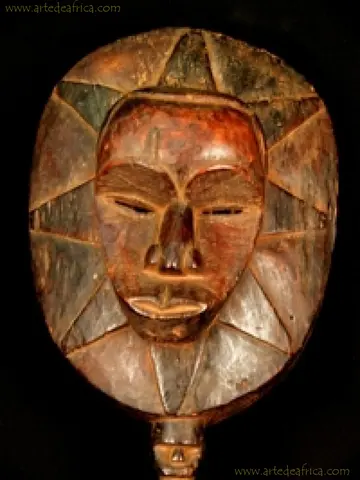
This mask belongs to the ekpo society because just like the ibibio and other peoples also have the Eket they have the…
MMN-2
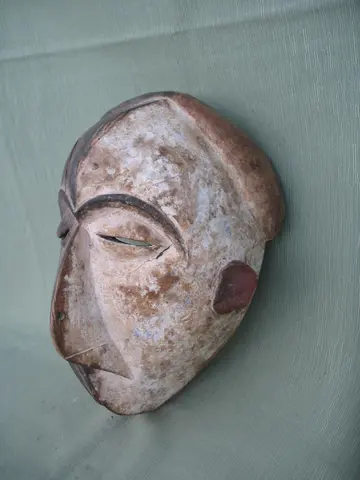
It is the name that this mask of sickness or sick receives in the Congo.
MFE-3
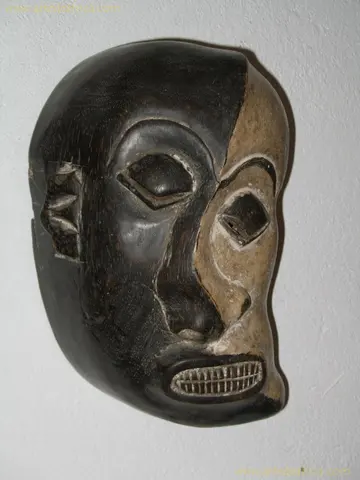
There are several villages that present in their masks the aesthetics of the disformity, of the ugliness, like this mask that represents…
MFE-4
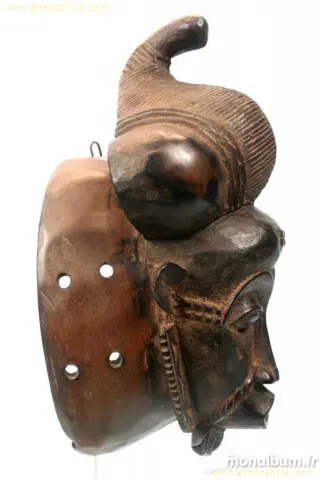
Expression of serenity in this morecra that perfectly respects the artistic canons of the ethnic group.
MFAZ-10
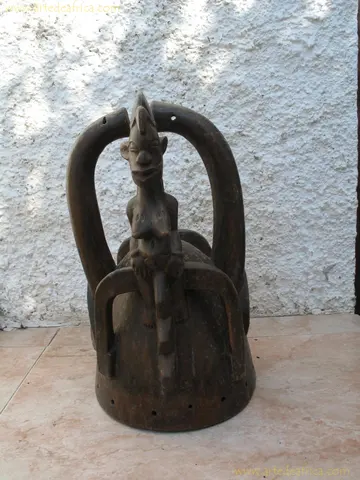
This helmet mask carries to one side a sculpture representing a founding member of the female clan and on the other side…
MCYC-10
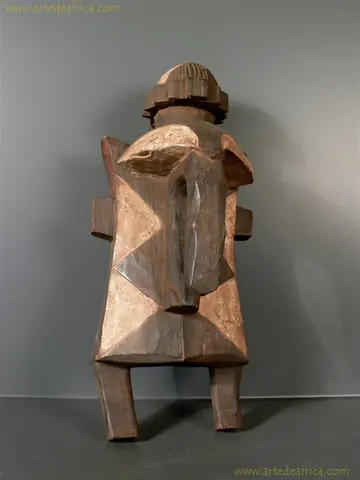
The Wawa are a small ethnic group, neighbors and relatives of Igbomainly in the north of the capital of Nigeria, Abudja, on…
MFG-47
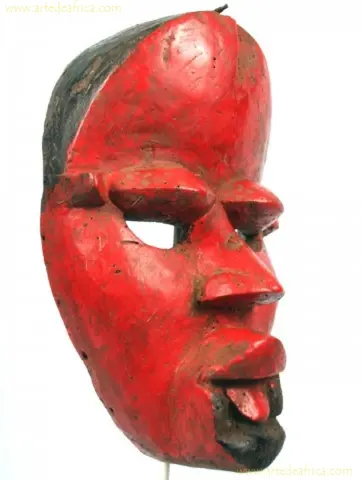
Mask painted red and with tongue outside.
MFANT-162
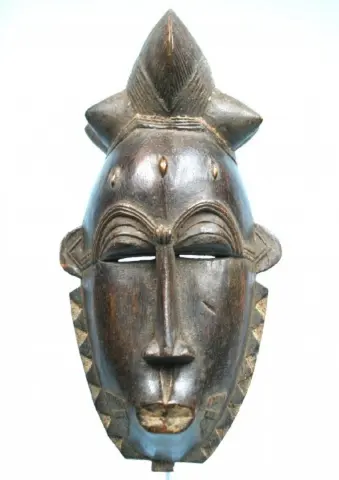
Family masks are not intended for dance or participation in religious, funeral or playful ceremonies.
MFANT-173
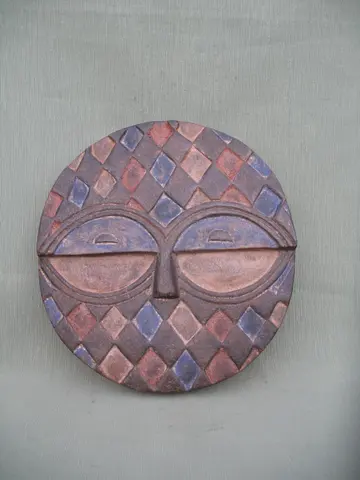
The masks of this group are round and flattened.
MFC-3
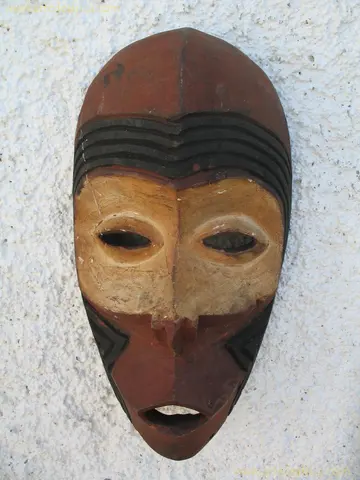
Cover mask by members of society Kidumu at weddings, funeral ceremonies of important members or at the reception of personalities and at…
MFANT-39
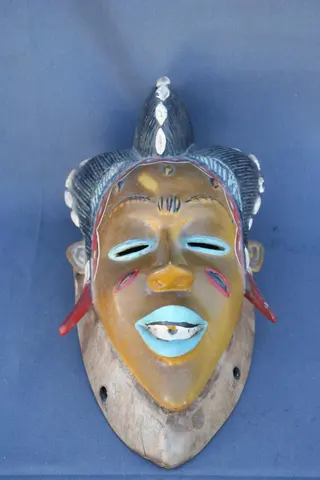
The word Zaulí designates both the mask and the traditional dance of the country.
EFM-120
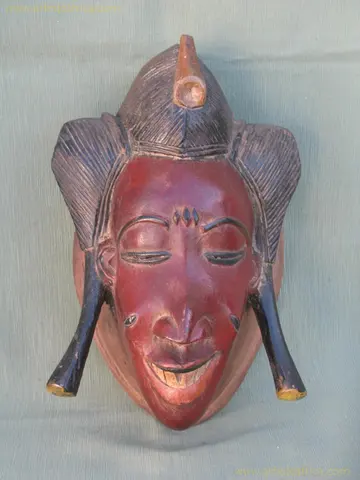
The word Zaulí designates both the mask and the traditional dance of the country.
MFANT-137
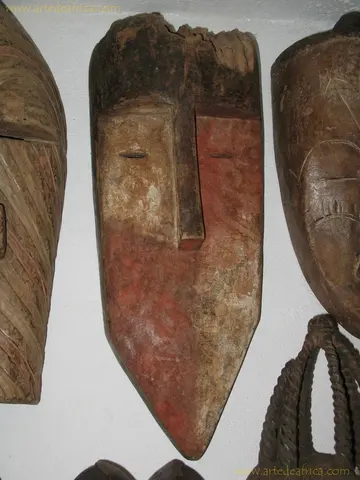
Mask with alternating red and white polychromy on the face, black forehead and nose, The nose is an extension of the forehead,…
MFANT-87
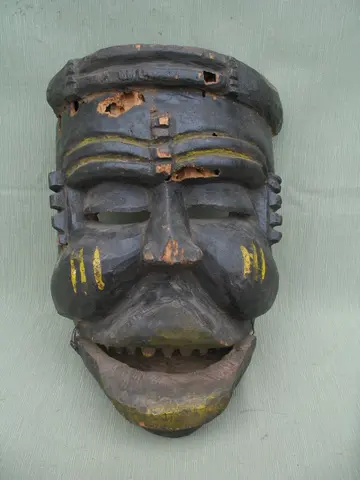
In the village Ibibio as in theAnang there is a secret society Ekpo who is responsible for the cult of ancestors and…
MFANT-193
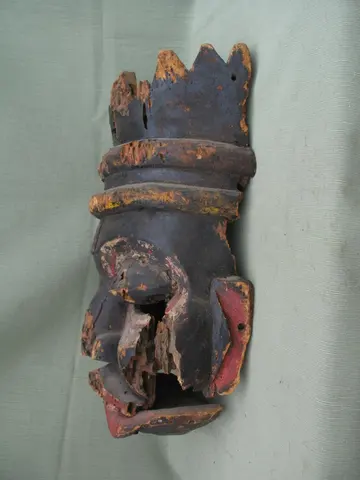
In the villageIbibio as in theAnang there is a secret society Ekpo who is responsible for the cult of ancestors and who…
MFANT-192
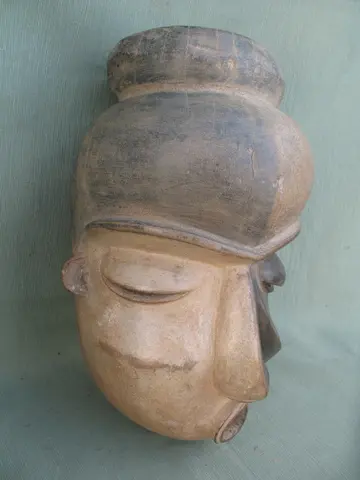
There are several villages that in their masks present the aesthetics of the disformity, of the ugliness, like this mask that represents…
MFE-5
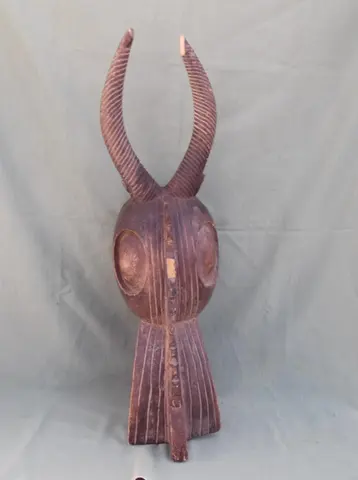
According to Susan Vogel, who has studied in depth the customs and traditions of BauléThe Goli is a show that lasts for…
MFZ-62

The masks of Ekpo society are called sickness masks. They actually represent the spirits responsible for illness or deformation.
MFE-6

These types of masks with deformed faces are known as sickness masks.
MFE-7

Some of the masks of Ekpo society are called sickness masks.
MFE-8


