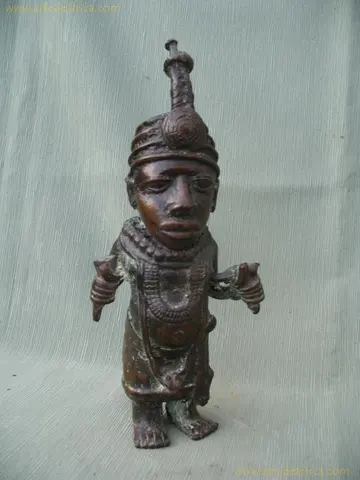
Little Statue of Oni De Ife
Small representation of an Oni wearing pectoral collars and the crown that mark its dignity.It looks like a reproduction of the ancient…
BRN-13

Text of the original catalogue
The former ethnic group Yoruba extends to the southwest of Nigeria and south of Benin, former Dahomey, in the country Fon. In the myth of their origins, the founder of the Odudua ethnic group distributes to his children crowns of glass beads with the command that they be founded, each in his kingdom, away from Ife. Thus are born the various Yoruba kingdoms, whose Obas or kings all descend from Odudua, their common ancestor. The sacred power of the Oba contrasts with the political power exercised by the very important and powerful secret societies, especially the Ogboni society, led by notable elders who are truly responsible for the administration of many States. Ogboni society does not wear masks in its ceremonies. Two other very important societies cover the Yoruba country, the Geledé and the Egungun. The first is present in the soroeste of Nigeria and Benin. Both societies, contrary to Ogboni society, have very important and powerful masks. Geledé society celebrates dances intended for general rejoicing and can be seen all over the world, contrary to those celebrated exclusively among members of society. Almost all masks wear tribal scarifications, three small stripes on the cheeks and sometimes on the forehead. Their masks are very varied, fruit of a great imagination. An essential feature characterizes Nigerian masks: the absence of snake. Reason that is widely used among the Yoruba of Benin, influenced by the Fon in those who worship the serpent.Most of these masks participate in the "epa" ritual feast destined to celebrate human fertility and that of the fields. Egungun society is especially linked to the cult of ancestors. In ceremonies in honor of the notables, the chiefs and founders of the deceased clans, the masks or dancers who carry them embody the soul of the ancestors, who temporarily take possession of their bodies, in such a way that some elders recognize in them, by their way of moving and speaking, certain deceased. The dead that the mask bearers have not met. With the dismemberment of the kingdom of Ife come different kingdoms among which are the Ijebu, whose king is named Awujale, and which occupy part of the Atlantic coast of the 1500 as at 1750It seems that the intense relationship between Ijebu and Ife was due to the fact that the first Awujale was Oduduwa's son. They negotiate with the Portuguese and receive large amounts of bronze that their artists, who have been influenced by Ife and Benin, make valuable objects. The empire of Oyo extends, from 160 a 1830, in the north area, Yoruba tongue. The emperor, the wingman, is invested with the power of supreme judge, but his power is not omnimode, it is countered by the power of the Council, made up of the heads of seven families outside royalty. The knights Oyo undertake great conquests by expanding the territory. Many of the Yoruba equestrian figures and the Epa masks recall these gentlemen.
87 objects · page 1 of 4
Small representation of an Oni wearing pectoral collars and the crown that mark its dignity.It looks like a reproduction of the ancient…
BRN-13
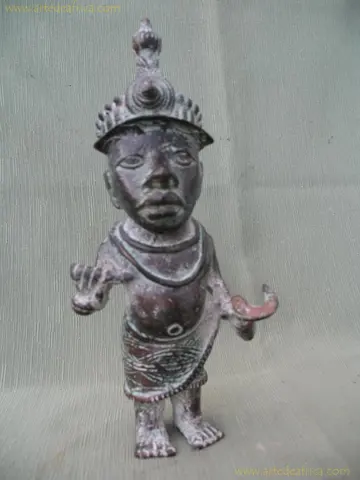
Pay from the court recognizable to the insignia of the royal house presiding over his headdress.
BRN-14
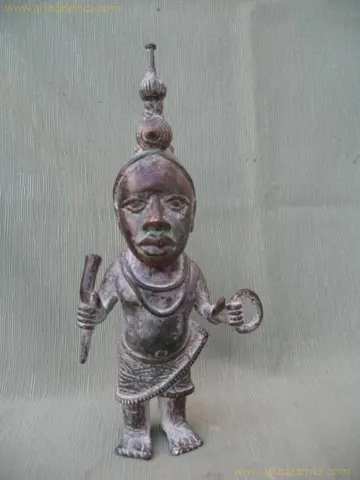
Pay from the court recognizable to the insignia of the royal house presiding over his headdress.
BRN-16
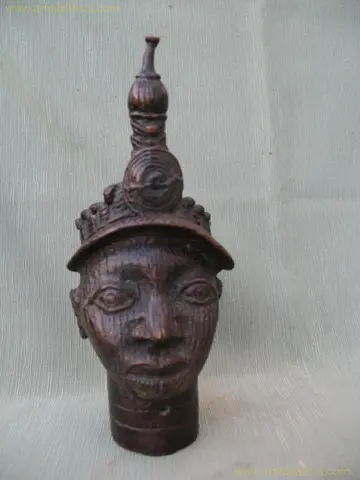
Ife's art is characterized by the beauty and balance of its lines and by a penetrating realism and serenity that seems to…
BRN-28
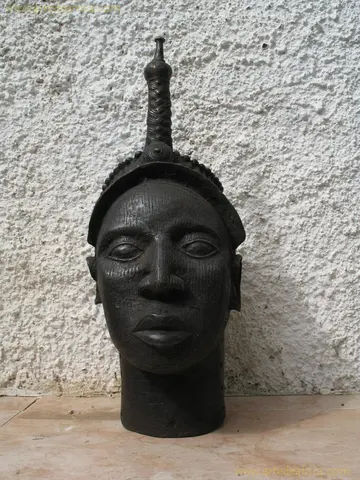
Ife's art is characterized by the beauty and balance of its lines and by a penetrating realism and serenity that seems to…
BRN-31
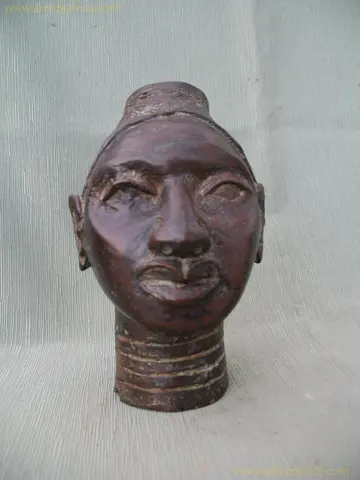
Queen head of small dimensions that realistically presents all the beauty traits of the Yoruba woman.
BRN-32
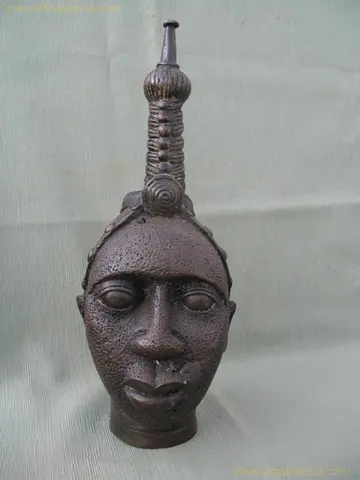
Ife's art is characterized by the beauty and balance of its lines and by a penetrating realism and serenity that seems to…
BRN-33
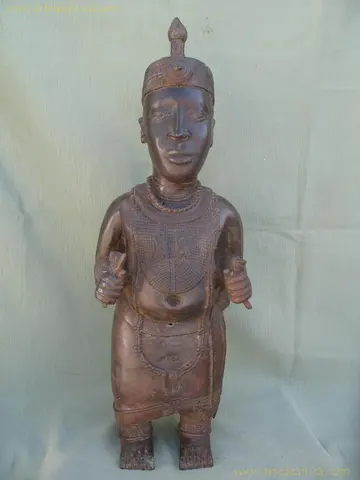
Unpublished and rare statue of an Oni de Ife. One of the few statues known to the present whole body.
BRN-37
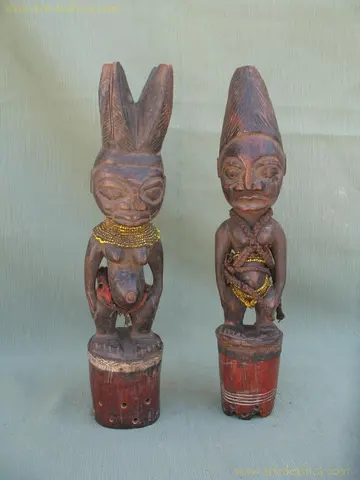
In the case of ”ibeji“ In Yoruba, ” “ibedji” means “twin”, if one or both twins die, the mother, on the advice…
GML-10
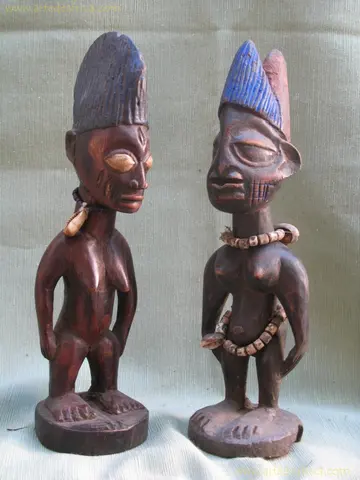
In the case of ”ibeji“ In Yoruba, ” “ibedji” means “twin”, if one or both twins die, the mother, on the advice…
GML-9
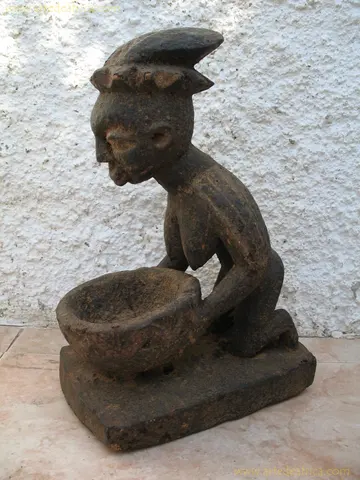
The Yoruba statues of cup bearers are related to divination, serving for a part of a cup of offerings and welcome cup…
EFM-17
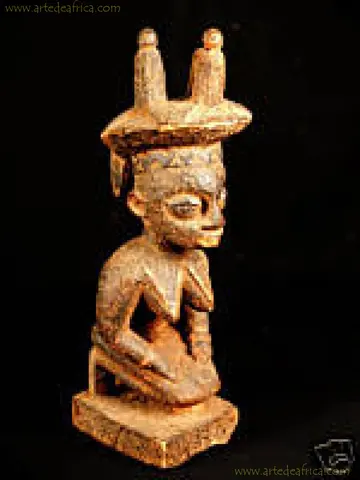
A woman kneeling with her hands on her thighs, near the rhodollas, in a position to pray.
EFM-18
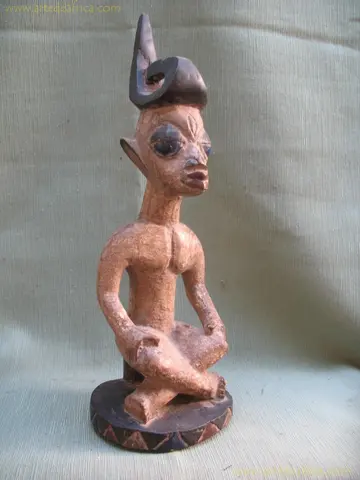
Curious figure sitting on a small stool, legs folded and crossed, hands resting on thighs in meditation attitude.
EMS-21
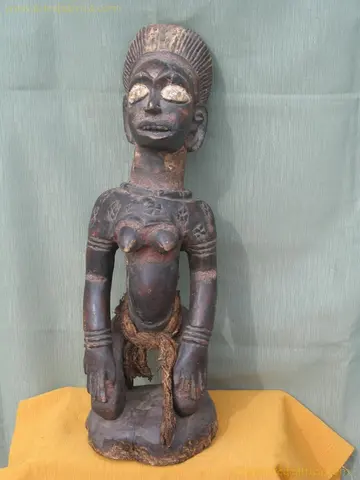
The Gelede cult, practiced mainly by the Yoruba Westerners, it is a cult in honor of living or deceased elderly women.
MYA-11
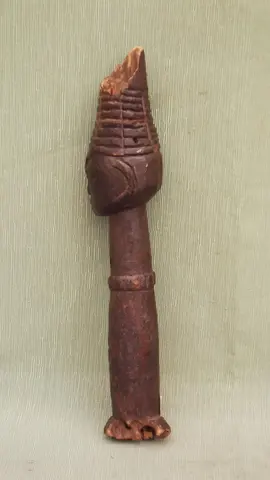
It is a cane or axe of ceremony used during worship to the god of Thunder Shango, fourth Yoruba king who was…
BST-34
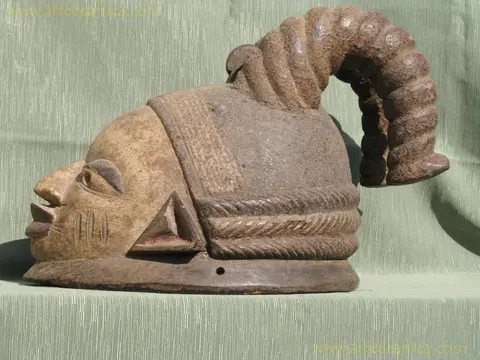
The Gelede cult, practiced mainly by the Yoruba Westerners, it is a cult in honor of living or deceased elderly women.
MCYC-9
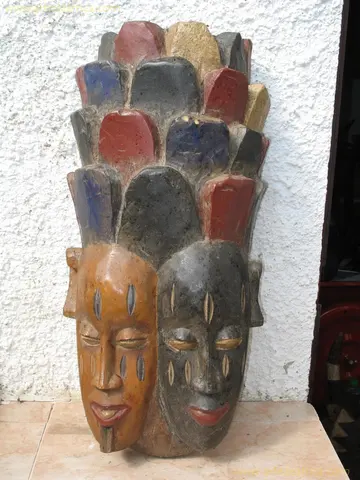
Gelede mask dedicated to the cult of the twins.
MFANT-86
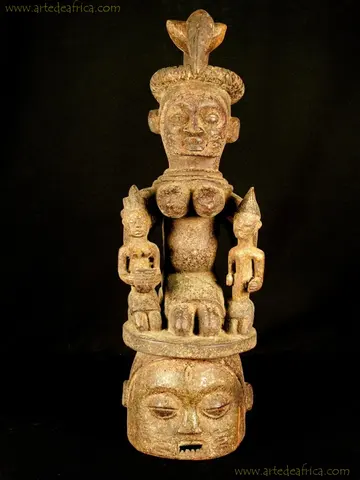
It represents the wife of Obatala, an orisha of the Earth surrounded by her children.
MCYC-15
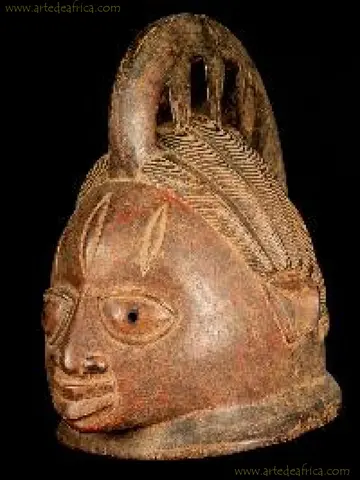
It is believed that the origin of the Geledé cult occurs on the occasion of the mythical passage from matriarchal society to…
MYL-7
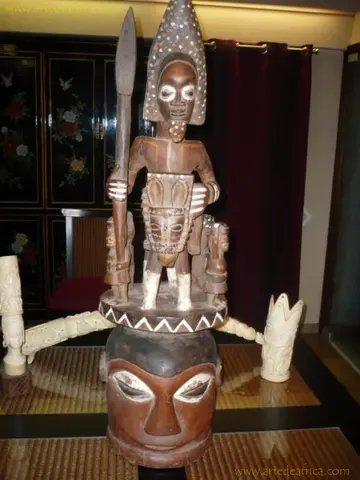
Personifies Obatala, an ancestor of the Yoruba Deified who also receives the name “Jagunjagun”.
MFG-18
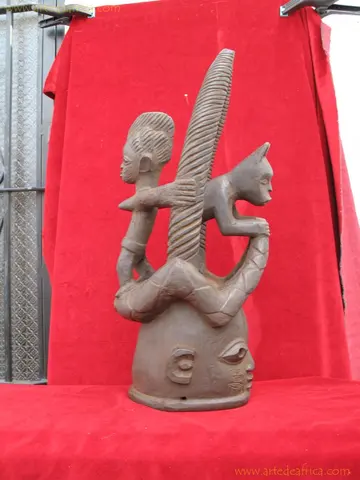
These masks represent the principal Orishas, incarnation of the attributes of Olorum, the supreme and distant God of men.
MYL-9
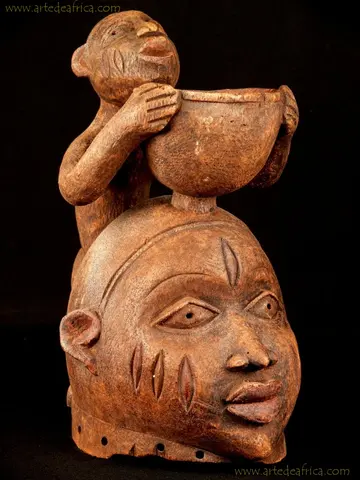
Gelede society practices the cult that gives its name to older women, “our mothers” (awon sya wa) who can use their powers…
MCYC-18
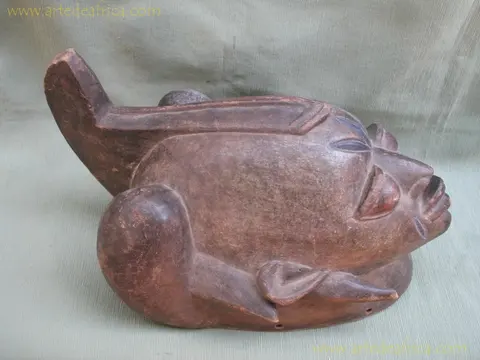
It is believed that the origin of the Geledé cult occurs on the occasion of the mythical passage from matriarchal society to…
MCYC-20
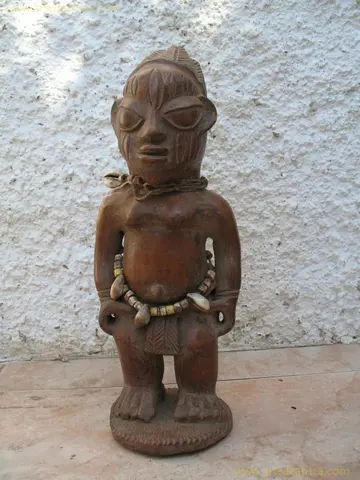
Statue of a young man who began, as shown by his facial scarifications and wrists in the form of bracelets.
TRRC-5


