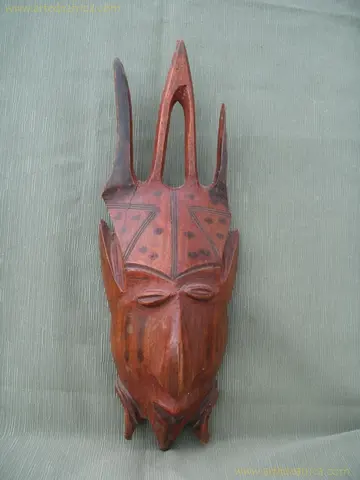
Mask Passport
Wooden mask with patina of time.
MPS-6

Text of the original catalogue
The Wolof they are the largest and most important ethnic group in Senegal, almost half of them. In the Gambia, too, they make up one third of the population. The Wolofgood traders and travelers, are present in many countries of the world, and mainly in neighbouring countries such as Mali, Mauritania and Ivory Coast. According to their legends they seem to have their origin in the Nile Valley and so it has been confirmed by the thesis of scholar Anta Diop and the studies of other historians. They remained for a long time in Mauritania and in the Tekrur, in the Senegal River valley that gives the country its name, dependent on the great empire of Ghana. Under Almoravid pressure they occupy the territories in which they are currently settled. Initially animists are becoming Islam without doubt by the influence of their neighbors, sereres, touculeurs, sonikés and diulas. But as most African peoples converted to other religions follow some practices of their traditional religion such as worship of ancestors. Traditionally they have been engaged in agriculture, livestock and fisheries, today they practice all kinds of trades and professions and have a great commercial spirit as demonstrated by Senegalese living in our European and American cities. Senegal has been one of the first African countries to modernize and has given illustrious characters such as Léopold Sédar Senghor or Cheik Anta Diop. The family organization was traditionally matrilineal but the patriotic regime prevailed as it converted to Islam. Their social system was long based on slavery and social castes. Slavery is overcome, castes persist, although they disappear mainly in the cities where the Western life system dominates.
13 objects · page 1 of 1
Wooden mask with patina of time.
MPS-6
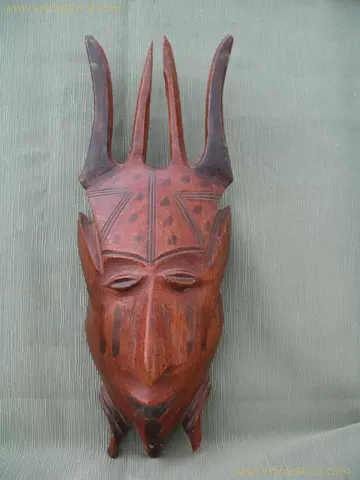
Morecra wood color with geometric drawings and black prunes on the forehead and perpendicular stripes on the cheeks as scarifications.
MPS-7
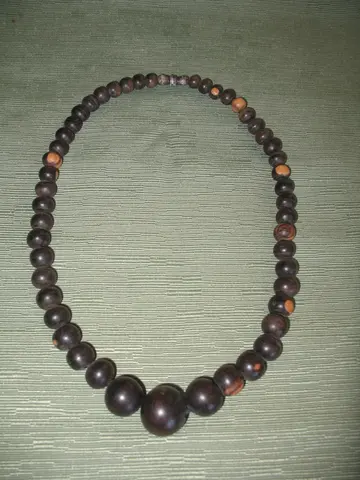
Necklace of wooden beads of progressive thicknesses. Dark color on most beads.
COLL-6
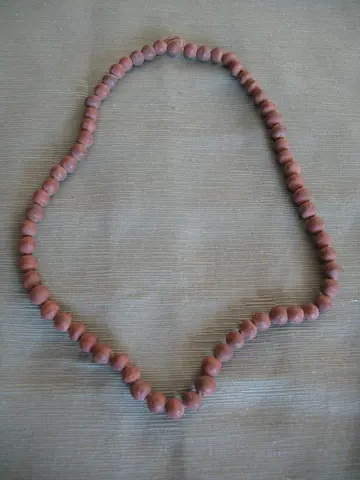
Simple ceramic-paste necklace made of fired-clay balls. Worn as an ornament by Wolof women.
COLL-7
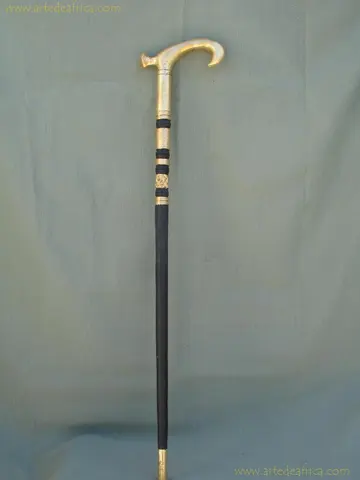
Staff marking the chief’s rank. Black and golden patina.
BST-17
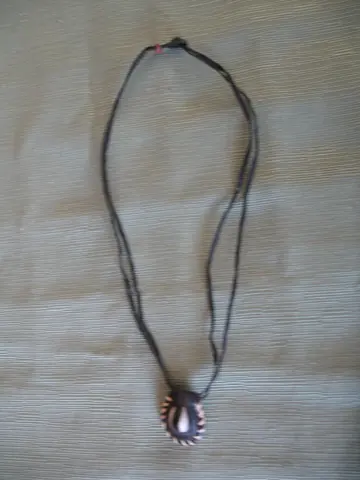
Simple necklace worn by Wolof girls and women to promote fertility.
COLL-4
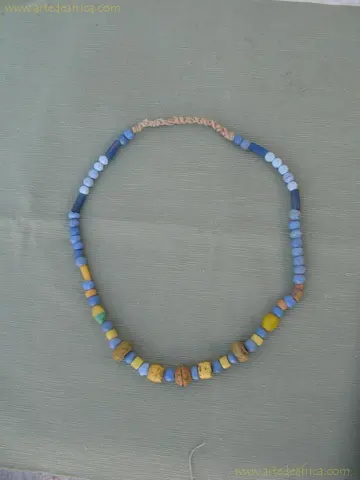
Necklace of ceramic beads used as barter currency.
MND-22
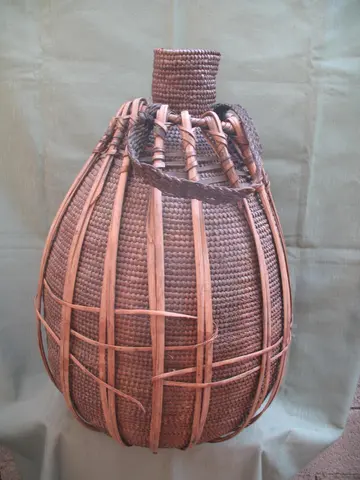
Braided raffia container to put the grain safe from rodents.
VAR-22
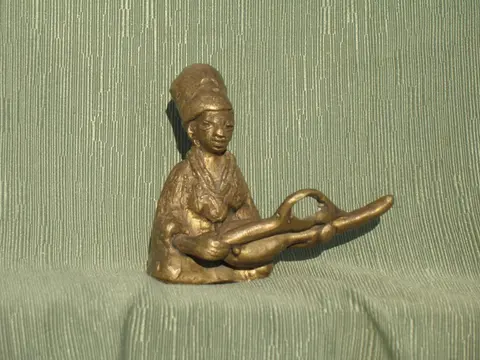
Musician, rapsoda, singer, narrator, panegirist, historian, genealogist, fabulist and literate on griot is essentially the master of the word,…
BRN-104
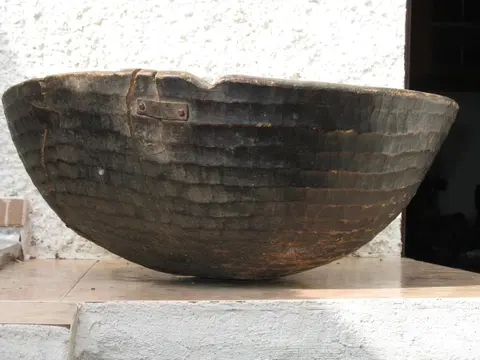
Large bowl intended for different uses as a container to contain the grain, to throw the grain or to use it for…
RCPT-32
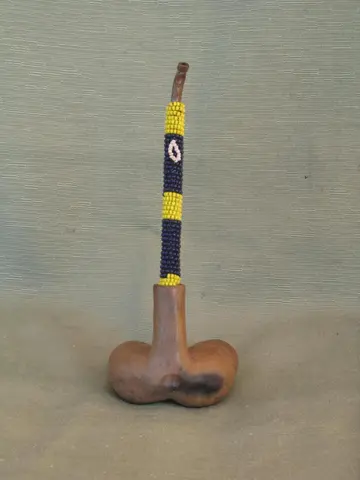
Unusual terracotta pipe with two bowls, decorated with geometric lines.
PIP-22
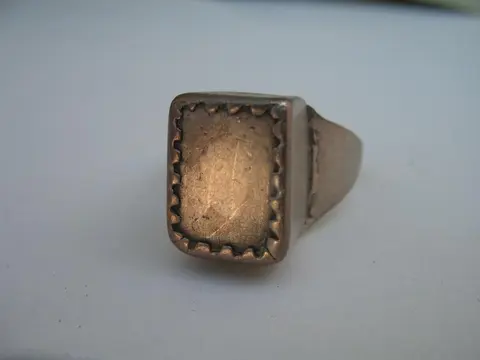
Protective ring used by Muslims.
ANLL-13
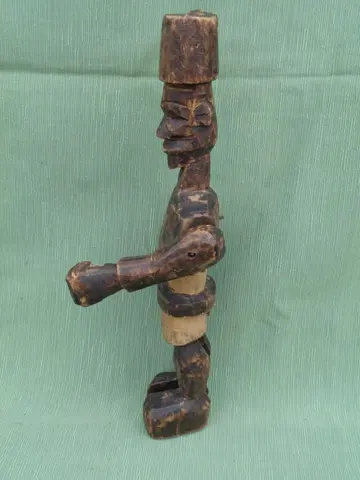
Representation of a Senegalese "tirailleur".
EMS-126


