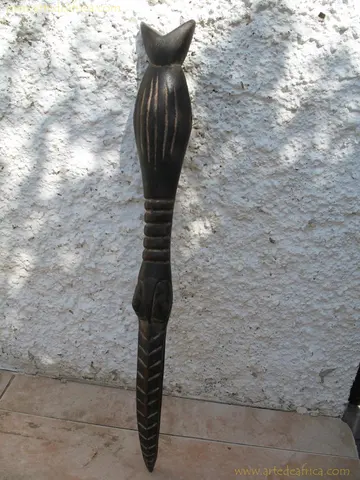
Hunter’s whistle
For the African hunter, the whistle is as important as his hunting weapons: his bow, spear or old, rustic shotgun made by…
INM-11

Text of the original catalogue
To the Senufo they also call them “Siena.” There are currently more than a million and a half spread across three countries: Mali, Burkina Faso and northern Ivory Coast. There are some in Ghana. Minianka are Senufo Northern Mali. In Côte d'Ivoire they are located in the Korhogo region. The Senufo of Dabakala are the Djimini And Katiola's Tagonana women think they can't conceive without excision because clitoris is something that interferes with menstruation and childbirth. They are excellent farmers who have always lived under foreign domination, especially under the Mandés. Reputed for their manufacture of statues and masks for religious purposes in which they represent human bodies and anthropozoomorphic masks presided over by one of the five mythical animals, the first beings of creation: the turtle, the snake, the crocodile, the big cove and the chameleon. Most of these symbols are associated with initiation rites. The senufos sculpt human statues that can sometimes exceed the two meters, such as the one of the great calao or the “pombibele”, sons of the Pore, which appear only at funerals and in the rites of the pore. These giant statues represent that the senufus has his feet well anchored on the ground while his spirit can rise very high. Women do not wear masks, but during ceremonies an officer may wear a statue over her head like that of a woman sitting on a stool, which is associated with the fertility cults of the woman and the fields. Of all the senufo areas it could be said that Korhogo is the most characteristic, the one that best identifies them and where it is located the Senufo The founder of the city could have been “Nangui” belonging to the Kiembara group and who would have remained for a long time in the city of Kong under Uatlara’s domination. The name Senufo would have its origin in Chruire and Fongho, artisans who worked metal and wood. This artisan origin makes artisans occupy an important place in Senufo society. The blacksmith craftsmen are grouped into castes : - Fono : During colonial and precolonial periods the Fono took care of the extraction of iron and the manufacture of agricultural tools, white weapons and kitchen utensils. to exceed the two meters, like the one of the great calao or the “pombibele”, sons of the Pore, which only appear at funerals and in rites of the pore. These giant statues represent that the senufus has his feet well anchored on the ground while his spirit can rise very high. Women do not wear masks, but during ceremonies an officer may wear a statue over her head like that of a woman sitting on a stool, which is associated with the fertility cults of the woman and the fields. Of all the senufo areas it could be said that Korhogo is the most characteristic, the one that best identifies them and where it is located the Senufo The founder of the city could have been “Nangui” belonging to the Kiembara group and who would have remained for a long time in the city of Kong under Uatlara’s domination. The name Senufo would have its origin in Chruire and Fongho, artisans who worked metal and wood. This artisan origin makes artisans occupy an important place in Senufo society. The blacksmith craftsmen are grouped into castes : - Fono : During colonial and precolonial periods the Fono took care of the extraction of iron and the manufacture of agricultural tools, white weapons and kitchen utensils. - Lorho: They are casters and bronze workers. They work the casting technique according to the procedure of lost wax. They make pendants, bracelets and ankle rings and bronze masks. - Kpembele or Kule : They are wood sculptors. They work mainly soft wood, as in almost all of Africa. The ebanaceae work; the “sun-sun” works it green, does not flatter itself by drying, blackens as it ages and hardens. The objects manufactured receive a patina, based on alheña for the red color and vegetable juices for the black. Among its productions are masks and statues, hut doors and doors that close access to the sacred forest, drums, cosmetic boxes and shavings for women, pulleys for looms, stools and various seats. The Lorho are specialists in metal and repulsed metals. They heat the metal and melt it in an oven, then hammer it. The embossed drawings chisel them with an iron tip when the metal is in fusion. The large pieces are also melted into crucibles prepared on the ground, underground. Small objects are melted by the procedure of lost wax. For this purpose, the molten metal is poured into a clay crucible with an iron or wood handle. The figure sculpted in wax is covered in clay, which serves as a mold and is allowed to dry. Through small holes or nozzles arranged conveniently penetrates the molten metal of the crucible that will occupy the place of wax, which escapes through another hole. Once the metal is cooled, the mold is broken. The work is finished with lime and a hard stone polish. These objects are grouped and stored in the sacred forest. The uninitiated cannot see them at the risk of their lives. They were first seen when one Klefongho introduced a new cult, the Massa cult, which proclaimed itself a prophet and presented itself as a new god, imported from San, in Mali. The Senufo culture is based on the Pore, a system of life that governs the destinies and lives of men. It proposes a whole metaphysics that encompasses all aspects of human existence, both political and religious or technical. Masks and statues have a very active participation in all rituals related to the pore. Mylène Remy, in “La Côte d’Ivoire aujourd’hui” (Editions j.a.) in a few lines achieves a masterful description of the pore : “For the SenufoMan at the time of his birth is nothing but an animal. What little by little will lift you above this state, is the teaching dispensed by the Pore, as well as the training in trials leading to self-possession. There are several stages of initiation, each of seven years: The Kuord is the prenup period. The child takes care of certain tasks and learns some symbolic words. The dain prepares for community life. During this period, the adolescent must be able to take personal sacrifices. Learn to participate in collective work, to make your clothes and to participate in ritual parties. The tcholo encourages reflection on the meaning of life. A number of secrets that he could not understand before, are now revealed to the young man. They are concerned with theology, philosophy, social behavior and some professional teaching. Finally, the kaffono allows achieving supreme knowledge and definitive enthronement among the initiate mask bearers. Once fully integrated into the Pore, the initiates must deliver an annual contribution. In turn, they receive the help of their older brothers, they are protected by the “great teachers”, who have taken their philosophical-religious quest even further and, at the time of death, their funerals will be assured by the members of the pore.” As we see, the Pore members are not fully adult and are not fully formed until the age of about thirty-five. Its members are grouped in the secret society of the same name. Masks used in the secret society of the pore: The Senufo have two large categories of masks. They call the little masks “Kpelié”; The big ones are called “Wabelé”. I.- Wabelé Masks: They comprise five types of masks. 1.- The group “Kponiugo” or “waniugo”. They are bulky masks, very thick, that gather the attributes of several animals: Huge mouth, with an important teeth representing the crocodile; big horns, which can be buffalo or antelopes and fangs of facocero, African boar. Between the two big horns there is a representation of the chameleon or calao. The calao represents the Senufo people and is associated with the cult of fertility. The chameleon would indicate a cult to the primordial Universe and would be the first being created by God. In all senufo realizations there is allusion to their totemic animals. The representation of their primary animals is constant: The chameleon, the turtle, the snake pyton and the calao, its great bird. “Waniugo” represents Poro’s head. In it are associated the buffalo’s strength, the antelope’s wisdom, the facocero’s aggressiveness and the crocodile’s power. It will always be front paged by an initiate member of the town's secret society. Pore is a secret society of male initiation. His Waniugo masks never go out alone, always in groups, at least ten. On the masks have been painted white spots with kaolin, meaning that the ritual has been placed under the sign of the panther. The Waniugo mask itself symbolizes the universe in its origins, created by the divine architect or Kulotiolo. In this universe all animals are represented and the panther occupies a prominent place. In the big mask there is a small glass to which the Senufo “wa”. This cup contains a magic substance that can keep the sorcerers and sorcerers away from the village and allows the exit of the masks to be carried out in the proper conditions. In some regions there are double-sided Waniugos. In this case, he doesn't have buffalo horns. Often this mask is sculpted in relief by a sinuous line, which is the symbol of the great python “Seba”. This is an allusion to fertilizing water, a factor in life. The Waniugo mask is endowed with superhuman faculties. The informants say that you can sit without suffering any damage, on a brazier, ride a single jump on the roof of a house, or burn a sorceress without burning her hut. It's a fire spitting mask. When they come out at night, spit fire, put a plaster between their teeth. If an uninitiated or a woman sees these masks they will be sentenced to pay a substantial fine. 2.- Korobla Belongs to the Wabele mask group. He has no horns or cups on his head. His mouth is elongated and provided with fearsome teeth. Its use is restricted and corresponds to the caste of the Djeli. In the past the Djeli were an ethnic group. Today this group is made up of shoemakers and tanners. The Korobla is the most popular funeral mask in the Senufo countries. In addition to funeral ceremonies, he participates in other types of ceremony. This mask is covered by a bright red fabric and carries cynocephalus cribs. A small drum hangs on his chest suspended by two membranes and, from time to time, uses it. The Senufo They say that if a woman or an uninitiated person sees this mask, he must die. Before the exit of the mask a dancer will ring a small bell to indicate its exit and allow women to hide. The movements of this mask when dancing are slow. 3.- Kagba.- It is located in the Sinematiali region, near Korhogo. It represents the bull and is used in sessions that mark the beginnings of the initiations of the Pore. It is only shown to the public at the funerals of dignitaries of secret societies. Kagba in significa “village house”. Thus, the body of the mask evokes a rectangular house with roof to two winds. The frame of the mask is made of wood. It can reach two meters in length and a height of more than one meter. The frame is covered by a fabric with geometric drawings in white, black and ochre. The head is represented by a known mask, which is none other than Waniugo, as it bears all its attributes. A strip of fiber hides the feet of the carriers. 4.- Kanauto This mask represents a hyena and is therefore devoid of horns. 5.- Nassolo Mask identical to the Kagba, with the difference that its semi-cylindrical frame is much longer, can reach three meters. It is covered by two initiates who, for ritual reasons, are completely naked inside the mask. Like the Kagba, its front is a reduced Waniugo but with a more delicate finish. The back is finished off by a tail made of vegetable fibers. The bearing of this mask requires an important training of the initiates. The one who directs the movements sees through a groove practiced on the chest of the mask. Another carrier must imitate the buffalo's moths. II.- KPELIÉ Not all regions call these masks Kpelié, some Senufo They call them Kepelique or Kodelié. Whatever their name, these masks remind the neophytes of the Porus of the ritual of the cut of the first beard, a practice that is called “Kpeliri”. His ceremony recalls the imperfection and precariousness caused by the first adultery. These masks may be male or female, but they always come out in pairs. The clothes change accordingly. Sometimes, there appear two masks gathered together in one, forming a mask with double face, are the masks “Kufolo”, representing the male and female principles, the masks “DEGUELE”. They are objects of art; they are an intermediate figure between the mask and the statue. A kind of statue without arms. The body is ringed, like forming a long neck; is mounted on a kind of helmet or capirote in which slits have been arranged to facilitate vision. It is made from a single piece of wood whose interior has been hollowed out. The power of the mask lies in the number of overlapping rings that compose the trunk or neck of the statue. Each of the rings has a precise volume of supernatural energy acquired during initiation into the society of the Pore.
149 objects · page 1 of 7
For the African hunter, the whistle is as important as his hunting weapons: his bow, spear or old, rustic shotgun made by…
INM-11
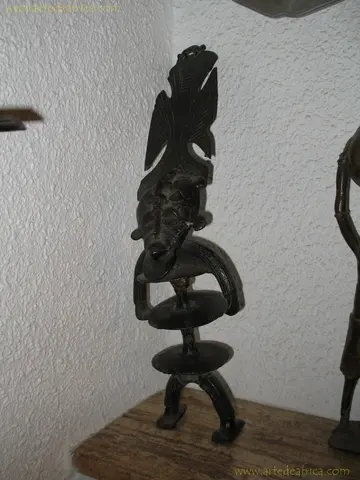
Former bronze figure who seems to represent a reverent snupho king in his ritual attire.
BRN-39
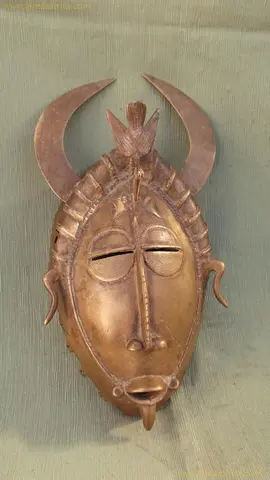
Kpelié mask with a cove pecking over the head.
BR-11
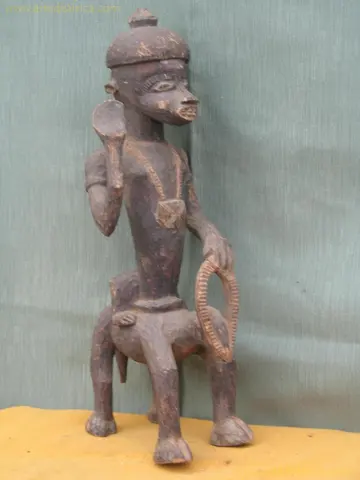
Figure from Korhogo representing a remarkable or a healer on a saddle that curiously lacks a head.
FEC-12
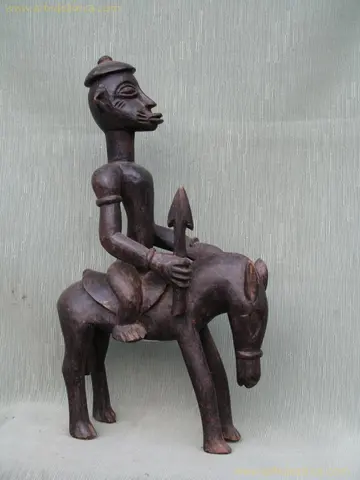
Equestrian sculptures correspond to an important category within the Senufo statuery.
FEC-13
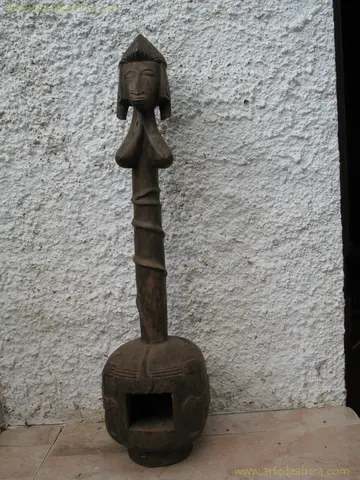
Large spoon intended to serve the chapal.
CHR-1
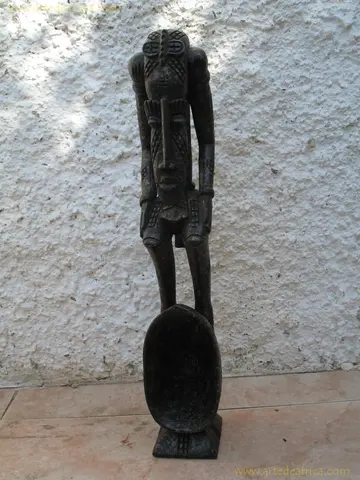
Magnificent and complicated sculpture by an old Senufus sculptor.
CHR-2
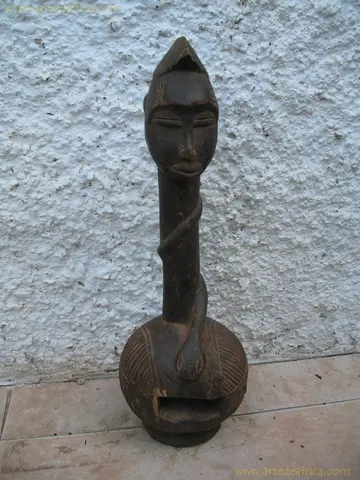
This type of spoon served to drink millet beer, called tcapalo, which was the alcohol that was most traditionally drunk in northern…
CHR-3
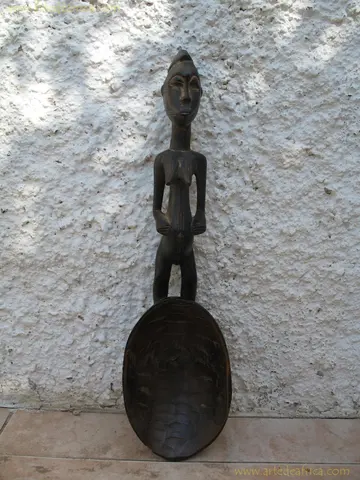
Ritual spoon whose handle represents a young woman who has begun to judge by the scarifications she carries on her cheek, breasts…
CHR-11
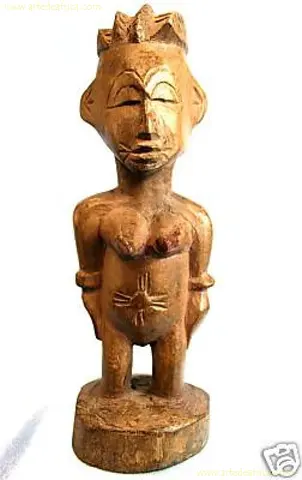
Former votive statue that has been used in family cults.
EFM-21
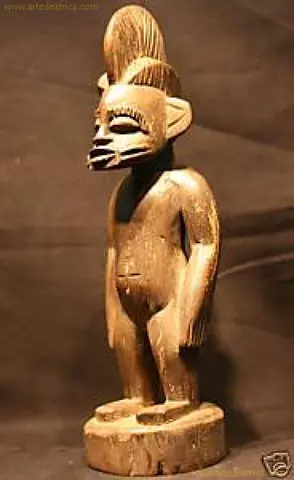
An ancestor's votive statue, commonly known as "bandeguelé senufo".
EMS-9
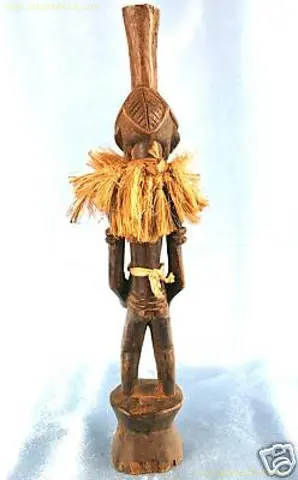
A protective figure in the shape of Deblé.
FET-4
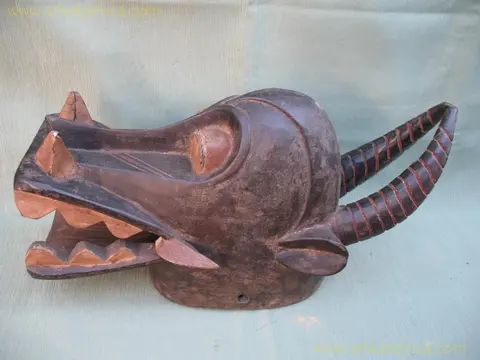
It belongs to the group of masks Wabelé. It is a buffalo mask.
MFG-45
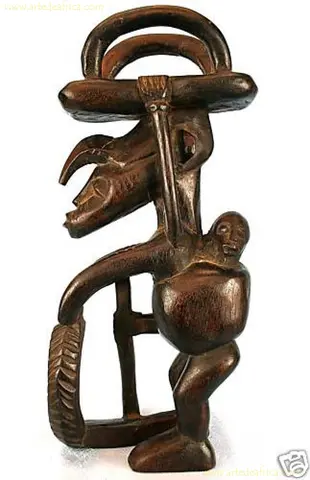
Rare motherhood that represents a mother who goes to the country with her son behind her back, in the traditional African position,…
MTR-5
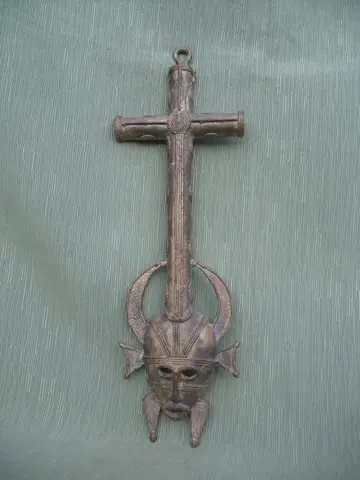
Representation of a kpelié mask with a cross on top, undoubtedly done in some Christianized zone or it is also possible that…
BRN-131
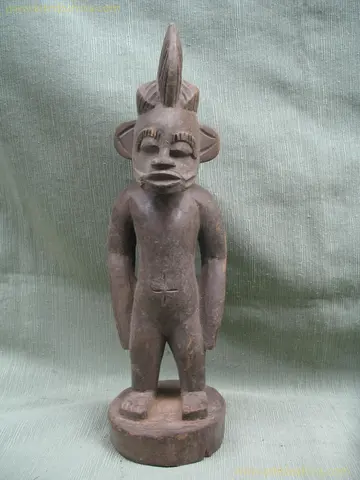
Commemorative statue intended for family worship. The arms fall along the body until they reach the knees.
EMS-17
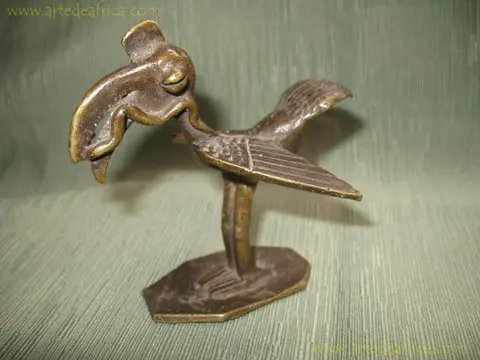
Unique model of calao cast by the procedure of lost wax.
BRN-45
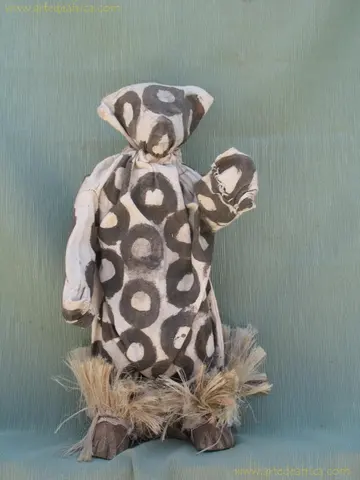
Articulated arms. Fetish of the secret society of panther men.
FET-19
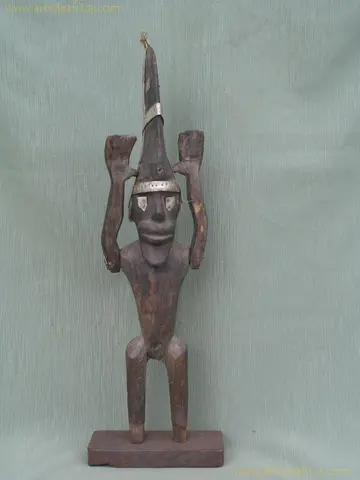
Rare senufo fetish of unknown use, probably protective. Articulated arms that can rise up to the cheeks and stay fixed.
FET-20
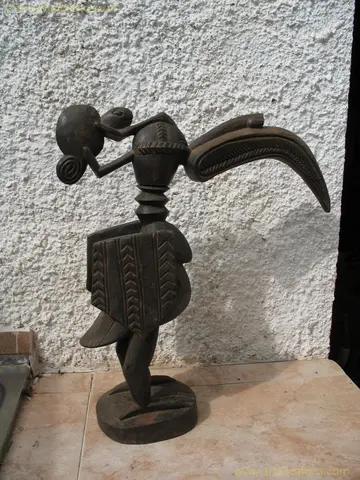
Neck that allows to orient the head of the calao in different directions.
FET-22
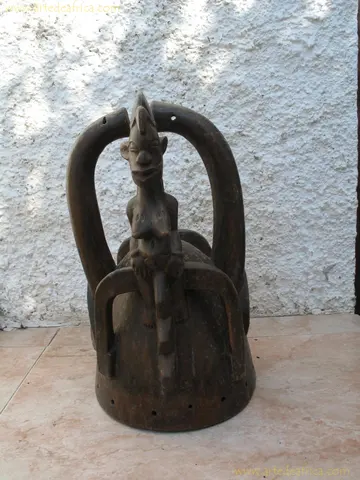
This helmet mask carries to one side a sculpture representing a founding member of the female clan and on the other side…
MCYC-10
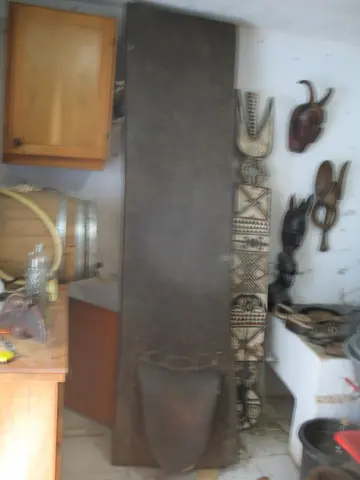
Great mortuary bed intended for a king or lord. Made in a single piece of hard and heavy wood.
VAR-27
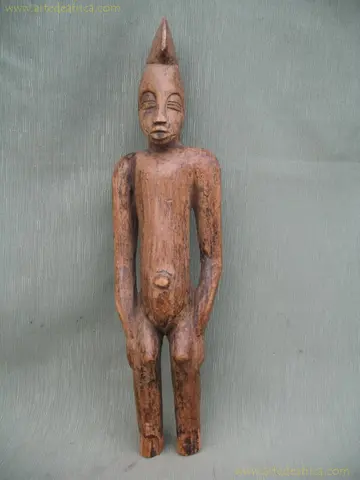
Small and old figure with remains of pigmentation. These statues were commonly used in divinatory trials.
EMS-42
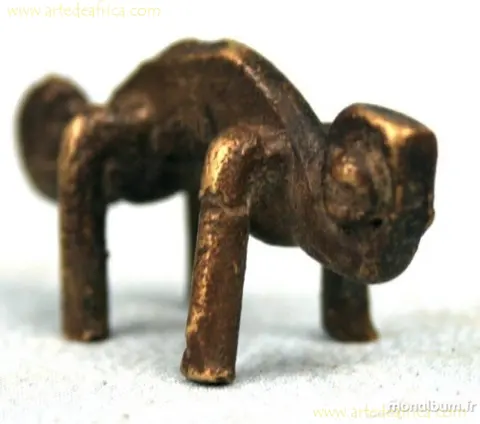
Bronze chameleon made by the procedure of lost wax. The chameleon is an emblematic animal of African wisdom and prudence.
PFG-2


