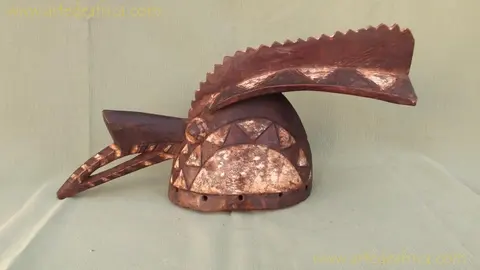
Mask Gallo Wan Noraogo
These are normally helmet or helmet masks representing a rooster with a large crest above its head, especially in the Ouagadougou and…
MCYC-32

Text of the original catalogue
People from Ghana Founded the First Empire Mossi back in the century XVAccording to legend its founding hero is Ouedrago, son of a Mandé hunter and Yannenga, princess Dagomba, from eastern Ghana. But according to the oral tradition Mossi From this date they founded several kingdoms Yatenga and Ouagadougou. They spread rapidly thanks to the use of the horse that gave them military supremacy over the neighbouring kingdoms and for a time resisted the attacks of the Songhai and other peoples who had already embraced Islam, although they became massively during the French colonization. The sovereign of the Mossi It is the Mogo Naba, with his official residence in Ouagadougou, to whom the other kingdoms have surrendered pleitesia throughout the times. And as in many other modern African states, traditional kings are respected and consulted by current governments that allow them to exercise their power in certain legal and social matters with their subjects. It is the most important town in Burkina Faso, formerly Upper Volta, almost half of the population. They speak the Mooré. They have a centralized government in addition to being organized by clans and by professional organizations or castes of artisans. The villages are organized on the basis of concessions corresponding to the family clans, formed by different huts. Agriculture is their main activity. They have numerous masks, used in agricultural ceremonies and playful celebrations. Many of their masks are zoomorphs and can receive offerings and libations according to the category of masks. The group Mossi is made up of about six million individuals most of whom live in Burkina Faso, and may have been for five or more centuries. Representatives of the group are also present in Ghana, Benin, Côte d'Ivoire, Mali and Togo. There are two great kingdoms: Ouagadougou, east of Burkina faso and Uahiguya, west of the country; It was a powerful kingdom when Upper Volta, now Burkina Faso, was a dismembered territory. At the head of each of these kingdoms was a spiritual and temporal chief who was an all-powerful king whom the subjects elevated to the rank of divinity. The king of Ouagadougou is called Moronaba and Guahigunaba Uahiguya. History tells that both sovereigns never came to meet throughout their lives. There are therefore two Naba or supreme chiefs. In addition to the supreme chief Naba there are ministers and officials, and only afterwards come the artisans and peasants. This proves that society Mossi It was very hierarchical. In the caste of artisans is included the blacksmiths, as always in Africa occupying the first place, the continuation comes the weavers and basketmakers, tints, potters, jewelers and carpenters. And finally the caste of the “hut slaves” or “domestic slaves” who enjoyed an almost familiar treatment. Most of the Mossi There is also a high percentage of Christians and Muslims, who are mainly in the major centres of population. Many of the masks Mossi have a great resemblance to the masks Dogoneven though they don't reach their height. It is mainly the peasants who wear the masks for the different ritual ceremonies. The masks are usually kept in the villages of artisans and especially in those of blacksmiths, who in most cases make the masks and those who go to the sacred forest to circumcise the young. The Mossi they call masks “wango”, in singular or “wando”, in plural. They carve their masks in soft wood, mainly ceiba. All their masks are abstract and polychrome. The dominant colors are black, white and red or brown. They do round or triangle carvings to represent the eyes. A median edge, in the form of saw teeth, makes a nose. Usually it's afona masks, they don't have a mouth. All masks Mossi they are anthropomorphic but of an anthropomorphism that presents very stylized and unreal human faces. Many of them are topped by two large ass ears and two horse antelope or hypothragus horns, “Koba” in vernacular. According to the sex of the mask spirit his horns will be straight or bent. The female masks are topped by a small figure of the female ancestor, a figure that would represent the earth goddess. Some claim that this figure would be the portrait of the first woman who discovered the mask and first protected herself from the fiber clothing that the mask wore. This dress is a symbol of power, but later on, the society of men was protected from these objects, and it is from then on that men exercise their authority over women. The masks are male. From the top comes a wooden plate, a kind of stele, cut, forming a draught with geometric drawings. The masks of the Mossi They rarely measure more than two metres, i.e. the height of the iron. All masks belong to the male secret society “Wango”, made up of young men. They appear at the funerals of the elders when the masks dance at these funerals use a secret language. Mask carriers dance with arms attached to the body but forearms remain forward. They're dances that dance with the body and the torso. The dancers are young, dressed in cotton woven strips, adorned with cauris and wearing multicolored bags. They are also used to remove the bad smells from the fields and especially those of the “shea” tree, from whose seeds the butter so appreciated by Africans is obtained and also used in cosmetics. These masks are not kept in the fields, he is the chief of the earth, the descendant of the first man who occupied the earth, who keeps them in his house. It is believed that Mossi had an agrarian cult similar to that of the Bambara and that of Senufo.
61 objects · page 2 of 3
These are normally helmet or helmet masks representing a rooster with a large crest above its head, especially in the Ouagadougou and…
MCYC-32
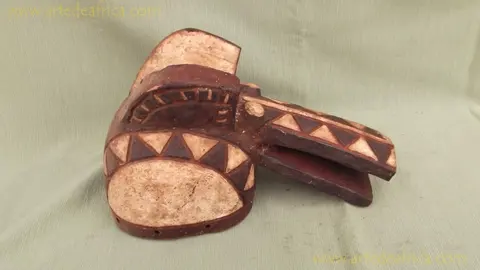
Mask helmet representing an imaginary animal that could be a hyena.
MCYC-33
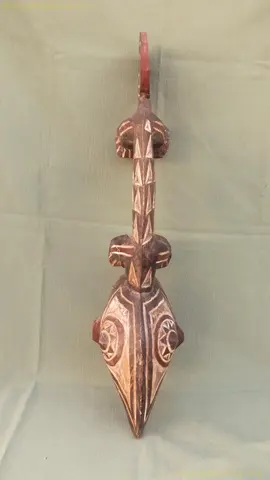
It is a mask of the San ethnic group of Mossi.
MFG-52
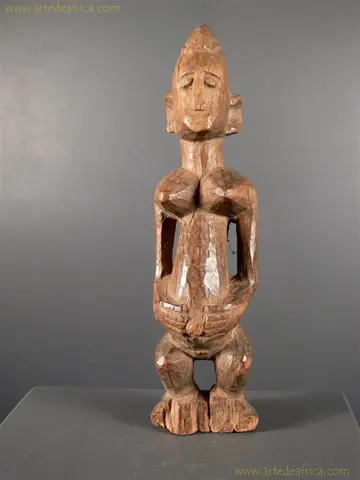
The female Mossi statues represent Princess Yennega, the mother of Ouedrago considered the founder of the ethnic group.
EFM-64
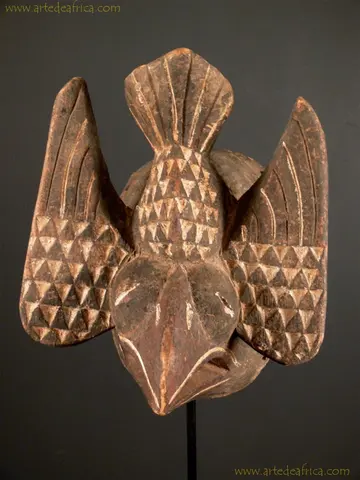
This mask is from the Moagha group of the familyMossiIt represents a hawk with wings deployed in flight position and evokes death.
MFZ-31
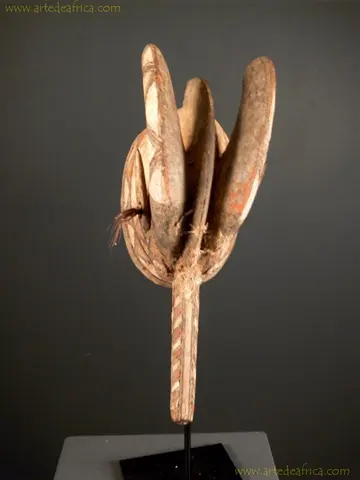
The zoomorf masks for most African ethnic groups, especially from the west, are hunter masks.
MCYC-34
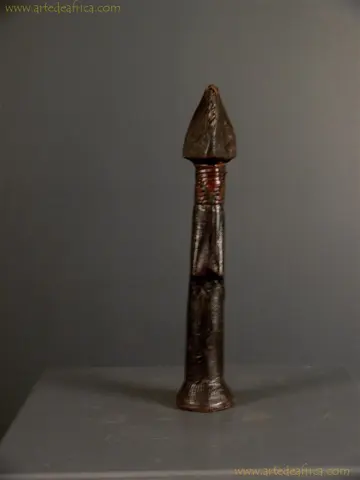
The so-called Biiga dolls are manufactured by the Mossi Bulsa region.
FRT-31
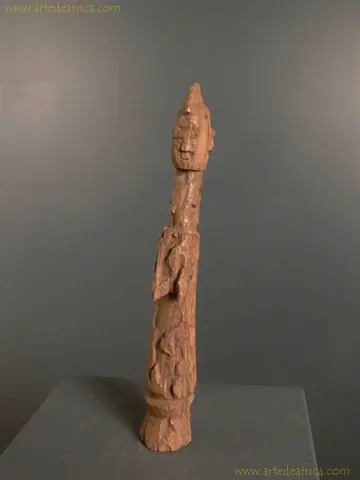
The so-called Biiga dolls are manufactured by the Mossi Bulsa region.
FRT-32
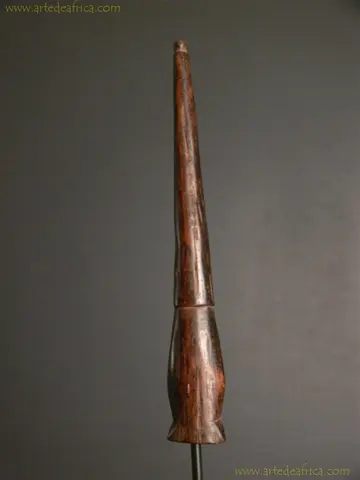
For the African hunter, the whistle is as important as his hunting weapons: his bow, spear or old, rustic shotgun made by…
INM-12
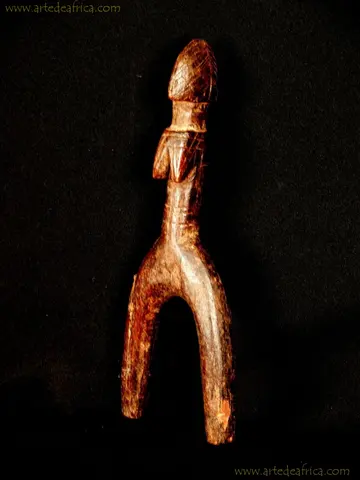
Calling Dolls Biiga are manufactured by the Mossi Bulsa region.
TRCH-16
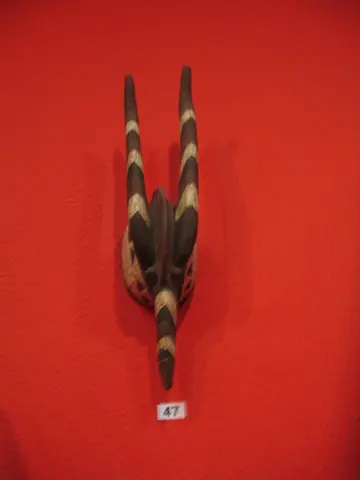
Mask that in a stylized way represents an imaginary antelope, possibly inspired by hyprothragus orcobafor natives.
MFZ-52
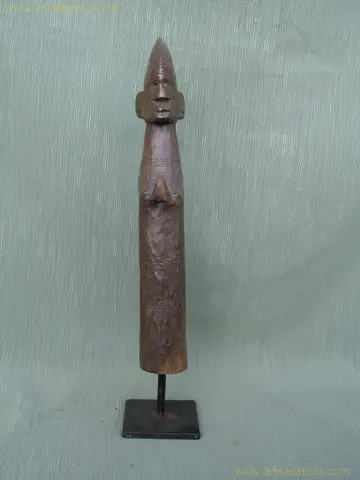
The so-called Biiga dolls are manufactured by the Mossi Bulsa region.
FRT-33
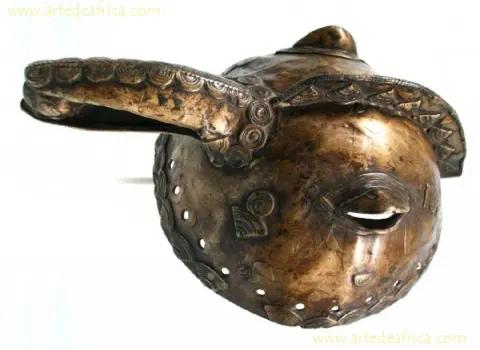
Magnificent bronze helmet mask depicting a hornbill with a fruit in its beak.
MCYC-40
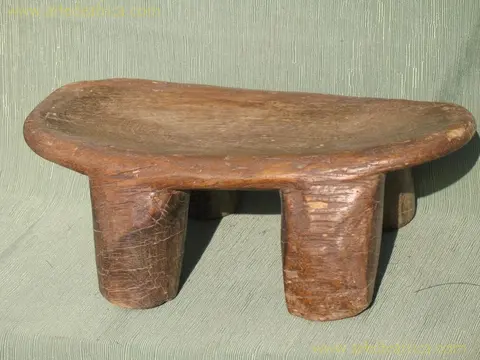
Three terms which, in large part of the African peoples, are used interchangeably.
TAB-9
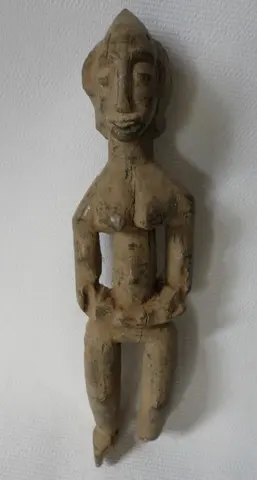
Former ancestor figure showing, mainly at the back, attacks of xylophages and the passage of time.
EFM-110
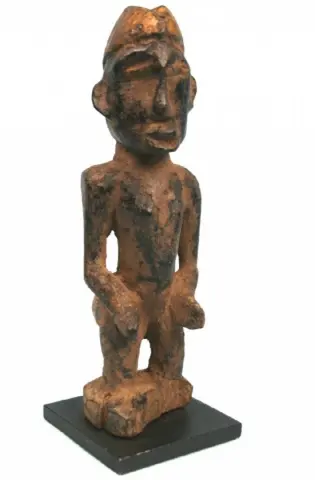
The statues, offerings, votive figures and exvotes are not in Africa an offering dedicated to God or to the gods for a…
FIV-26
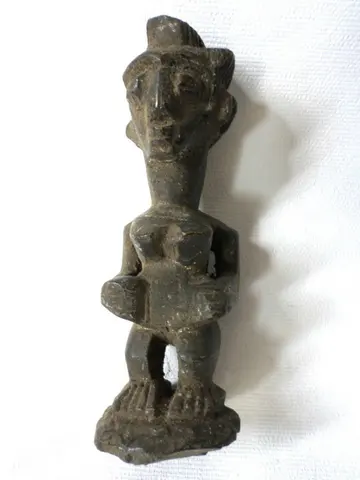
The statues, offerings, votive figures and exvotes are not in Africa an offering dedicated to God or to the gods for a…
FIV-33
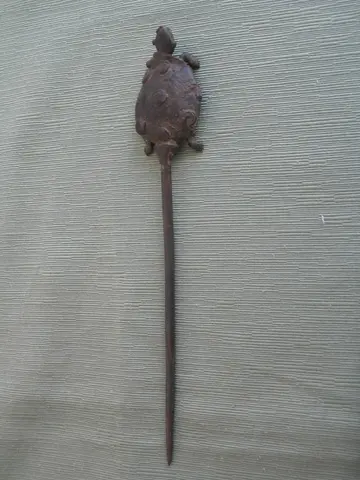
These pins are intended to hold the bows of the artistic hairstyles of ceremony and festive women.
CYA-14
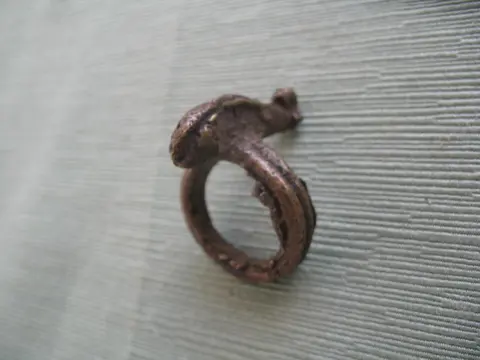
Roughly made double-band ring representing a fish. Dark patina.
ANLL-12
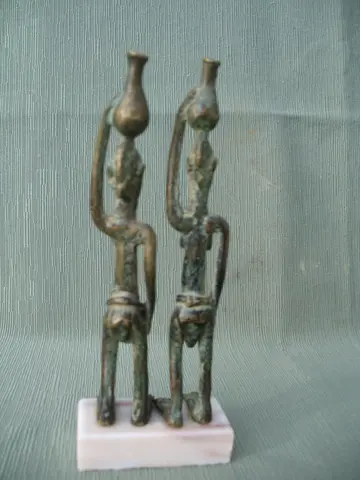
Couple of dogon women with a pitcher over their heads.
BRN-113
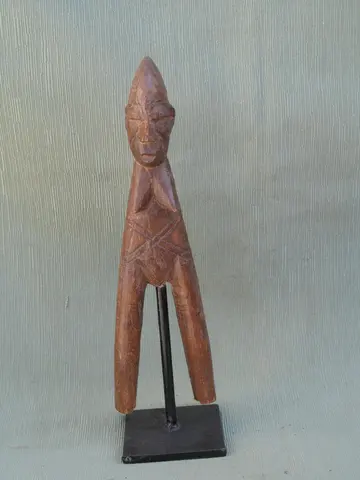
Slingshots or slingshots, depending on the region, are actually a small, sling-like, first weapon capable of injuring or killing remotely.
TRCH-34
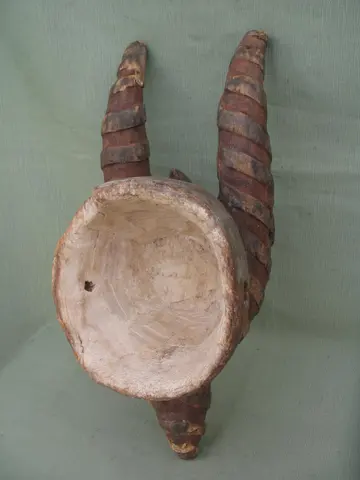
Mask helmet with red and black polychrome.
MFZ-48
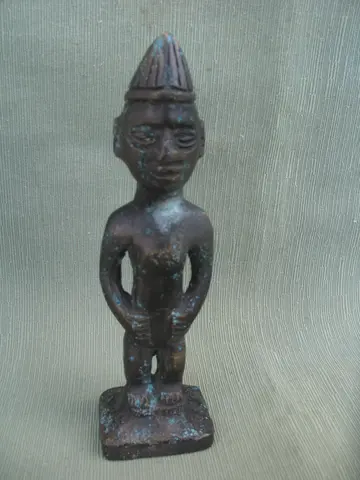
The statues, offerings, votive figures and exvotes are not in Africa an offering dedicated to God or to the gods for a…
BRN-123
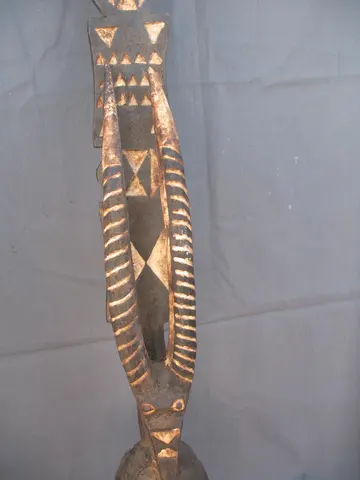
It is one of the most well-known masks of the Yatenga group and are part of those known as Iron masks.
MFG-83


