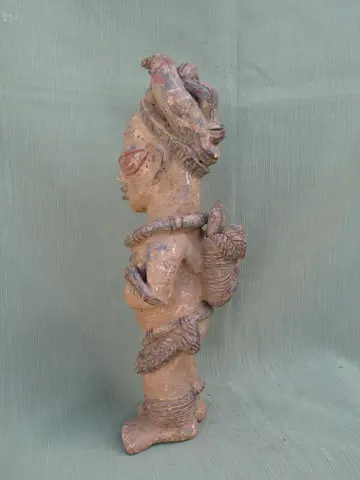
Ikenga
An important figure in culture Igbo are the “Alusi” or geniuses of nature, responsible for disease and death, and charged with punishing…
TRRC-65

Text of the original catalogue
It is one of the most important villages in Nigeria. They live in a wooded area south of Nigeria, between the Benué to the north and the Niger to the west. They are approximately the 20They are also an important nucleus of the country's two main cities, Lagos to the west and Kane to the north. The Igbo language has several dialects. Its notion of time and space is special. They do not speak of hours but of rhythms, which mark the defining times. The king sets the annual calendar of festivals and markets and the community is organized around these dates. . The king also sets the calendar of activities from the lunar phases and the will of the god Aro, interpreted by the priests. Each clan sets its own calendar from the messages of Aro, which regulates the lives of traders and clans. The igbo have a deep sense of individuality associated with a strong sense of belonging to the group. Its political system is complex and little known. The village is the most important social unit, the smallest being the extended family at the clan level. These units form a people that have a high degree of autonomy under the authority of the oldest leader of lineage. Its social structure is dominated by two powers, the council of elders and secret societies. The religion of the igbo is complex; for them Allah is the spirit of the earth and wife of Chukwu, the supreme, omnipotent, omnipresent and omniscient Creator God. An important figure in culture Igbo are the “Alusi” or geniuses of nature, intermediate divinities responsible for sickness and death, and charged with punishing perjury. They are given family altars and in the villages so that they are favorable to men. These altars are adorned with wooden statues called “Ikenga”, protective guardians of families and their homes. Only parents can own Ikengas. The Ikenga are sons of the Alosi and therefore share supernatural powers. At the death of the head of the family, his Ikenga must be destroyed. A cult is offered to the Ikenga, based on prayers and libations, destined to extol the power and vital force in the right hand of man. The statues that remain standing embody their different deities. The Igbo have numerous masks used in different playful and funeral ceremonies as well as initiation. The female masks are adorned with artistic hairstyles. The role of the soothsayer is to interpret the wishes of the alusi and the priest to appease them with sacrifices. The Allusi resolve conflicts with the mediation of a priest or intervene favorably in the affairs of men, but they can also be responsible for sickness and death, punish men who fail to fulfill their promises or swear in vain. They celebrate dances in honor of the god Aro, which in igbo means “year” and “god of seasons”. Igwe, he's the god of heaven.
38 objects · page 2 of 2
An important figure in culture Igbo are the “Alusi” or geniuses of nature, responsible for disease and death, and charged with punishing…
TRRC-65
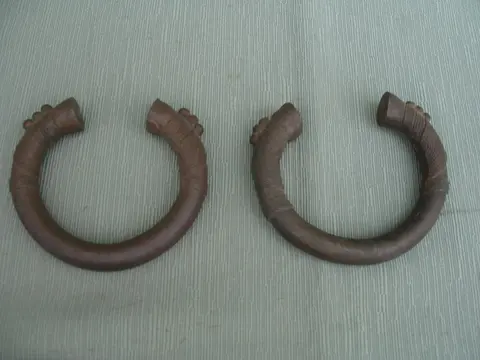
These bracelets in addition to a feminine ornament were used as a barter coin or as part of the dowry and integrated…
PYB-45
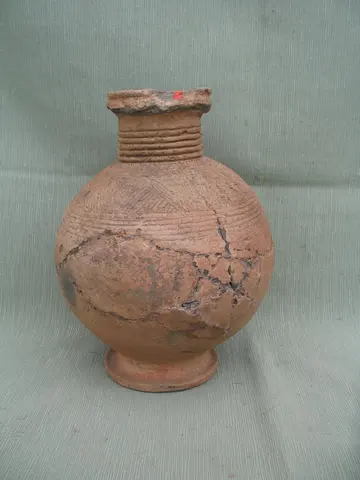
Aboil it or vessel of wide body and narrow neck destined undoubtedly for funerary uses, although this type of jars also served…
TRRC-74
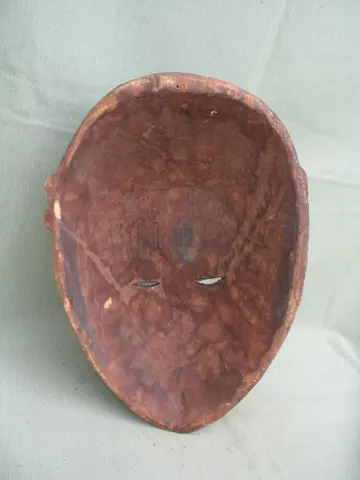
Mask whose face bears a great resemblance to the masks agbogho mmwo, mask of young female spirits as its name indicates.
MFANT-201
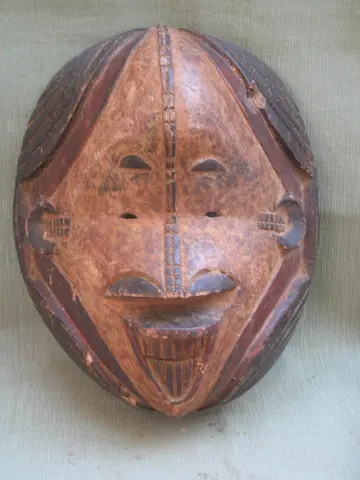
This mask, Okoroshi Oma, like the Okoroshi Ojo, participates in the rituals destined for the cult of water, Owu, rituals that are…
MFANT-204
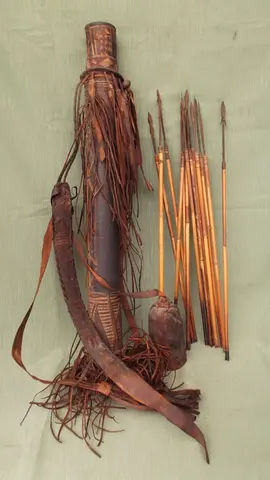
Nice carcaj with a large group of arrows destined for hunting and defense.
ARM-48
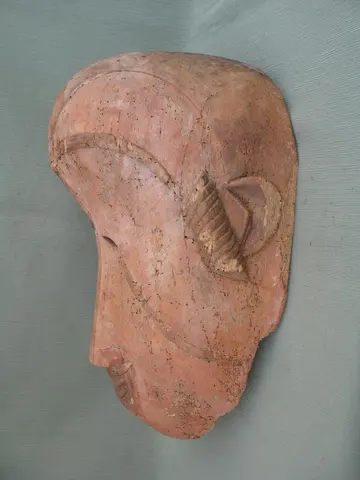
This mask, Okoroshi Oma, like the Okoroshi Ojo participates in the rituals destined for the cult of water, Owu, rituals that are…
MFAZ-101
Carcaj and small arrows of hunting and defense. Often the tip of the arrows is poisoned.
ARM-56
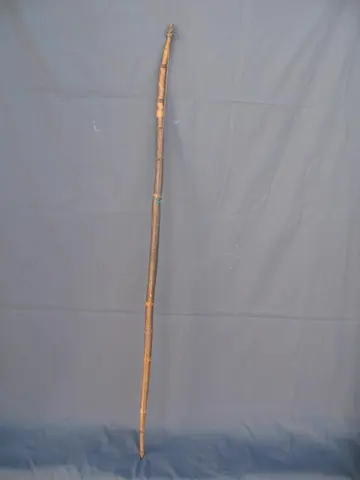
Arch used for hunting and in other times also for defense.
ARM-52
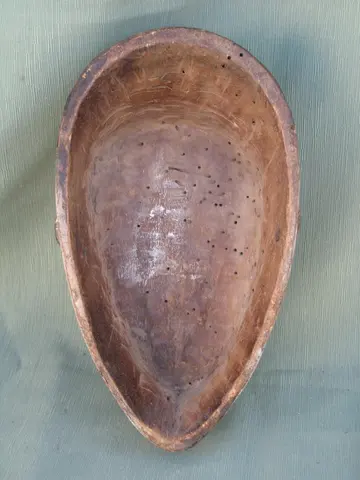
These masks are kept in the family altars and are intended to honor the deceased.
MSOAL-13
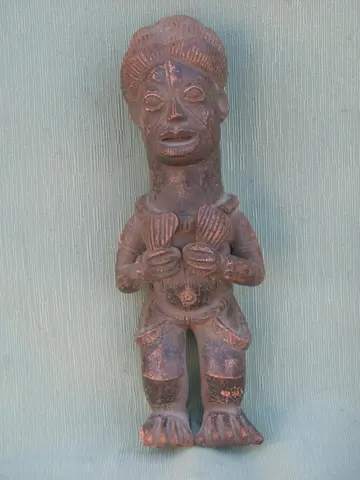
Character with an elaborate hairstyle with collar at the neck, bracelets on the arms and elegant dress that has in his hands…
TRRC-76
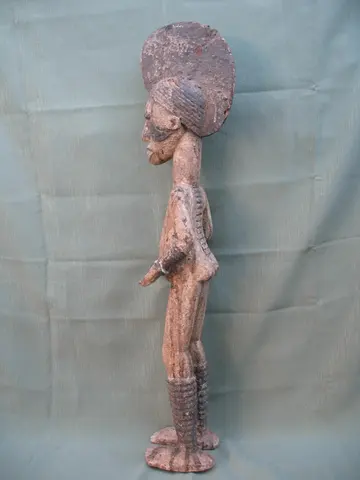
An important figure in culture Igbo are the “Alusi” or geniuses of nature, responsible for disease and death, and charged with punishing…
-38
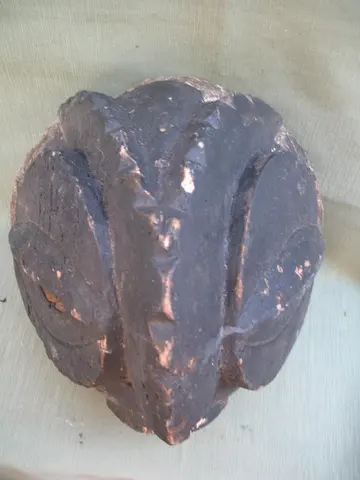
Curious and rare funeral mask that presents circular and exaggeratedly large eye orbits as well as the eyeballs, with large eyelids, that…
MFANT-220
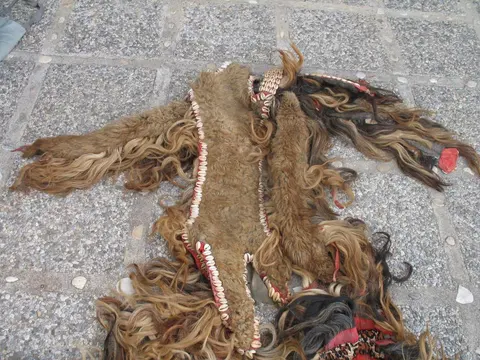
Great Dance Costume Igbo, consisting of several parts, the upper, the lower and the legs.
VAR-37


