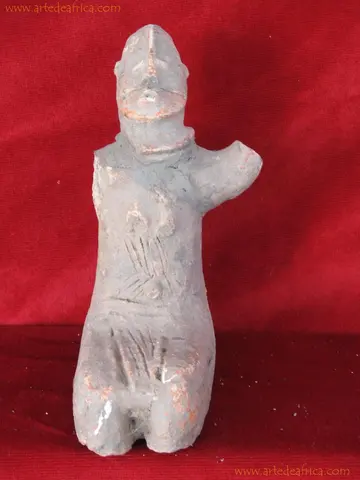
Tenenkun Sitting Male Figurine
These statuettes come from the Djenne region, the nearest city to the archaeological site “Jenne-Jeno”, (formerly Djenne), in the Niger Valley.
TRRC-41

Text of the original catalogue
When it comes to Djennee, it is not about an ethnic group, it is about various cultures and styles throughout the centuries. Djenée is located about 600 kilometres from the capital, Bamako, and belongs to the Mopti region. The city was created in the century IX the Bozo, fishing village, that gave it the name of Djenée that in Bozo means “genius of the waters”. In fact, Djenée is an island that does not reach 100 hectares built between two arms of river Bani, tributary of Niger. It was built next to the old Djenne-Djenno. Because of its strategic geographical location that made it an important commercial center where the goods that were traveling through the Sahara transited, it was coveted, conquered and occupied by numerous peoples that succeeded throughout history. Quickly converted to Islam the city is conquered successively by the Tuaregthe Songhaï, the Peul, the Weapon, the Bambara, the Tukulor and finally, in the century XIX by the French troops of General Archinard. After so many conquests and invasions, it is not surprising that today it is inhabited by a multitude of ethnic groups, as with the Songhaï, PeulBambara, Sarakolé, Bozo, Dogon or MossiDjenée is a city of mud, because in this material were built their houses and this is also the material of their famous mosque, ordered to be built by King Koi Komboro at the end of the century XIII. It is not surprising, then, that all the remains of this city that reach to our day are made of clay or what we now call terracotta. Given the multitude of ethnic groups in the Djenée region, it is impossible to attribute the paternity of these objects to a certain ethnic group, as is the case with the rest of the pieces we integrate into what we commonly call African art. All of these pieces are named after a vessel, statue, or figure of Djenée and within this denomination various styles are attributed to it. Main styles: - Djenne style (Djenne-Djenne), centuries XIII a XV are the most well known and also the most classic. - Bankoni style, near the current Bamako, about the same time. As in the case of Djenne style, maternity homes and men on their knees or sitting and equestrian figures of knights carrying arms or ornaments, similar to those appearing in the Niger Delta, have appeared. - Niger's lower delta style, centuries XII a XV. Rounded features and without the scarifications presented by the other styles. Nor do they have globular eyes. There are numerous statues of knights appearing for several centuries, the most important being those of centuries. XII a XVIknown indistinctly by the name Djenné or Djenné Jenno. These sculptural manifestations prove once again the importance that the horse has had for centuries in the territory that corresponds to today's Mali. Although it has not been considered a sacred animal, the horse has always enjoyed special care and attention in these regions. It is, par excellence, the animal that confers a high rank to its owner. Usually in these statues there is an excess of ornamentation both in the knight and in his mount. The reddish varnish that covers Djenne's terracottas has a funerary meaning.
27 objects · page 1 of 2
These statuettes come from the Djenne region, the nearest city to the archaeological site “Jenne-Jeno”, (formerly Djenne), in the Niger Valley.
TRRC-41
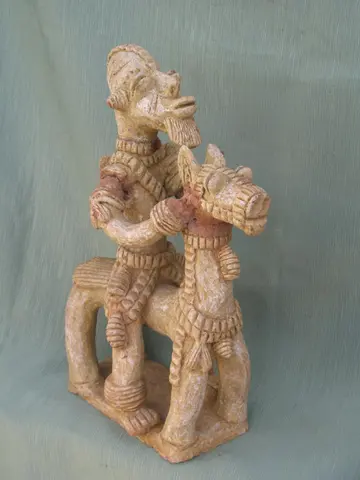
This figure seems to represent a remarkable given his dress.
TRRC-62
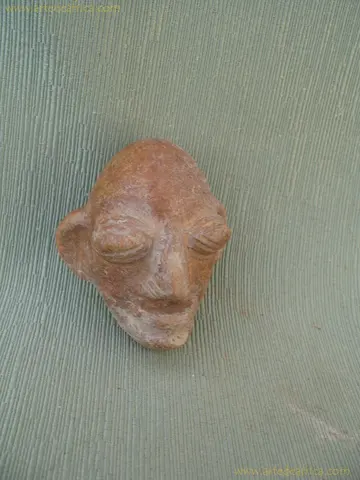
Since the 1970s, there has been a knowledge of a culture developed over the centuries.
TRRC-9
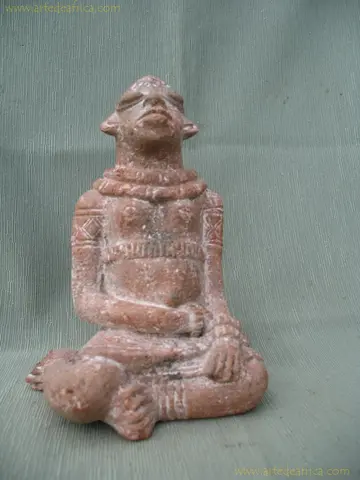
By the pro-eminent navel and the incipient breasts could be the representation of a young woman, as well as the bracelets she…
TRRC-10
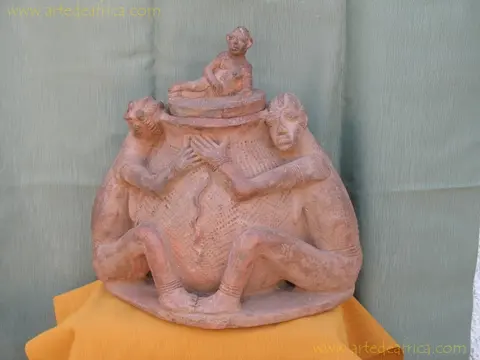
Since the 1970s, there has been a knowledge of a culture developed over the centuries.
TRRC-17
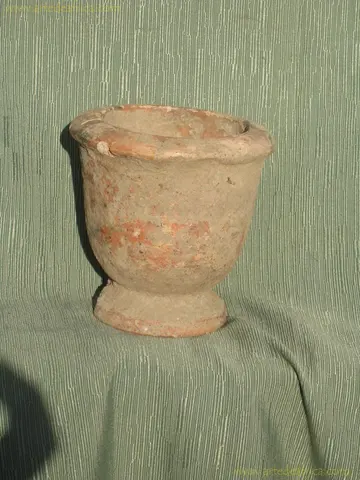
Small Djenne vessel, from the Nijer valley, intended to contain medicinal, magic or cosmetic substances for women.
TRRC-18
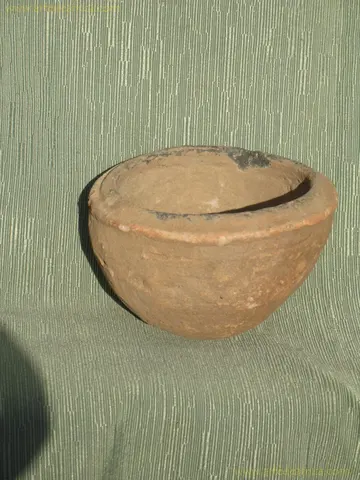
Glass of terracotta ointments, intended to contain or prepare medicinal or magical substances.
TRRC-19
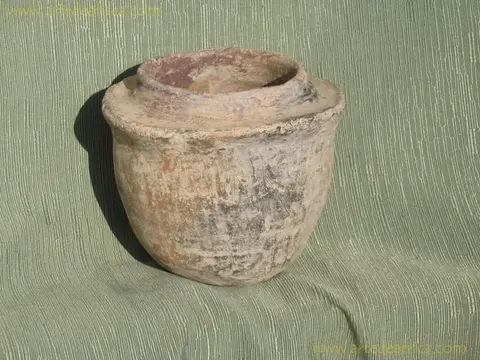
A pot of ointments intended to contain magical substances for ritual celebrations or cosmetic substances for use by women.
TRRC-20
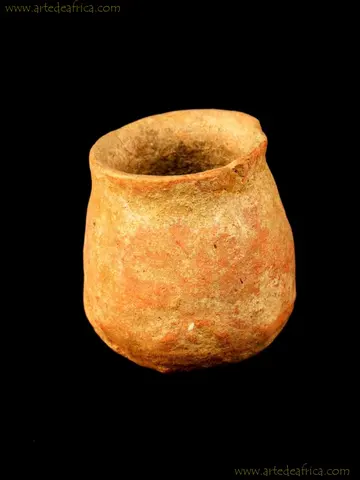
Small glass of terracotta intended to contain medicinal ointments for healings, magic substances or cosmetics to enhance the beauty of the woman.
TRRC-21
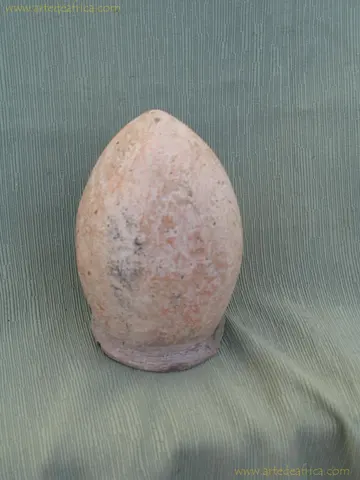
Small glass with amphora-shaped body intended to contain medicinal or magical ointments for your use in divinatory practices.
TRRC-22
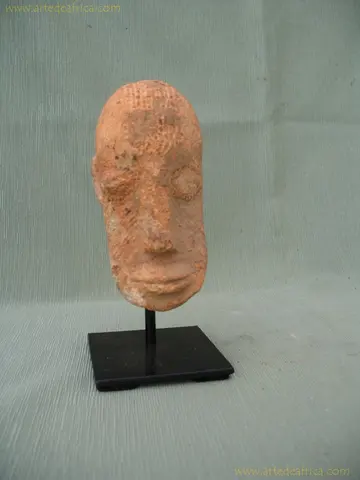
terracotta head which is undoubtedly the fragment of a full-body statue.
TRRC-23
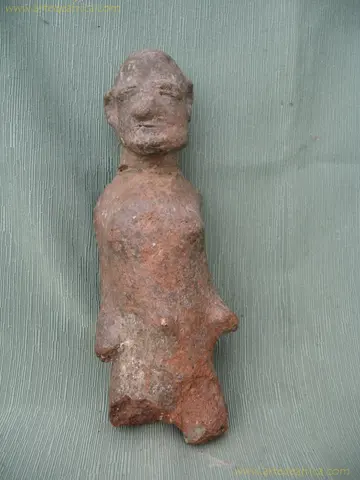
Anthropomorphic figure in heavy ferruginous terracotta. Arms along the body slightly flexed and missing part of the legs.
TRRC-24
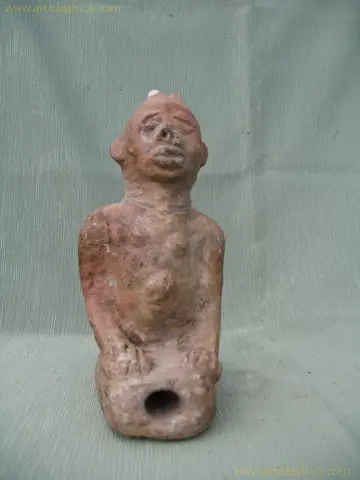
These statuettes come from the Djenne region, the nearest city to the archaeological site “Jenne-Jeno”, (formerly Djenne), in the Niger Valley.
TRRC-25
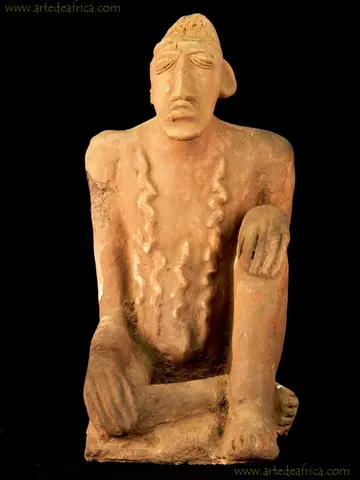
Male sedative figure, with one foot resting on the ground and hand on the left knee.
TRRC-30
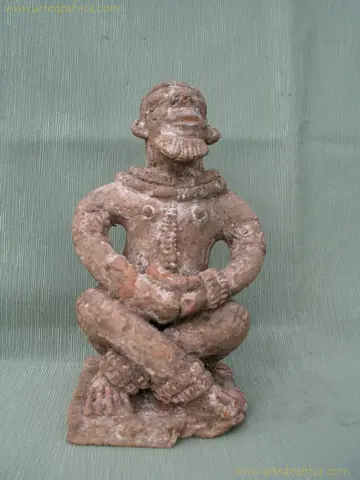
Figure of a remarkable with crossed legs and hands together on the waist, looking at the sky in a gesture of imploration.
TRRC-43
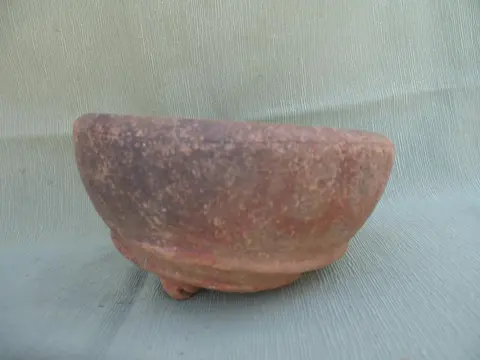
An elongated snake with an open mouth appears curled in the bottom of the glass indicating that it was definitely intended to…
TRRC-79
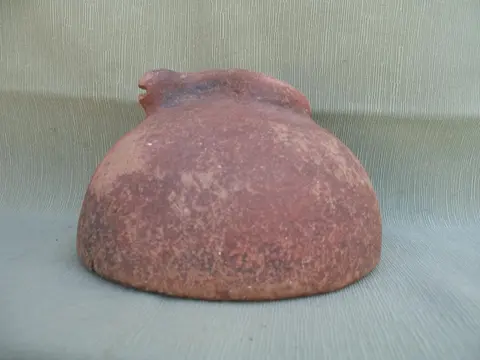
A short, strong snake, with its mouth open, appears at the bottom of the glass indicating that it was intended to contain…
TRRC-80

Small terracotta flask intended to contain perfume or ointments.
TRRC-93

Representation of a female body that has originally been modeled without legs.
TRRC-94

This type of bowl served to contain grain or liquids. Accurate antiquity without a thermoluminescence analysis is difficult to define.
TRRC-95

This type of bowl served to contain grain or liquids. Accurate antiquity without a thermoluminescence analysis is difficult to define.
TRRC-96

This type of bowl served to contain grain or liquids. Accurate antiquity without a thermoluminescence analysis is difficult to define.
TRRC-97

This type of bowl served to contain grain or liquids. Accurate antiquity without a thermoluminescence analysis is difficult to define.
TRRC-98

Small container used to drink some liquid. Accurate antiquity without a thermoluminescence analysis is difficult to define.
TRRC-99


