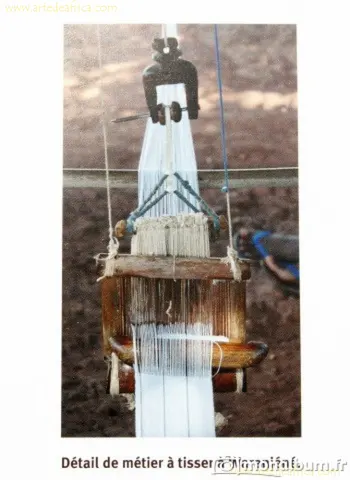
Telar pulley
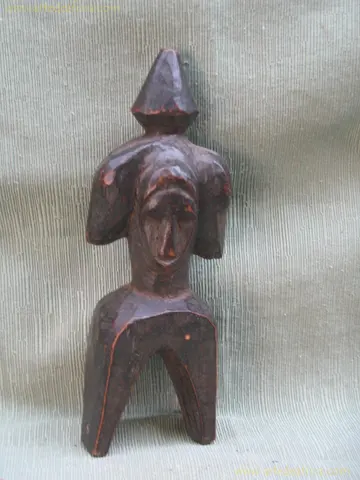
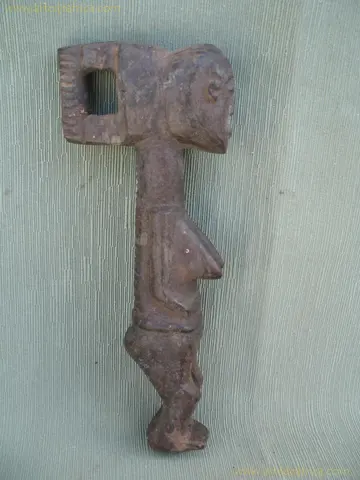
Surprising Nbekré in a loom pulley.
PLYTL-13

Text of the original catalogue
According to legend, at the end of the 18th century an Akan group related to the Anyis, led by Queen Abla Pokou, niece of the Ashanti king OsaiTutu, fled Ghana and tried to take refuge in Côte d’Ivoire. On the monarch’s death, a war over the succession to the throne broke out between Abla and her brother Dako. Pursued by Dako’s troops, Abla was forced to flee towards the neighbouring territory of Côte d’Ivoire, reaching the crocodile-infested Comoé River, west of Abenguru. Halted in their flight by the turbulent river, and following her diviner’s advice, the queen did not hesitate to sacrifice her newborn son to obtain the gods’ help, save her people and cross the river. Taking her son in both arms and raising him above her head, she threw him into the river, crying ‘baouli’ (the child is dead), thus giving her people a new name. The crocodiles crowded together to obtain a share of the prey, forming a compact, solid surface that allowed her people to cross the river. And so the Baule people came into being on the opposite bank of the Comoé.
The Baule live in central Côte d’Ivoire, in its capital Yamoussoukro and in the towns of Tiebisú, Tumodi, Dimbokro, Beumí and Sikasso, considered the Baule’s moral capital, where legend says Queen Poku arrived with her people from Ghana. They governed the country for forty years during the second half of the 20th century. They apparently learned woodcarving from the Guro, and the aesthetic sensibility expressed by their masks and statues is unrivalled.
For the Baule, each individual leaves a family in the other world at birth. In adulthood, jealousy enters the couple’s relationship, instilled by the spouse in the afterlife. The diviner therefore commissions a statue, as beautiful as possible, to be welcomed as if the husband or wife from the other world had come to reconcile with the earthly spouse. After a ceremony resembling a wedding, the statue is kept in the bridal chamber, honoured and fed regularly. Blolo bian is the husband and blolo bla the wife of the other world, our origin and our destination.
Thus, for the Baule, their statues relate more to the realm of divination than to the world of the ancestors.
The Asié usu represent the spirits or beings of nature. They are intermediary divinities that can be favourable or harmful. To make them favourable, the diviner commissions an effigy as beautiful as possible, so that the spirit will feel at ease in its new dwelling. It is usually represented as a bearded man with handsome features, seated on an Akan throne, often holding an egg, a symbol of the Universe. It receives sacrificial offerings and libations from families or possessed people, who thereby obtain its favour and protection. These statues are passed down from generation to generation to ensure the families’ well-being.
608 objects · page 8 of 26
Surprising Nbekré in a loom pulley.
PLYTL-13
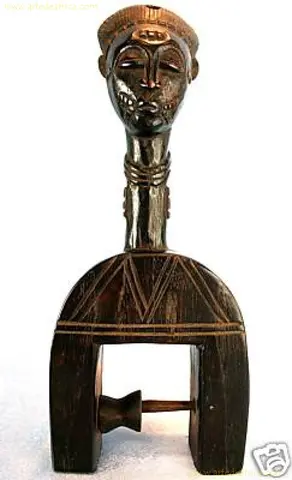
The pulley handle represents a woman with a long neck adorned with necklaces, possibly evoking the woman of the weaver, a woman…
PLYTL-14
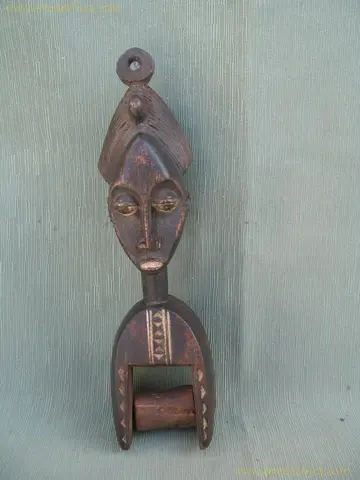
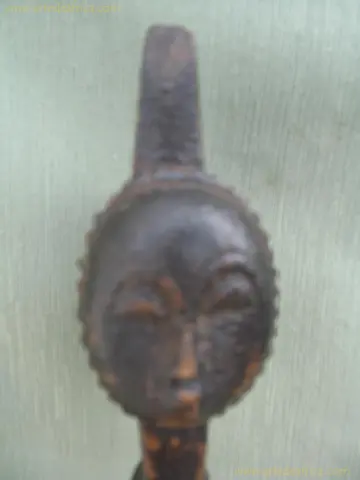
Beautiful female face, stylized for a Baule figure. Conical headdress topped by the ring used to attach it to the loom.
PLYTL-15
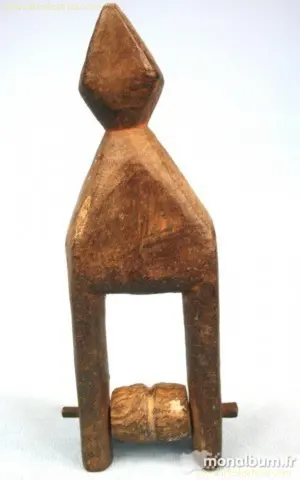
Ancient and rustic pulley that has really been used. Colour wood with dark honey patina.
PLYTL-17
The four heads of this loom coil mean that you can see in all directions, just like the present and the future,…
PLYTL-22
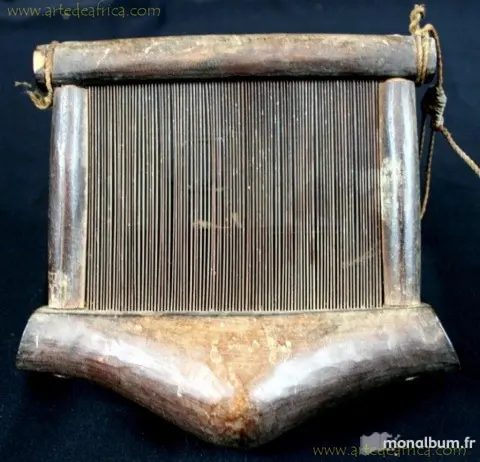
Beautiful patina for use and small strokes due to the artisanal use of the object.
PLYTL-25
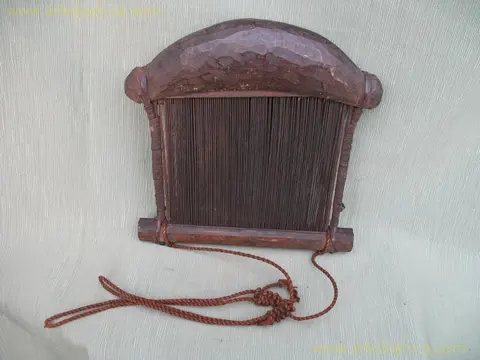
Loom comb or thread guide used in central and northern Côte d’Ivoire, mainly by the Baule and Senufo.
PLYTL-26
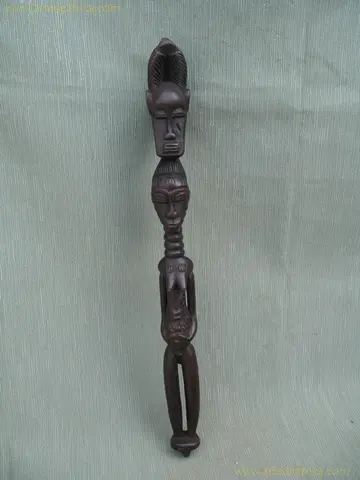
This divinatory hammer or also called gong hammer represents a woman, delicately sculpted, with her neck ringed, symbol of feminine beauty.
-8
Small rough-looking hammer possibly made by the loom owner.
-9
Beautiful sculpture in this hammer of divination depicting a woman touching a chest with a recha hand and belly with a left…
-10
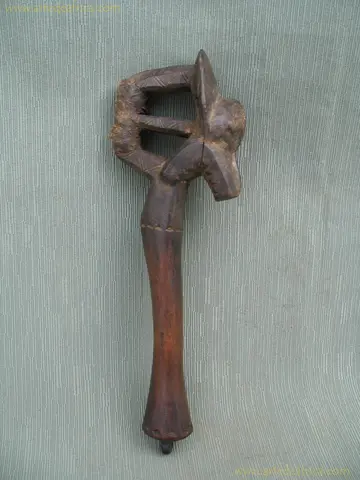
This divination hammer is topped by a Bon Num Amwin mask, which suggests that it has belonged to a fortune teller as…
-11
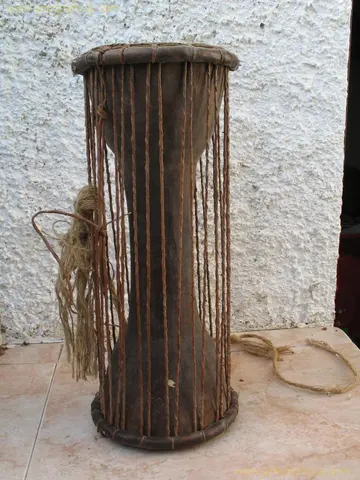
Mid-century drum XX.
IDIOF-4
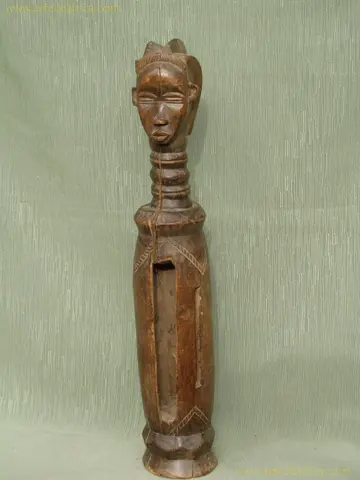
Slot drums have been used in large areas of Africa.
IDIOF-6
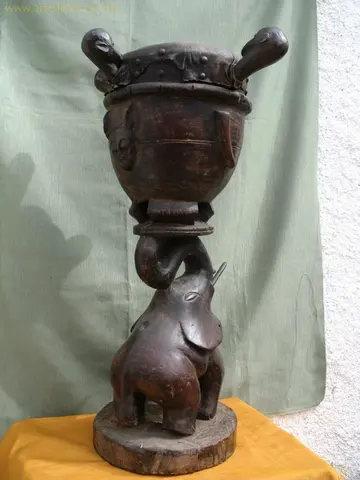
Drum in which the caryatide is an elephant, symbol of Ivory Coast.
MEMB-3
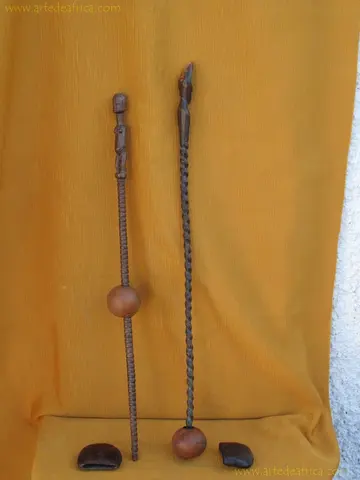
the awokois a small instrument of music of the so-called scrapers.
IDIOF-15
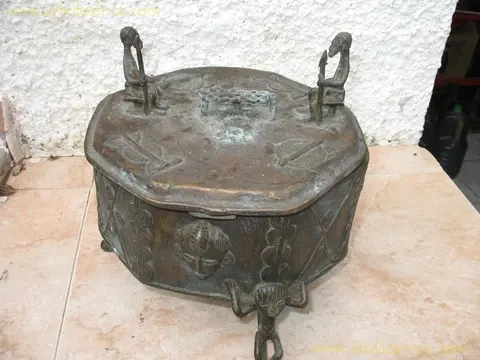
Box intended to store the tail nuts offered to the visitor, as a symbol of hospitality, on arrival visiting a house.
BRN-72
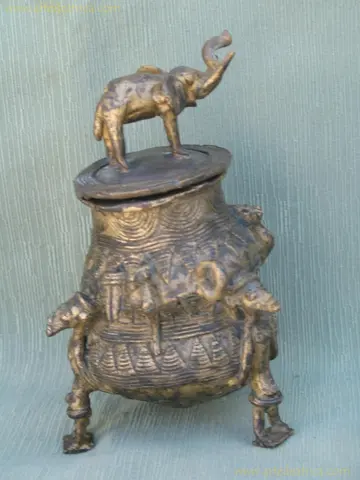
Container manufactured by the procedure of the requested wax, coming from Buaké.
RCPT-6
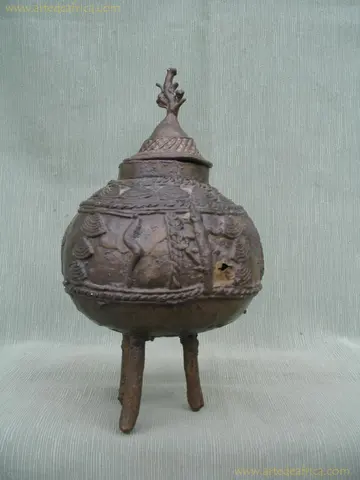
In addition to their usefulness as cosmetic cans, they also serve to store ointments that constitute true magic ointments intended to protect…
RCPT-7
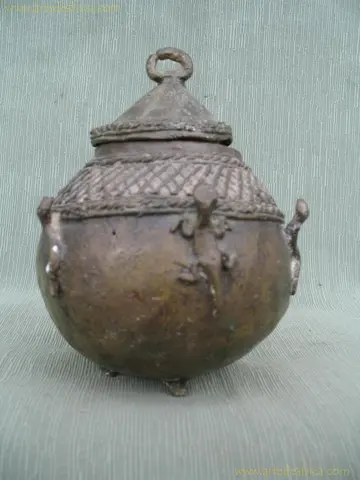
In addition to their usefulness as cosmetic cans, they also serve to store ointments that constitute true magic ointments intended to protect…
RCPT-8
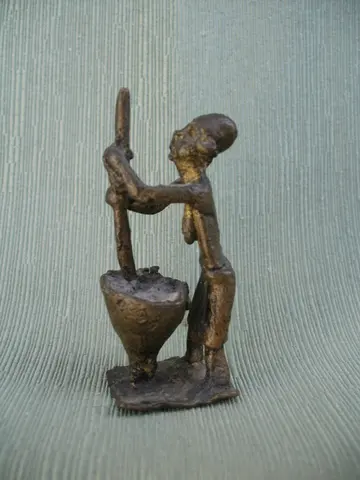
Woman stacking, surely millet or preparing futu, in mortar.
PFG-16
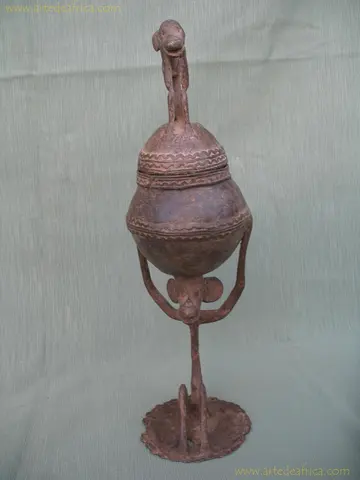
Cup or jar to guerdar medicinal herbs on whose top is a monkey, reference to the N'botombo, divinity of the jungle, in…
RCPT-10
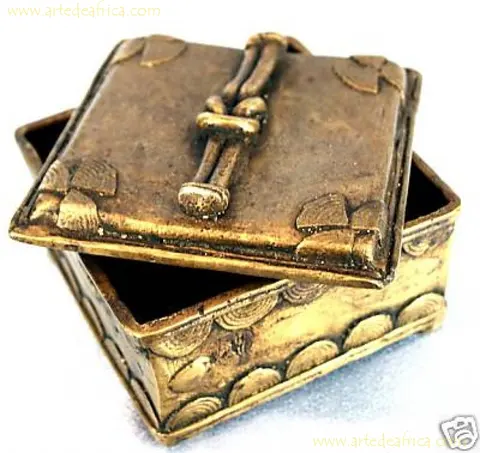
Small box or bronze box made by the procedure of lost wax.
RCPT-16
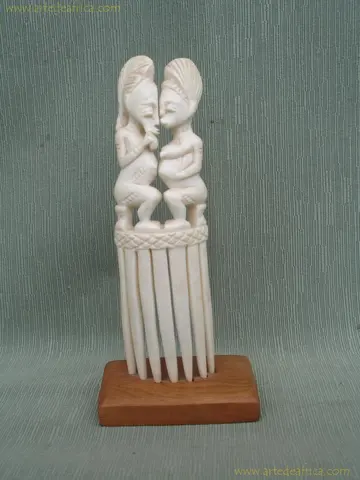
Tender scene of two lovers sitting on the traditional Akan stools or thrones, with the most significant traits and scarifications of the…
PNS-2
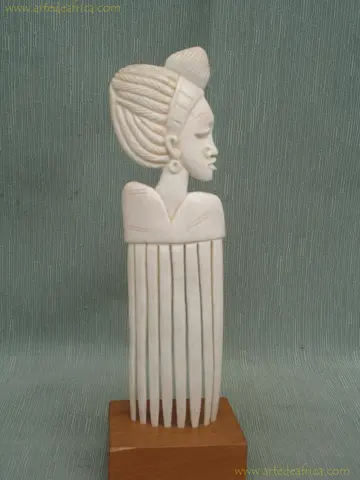
The face of a beautiful young woman with a typical Baule hairstyle.
PNS-3


