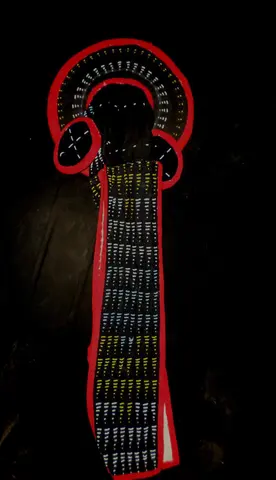
Kuosi Elephant Mask
The elephant is a symbolic animal in Africa.
MFG-67

Text of the original catalogue
Many are the theories that have existed about the origin of the Bamileké Although it is increasingly confirmed the thesis that considers them natives of Upper Egypt from where they would have come out in the century IX and after different settlements they would have settled in the Tikar country towards the middle of the century XIII. Also the origin of the name “bamileké” has given rise to the most diverse theories, although it is a name that seems to date from the early century XXThe Bamileké country is settled in an area of high plateaus where volcanoes and numerous lakes abound, some of which in the craters of the volcanoes, alternating with lush and fertile valleys. This people has seen a wide expansion throughout the ages, having to occupy new territories, due to its strong population growth favored by polygamy. Also, the fact that in inheritance only the eldest child minor children are forced to settle in other places in order to start a new life. Agriculture has been its main resource together with trade in surplus production and crafts. And, in times past, the slave trade. As Tematio Maurice tells us, there was a division at the death of the only sovereign, King Ndéh in 1360. His son Yendé refuses to occupy the throne and crosses the river Nun and founded Bafussam and years later the younger brother Ncharé goes down to the plains of Nun and founds the country Bamun but it is from Bafoussam where all the bamileké groups will come from. Both Bamileké Bafussam as those of Bamun will branch out giving rise to the creation of multitudes of dialects to the kingdom of Njoya at the beginning of the century XXThe socio-political structure of the Bamilekese is the head office, a kind of small kingdom that enjoys all the attributes of a true hereditary monarchy, at the head of which is the Fon who will choose his successor from among his sons. Fon has its palace and court and is assisted by a council of nine notables. Each head office has a certain number of villages commanded by a phone named by the phone. There are currently a hundred headquarters that are unevenly distributed between Dshang, Bafang, Bangantgté and Bafussam districts, the capital of the BamilekéThe Bamileké people are organized into a multitude of political-administrative societies, dedicated to establishing public order, fighting against the invisible beings of nature, against witchcraft, dealing with warring, magical or religious practices, achieving the happiness of people, acting for the good governance of leaders, etc. It is a hierarchical society whose supreme leader is the FonHe is invested by the power of the forefathers, he is the chief priest of this cult and only to them must he be held accountable. He assumes all the powers, legal, political, military, religious, administrative and economic, in short, everything depends on him. Their power is absolute and semi-divine. As most Animist peoples are monotheistic, they believe in a Creator God, being supreme to what they call Yes. They have many secondary divinities to which they turn to obtain the favors of Yes. Their main cult is the cult of ancestors and they believe that the ancestor's spirit is enclosed in their skull, so large funerals are held during the dry season and the skulls of the last to die are unearthed for after ceremonies to keep them with the other ancestors of the family in a special hut or in the room of the head of the family. But the ancestor has not died, he has detached himself from his fleshly clothing that returns to the land to which he belongs and his spirit remains alive interacting in the world of humans protecting or punishing, if necessary, those who contravene the laws. The skulls are questioned whenever problems or needs arise. They have their places of worship in the sacred forests where the initiations of young people culminating in circumcision are carried out, but girls are not excisioned. With so many small monarchies, it is no wonder that their crafts are focused on what in the African art world is known as cutting art. His bronze pipes, his masks covered with fine metal sheets, his artistic carved tables, the majestic columns of the royal palaces, the colorful elephant masks of his Kuosi society and so many other objects whose aim is to extol the figure of the Fon and show its power and wealth. In its craftsmanship it is worth highlighting the art of the pearl and its magnificent thrones and statues.
75 objects · page 3 of 4
The elephant is a symbolic animal in Africa.
MFG-67
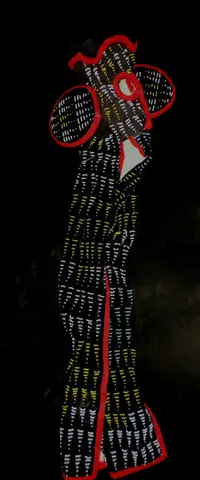
The elephant is a symbolic animal in Africa.
MFG-68
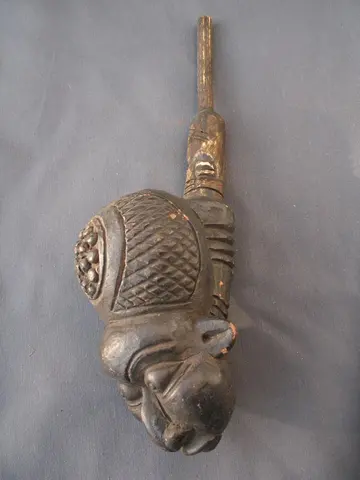
Pipa of the calls of prestige or ceremony because they are only used on great occasions, although not smoked in them, is…
PIP-21
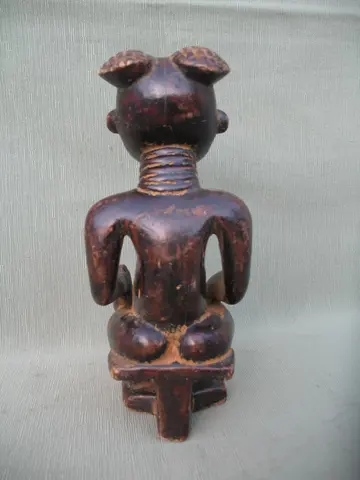
Healer sitting on a stool. In his left hand he carries the container with the medicines.
ESFE-2
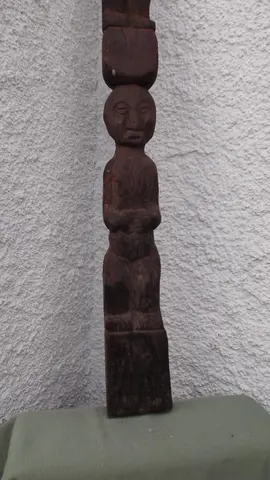
This high post is placed at the door of the hut or the house of the pregnant woman who is on the…
FRT-36
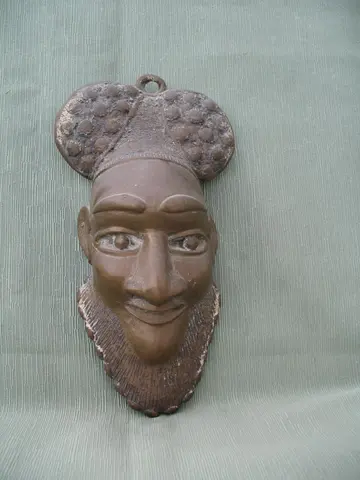
It is a male mask of remarkable bamileké.
BR-30
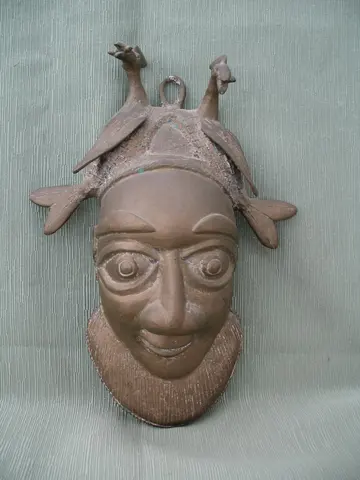
Mask female portrait intended to be hung in the home and in which it makes trade of protective mask.
BR-31
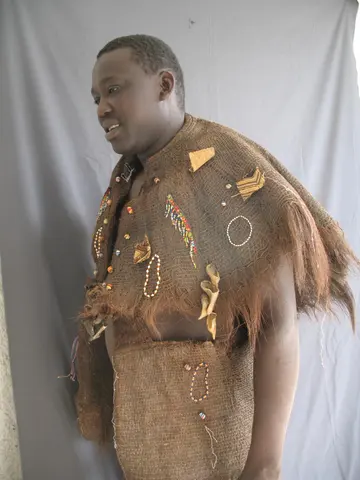
Chaqueton woven with roots and adorned with amulets of animal nails and beads, worn by the sorcerer for his magic sessions.
MYA-35
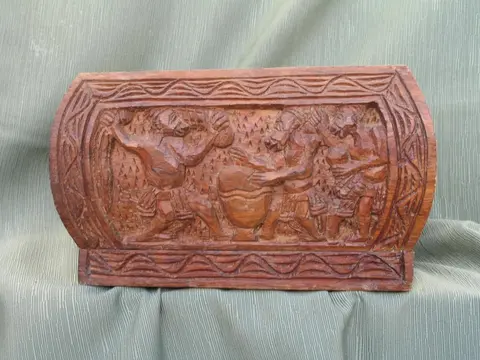
The so-called iron wood chest because they say it doesn't float. decorated with tribal scenes.
RCPT-31
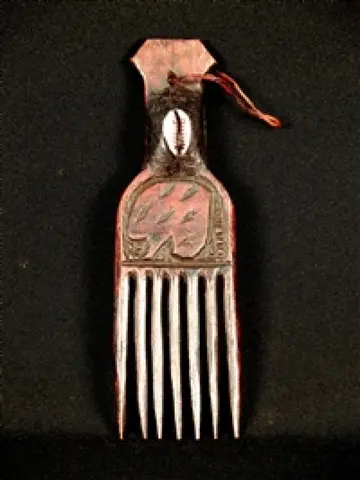
Comb decorated with a cauri, symbol of female fertility. The comb's body is decorated with drawings whose significance we don't know.
PNS-24
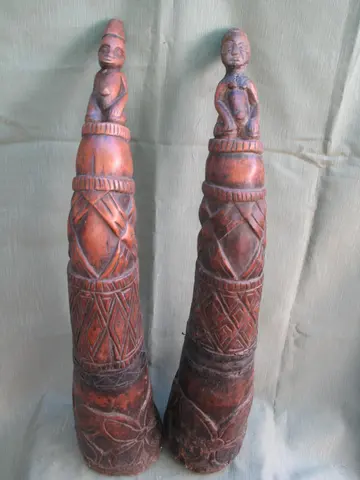
Good size tubes used in court festivities. They're topped up, with two characters who can represent the real couple.
AER-6
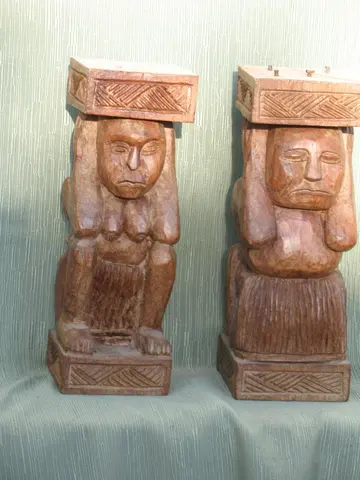
Series of different size furniture legs representing male and female figures.
ARC-10
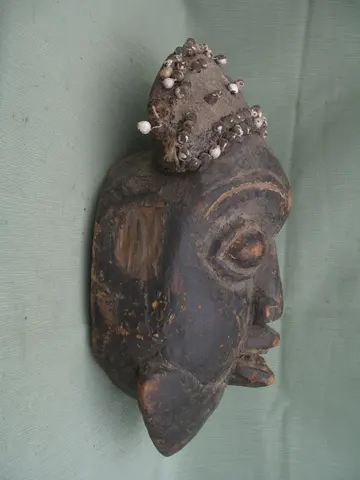
Mask used in evening ceremonies in honor of the deceased. Kam is Ngoin's husband, the female mask.
MAVA-2
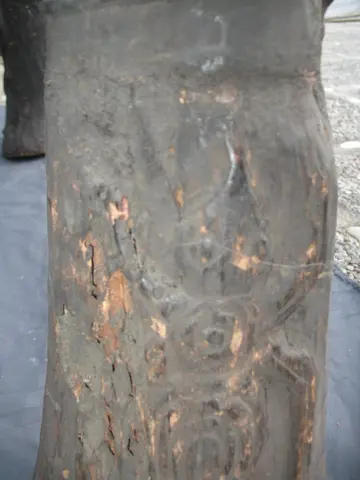
Large tubes used in court festivities.
AER-8
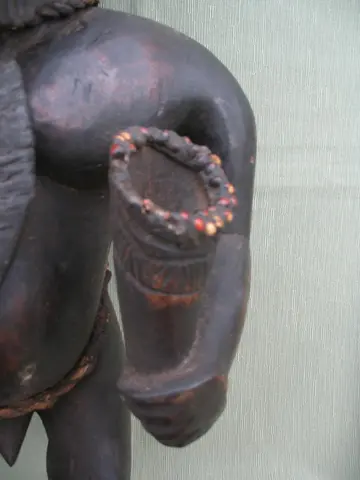
Couple of notable bamileké. The woman has a bowl between her hands, whose edges are decorated with small red seeds.
PAR-21
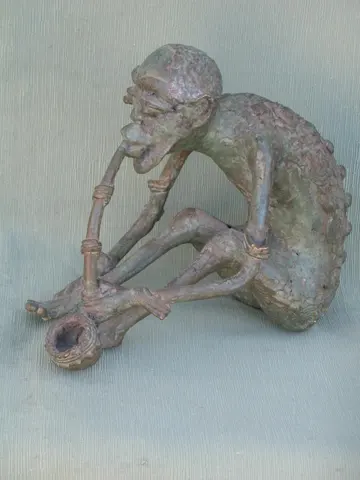
Curious piece of a man, probably representing an ancestor, smoking a long pipe.
EMS-119

For the central character who carries in his arms a pumpkin of magical substances, by his dress and by his bearing we…
BST-42
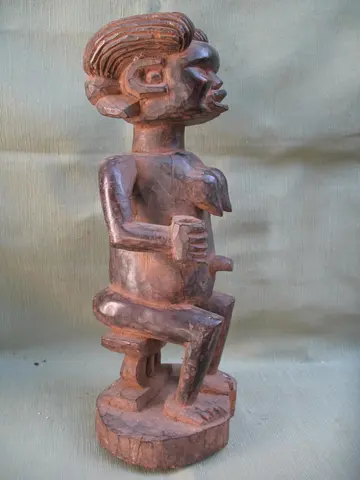
Notable woman how she denotes him to appear sitting on a royal stool.
EFM-135
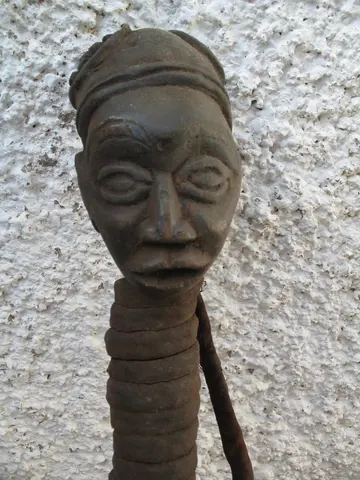
Scary whose handle is topped by a head that undoubtedly represents its owner or a remarkable.
ESP-9
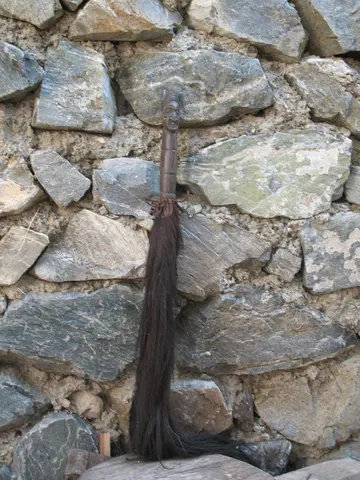
Elongated flyfly with also an elongated handle topped with a moreculine head.
221
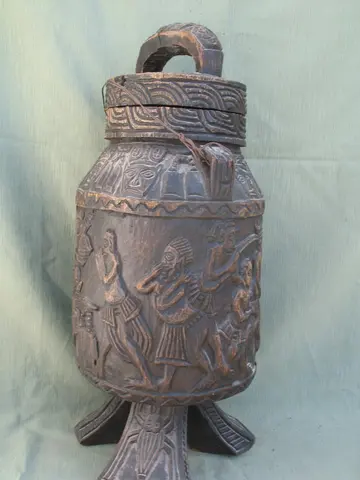
Cup intended to contain the kola nuts offered to the visitor.
RCPT-36
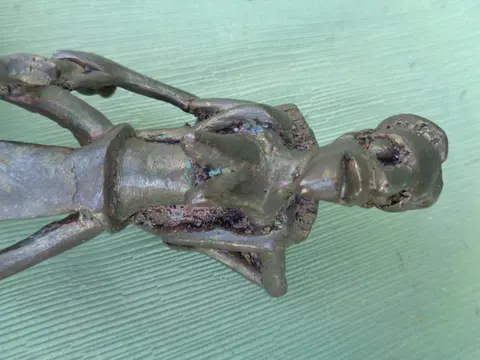
Small figure representing a tiller with the hoe in his hand and basket on his back.
BRN-147
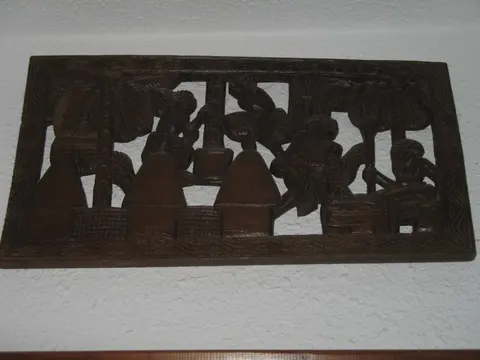
Small panel with family scenes. The drawings are trimmed.
ARC-11
Small panel that is part of a group of two.
ARC-13


