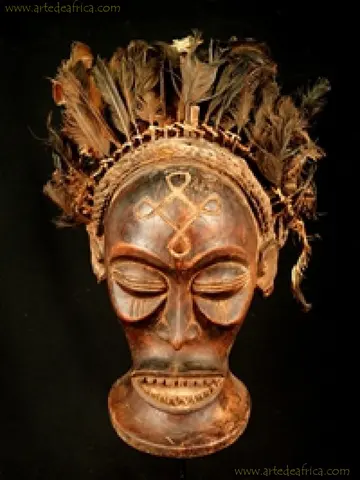
Cihongo mask
This mask embodies a masculine spirit that dispenses power and wealth.
MSOAL-1

List of the historical catalogue
Text and organisation of the original catalogue · Jesús Arrimadas Saavedra
The family altar is a sacred place intended for the worship of ancestors and used by virtually all the animistic ethnicities of black Africa. It is the center of the vital energies and the par excellence in which the world of the living and that of the dead enters into communication, or rather that of the ancestors, because they have not died, they have simply passed into another dimension. In these altars, statues, masks and other objects intended to worship ancestors will be kept in the shelter of the eyes of the profane. Most of these statues represent the ancestors, others are erected to thank a divinity for the service rendered. In both cases they serve to intensify devotion. Normally these altars are erected in a hut, called sanctuary, especially dedicated to worship. This is where the family will celebrate their rites, prayers, libations and even animal sacrifices intended to obtain the favor of their deceased. And this is where the deceased transmit their strength, their advice, their teachings and all their help to those who still remain is this world of the living. Life in traditional Africa is inconceivable without this interaction. These altars can take multiple forms. Sometimes, as in the case of some ethnic groups, such as Igbo (Nigeria) with the Ikenga the altar can be reduced to a statue or even a mask. The altar masks do not dance or participate in dances, they are sacred masks that are kept in the sanctuary. Only priests and initiates can approach them and offer sacrifices. They are placed on the altars during ceremonies. There are also masks that are altars on which sacrifices are made.
48 objects · page 1 of 2
This mask embodies a masculine spirit that dispenses power and wealth.
MSOAL-1
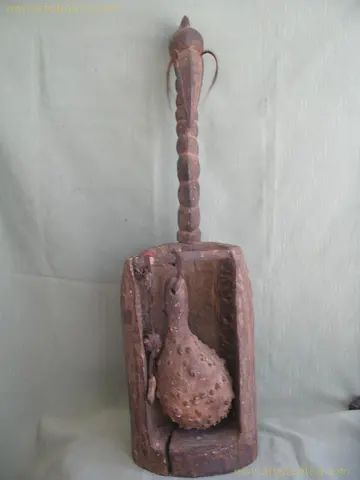
Family altar intended to worship ancestors.
OYA-1
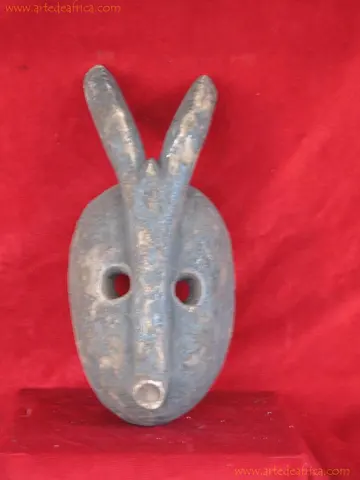
Curious hare mask, which leaves the line of dog head masks, ovoid face on which stands out a raised Greek "Y" that…
MFZ-2
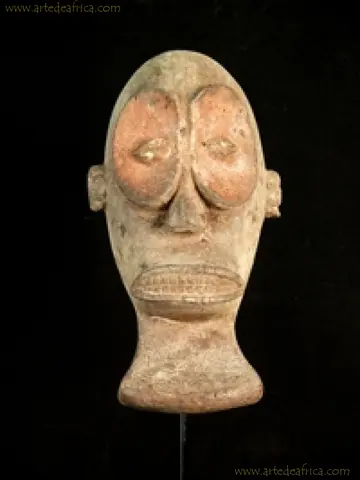
The masks Ibibio belong to the “ekpo” and “idiong” societies.
MSOAL-2
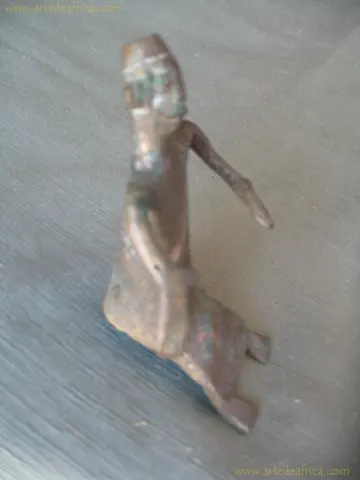
The so-called altars Asen of ethnic origin FonThese altars are formed by a circular platform in the center of the base of…
OYA-2
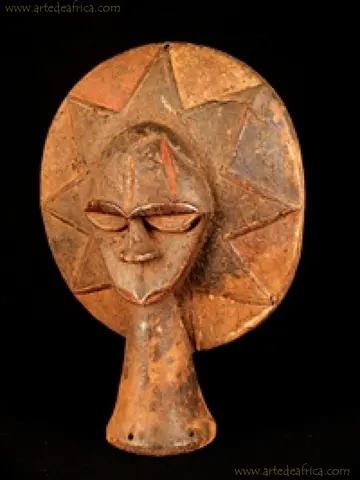
This mask belongs to the ekpo society, because just like the ibibio and other peoples also have the Eket they have the…
MSOAL-3
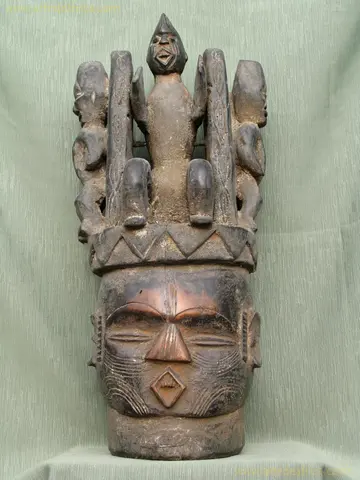
Civilization Igbo-Ukwu is developed in eastern Nigeria, mainly during the centuries IX and X.
MFG-5
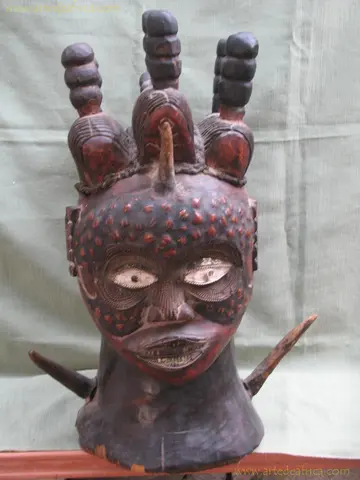
Voluminous, heavy and strange Ekoi head, in the form of a scimer but whose weight prevents it from being covered, so it…
MSOAL-5
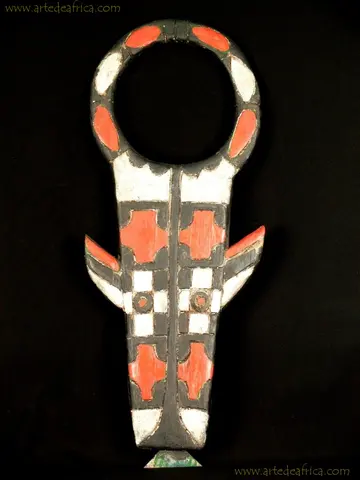
The sculptors Duala showy elongated masks, representing a stylized and polychrome buffalo, called nyatti.
MSOAL-6
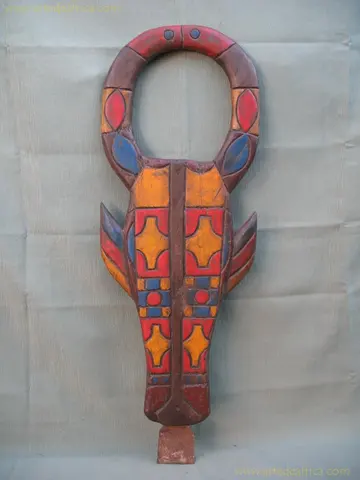
The sculptors Duala showy elongated masks, representing a stylized and polychrome buffalo, called nyatti.
MSOAL-7
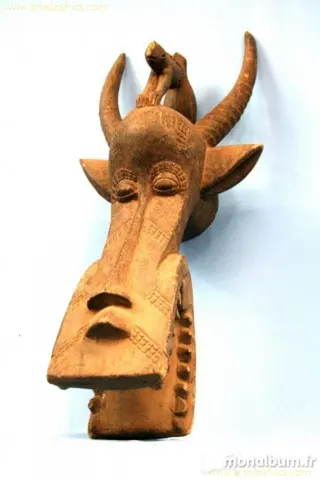
Altar mask, object of worship and veneration. It's not a cover mask, but it receives offerings from family altars.
MSOAL-8
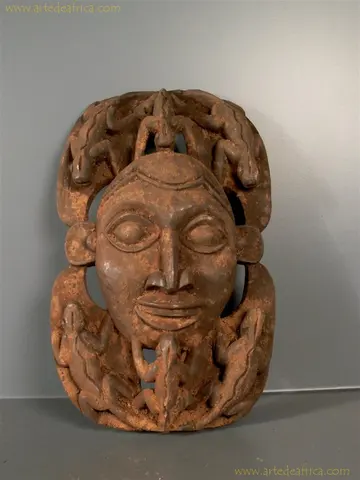
The altar masks do not dance or participate in dances, they are sacred masks that are kept in the sanctuary.
MSOAL-9
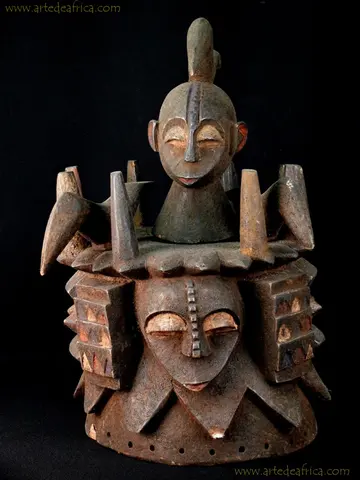
Mask helmet also used as an altar to worship the ancestors and Ala, divinity of the earth, to be favorable in the…
MCYC-13
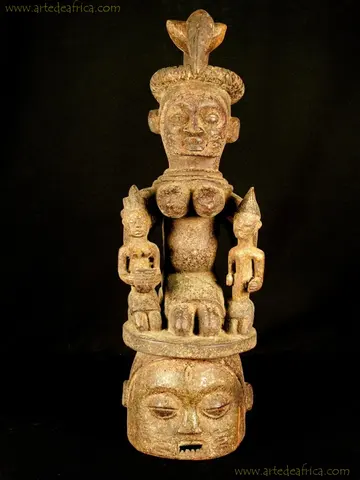
It represents the wife of Obatala, an orisha of the Earth surrounded by her children.
MCYC-15
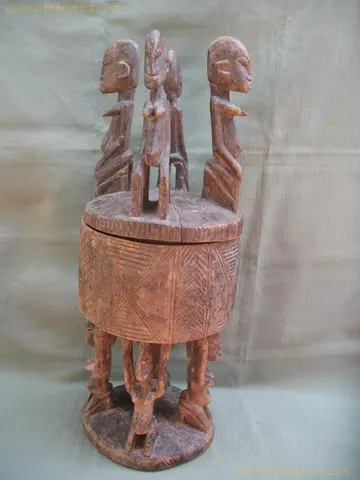
Funeral wooden urn intended for reliquary to preserve relics of the ancestors.
RLC-20
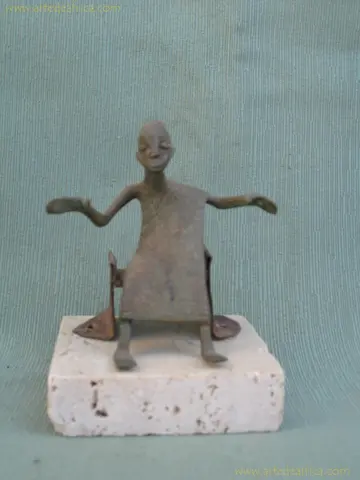
The so-called altars Asen of ethnic origin FonThese altars are formed by a circular platform in the center of the base of…
BRN-35
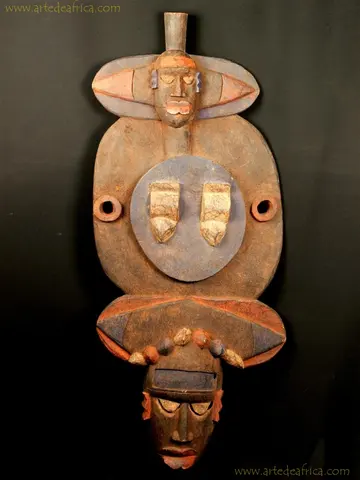
They do not dance or participate in dances, they are sacred masks that are kept in the sanctuary.
MFG-60
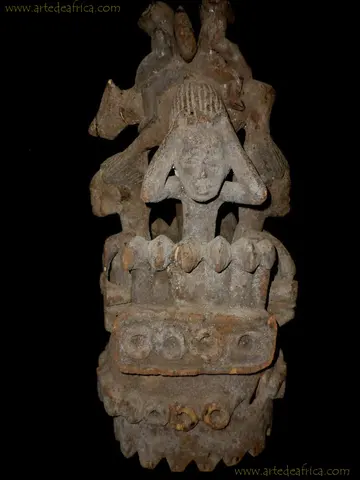
Old helmet mask which is in turn an altar mask on which sacrifices and libations are made.
MSOAL-10
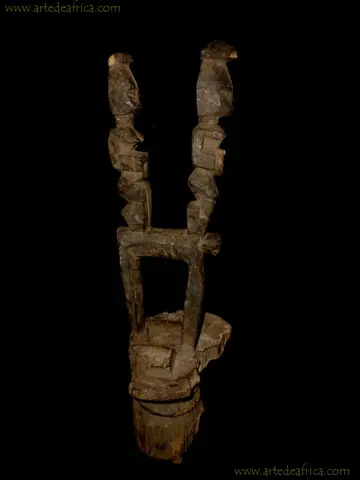
Altar soninké intended to celebrate the cult of ancestors and receive offerings and ceremonies.
OYA-10
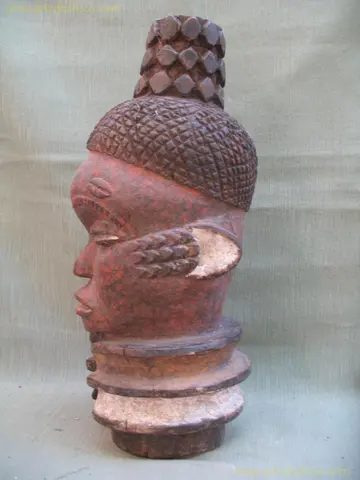
The primordial couple of cosmogony Kuyu was represented by Joku, the first male ancestor and his wife Ebotita.
MCYC-44
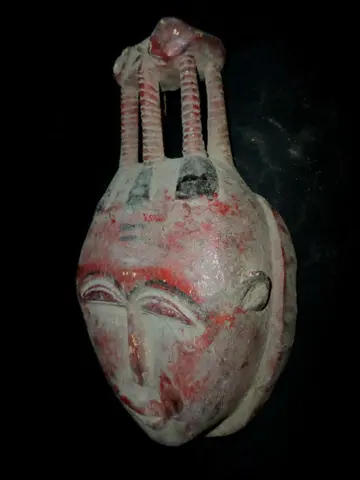
Ancient and curious baulé mask of the so-called "colonial type" for its color painted red with which African loa identified Europeans. gives…
MFANT-171
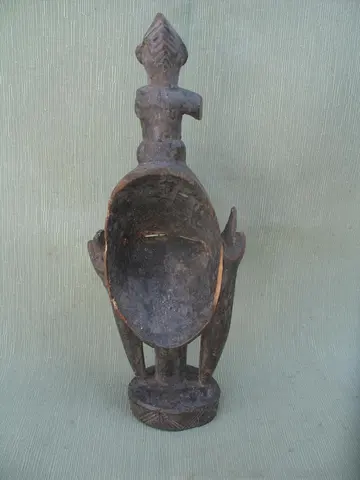
Small Kpelié mask of altar with a feminine character on top, that by his navel well marked and umbilical scarificationsw can not…
MSOAL-11
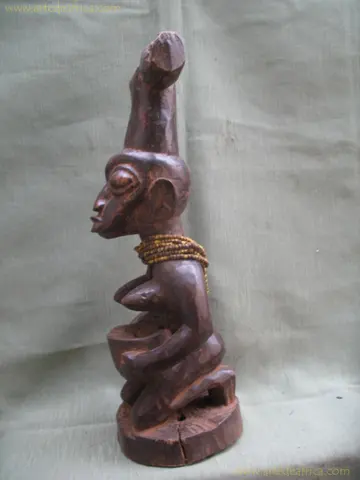
Priestess of the cult to the god of Thunder Shango, fourth Yoruba king who was deified, and in the ceremonies of possession…
EFM-79
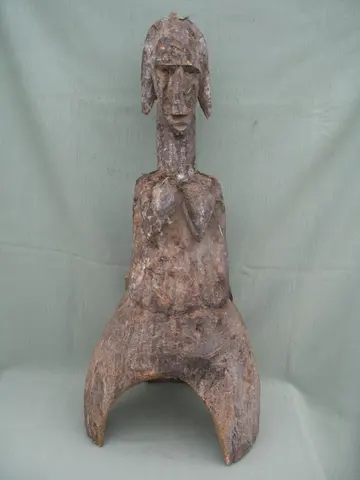
This statue represents Faro, genius of the waters, that has allowed and favors the fishing of the BozoLighthouse can occur in the…
MSOAL-12


