Pipe
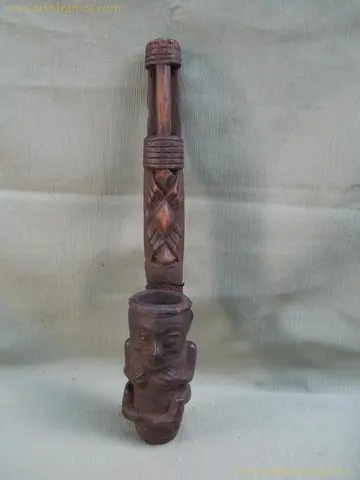
Ceremony pipe. It is a pipe of apparatus, not intended to smoke in it but is a sign of notability.
PIP-7

Text of the original catalogue
Royalties are the material symbols representative of the head's authority. They are the main symbols of power and dignity and can only be carried and possessed by those who wield power. Ceremony swords, flyflies, scepters and command sticks are part of the royalties. Only kings can carry scepters and batons of command. The scepter is, par excellence, the symbol of royal power, to such an extent that even in the absence of the king honors and pleitesy. They are usually delicately sculpted and richly decorated, whether made of wood, bronze or covered with gold foil as in the country. Akan.
123 objects · page 2 of 6
Ceremony pipe. It is a pipe of apparatus, not intended to smoke in it but is a sign of notability.
PIP-7
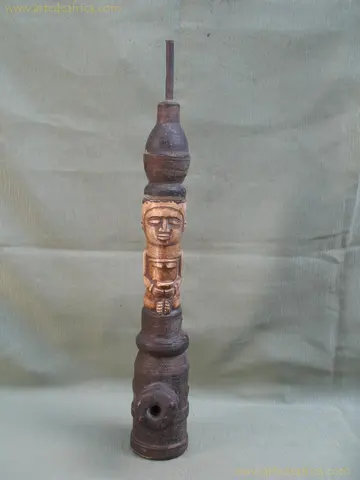
This pipe represents a woman sitting in prayerful attitude, which proves the ceremonial character of this object.
PIP-8
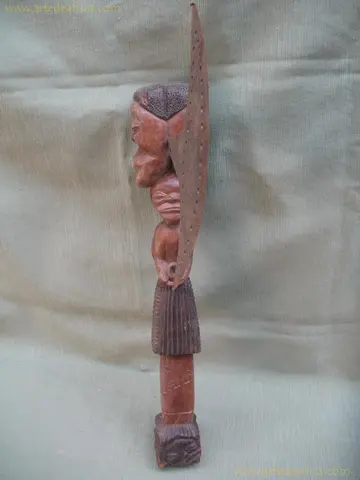
Ceremony axe with two heads, Janus, opposite the back of the head, one with big teeth and mouth closed the other.
BST-4
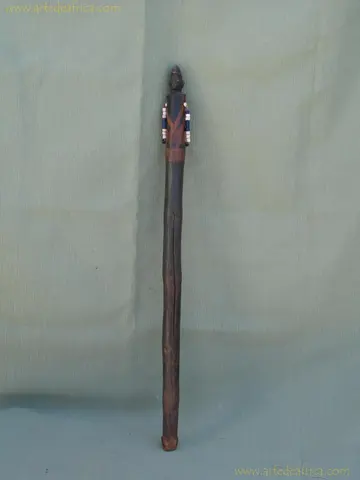
A remarkable Yoruba cane. These canes, besides serving in divinatory practices, are a symbol of self-restraint.
BST-5
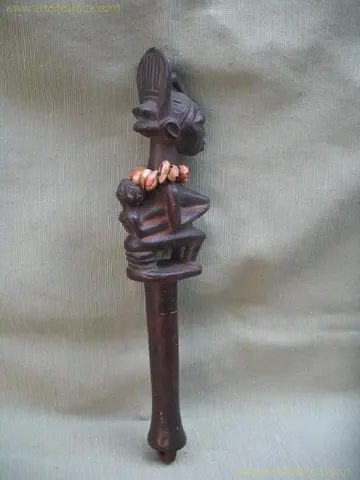
This cane, which is used in ceremonial dances, represents a motherhood with the child behind his back in the African style.
BST-6
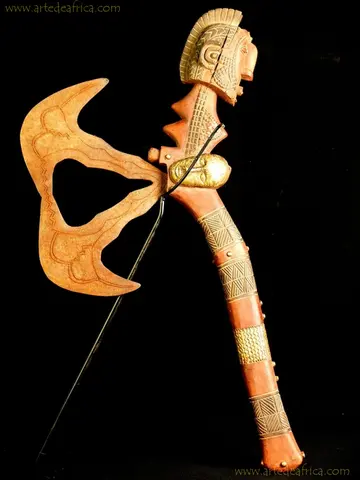
Ceremonial double-leafed axe, with the head of a Nimba mask as a finish and a small bronze mask at the intersection of…
BST-7
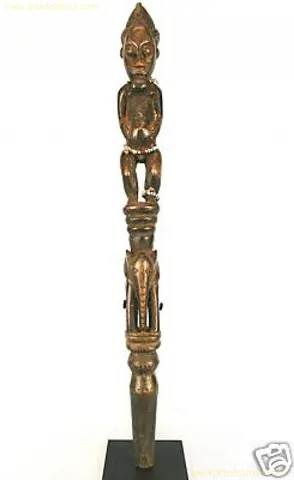
Artistic carving of a mystical husband or bian Blolo on an elephant, symbol of the country.
BST-8
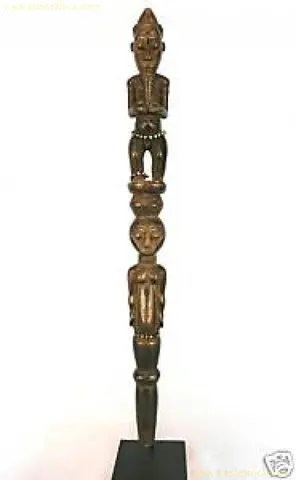
Stand of command employed in important ceremonies by the notables.
BST-9
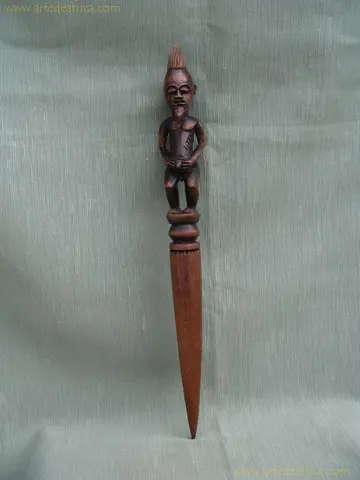
The cane is topped by the small figure of a remarkable, finely sculpted.
BST-10
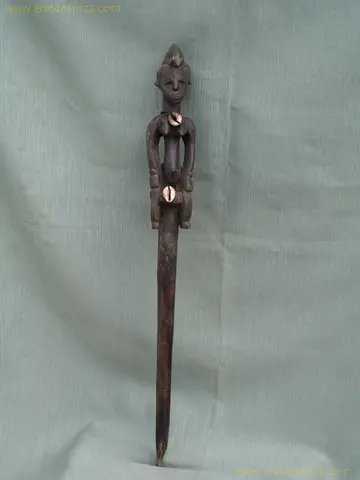
Former cane used by the great dignitaries during ceremonies and on the occasion of the reunification of the ethnic group.
BST-11
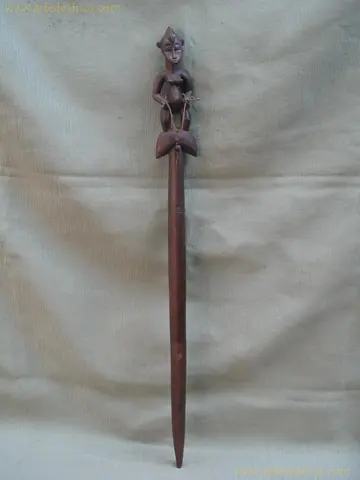
Former cane used by the great dignitaries during ceremonies and on the occasion of the reunification of the ethnic group.
BST-12
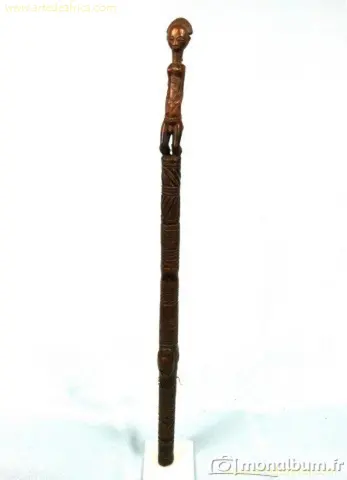
These canes are called command sticks or ritual sticks indistinctly because they are used by high dignitaries in ethnic ceremonies.
BST-13
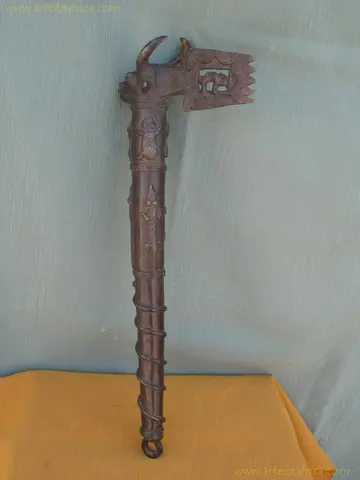
Bronze ceremony scepter, decorated with an embossed, spiral stretcher, in the form of a rolled vine.
BST-14
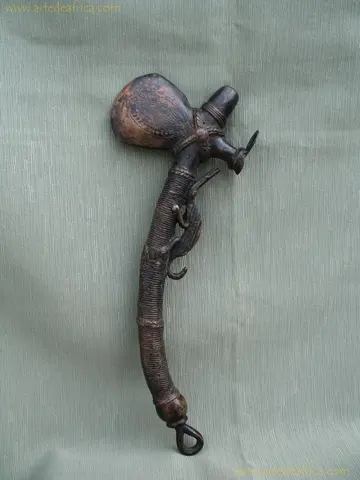
Bronze axe that imitates prehistoric stone axes, used in ceremonies as a symbol of prestige.
BST-15
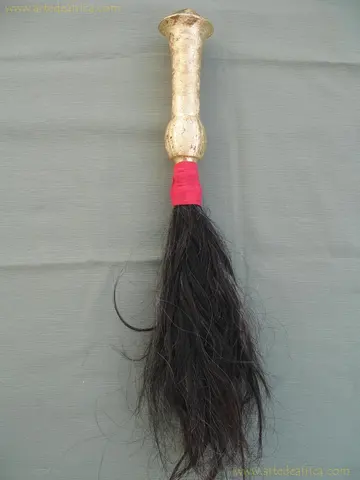
Fine bullflies handle carved with knife with akan motifs and gold to the golden bread.
ESP-2
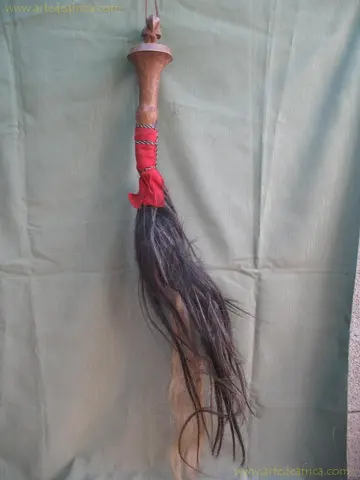
The flycar is a symbol of power or prestige. They are used by kings and notables.
ESP-3
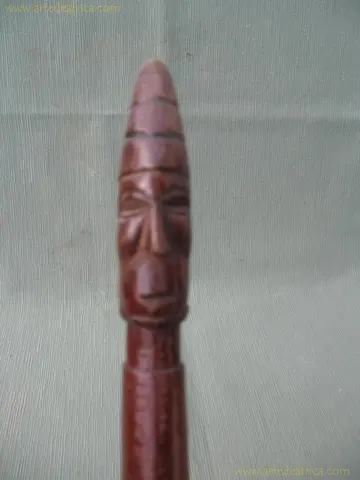
Mace employed by the king of the Yaka in ceremonies designed to settle their power.
BST-16
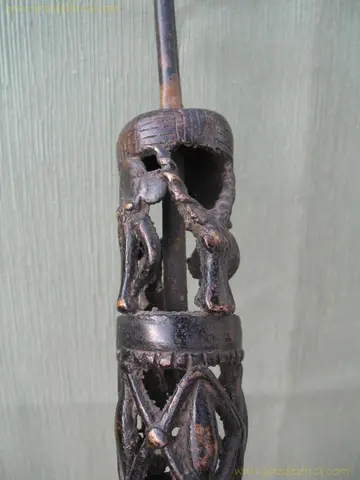
This category of pipes is called real pipes.
PIP-9
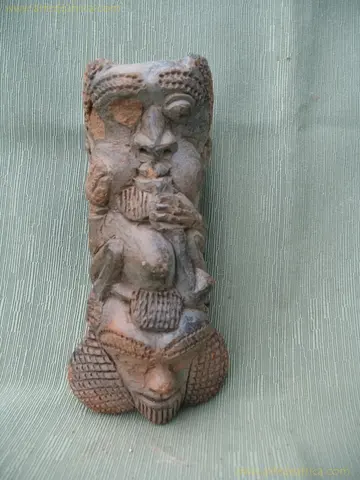
Terracotta pipe bowl used by the chiefs in court ceremonies.
PIP-10
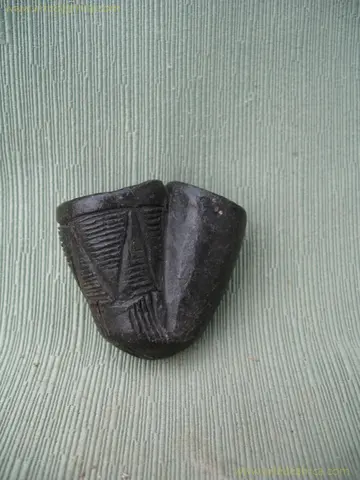
Small and simple pipe oven for use, with geometric drawings.
PIP-11
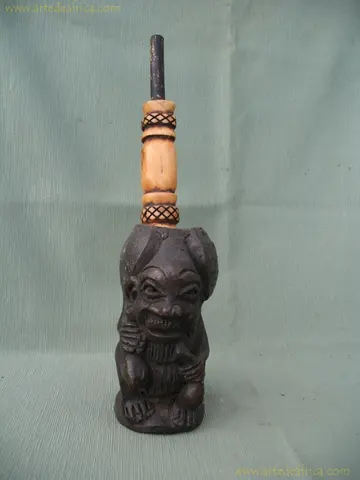
Pipe used by the bosses in ceremonies. It's a prestigious pipe and it's not meant to smoke in it.
PIP-12
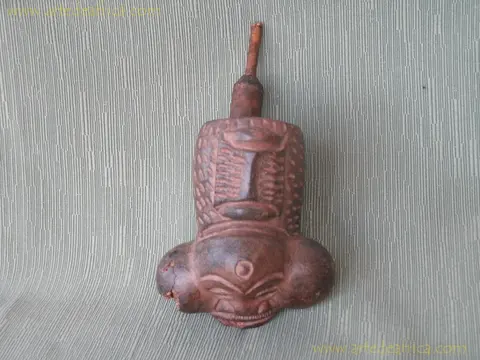
Pipe used by the bosses in ceremonies. It's a prestigious pipe and it's not meant to smoke in it.
PIP-13
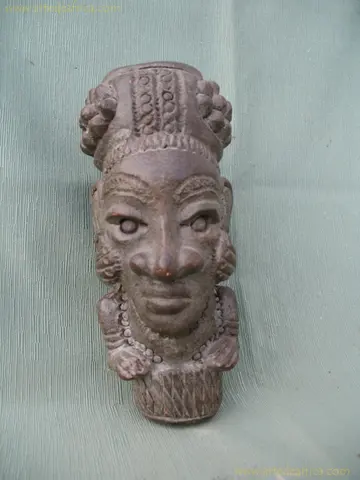
Prestigious and ceremonial pipe oven representing a man sitting whose head occupies the whole body.
PIP-14
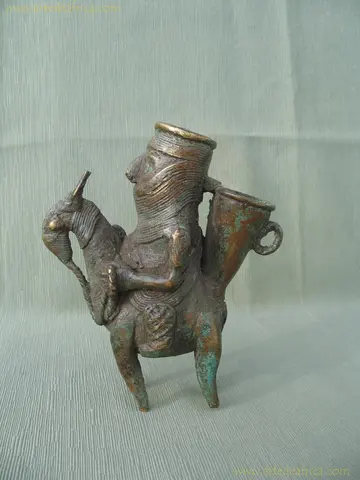
Artistica pipe cazoleta, bronze, representing a gentleman Sao Holding the reins of his horse.
PIP-15


