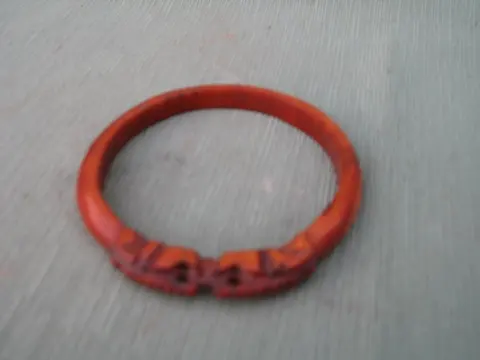
Bracelet
Fine and simple ivory bracelet whose reddish color appears to have been obtained with palm oil.
PYB-35

Text of the original catalogue
Ornamentation is not just a female symbol. Kings and notables make abundant use of gold and copper jewelry or brass in addition to other metals. The jewels denote the social rank of the wearer. Women's ankle bracelets or ankle bracelets, depending on their weight and size, indicate that the range of their wearers frees them from ordinary household chores while forcing them to walk in a special way that increases their appeal and seduction power. Many of these bracelets are change coins or are part of the dowry or family heritage. Arms, legs and ankles as well as neck, forehead or nose, or size and torso can be adorned with bracelets, necklaces and other jewelry. The bracelets were a sign of identity of both the social class of the person and the ethnic group. They were often currency for marriage. There are pearls and necklaces exclusively reserved for the use of kings and high dignitaries, as is the case in Benin. Brass and copper jewelry, the so-called African bronze, manufactured by the method of lost wax, are widely used in Africa, as are garments or ornaments decorated with cauris or beads and beads bracelets and beads of ceramic. These are often recovery metals. Cauri, frequent in body ornaments, has served as a currency of exchange, in some places, until well into the century XX. It is a symbol of female fertility, indispensable element in divinatory and magical rites, and habitual ornament of statues, masks and garments. The bracelets, like the other jewels, are part of the family heritage, they are part of the dowry in most cases and the usual exchange currency in almost all regions.
71 objects · page 1 of 3
Fine and simple ivory bracelet whose reddish color appears to have been obtained with palm oil.
PYB-35
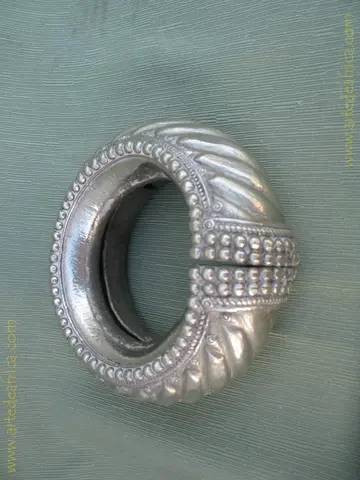
Bracelet intended to be worn by women on the ankle, in the manner of the former slaves, although in this case in…
PYB-1
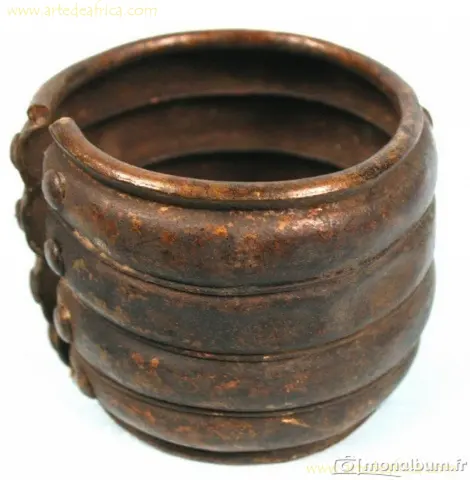
Object that has been used, important size and nice patina.
PYB-2
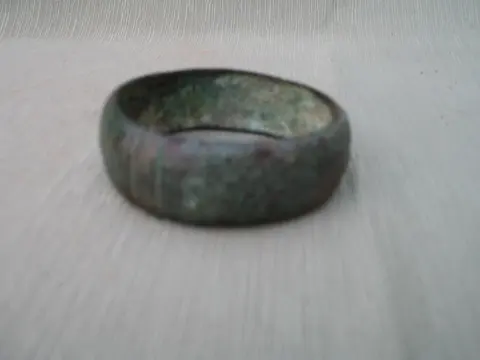
Bracelet baulé very old, century XIX or earlier, made from a thin sheet of the so-called African bronze.
PYB-32
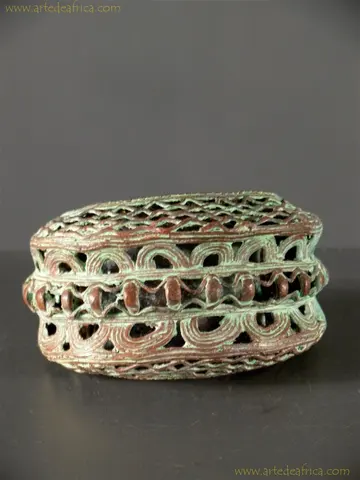
Normally the Kapsiki are classified as Kirdi, is a term used by the Peul to designate non-Muslim pagans.
PYB-3
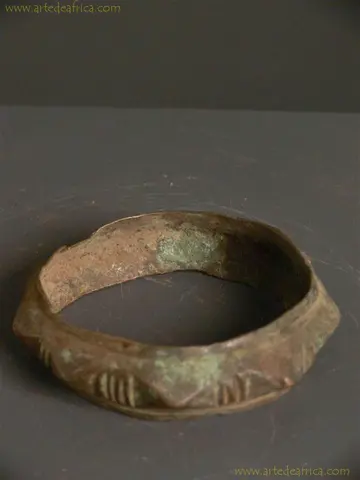
Old Lobi bracelet with reliefs and geometric drawings. Patina showing the usury of time.
PYB-4
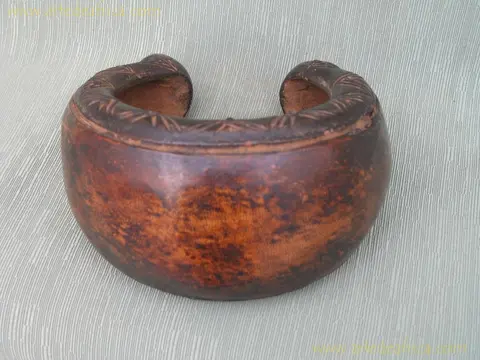
terracotta bracelet adorned with triangles on the edges and smooth in the center.
PYB-5
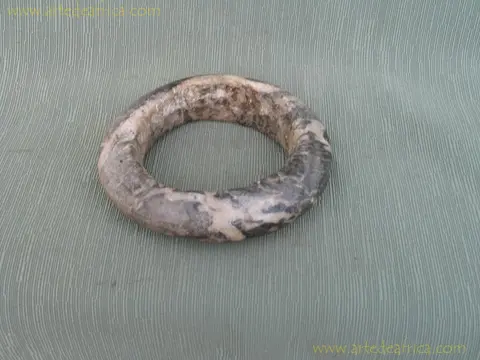
In his day these bracelets, called elbow bracelets, served as a defensive shield to stop the opponent's sword blows and strike him…
PYB-6
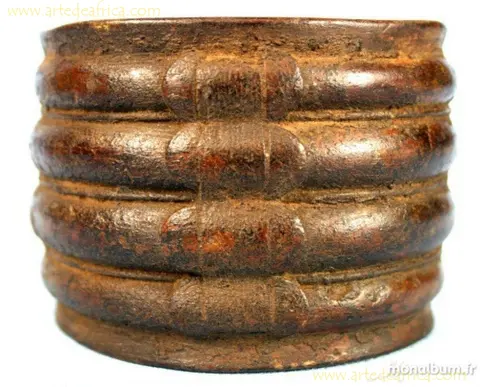
Bracelet made by the procedures of lost wax, of four overlapping circular crowns.
PYB-7
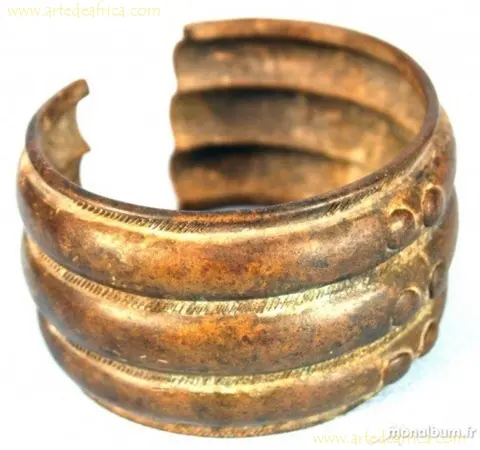
Regular bracelet made by the procedure of lost wax. Old patina for use and the time elapsed.
PYB-8
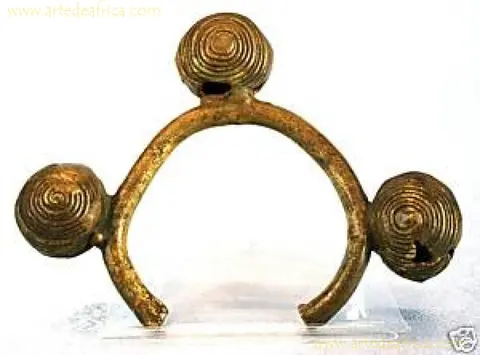
Typical bronze bracelet with three bells or bells to produce soft sounds used by women in ritual ceremonies and dances.
PYB-9
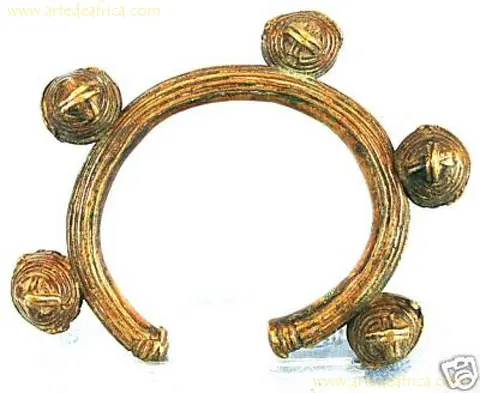
Use bracelet with grooves and five bells or bells.
PYB-10
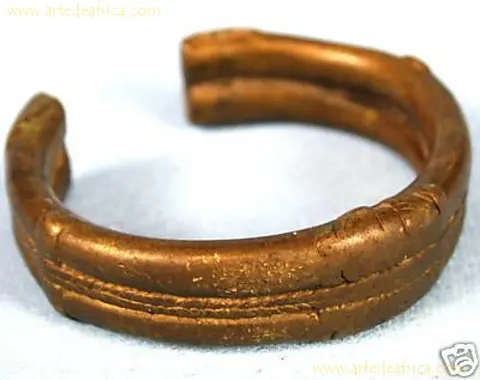
Small solid bronze bracelet made by the procedure of lost wax.
PYB-12
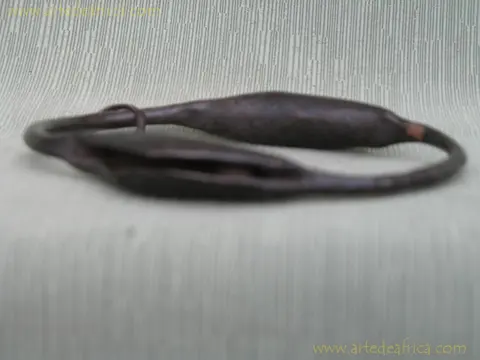
Ovoid-shaped iron tobillera or bracelet, forming the sides a kind of semi-closed shell.
PYB-13
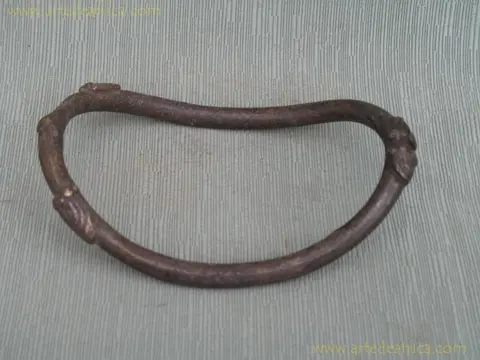
An old ankle bracelet or ankle bracelet, oblong and hunched in shape, with ends forming geometric drawings in front of each other…
PYB-14
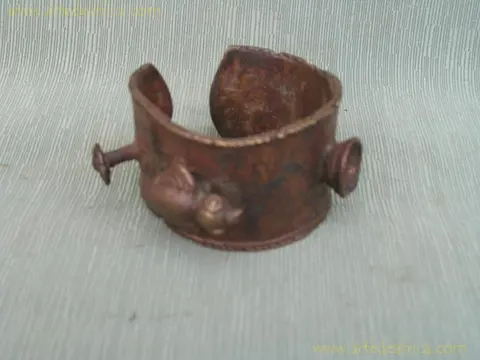
Open bracelet with three ledges in the form of broad nail heads and the figure of a small animal of difficult interpretation,…
PYB-15
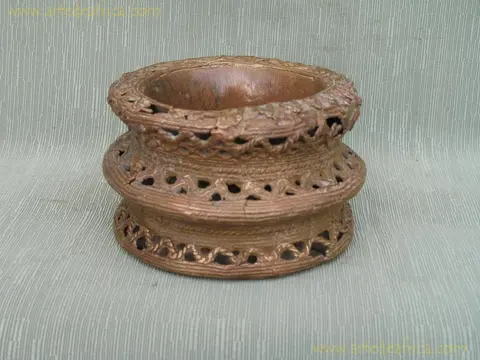
Armband composed of three joined parts forming two concave grooves in the interior areas, on the sides of the central ring and…
PYB-16
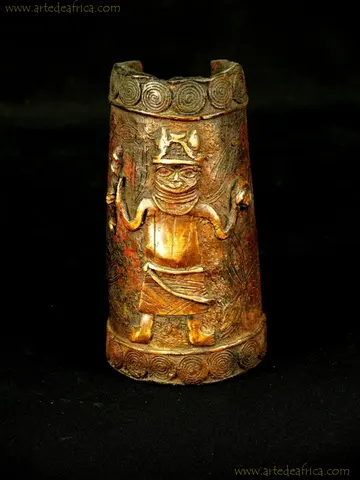
Bracelet with the embossed drawing of a high court dignitary.
PYB-17
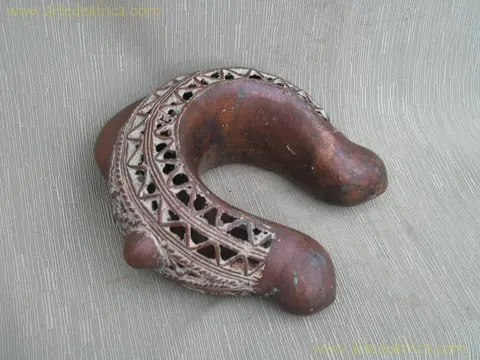
Bronze bracelet whose edges form lace lines with a broken line in the form of triangles in which small holes are lodged.
PYB-18
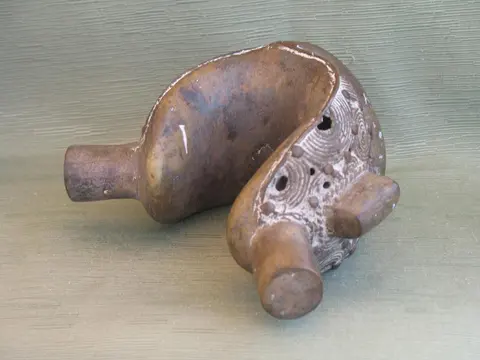
Bronze bracelet, from the Merona region to the north of the country, elaborated by the procedure of lost wax.
PYB-19
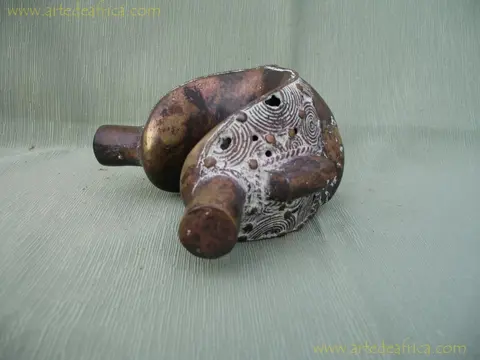
Open bronze bracelet, made from lost wax. Philigree drawings.
PYB-20
Old bronze bracelet made by the beginning of lost wax.
PYB-21
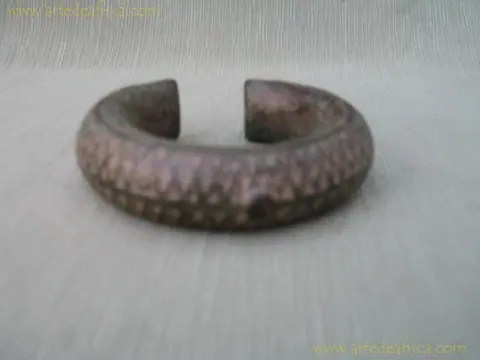
Heavy bronze bracelet. These bracelets were offered to the new one and thus became part of the family heritage.
PYB-22
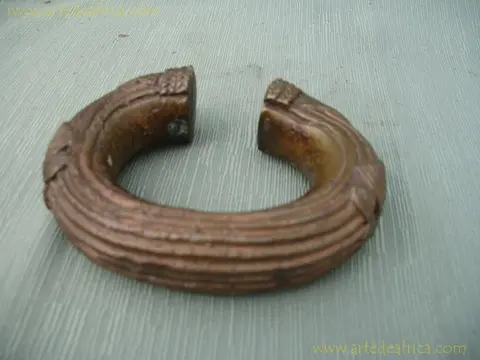
This old, heavy bracelet is surely a wedding gift from a father to his daughter or a man to his wife.
PYB-23


