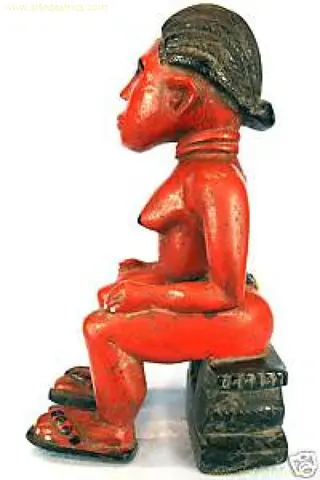
Sitting Woman
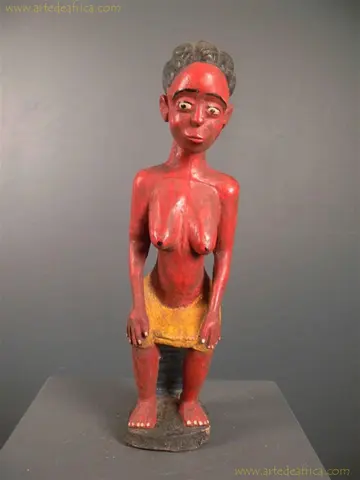
A woman sitting with her hands resting near her knees and expression of expectation or amazement on her face.
COL-32

Text of the original catalogue
The term “colon” is applied in African art to small statues that take their origin in colonial times, the most significant being those of the Baulé ethnic group in Ivory Coast. These statuettes usually represent characters of all kinds and conditions of European society of that time, both men and women. This can be found from magistrates, doctors or military to footballers, rockers or ordinary people dressed in street clothes, wearing shorts, long pants or work monkeys, as well as wearing shirts and shoes of all kinds. The arms are usually extended along the body, in other cases with the hands in the pockets in an unwrapped attitude. The uncovered face and body parts are painted red, a colour with which Africans describe the European. A humorous nuance surrounds these figures that are nothing but a satire of the colonial population. Africans working for Europeans, in the army, in the administration or in hospitals have also been represented. It is common to find figures representing African maternity homes, healers and even African-style European characters. An important feature of these figures is their colour, most of them painted with all kinds of colors, including red, black, blue, white and yellow. What has earned them the humorous name of “Ripolin figures”, the name of a well-known brand of painting sold throughout the West Africa.
39 objects · page 2 of 2
A woman sitting with her hands resting near her knees and expression of expectation or amazement on her face.
COL-32
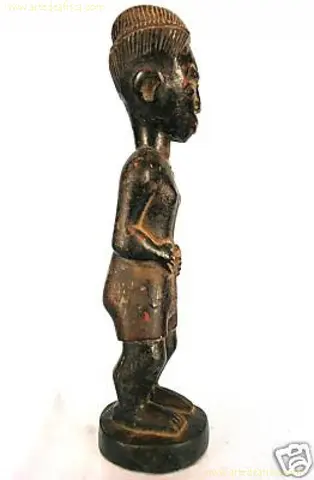
Figure collected in an animist village of Baule. Remains of red polychrome are preserved on his face and lips.
COL-33
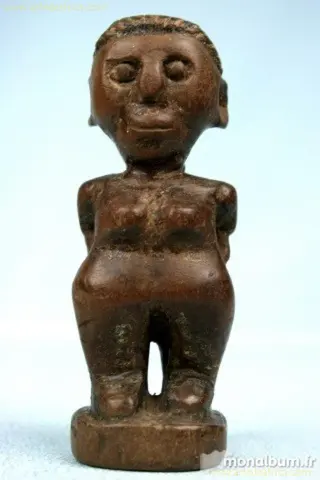
Ancient piece of settler abron, small size and of a great rarity.
COL-34
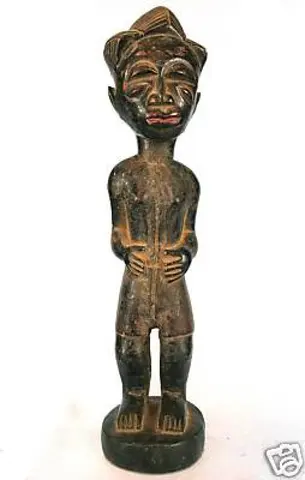
Colon with hairstyle and ethnic proportions. He wears a blackened short.
COL-48
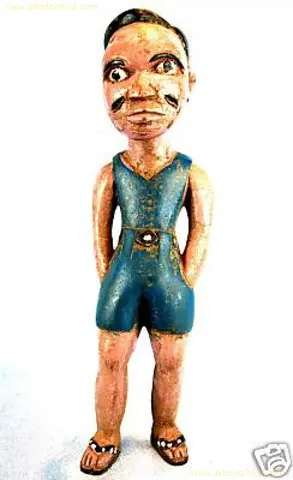
Young settler dressed in a blue monkey with short pants and unwrapped attitude with his hands in his pockets.
COL-35
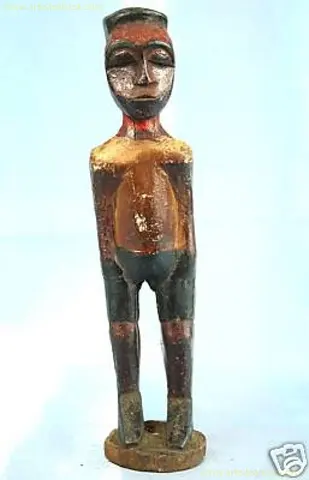
Colono dressed in a shirt whose white color has become yellowish and brown over the years.
COL-36
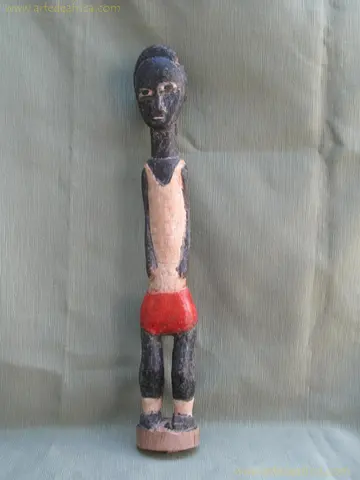
Curious black settler as they usually represent Europeans painted red.
COL-37
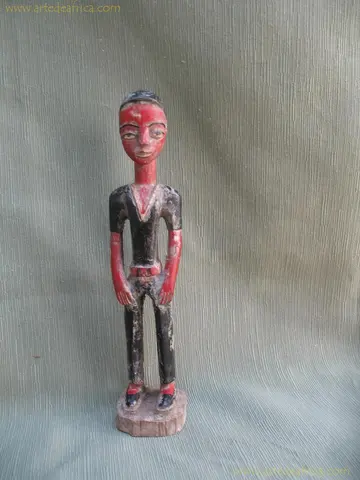
Stylized settler figure that wears a black set, type of work monkey, with neck in "V" and short sleeves.
COL-38
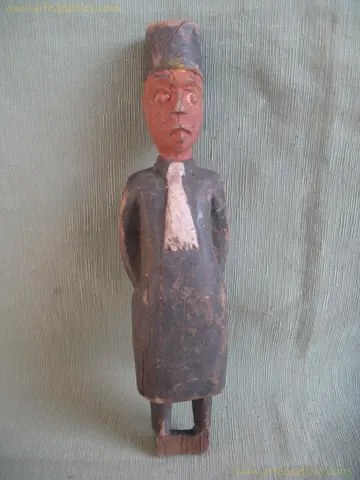
Lawyer with dress with robe and birete characteristic of the time.
COL-39
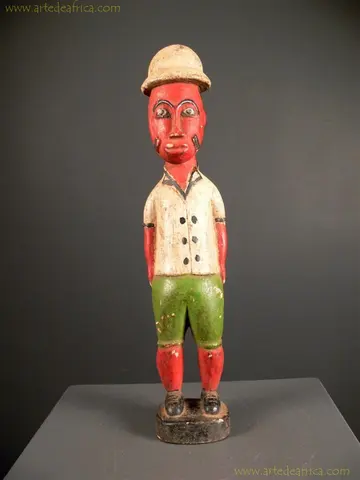
The term “colon” applies in African art to small statues that take their origin in the colonial era, the most significant being…
COL-40
The term “colon” applies in African art to small statues that take their origin in the colonial era, the most significant being…
COL-41
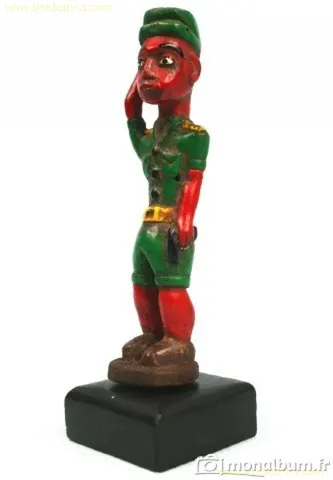
The term “colon” applies in African art to small statues it takes n its origin in the colonial era, being the most…
COL-42
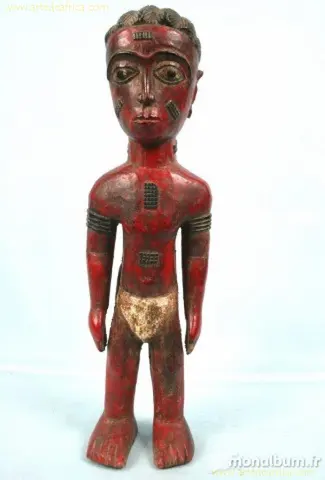
The term “colon” applies in African art to small statues that take their origin in the colonial era, the most significant being…
COL-43
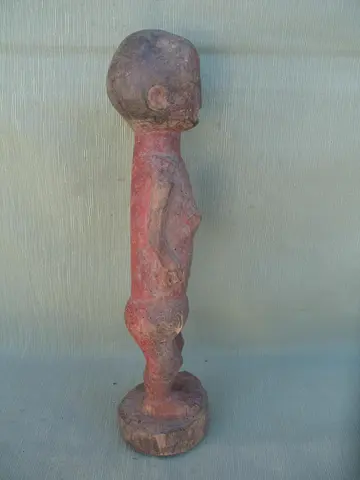
A settler statuette representing a young woman with incipient breasts.
COL-45
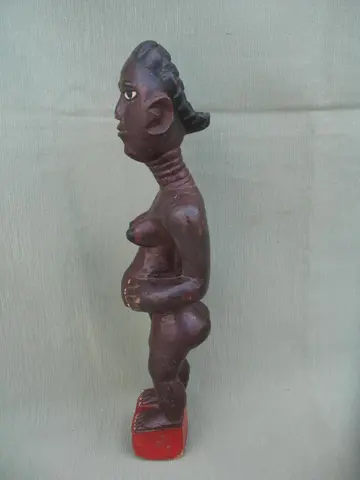
The term “colon” applies in African art to small statues that take their origin in the colonial era, the most significant being…
COL-47


