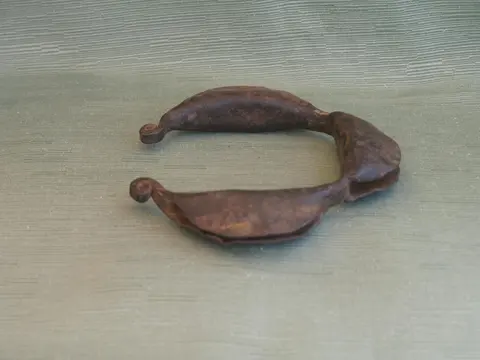
Sonajas bracelet
Bracelet that has three circular discs folded in the shape of a shell inside of which a few pebbles or balls of…
PYB-49

Text of the original catalogue
The Lobi occupy part of northern Ivory Coast, north of the fauna reserve of Buna and south of Burkina Faso. They are a village of farmers and hunters. Its houses are rectangular and built around a central courtyard. Each soukhale gives shelter to a family: the father and his wives, married and single children and grandchildren. The Lobi they receive an initiation period lasting three months, before the circumcision that culminates with the Feast of the Djoro, which takes place every seven years. The Bateba statues of the Lobi represent the evil philistine thils to whom it is convenient to make offerings and sacrifices to ensure their protection. Following the instructions of the sorcerers altars are built inside the houses or on the roofs. The bats, usually made of wood, although they can also be carved in stone, are small statuettes that rarely pass from half a metre, not reaching some to ten centimetres. They are rudimentary in appearance, roughly carved, not intended to be aesthetic but useful. Its usefulness lies in its magical strength. The duntundator bats are among the largest and have apotropaic virtues will ensure protection in exchange for offerings and with their aggressive appearance will keep evil forces away from families. Others will bat, embody different Thil, who will be recognized for their attitude. The dangerous Thil will appear with raised or open arms while more peaceful ones will adopt a normal attitude and may even represent a woman or a motherhood, symbol of fertility and wealth that will flood the house. There are figures batting that represent fertility imitating a sexual act, the so-called betises. Its three-legged, European-inspired, courtship stools are known to be topped by the head of one or both spouses. They manufacture small bronze jewelry, such as earrings and pendants decorated with geometric drawings and also in ivory. The people Lobi The female statues are called Thilburu and are statues that of family altars.
66 objects · page 3 of 3
Bracelet that has three circular discs folded in the shape of a shell inside of which a few pebbles or balls of…
PYB-49
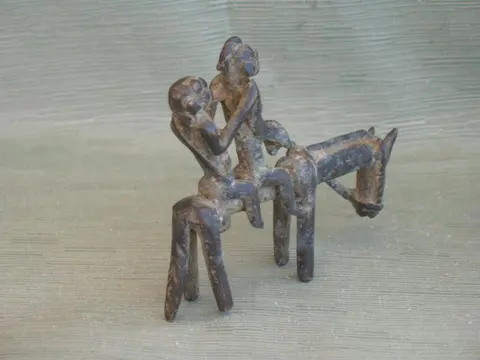
Curiosity bronze figurine of a woman carried the reins of horse while the man goes in the group holding the shoulders of…
BRN-126
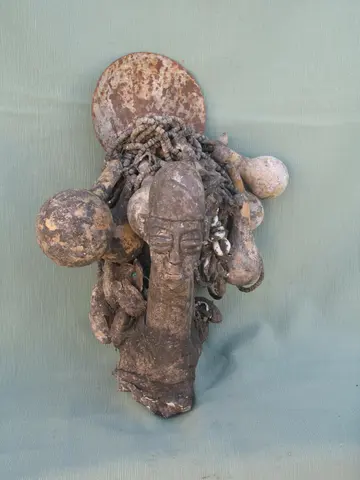
Fetish intended for sorcery practices, similar to those used for voodoo, for example by Fon of Benin.
FET-74
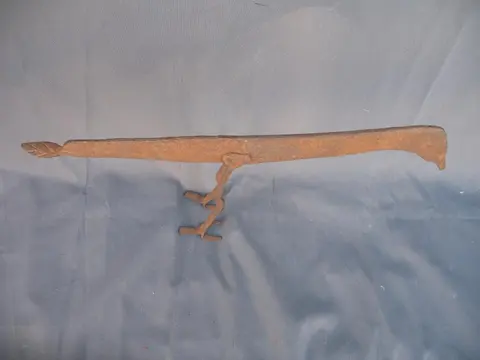
Forged iron bird intended for divinatory practices. The legs are attached to the body by means of iron rivets.
MYA-40
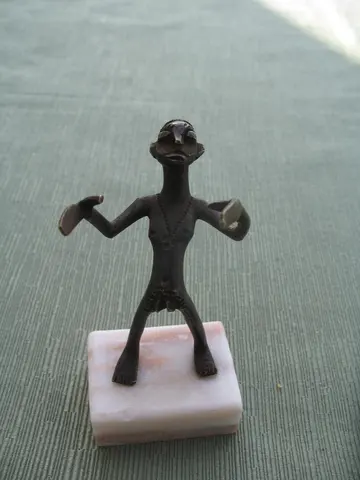
Small character with big hands in clap actud and body leaning back.
BRN-133
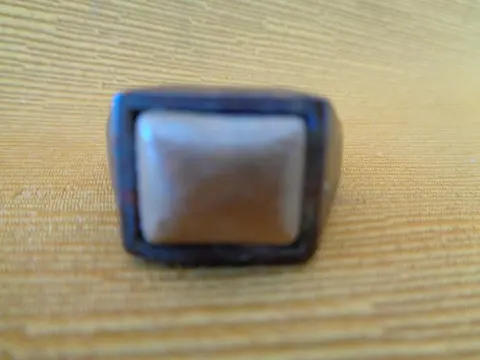
Ring of a reddish metal, probably copper in which is inserted a stone of those known as tiger's eye.
ANLL-15
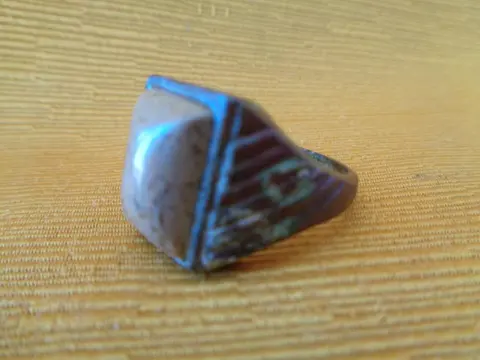
Cobrizo meal ring with wide and striated sides and a stone, of good size, set, of the so-called tiger eye.
ANLL-16
Antigu copper metal ring topped with the head of a horse, in front of which there is the simulation of a set…
ANLL-22
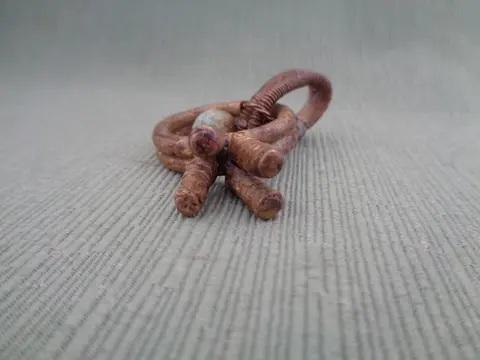
Curious double-ringed male ring with four protruding auctions.
ANLL-24
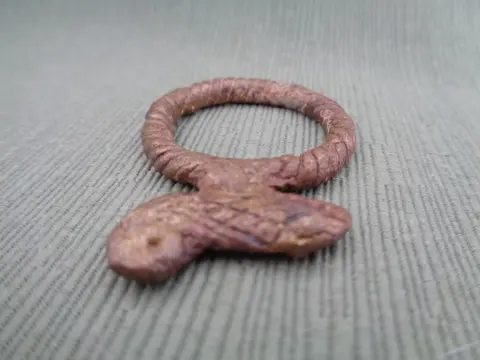
Male ring rowed with the figure of a chameleon. Time skate.
ANLL-26
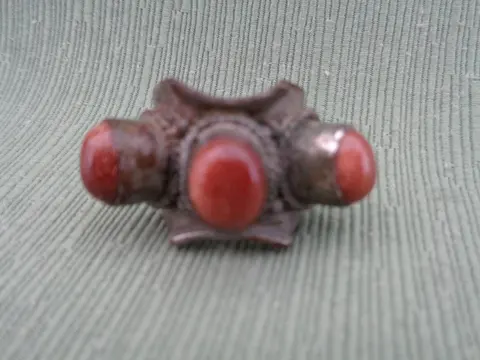
Big woman's ring with three sunstones set.
ANLL-27
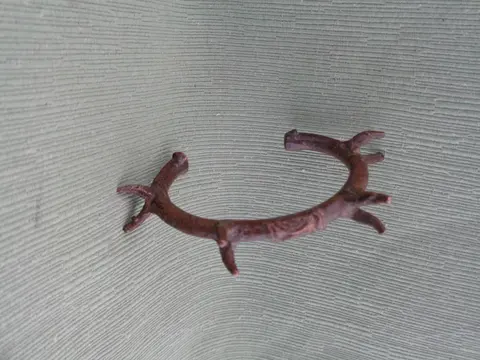
Curious bracelet that looks topped with two elongated horse heads.
PYB-57
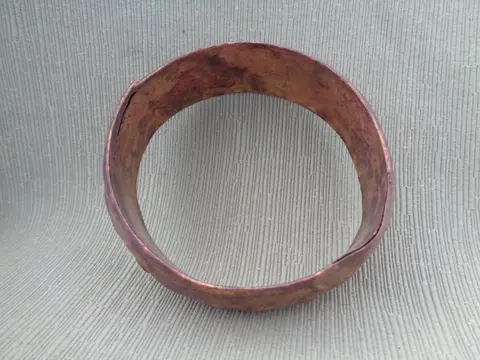
Curious bracelet, very light, that seems to be built with two superimposed sheets of very fine brass tin foil, set one on…
PYB-64
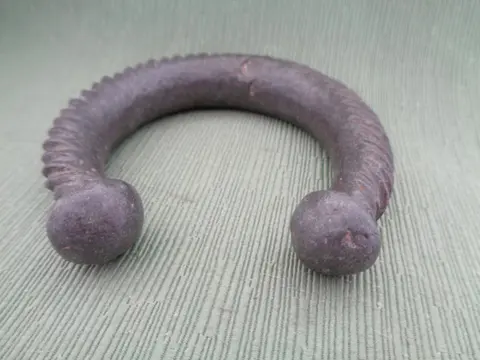
Bracelet of a grey metal, unknown, that weighs more than aluminum but less than iron, bronze, silver or brass.
PYB-69
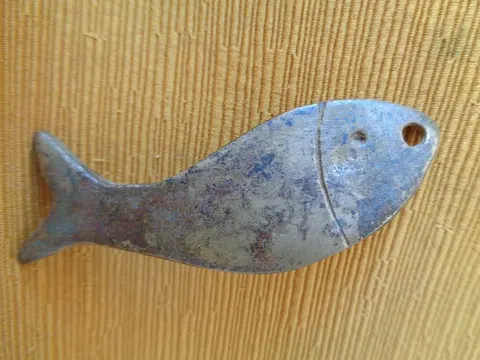
Adorn Pendant for Women Lobi Fish-shaped patina of time.
CYA-33

The archer is an important character in African ethnicities.
MYA-42

These wrought iron figures usually represent ancestors. Here we have a stylized couple made up of a man and a woman.
PAR-25

Small vessel intended to contain healing pocymes or ointments, also used in magical or ritual practices.
TRRC-106


