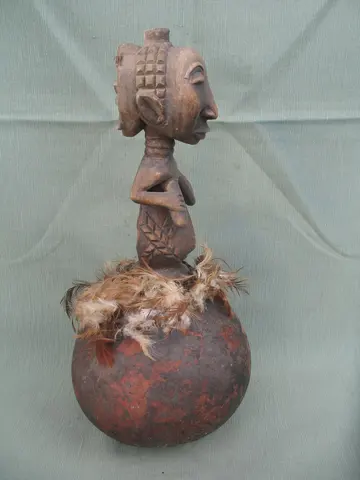
Guess what.
Reliquary intended for ritarian uses within the cult of ancestors.
RLC-17

Text of the original catalogue
The Hemba live on the right bank of the Lualaba River since the century XVIIIThey are organized into clans and practice the cult of ancestors. Secret societies limit the power of clan leaders, fumu mwalo. They have two main secret societies, the Bukazanzi made up of men and its female version, the Bukibilo. Their artistic manifestations are very similar to those of the Luba, to the point that for many decades they have been confused with them by European dealers. The “master of Buli” for example, the most cararismatic and famous of his artists, is a member of the Hemba family and has always been considered as a luba artist. Their Songiti statues are well known for a long time as luba, the hemba statues are half to a metre in size, the largest. Short and strong legs and hands normally resting on the belly. They are male statues, with a rounded beard and a face that expresses majestic serenity. The back of his headdress features a cross framed in a circle. They represent the ancestors and receive libations and sacrifices. They are kept by clan leaders to secure their power.
6 objects · page 1 of 1
Reliquary intended for ritarian uses within the cult of ancestors.
RLC-17
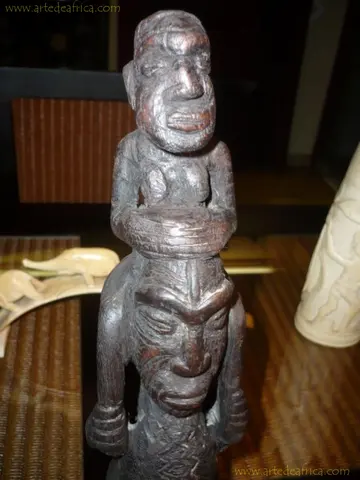
Couple figures are rare in African art. This old statue dates back to the 1940s.
PRJ-4
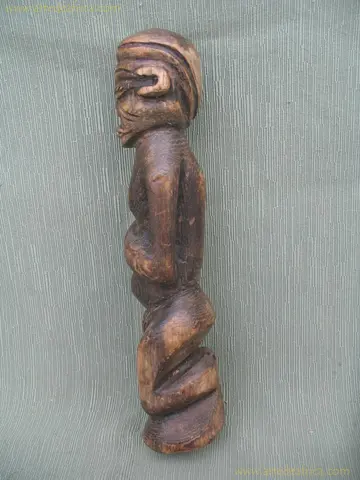
Former female statue with patina chiaroscura . Face washed as well as various parts of the body.
EFM-40
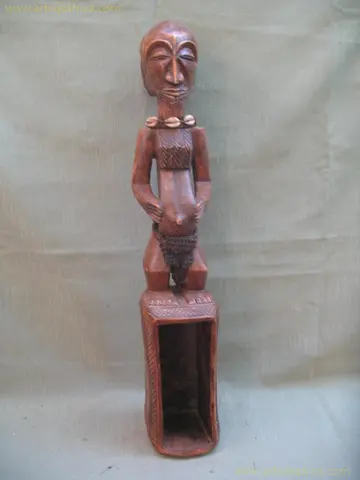
Reliquary formed by the box, empty, intended to contain the relics relics, on which is a representation of an ancestor, whose cheeks…
RLC-31
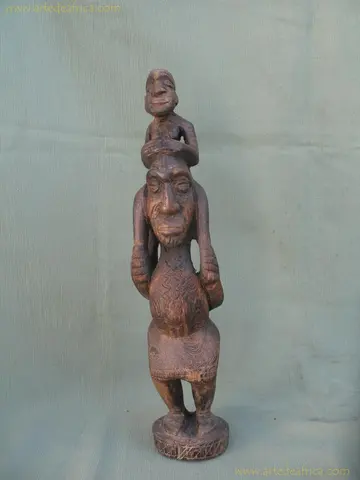
The Hemba are implanted on the right bank of the Lualba River where they arrived, probably from the territory of today's Tanzania,…
PAR-2
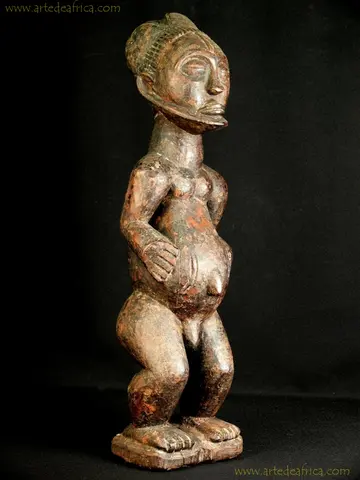
The hermaphrodite is a figure that often appears in the statuary and in African masks.
HYA-7


