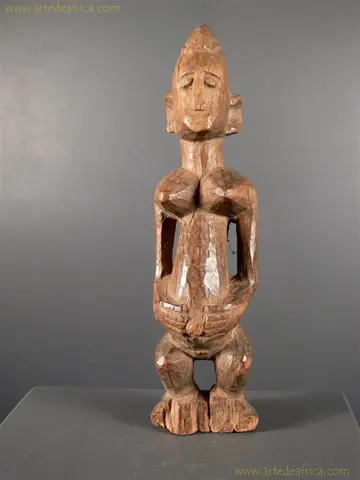
Nakomse Female Statue
The female Mossi statues represent Princess Yennega, the mother of Ouedrago considered the founder of the ethnic group.
EFM-64

2,936 objects · page 44 of 123
The female Mossi statues represent Princess Yennega, the mother of Ouedrago considered the founder of the ethnic group.
EFM-64
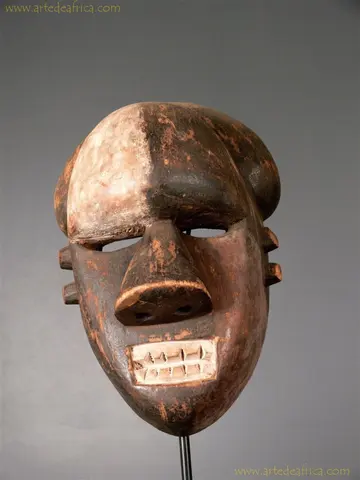
It is characterized by a large and flat forehead, thick triangular nose and rectangular, white mouth, ajar showing the two rows of…
MFANT-147
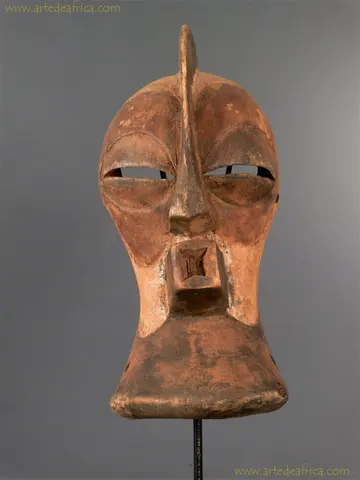
Used by society Bwadi Bwa Kifwebé is the best known mask, in its male and female versions.
MFANT-148
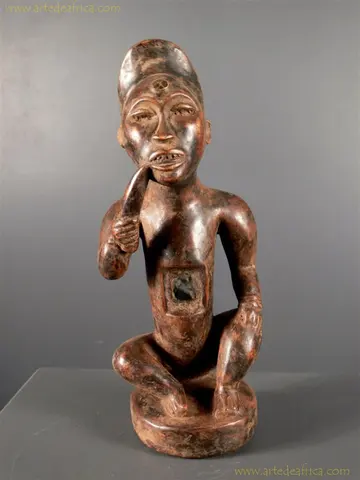
The statues Nkissi of the Kongolike all the Nkissi, are protective figures that acquire their strength and power after being charged by…
FET-48
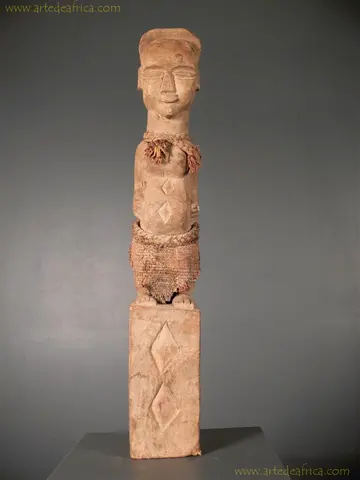
Fertility, whether of fields or people, is one of the central themes of traditional African societies and finds expression in numerous sculptural…
FRT-28
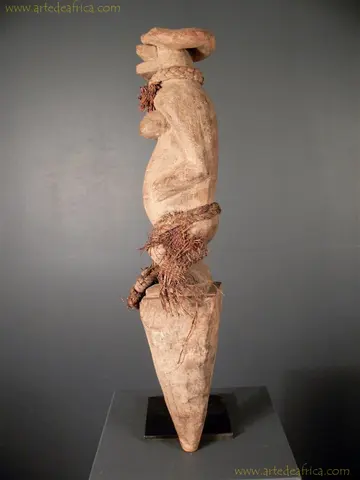
Fertility, whether of fields or people, is one of the central themes of traditional African societies and finds expression in numerous sculptural…
FRT-29
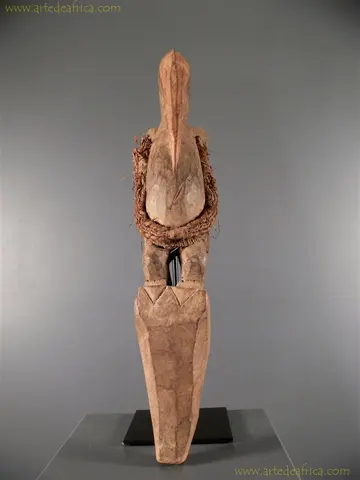
Fertility, whether of fields or people, is one of the central themes of traditional African societies and finds expression in numerous sculptural…
FRT-30
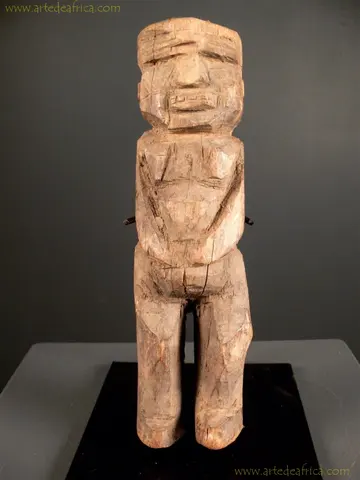
Unregistered reference
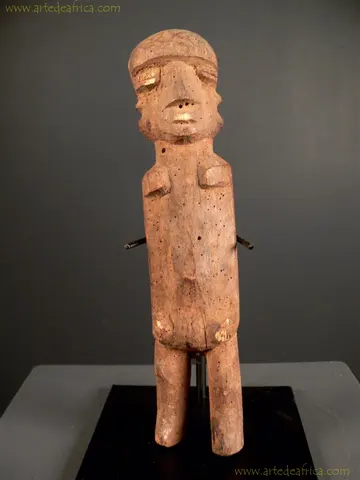
The Bateba statues of the Lobi represent the thils evil geniuses to whom it is convenient to make offerings and sacrifices to…
EFM-65
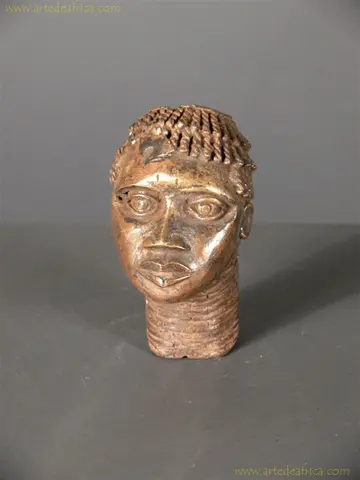
Commemorative heads seem to date back to the time of Ogiso.
BRN-66
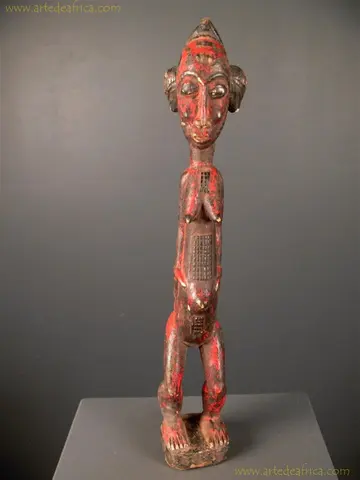
The Baulélike other peoples in Africa, they believe that everyone has a husband or wife in the other world and that they…
EFM-66
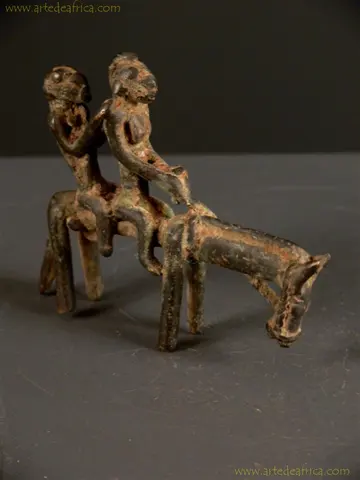
Figure on horseback with a companion riding behind on the horse’s rump.
BRN-67
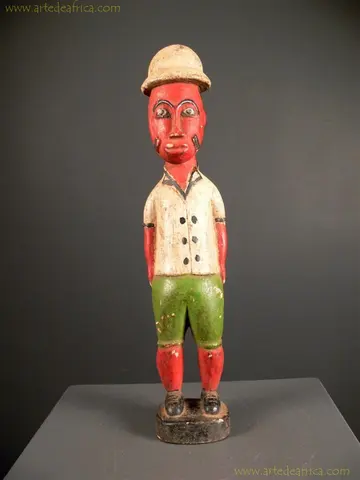
The term “colon” applies in African art to small statues that take their origin in the colonial era, the most significant being…
COL-40
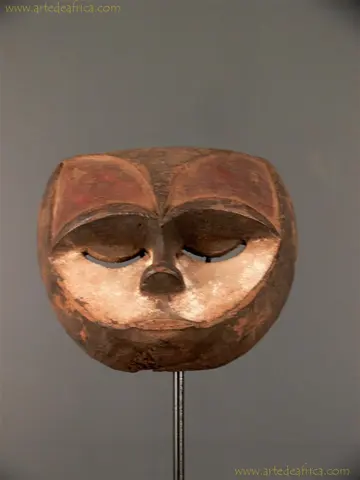
The people Eket It is formed by a caste society, being the most important Amamala.
MFANT-149
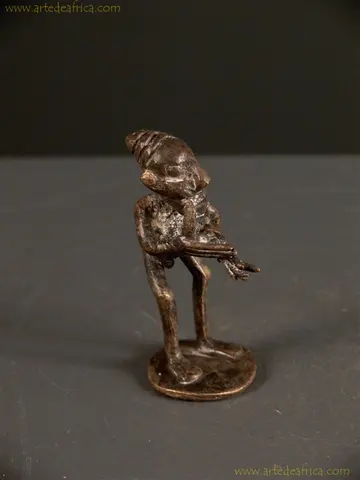
Small figure smoking a pipe. Made using the lost-wax method.
BRN-68
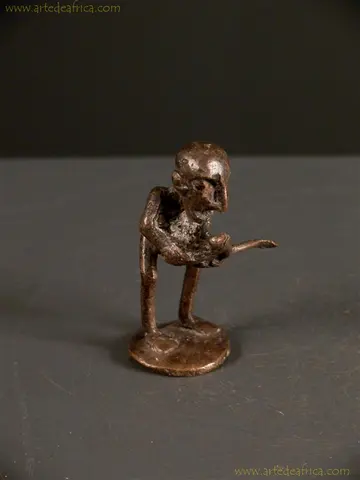
Small figure playing a musical instrument. Made using the lost-wax method.
BRN-69
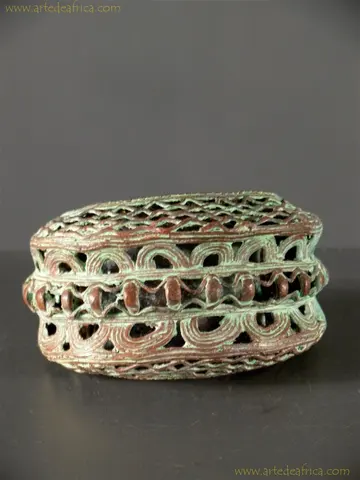
Normally the Kapsiki are classified as Kirdi, is a term used by the Peul to designate non-Muslim pagans.
PYB-3
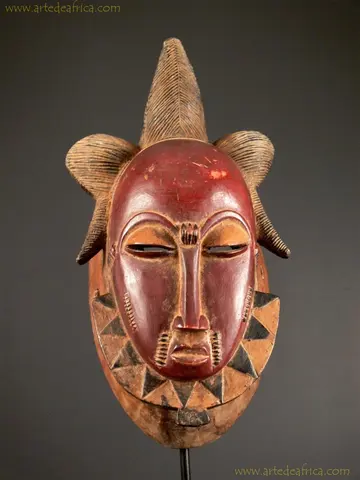
Portrait masks or “double” masks, ndomathey are supposed to be the “double” of the person whose face is represented.
MFANT-150
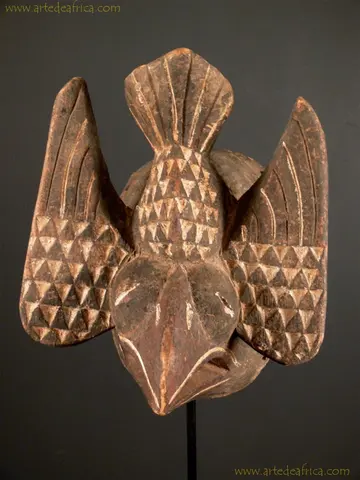
This mask is from the Moagha group of the familyMossiIt represents a hawk with wings deployed in flight position and evokes death.
MFZ-31
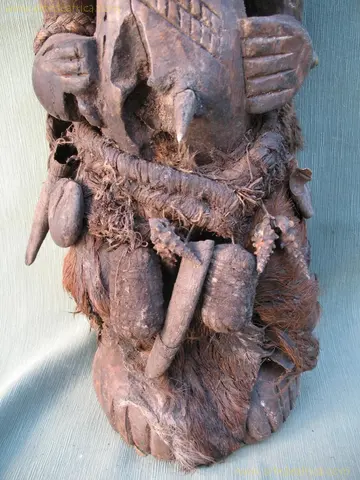
Large fetish widely spread in male and female versions throughout large areas of the former Zaire, now Democratic Republic of the Congo,…
FET-50
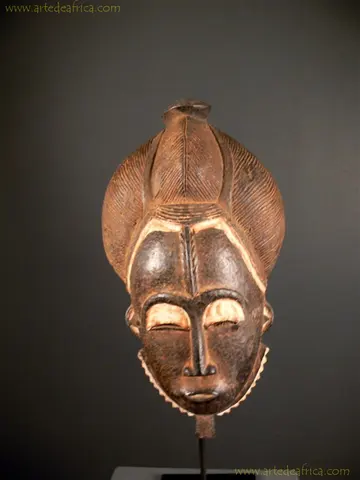
Family masks are not intended for dance or participation in religious, funeral or playful ceremonies.
MFANT-151
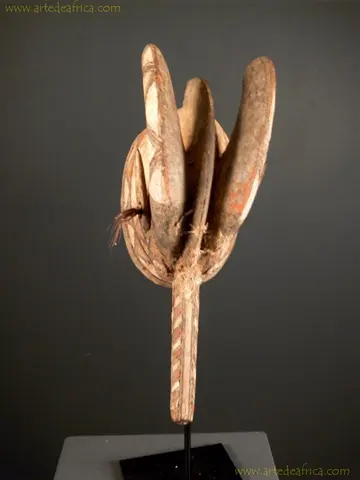
The zoomorf masks for most African ethnic groups, especially from the west, are hunter masks.
MCYC-34
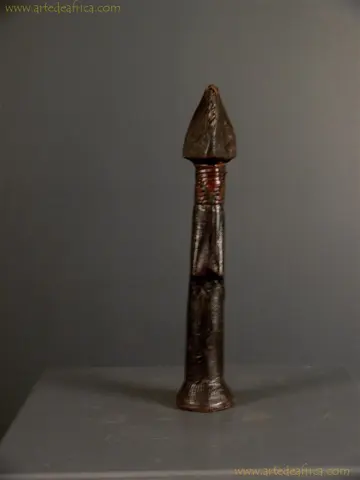
The so-called Biiga dolls are manufactured by the Mossi Bulsa region.
FRT-31
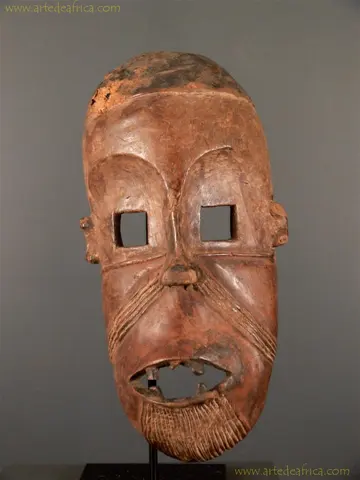
They belong to the secret society Gaza and behave on the occasion of the ceremonies of initiation and circumcision of adolescents.
MFANT-152


