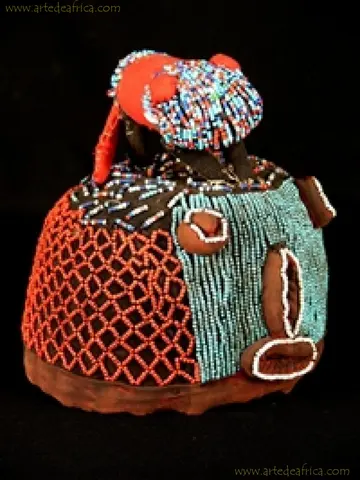
Hat of Ceremonies
On the main face of the hat there is the representation of an anthropomorphic face, formed by brown cloth rodeos with white…
TCD-1

List of the historical catalogue
Text and organisation of the original catalogue · Jesús Arrimadas Saavedra
They are called “pearl” figures, masks, statues or any other object covered with beads or ceramic pearls. The art of pearl was reserved for royal families, with pearls or ceramic beads imported from Germany at the beginning of the century XX and large quantities of multicolored glass beads that were imported from Venice for centuries. For a time slaves were exchanged for glass pearls. The Bamilek artisans have been the great masters of this art, mainly those of the Sultanate of Bamun. They are cutting or real arts. Their originality consists in having introduced polychrome thanks to the technique of pearling or covering of statues with beads and multicolored beads. This art is exclusively reserved for the king, his family and some notables, as well as the art of forging and casting of metals. In all Grassland art and power were intimately united. It seems that some kings (fon) practiced the art of pearl. Pearl statuettes appear in some ceremonies organized by secret societies to establish contact with the deceased in order to obtain their protection. Numerous prestigious objects, in addition to masks and statues, are reinforced and decorated with a layer of rutilating ceramic pearls. Of Venetian import for several centuries or of local manufacture, with glass of recovery, its symbolism is always the same: The works with pearls, glass beads or beads, as well as the bronze and ivory works, were reserved for the king and his court. This technique gave rise to an art of great expressiveness and symbolism: – The black, the colour of the night, evokes the relations between the world of the dead and that of the living. – White, color of bones, refers to the world of ancestors. – Red, associated with blood, symbolizes life, women and royalty in general. These ceramic or glass pearls were an important barter element and are part of a historical period that begins from the century onwards. XVMany of these so-called cylindrical-structured pearls were made of glass paste and are called rosette pearls. Portuguese ships trade these pearls for gold, ivory, palm oil or slaves. For more than four centuries millions of beads were changed on the African continent. The last factory closed its doors in Murano, in 1964, leaving in their drawers more than 20.000 different samples of glass and ceramic beads intended for Africa.
15 objects · page 1 of 1
On the main face of the hat there is the representation of an anthropomorphic face, formed by brown cloth rodeos with white…
TCD-1
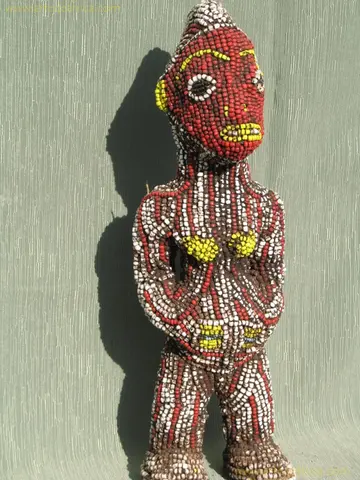
Female statue covered in glass beads.
FPR-2
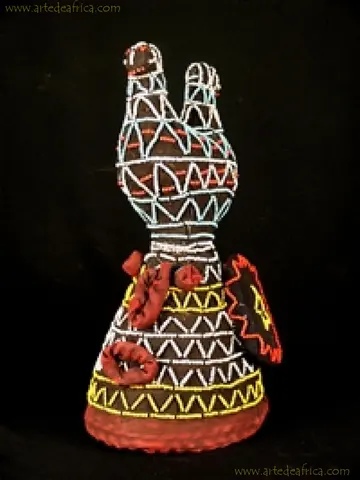
Ceremony hat decorated with white, red and yellow beads.
TCD-2
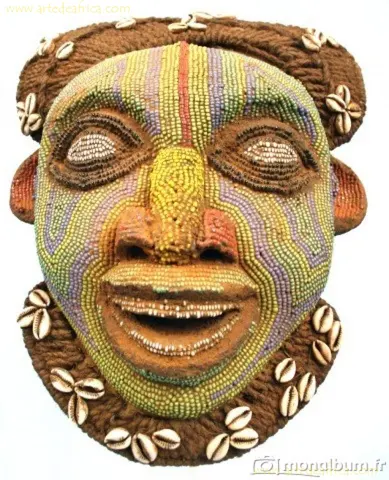
This name is given to masks, statues or any other object covered with beads or ceramic beads.
FPR-4
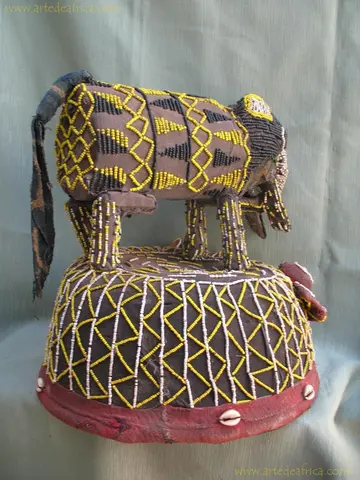
Ceremony hat used by the notables. On the hat bells an elephant, which is one of the main symbols bamileké.
TCD-4
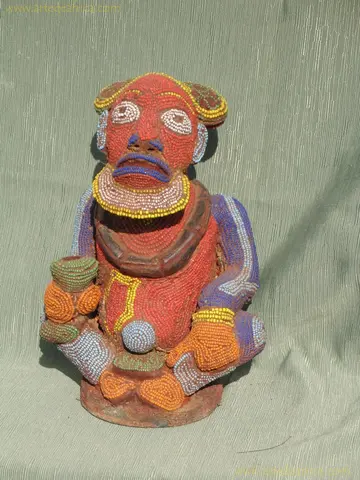
Statue of ancestor, clay covered with ceramic beads of turquoise, blue, red, yellow, green, corn and white.
FPR-6
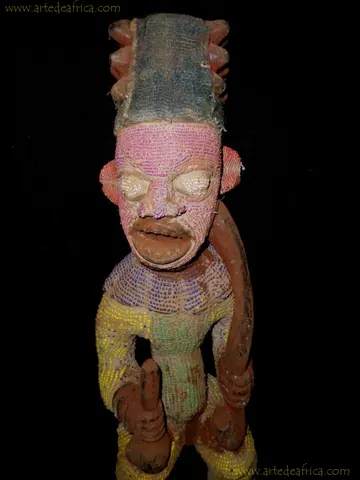
They are called "pearl" figures, masks, statues or any other object covered with beads or ceramic pearls.
FPR-10
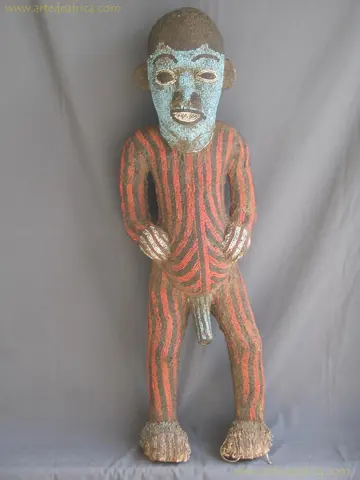
They are called "pearl" figures, masks, statues or any other object covered with beads or ceramic pearls.
FPR-11
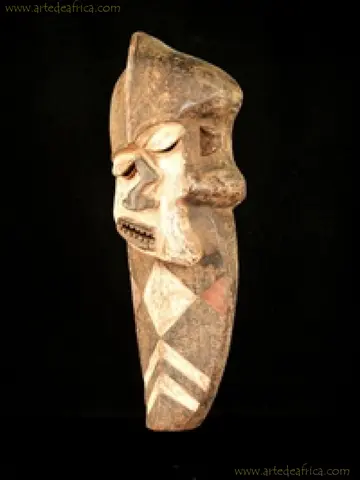
Face mask with ochre tones with the usual symbology of this category of masks.
MFE-1
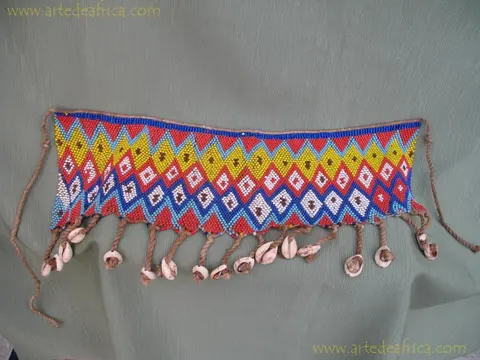
The essential function of African sex covers, especially when they are artistically decorated, is not what their name indicates but rather to…
FPR-7
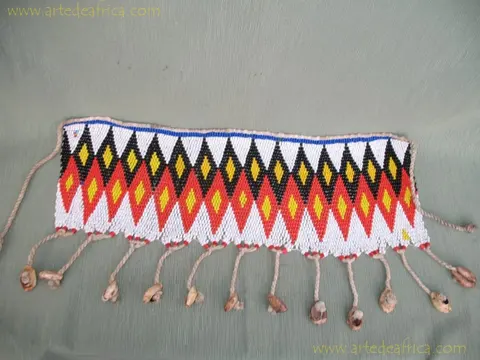
The essential function of African sex covers, especially when they are artistically decorated, is not what their name indicates but rather to…
FPR-8
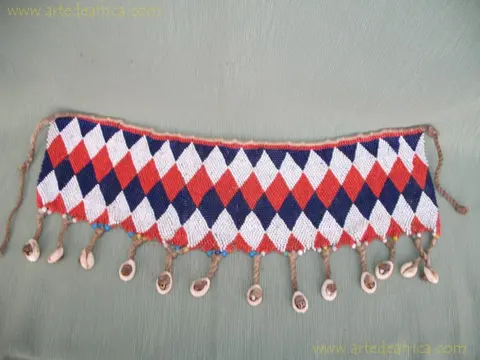
The essential function of African sex covers, especially when they are artistically decorated, is not what their name indicates but rather to…
FPR-9
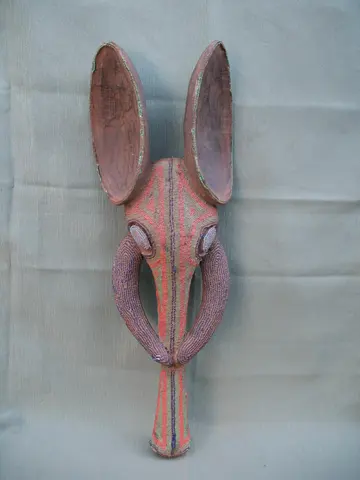
This mask was worn on the head, horizontally, during ritual dances and is still used today on some festivities.
FPR-12
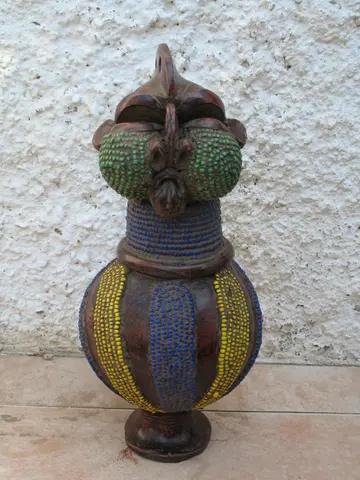
Little pot topped with the head of a character who's pulling out his tongue.
FPR-13

They are called "pearl" figures, masks, statues or any other object covered with beads or ceramic pearls.
ARC-15


