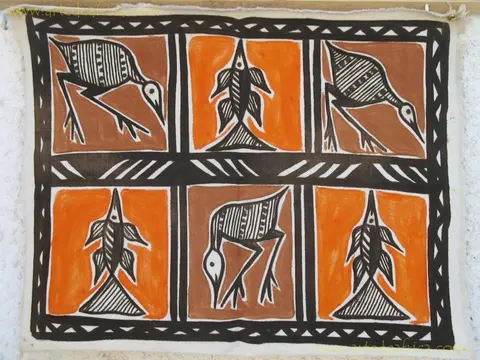
Buake Fabric
Fabric made of Buaké cotton, in dense and resistant fabric, with motifs of a fish and a paint that alternate.
TPC-1

Text of the original catalogue
When it comes to tapestries in African art, these are mainly two main trends, hand-picked fabrics in fabric from something where Korhogo in Ivory Coast and fabrics made from rafia fiber cone cidas kassaï velvets in the Democratic Republic of the Congo. KORHOGO TELAS COSTA DE MARFIL Korhogo is a city located in the north of Ivory Coast, in the Senufo region known for its traditional cotton fabrics with multicolored decorations covering all ethnic scenes typical of the villages, from music to the works of the countryside to traditional mask dances. Two types of fabric are sold in Korhogo. The traditional cotton fabric that was hand woven in small and elongated strips of cloth about fifteen centimeters wide sewn together. This fabric was quite thick and did not allow to obtain a good level of detail. Currently these fabrics are manufactured, in a village near Waranené, semi-industrially in finer grain which allows for a higher level of detail and since it is a single body cloth the drawing in the seams is not broken. The paintings are hand made by women. Once painted, they are fastened with nails or bedbugs on wooden panels, doors or posts for RAFIA TERCIOPEL KASSAI KUBA (RDC) Known under the name “velos kassaï”. Its fabrication was introduced into the kingdom Kuba by King Shamba Bolongongo, great traveler, between the years 1.600 and 1.620. Men weave knots of raffia fiber on a vertical or inclined loom. They are tight knots and very close together, cut very closely which gives a velvet look. And Shoowa women are in charge of decorating, drawing, starting from one of the edges, can employ some cotton or wool threads or the same dyed raffia. These fabrics served, among others, as currency or dowry, they were also used in funerals and important events as a symbol of wealth. The kings and queens, in the great ceremonies, carried around their waists long woven, up to six meters, of embroidered raffia, called nshak, which contained the most important aspects of their cosmogony.
24 objects · page 1 of 1
Fabric made of Buaké cotton, in dense and resistant fabric, with motifs of a fish and a paint that alternate.
TPC-1
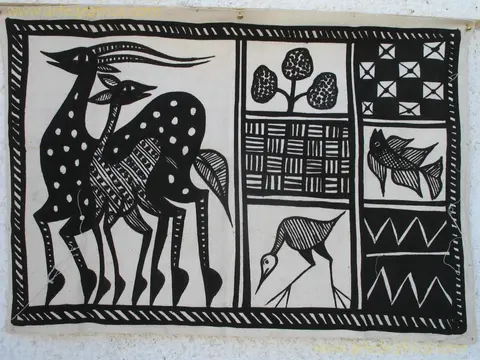
Two gazelles occupy half the space.
TPC-2
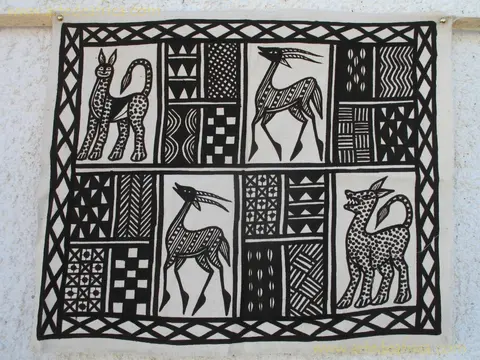
In this Korhogo fabric two gazelles alternate with two animals that could represent the leopard and hyena, alternating with numerous geometric…
TPC-3
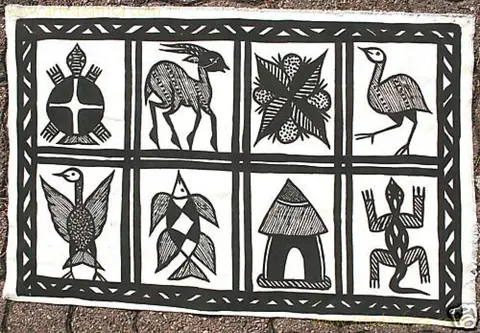
Korhogo or batik fabric in which several animals of the area are painted, a typical round hut of the region and a…
TPC-4
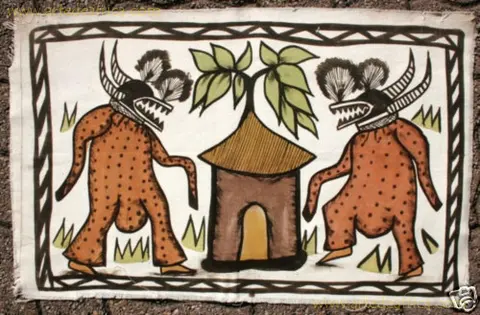
In this fabric of Korhogo have been represented two wabelé morecras dancing around a typical round hut.
TPC-5
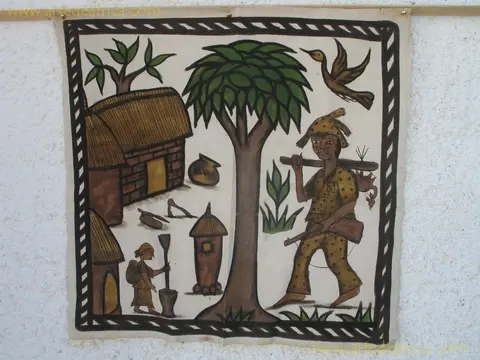
Representing a scene of senufus village with a hunter returning with his prey and a woman stacking the millet.
TPC-6
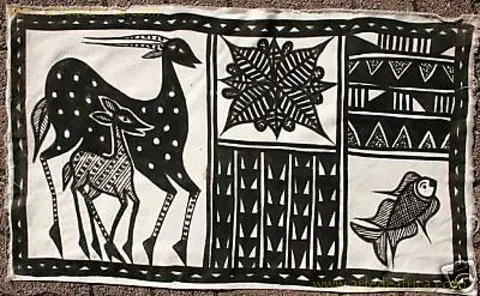
Fabric purchased in Korhogo. these fabrics are intended to decorate the walls.
TPC-7
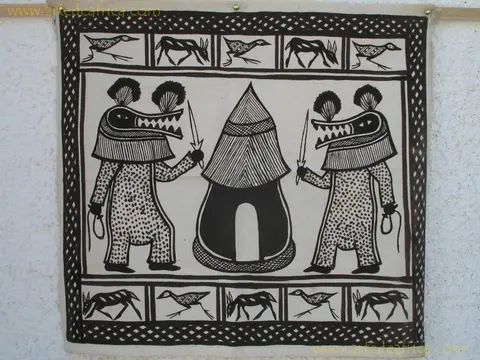
Dance scene with two korobla masks around the typical round hut of northern Ivory Coast.
TPC-8
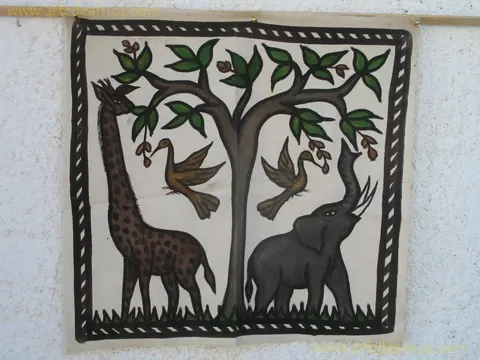
Scene with a giraffe and an elephant eating leaves from the branches of ur tree, acaompanadps by two birds.
TPC-9
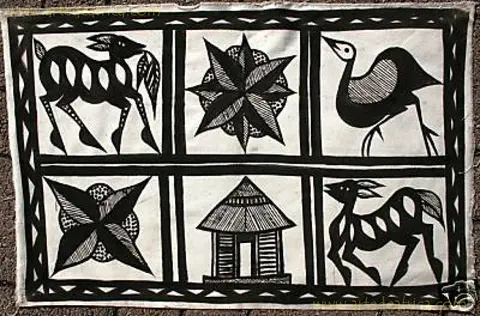
Fabric painted with tribal motifs such as antelopes, birds and huts, in the town of Waranéné.
TPC-10
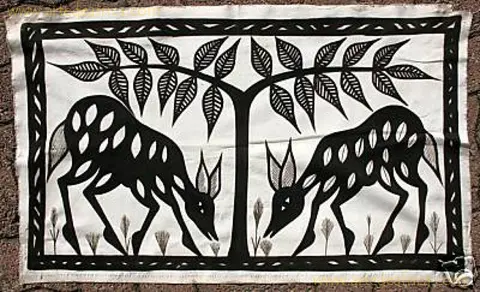
Scene of antelopes eating at the foot of a tree.
TPC-11
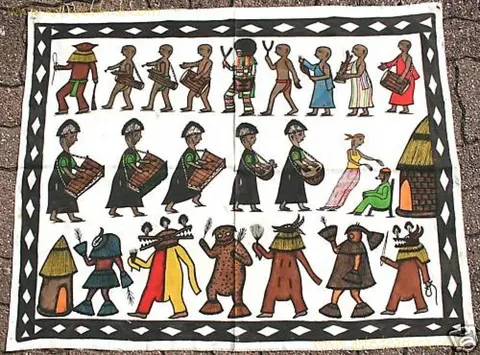
Rural tapiz typical of the Senufo region in northern Ivory Coast.
TPC-12
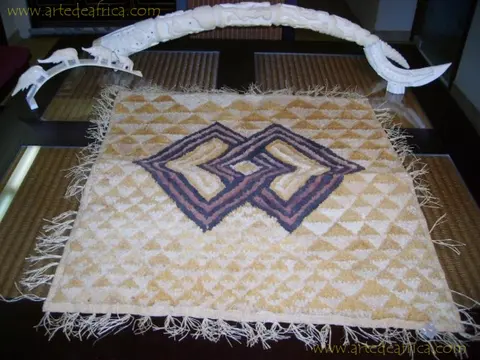
Known under the name of “velours kassaï”.
TPC-13
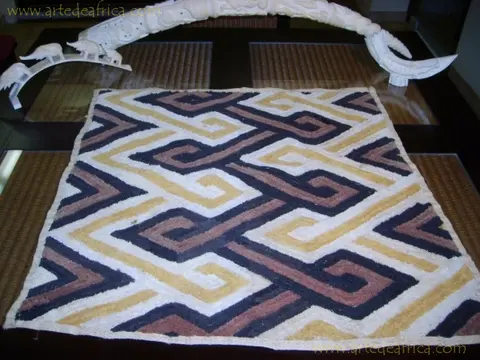
Known under the name of “velours kassaï”.
TPC-14
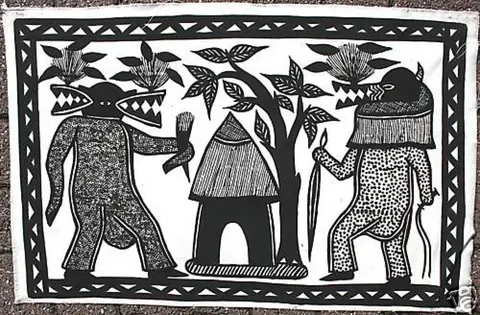
Two ponygo masks dancing around a hut and a symbolic word tree.
TPC-15
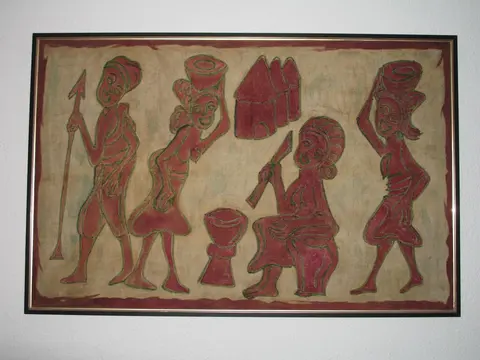
Scene of village with two women carrying the water and another stacking the cereal, while the man is represented with a spear…
TPC-16
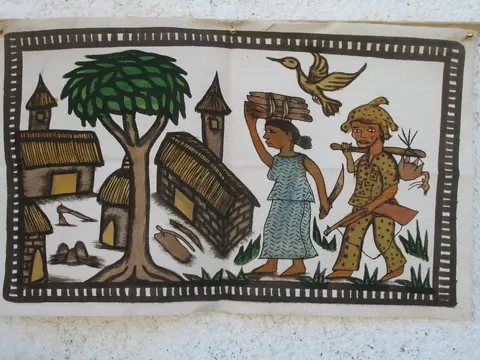
The man just picked up a small bell with his rifle and the woman and the woman carry the firewood that he…
TPC-17
Three wide bands fabric with five healers each. In the middle a tree.
TPC-18
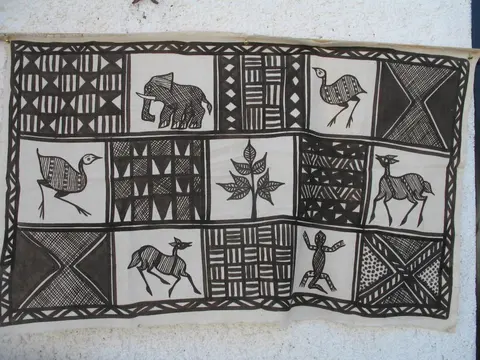
Three wide bands fabric with five healers each. In the middle a tree.
TPC-19
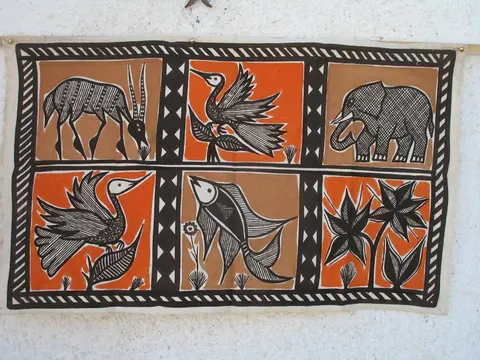
Fabric that features two large bands with three frames each.
TPC-20
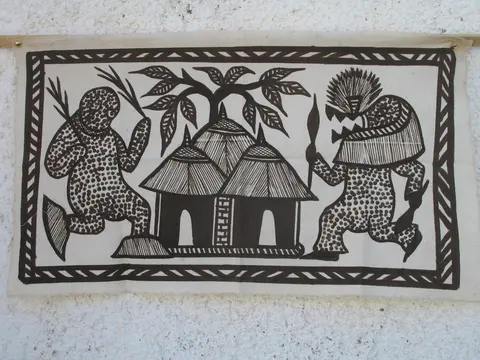
Fabric painted only in black.
TPC-21
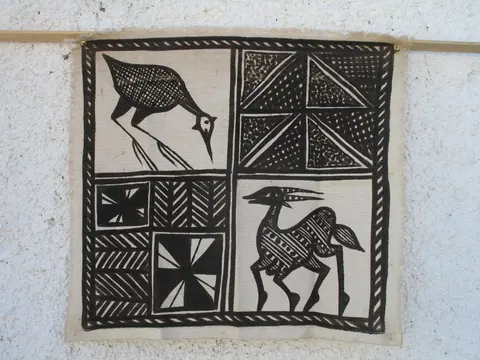
Fabric that represents a painting and an antelope that by drawing, horns and fur, could be a sitatunga, animal that lives in…
TPC-22
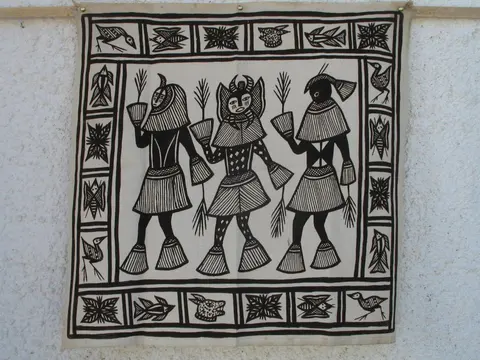
Three masks dancing with the Scarfs in the hands, framed by a series of rectangles in which painted, avce, dogs, fish, butterflies…
TPC-23
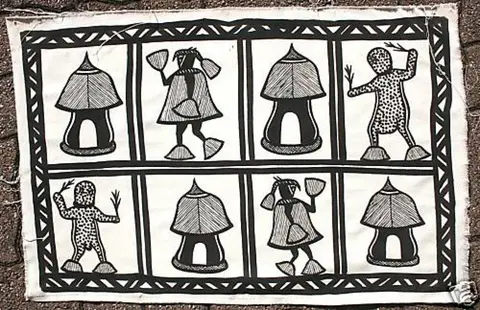
Rectangular Korhogo fabric in which two leopard men, two dancing masks and four huts have been depicted, all with black pigmentation.
TPC-24


