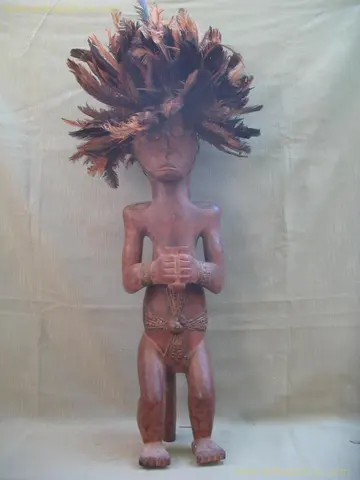
Statue Eyema Byeri
Statue eyema byeri, guardian of reliquary, with a rather voluminous bird feather headdress.
RLC-35

Text of the original catalogue
Some African peoples, and especially Gabon, are used to making raffia or bark containers to preserve the relics of one or more ancestors in order to worship them. The cult of ancestors is based on the relationship between the offering of the living to the deceased and the protection of the deceased to the living. Some of the most important mortal remains, mainly part of the skull and pieces of other bones, are kept in the reliquaries of the ancestors. It is usually the remains of the nearest ancestors. They are venerated at the same time that they are feared because they can be dangerous to the living, which is why it is advisable to place them under the tutelage of a protective spirit. Often next to or on this box is placed a figure that evokes the ancestors and that is called the keeper of reliquary. This figure is associated with the reliquaries and considers as a true reliquary, having been in contact with the relics. In other villages, as in Cameroon, it is a hut that serves as a reliquary, since in it the skull of ancestors is preserved.
78 objects · page 1 of 4
Statue eyema byeri, guardian of reliquary, with a rather voluminous bird feather headdress.
RLC-35
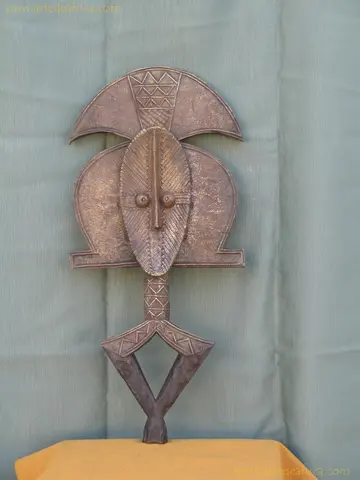
The Mahongwelocated in eastern Gabon, in the regions of Makotu and Mekambo, achieved a high degree of stylization, reducing the body to…
RLC-36
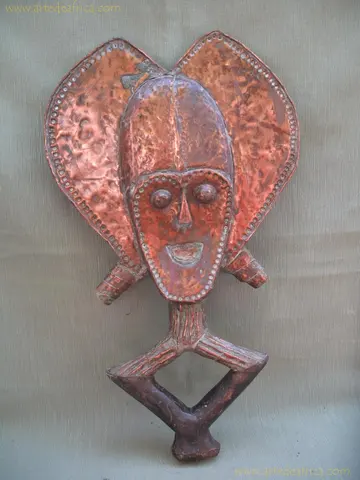
Together with the Mahongwes are the best known manifestations of the reliquaries Kota.
RLC-1
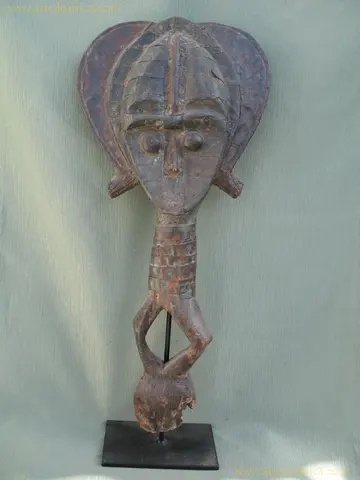
Together with the Mahongwes are the best known manifestations of the reliquaries Kota.
RLC-2
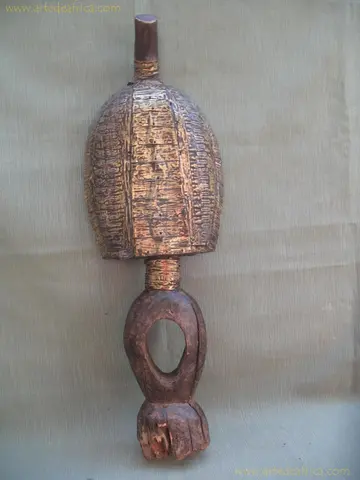
The Mahongwelocated in eastern Gabon, in the regions of Makotu and Mekambo, achieved a high degree of stylization, reducing the body to…
RLC-3
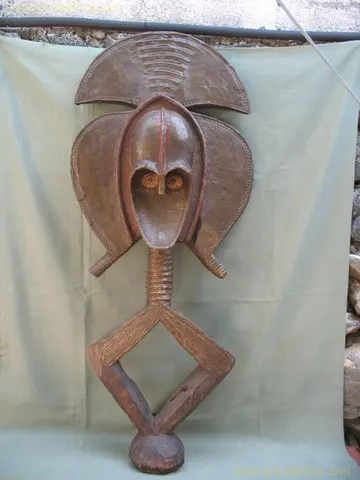
Together with the Mahongwes are the best known manifestations of the reliquaries Kota.
RLC-5
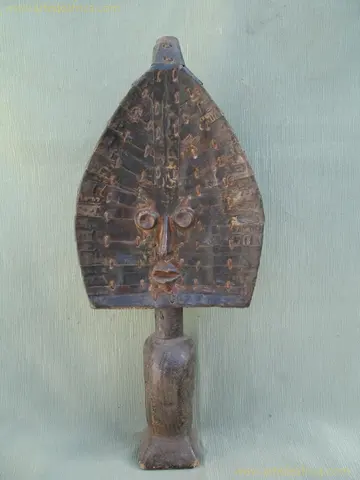
The Mahongwelocated in eastern Gabon, in the regions of Makotu and Mekambo, achieved a high degree of stylization, reducing the body to…
RLC-6
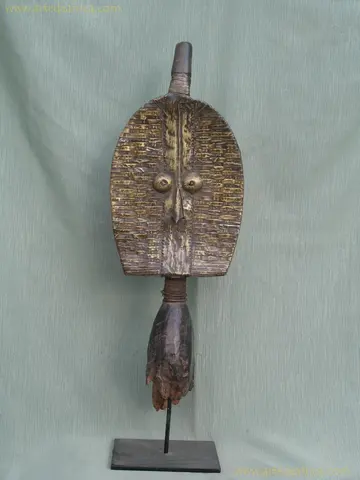
The Mahongwelocated in eastern Gabon, in the regions of Makotu and Mekambo, achieved a high degree of stylization, reducing the body to…
RLC-7
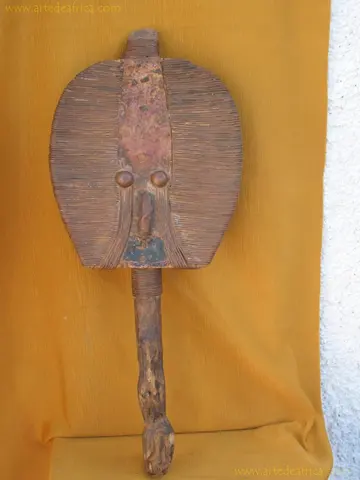
The Mahongwelocated in eastern Gabon, in the regions of Makotu and Mekambo, achieved a high degree of stylization, reducing the body to…
RLC-8
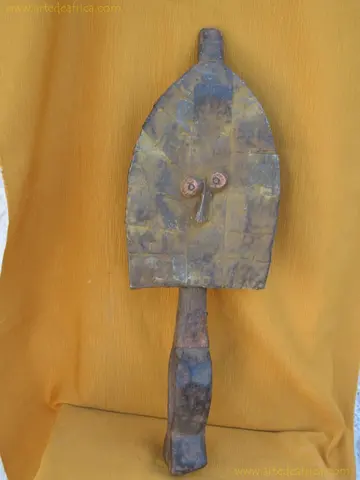
The Mahongwelocated in eastern Gabon, in the regions of Makotu and Mekambo, achieved a high degree of stylization, reducing the body to…
RLC-9
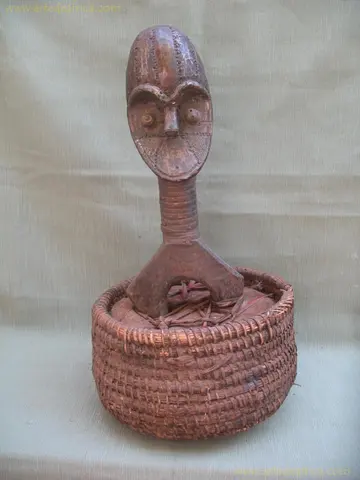
The style Sangu or Masango reduces the proportions of the head and suppresses the lateral parts, although it retains the rhombus and…
RLC-10
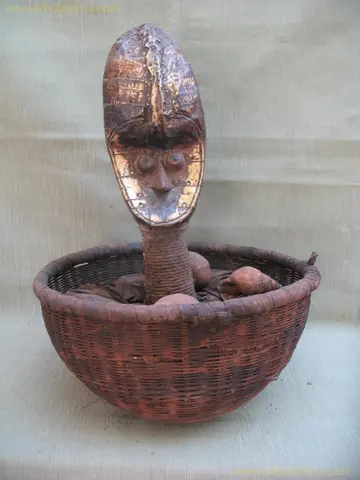
The style Sangu or Masango reduces the proportions of the head and suppresses the lateral parts, although it retains the rhombus and…
RLC-11
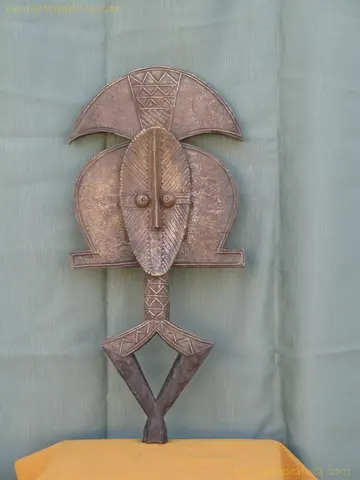
Together with the Mahongwes are the best known manifestations of the reliquaries Kota.
RLC-12
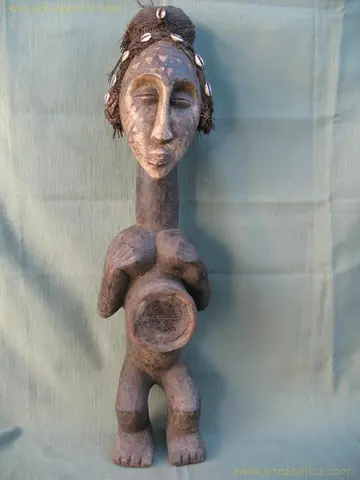
Reliquary representing A Ngaady a mwaashsister and wife of Woot, ancestor of the Bushongos, i.e.
RLC-13
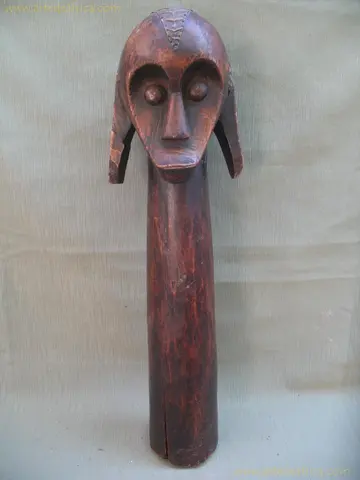
Reliquary guardian head.
RLC-33
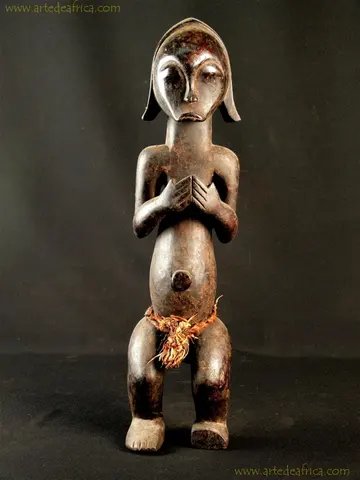
Usually called reliquary guards usually represent men sitting or with slightly bent knees.
EMS-30
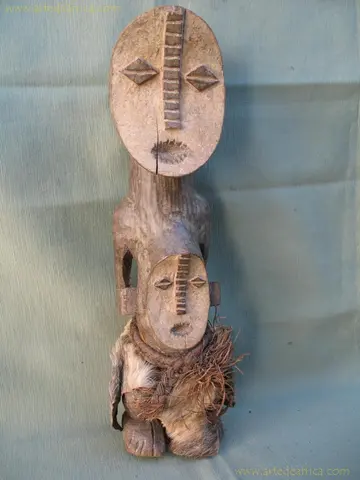
Statues with overlapping heads representing the different degrees within the “Bwamé” society.
RLC-14
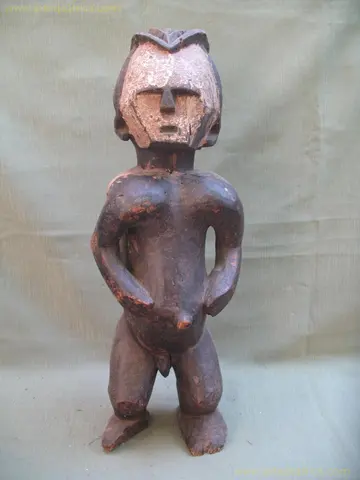
The Ambete or Mbete are located on the borderline of Gabon with the Republic of the Congo.
RLC-15
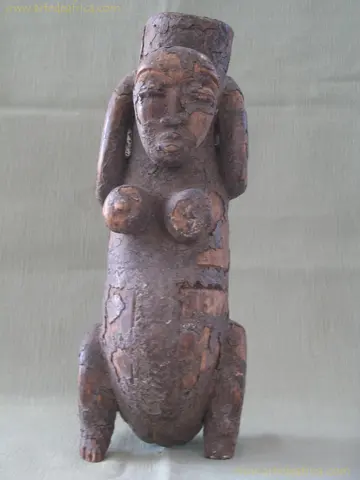
This village is formed by the symbiosis of two ethnic groups, the Ngata, traditionally blacksmiths and forgers and the Ntomba, farmers.
RLC-16
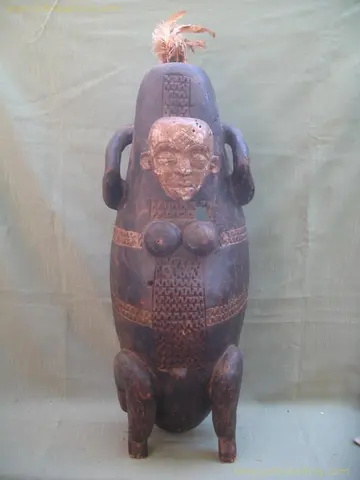
This village is formed by the symbiosis of two ethnic groups, the Ngata, traditionally blacksmiths and forgers and the Ntomba, farmers.
RLC-18
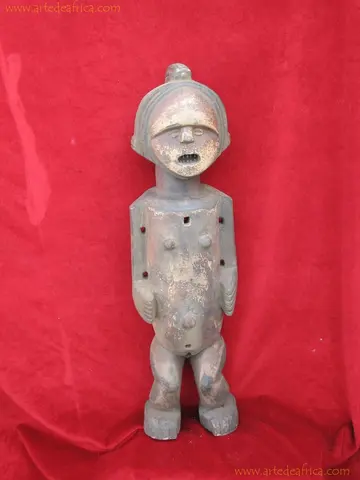
The Ambete are located along the border between the People’s Republic of Congo and Gabon.
RLC-19
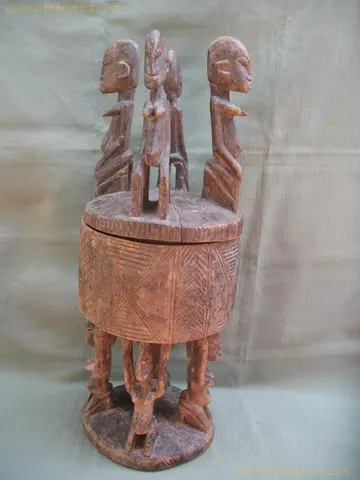
Funeral wooden urn intended for reliquary to preserve relics of the ancestors.
RLC-20
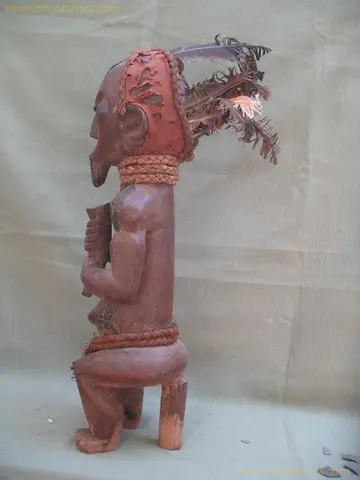
Reliquary guard sitting, holding the horn of magic substances with both hands.
RLC-22
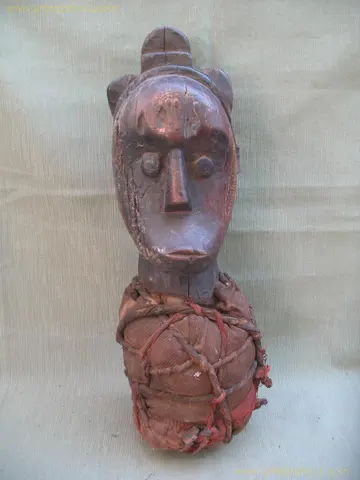
Among the Fang, village of hunters, each family owns a Byeri or box in which the relics of the most notable ancestors…
RLC-23


