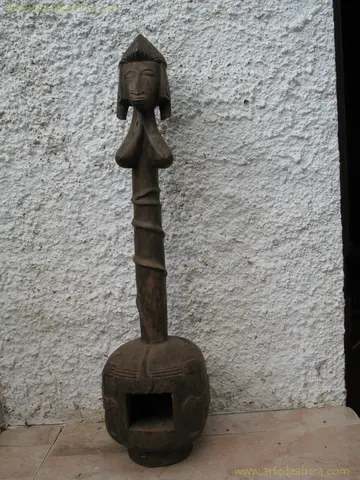
Spoon for Tchapalo
Large spoon intended to serve the chapal.
CHR-1

Text of the original catalogue
The spoon is not like in the West an utensil intended for eating or cooking. Most traditional African dishes are eaten with their fingers around a common container, especially if there are guests, as usually the boss or the parent eats alone. Decorated spoons are prestigious objects. They denote the rank and quality of their owners, usually women and, especially, the wives of clan leaders. Its use is ceremonial, whether religious or playful ceremonies. In addition to dances they also use in some magical rituals to collect the remains of the slaughtered animal and in some regions, as between the dan and the Baulé, are used in the great feast of rice, which is celebrated at the return of young people recently incinerated and usually circumcised. In some festivities the ladies of higher rank rival in the beauty of their spoons, true works of art, which they will use to distribute cereals to the most disadvantaged. Sometimes, spoon capacity measures the generosity of its owner. In some villages they are the exclusive property of the most hospitable woman. These spoons, for example among the dan, are called reward spoons because as a reward they receive them for their generosity or for their culinary gifts. Women keep and care for these spoons as if they were statues, and display them as true trophies. They are also the “weapons” of the representatives of the women’s associations who display them in ritual ceremonies or popular celebrations. The spoon, along with personal ornamentation, dresses and jewels, is the symbol that best defines the rank of the African woman. Those of the Baulé ethnic group, like all their production, are particularly beautiful. These prestigious objects have given rise to very original artistic creations. Generally the end of the mango is finished off by a reproduction of the traditional statues of the ethnic group, by an animal head, which is usually the totemic animal or by a hand that refers to the generous distribution of rice by its owner. In some ethnic groups, spoons may also belong to men, usually older men, who wear spoons hung with a sneeze during rites. if they were statues, and they display them as real trophies. They are also the “weapons” of the representatives of the women’s associations who display them in ritual ceremonies or popular celebrations. The spoon, along with personal ornamentation, dresses and jewels, is the symbol that best defines the rank of the African woman. Those of the Baulé ethnic group, like all their production, are particularly beautiful. These prestigious objects have given rise to very original artistic creations. Generally the end of the mango is finished off by a reproduction of the traditional statues of the ethnic group, by an animal head, which is usually the totemic animal or by a hand that refers to the generous distribution of rice by its owner. In some ethnic groups, spoons may also belong to men, usually older men, who wear spoons hung with a sneeze during rites. The Dan has three types and spoons: - The Mia Na spoon: small spoon to give food to the elderly. The top is five to eight centimeters long. - The Ya Bo Sie Mia spoon: which means spoon to distribute the cooked rice. It's the spoon that uses the Ko Dey, first woman, to cook. Large bucket, with handleable handle finished in triangle. - The Wa Ke Mia spoon: it is the festive or ceremonial spoons that honor the hospital woman. They measure more than forty centimeters. Wa Ke Mia spoons, to properly prepare the meal of circumcision, must be invested by a spirit, thus acquire a sacred rank. It is Wunkirle and its most important participation is in the “cow party or merit.” At this party women carry the singing voice. By planting their spoons they distribute rice, cauris and small pieces of currency to the most needy in the village. CUCHARA WA KEMIA It is a spoon richly decorated with beautiful sculptures, which is used in the festivities of the villages and confirms that its owner is a woman distinguished for her hospitality and generosity. And it is this woman that the village chief will ask to organize the ceremonial meal, which will normally be attended by numerous diners. The Wa Ke Mia is a symbol of the merit of its owners and a public recognition by the village. It will serve to distribute the rice and meat. And it is raised during the hospital woman's dance.
36 objects · page 1 of 2
Large spoon intended to serve the chapal.
CHR-1
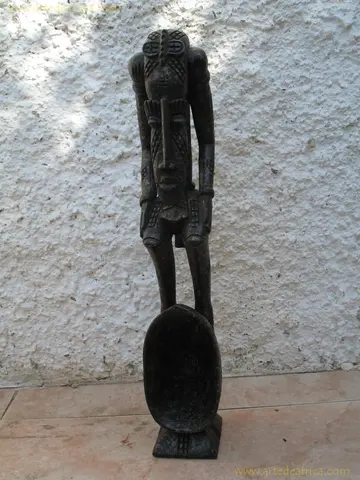
Magnificent and complicated sculpture by an old Senufus sculptor.
CHR-2
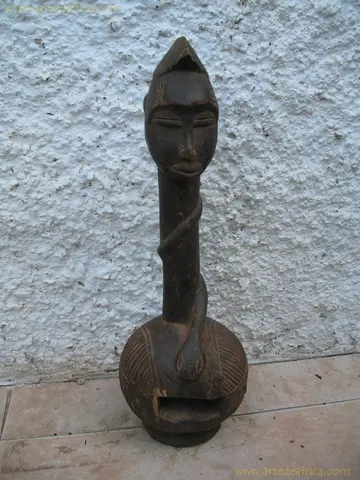
This type of spoon served to drink millet beer, called tcapalo, which was the alcohol that was most traditionally drunk in northern…
CHR-3
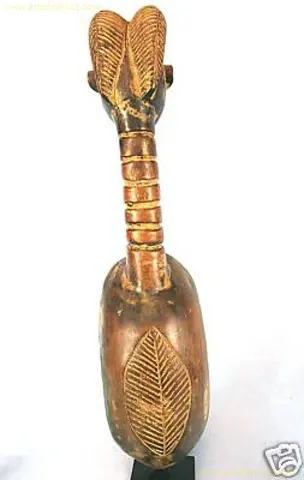
Spoon that represents the beauty canons Dan.
CHR-4
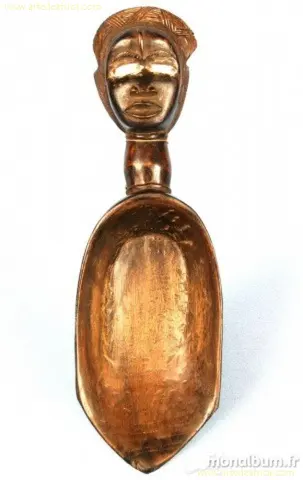
Spoon of great capacity employed by women in ritual dances intended to celebrate the end of harvests.
CHR-5
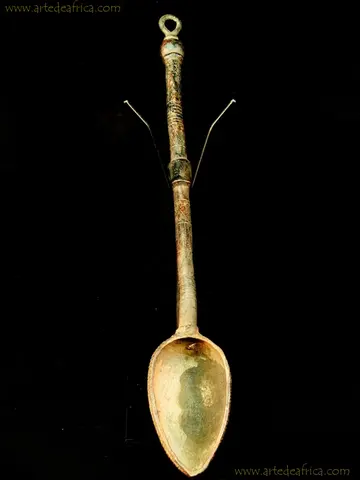
Spoon of prestige used by the woman of a remarkable as an element that exalts her dignity.
CHR-6
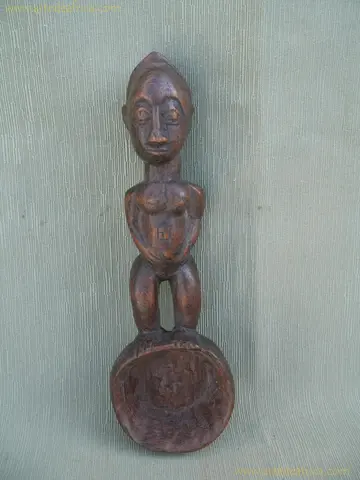
Mango formed by the figure of an androgynous woman, in an attitude of meditation. hands resting on the belly as an allusion…
CHR-7
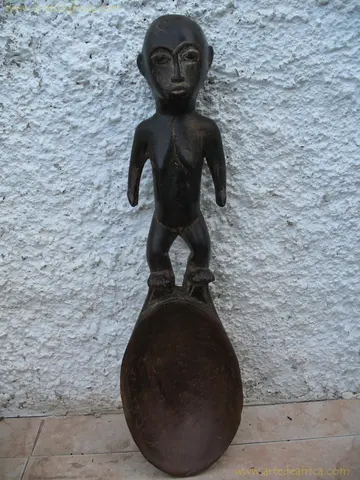
Big lobi spoon, whose handle represents a woman. Dark brown patina with remains of kaoli in the eyes and in some reliefs.
CHR-8
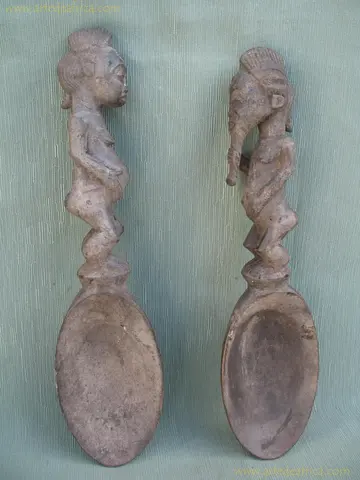
Spoon whose mango is a male character with his beard with his right hand while the left leans on his belly.
CHR-9
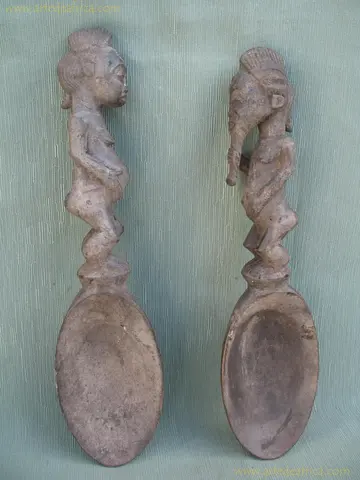
Ritual spoon whose handle is a female figure representing the classical canons of the Baule statuery.
CHR-10
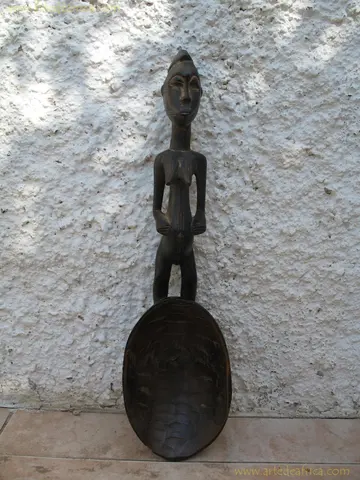
Ritual spoon whose handle represents a young woman who has begun to judge by the scarifications she carries on her cheek, breasts…
CHR-11
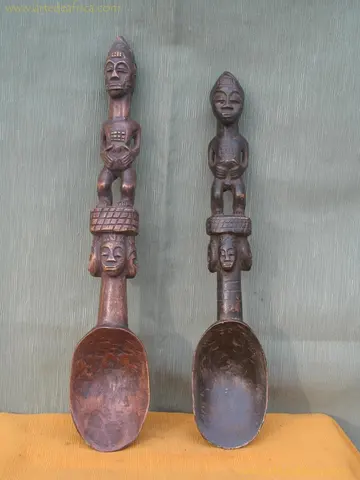
Spoon whose handle is formed by an androgynous figure of woman, with ritual scarifications on the chest, face and belly.
CHR-12
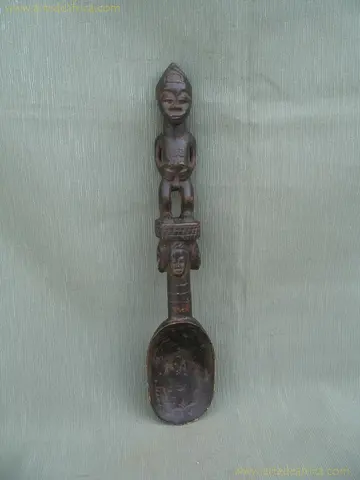
A male character standing on a pedestal under which four female heads appear, serves as a handle to the spoon.
CHR-14
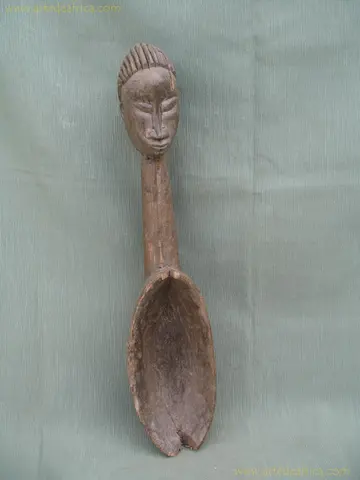
Festive or ceremonial spoons, which honors the hospital woman.
CHR-15
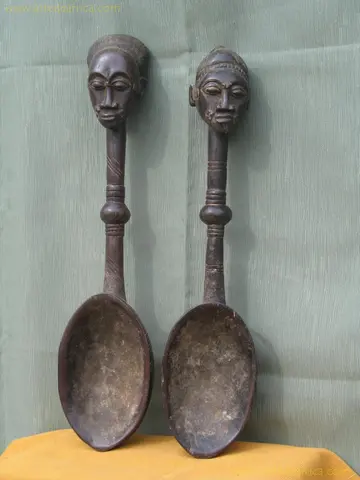
Festive or ceremonial spoon, which honors the hospital woman.
CHR-16
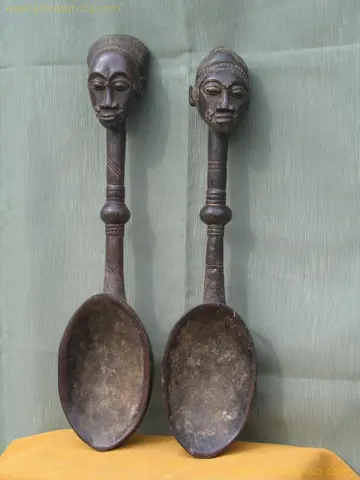
It forms a pair with the male statue.
CHR-17
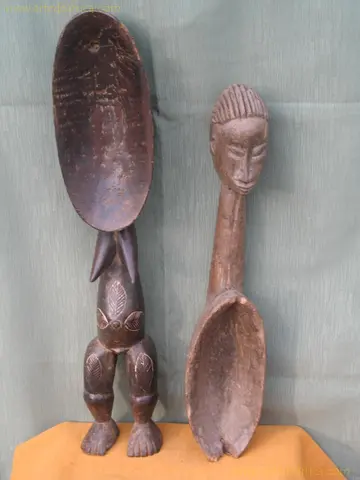
Wa Ke Mia Spoon: It is the festive or ceremonial spoons that honor the hospital woman.
CHR-18
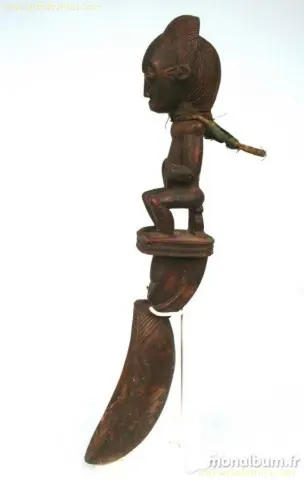
The spoon handle represents a man sitting on a Skan stool in meditation attitude.
CHR-19
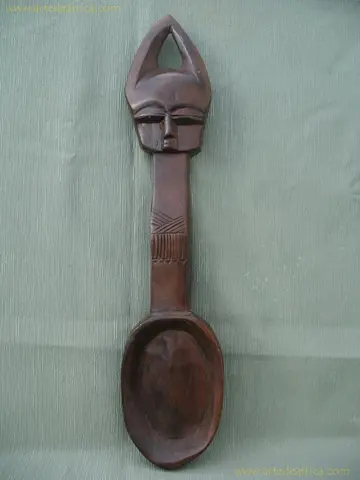
Ritual spoon whose handle is finished off by a representation of a mask bonu amwin, mask used in funeral ceremonies and in…
CHR-20
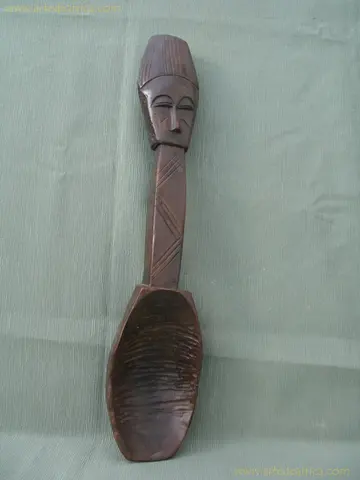
A ritual spoon acquired in Abidjan in the 1960s.
CHR-21
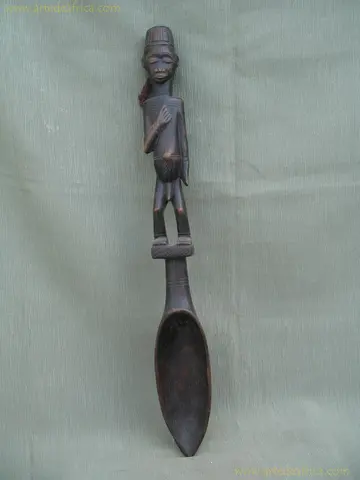
Ceremonial spoon made of hard wood, from lakes.
CHR-22
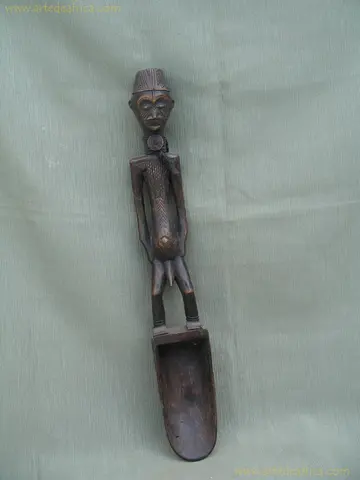
Spoon whose handle is a man touched with a chechia and heart-shaped face.
CHR-23
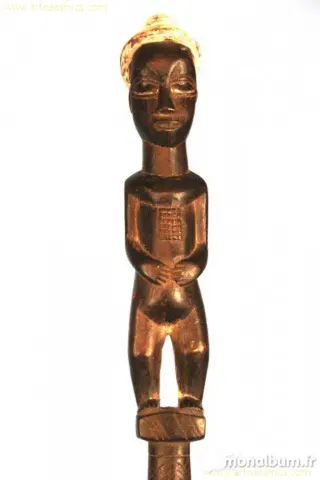
Spoon that represents a settler, easily identifiable by his colonial hat.
CHR-24
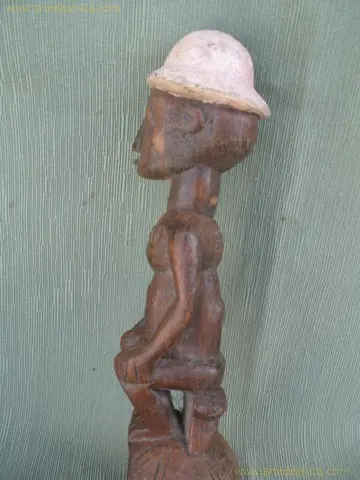
Original sculpture of a character played with the classic settler hat.
CHR-25


