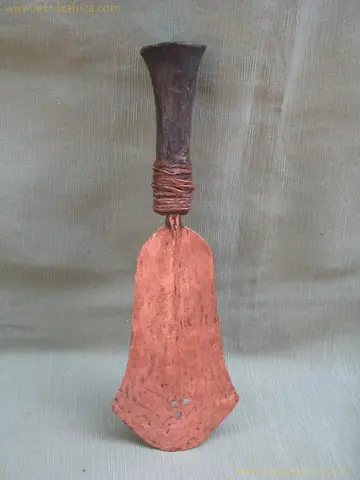
Ceremonial Knife
Wide copper blade, in the form of an inverted cup that widens further at the base and rounds the bottom.
ARM-34

List of the historical catalogue
Text and organisation of the original catalogue · Jesús Arrimadas Saavedra
Ceremony weapons, as well as scepters and batons of command, are symbols of power and authority that denote the rank of the person who holds them. They are not weapons of combat, which is the same as weapons, but as their name indicates they are destined to be carried in ceremonies and official acts. They are copies or imitations of real weapons, which have the same appearance but not the same effectiveness, although they are usually more decorated and presented with a more attractive appearance. Mazes, swords, daggers and axes are the most used ceremonial weapons by kings, chiefs and dignitaries in traditional Africa. As for weapons of use, the most widely used is undoubtedly the machete, weapon and tool at the same time, an inseparable element of the African that travels through the jungle or the savannah. It has also been used and combats and body struggles, along with the protective shield. The spear, at a time a handgun and thrower, has been used in fighting and hunting large mammals. The throwing knives have been used mainly in Central Africa. The firearms entered later. They are famous for their “traite rifles”, so called for being used during the slave trade. These rifles are handmade, usually manufactured by the blacksmith from any type of tube and cause numerous accidents by resisting very few pressure bars. Some spark rifles have been manufactured, although most are percussion rifles. Gunpowder is made from sulfur and charcoal powder. The manufacturing of pistons is still ingenious: The ends of sticks of about three or four centimeters are covered with some fine skin, rabbit or small antelopes and fastened with a fine rope. Let dry, cut the leftover skin, just enough so that the capsule so manufactured settles well in the chimney of the rifle. They made a paste with the heads of the old scratch matches and filled the bottom of the capsule with it. It was enough to let her dry up to be operational. What the author of these lines attests to, witness to their manufacture on numerous occasions. For the ammunition, the old lead tubes of toothpaste and bitumen, which were left by the whites or any piece of lead that fell into their hands, were melted. In the worst case round pebbles and for the hunting of large mammals he used an arrow or small calibrated spear that entered the canyon just. Ingenuity is the heritage of the African.
49 objects · page 2 of 3
Wide copper blade, in the form of an inverted cup that widens further at the base and rounds the bottom.
ARM-34
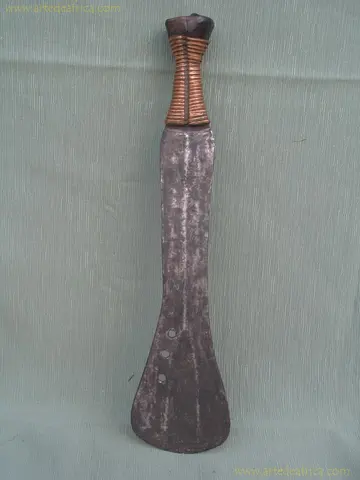
Sword of defense with handle in the form of elongated diabolus, in wood covered with copper grudo thread.
ARM-36
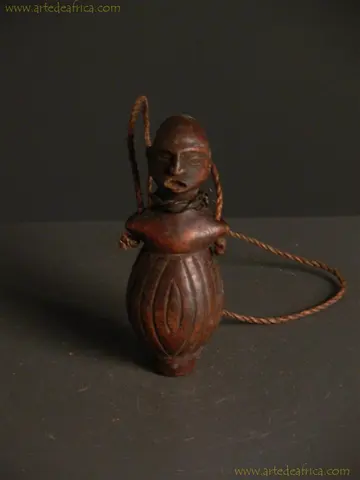
Small duster intended to transport the black duster used by the hunter.
ARM-39
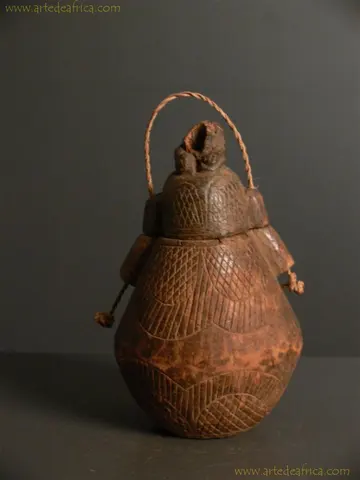
Duster intended to transport the black powder that the hunter will use.
ARM-40
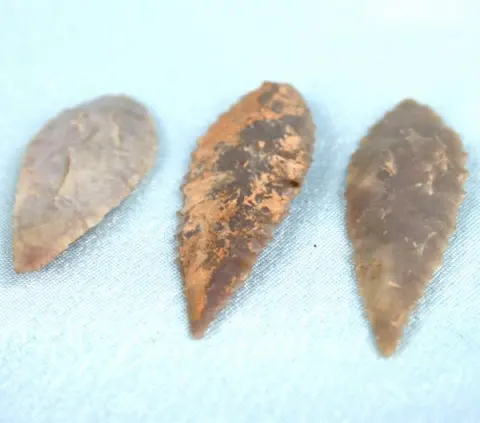
Launch points of the Neolithic period of Congo, a prehistoric era in which man bases his subsistence on agriculture, livestock, hunting and…
ARM-43
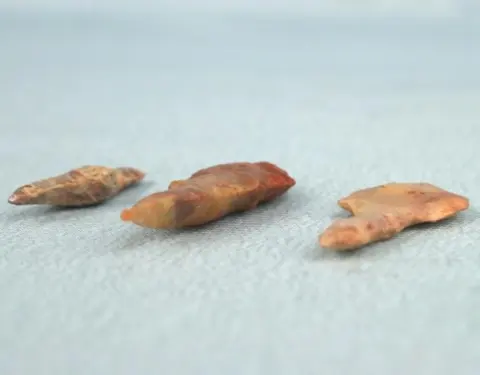
Point of spear, arrow and axe of the Neolithic period of Congo, a prehistoric era in which man bases his subsistence on…
ARM-44
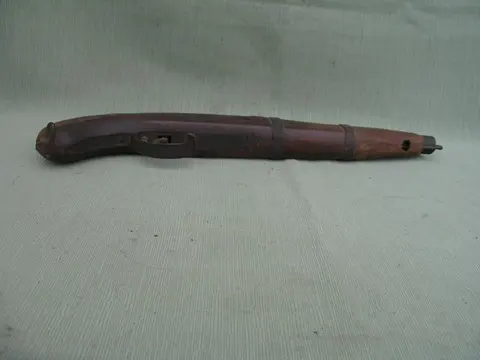
The weapons traditionally used by Africans, even today, are weapons equivalent to the weapons of avancarga.
ARM-45
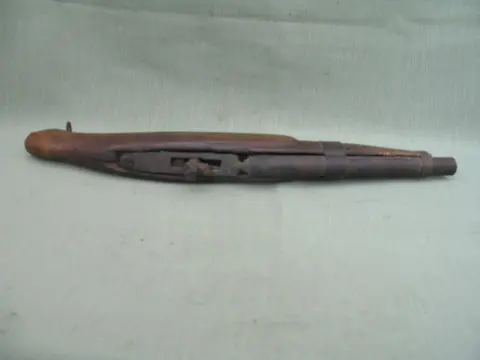
The weapons traditionally used by Africans, even today, are weapons equivalent to the weapons of avancarga.
ARM-46
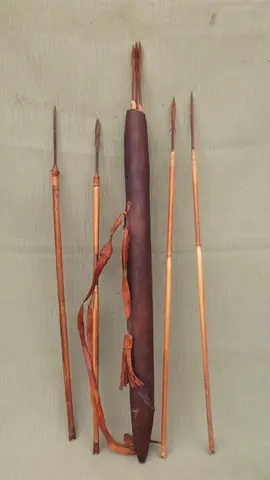
The Bakaalso known as Babinga or Bayaka, are the most important group of pygmies in Cameroon, 40.000and since all these groups are…
ARM-47
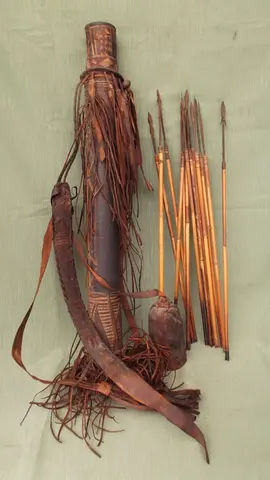
Nice carcaj with a large group of arrows destined for hunting and defense.
ARM-48
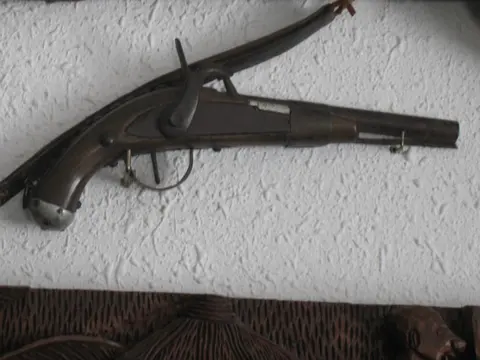
These weapons were manufactured by the blacksmith of the village recovering for the manufacture of the cannon any piece of metal tube.
ARM-49
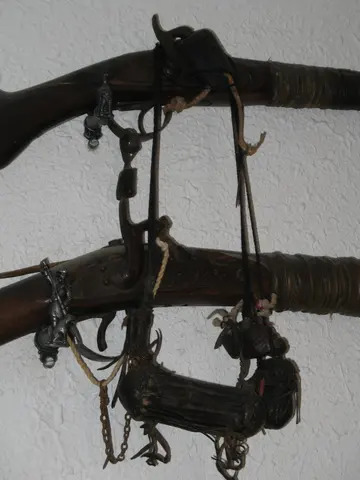
Former percussion vancharging shotguns, handmade.
ARM-50
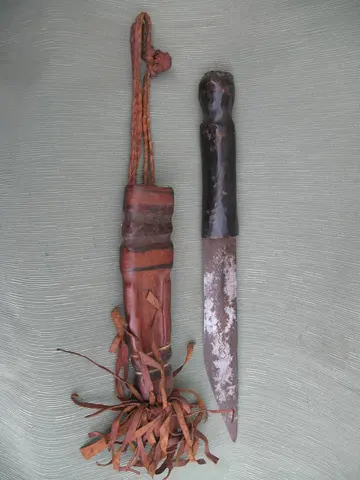
Knife for use and defense. Handle wood painted black and iron blade.
ARM-51
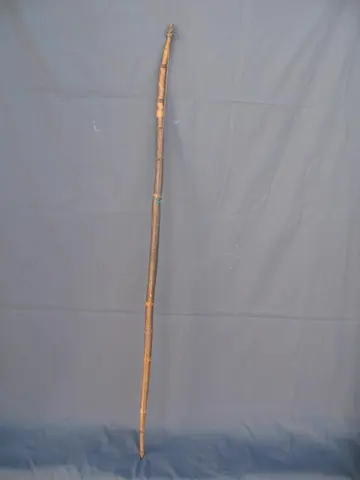
Arch used for hunting and in other times also for defense.
ARM-52
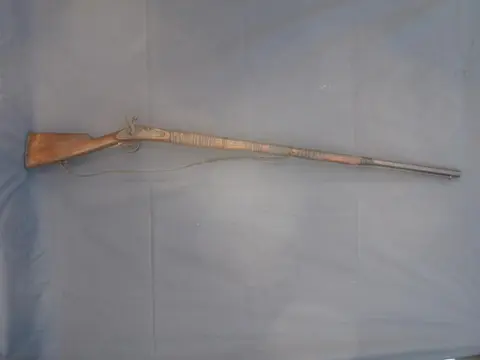
Former percussion vancharging shotguns, handmade.
ARM-53
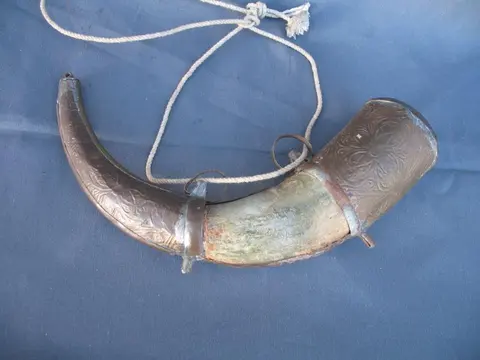
Duster made of a piece of ox horn with ends lined with repulsed brass foils.
ARM-54
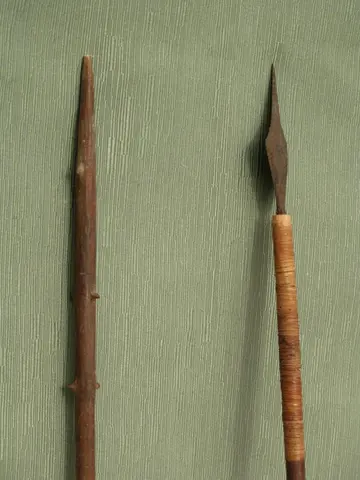
Two crafted arrows by the hunter himself.
ARM-55
Carcaj and small arrows of hunting and defense. Often the tip of the arrows is poisoned.
ARM-56
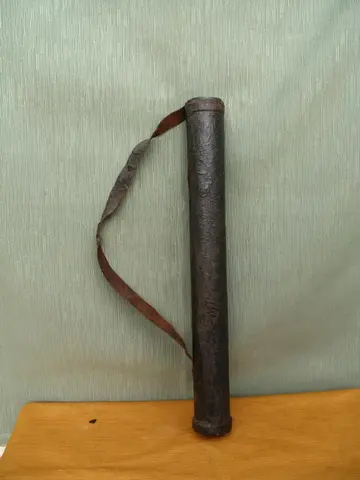
Little pygmy chime.
ARM-57
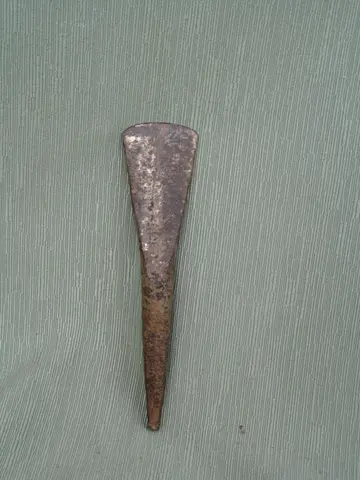
Tool used to remove and be able to pluck the elephant's teeth, piece used by hunters, which is why it has been…
ARM-58
Old sword I sounded with the leather sheath and two repulsed drawings.
ARM-59
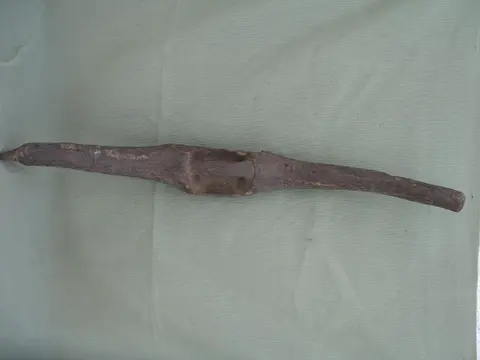
Very rare shield used by warriors Bidjogo. Long and narrow and quite heavy.
ARM-61

Group of six spear points of different sizes and shapes, destined for war, defense and hunting.
ARM-62

Point or spear astile intended to be set on a handle. These spears were destined for war, defense and hunting.
ARM-63


