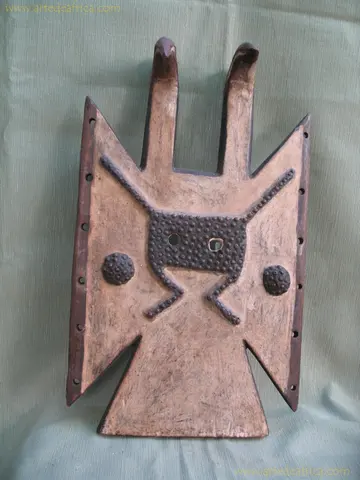
Loniake Iron Mask
The mask, called Loniaké, is made from a wooden plate, away from the eyes of young women and young women, as well…
MFG-39

List of the historical catalogue
Text and organisation of the original catalogue · Jesús Arrimadas Saavedra
We grouped all these categories of masks so as not to repeat the explanations contained in the part “Black-African artistic ethnography”. Agricultural masks are part of fertility masks. Fertility of fields and women are very united values in the animistic world. On many agricultural festivities the rites are destined to ask for the fertilizing rain of the fields to obtain good harvests or to thank the fruits received from nature and the masks dance as an integral part of these rites, but they also celebrate the fertility of the woman, dispenser of life, worker and caretaker of the fields. A large majority of masks participate in these festivities without being exclusively agrarian masks, as are the Ty Wara masks of the Bamana or BambaraThe same applies to initiation masks, although there is greater specialization in this case. Hunter masks, despite this name, do not mean that they are used during hunting, but belong to the hunters’ powerful secret societies. These dances participate both in the agrarian festivities and in funeral ceremonies and in the cults of ancestors. Many zoomorphic and anthropozoomorphic masks are agrarian and hunter masks and, contrary, most initiation masks are anthropomorphic masks. Over time many masks have evolved and changed functions. Masks that were sacred in their day have become playful masks. In some cases, less frequent, playful masks have become sacred masks by making them ported or owned by a notable ancestor. But it is difficult to chant the masks in a single category, as many of them participate in the most varied activities. Ventral masks celebrate and parody the different phases of female fertility while those of disease have the negative effects of some evil spirit. Today, most of the masks have lost their sacredness and participate in playful activities on the occasion of local festivities or the visit of important characters as young generations have moved away from the traditions of their ancestors. The passport masks identify their owner as a member of a designated secret society or ethnic group while allowing him access to ceremonies held in sacred forest or accompanying him in the journeys with a protective value.
119 objects · page 3 of 5
The mask, called Loniaké, is made from a wooden plate, away from the eyes of young women and young women, as well…
MFG-39
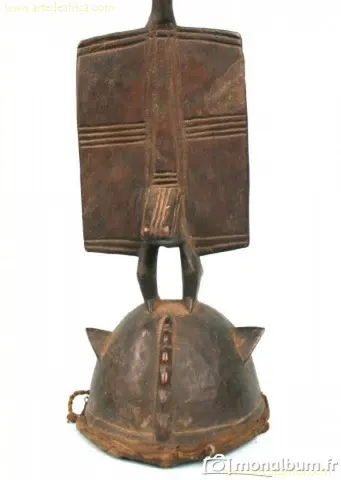
Helmet mask made of hard wood. A crocodile whose tail is the head of a snake appears in relief on the case.
MCYC-41
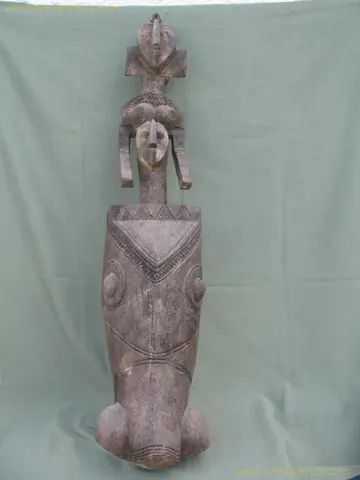
Great female mask depicting a maternity on a horse head.
MFG-43
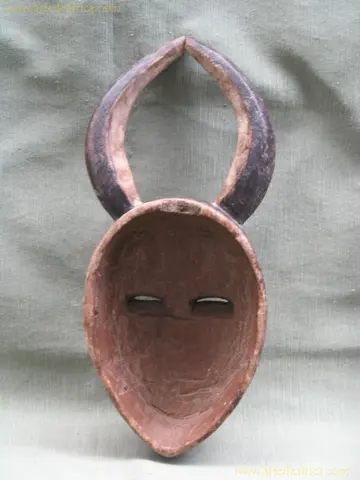
Black and white polychrome mask, or rather dark brown tanning to black.
MFAZ-43
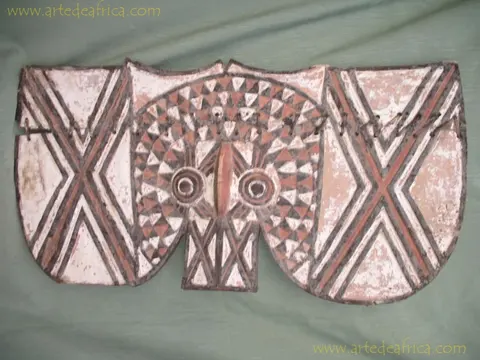
MASSARA MARIPOSA BWA (BURKINA FASO) They are usually large masks, light wood and colorful polychrome on a white background, which are manifested…
MFG-44
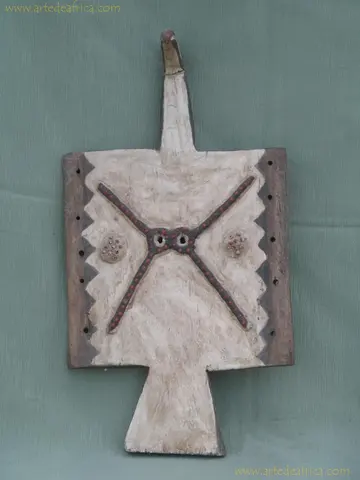
The mask, called Loniaké, is made from a wooden plate, away from the eyes of young women and young women, as well…
MFG-46
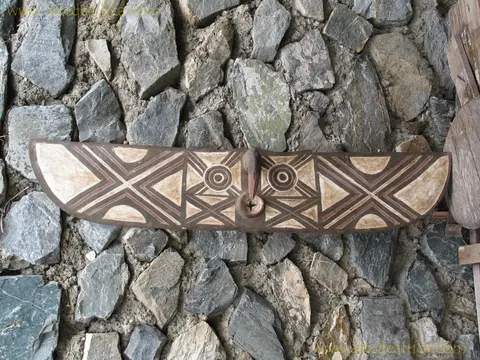
The hawk or owl mask and butterfly mask are very similar both in shape and size.
MFG-50
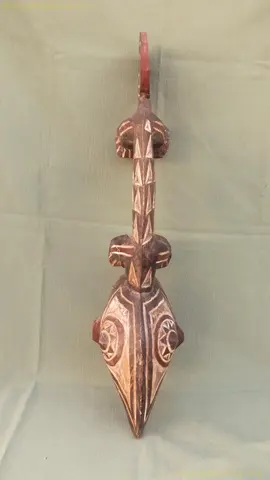
It is a mask of the San ethnic group of Mossi.
MFG-52
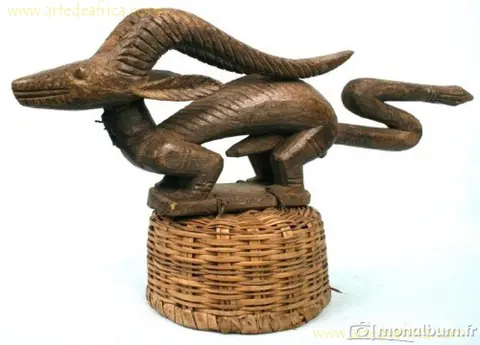
Tyi Wara means the work of the wild animal. Tyi means work and wild animal Wara.
MFG-53
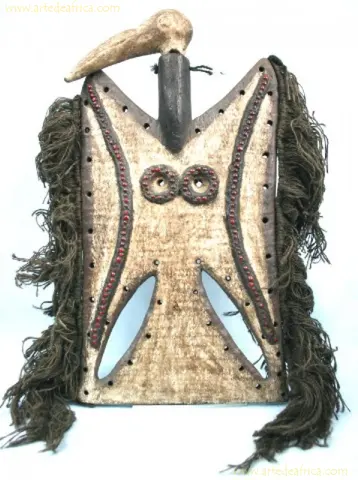
The mask, called Loniaké, is made from a rectangular wooden plate bordered by fringes and topped by one or two bird heads,…
MFG-54
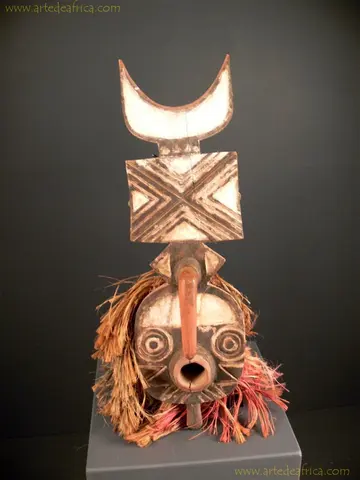
The Bwa are part of the Boboknown as “Bobo blacks” , like the “Bobo Fing”, considered the real ones Bobo.
MFG-55
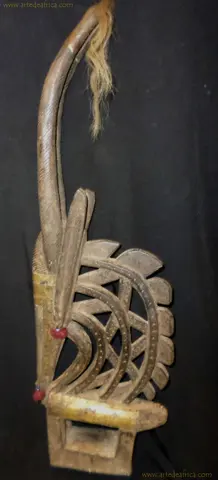
Tyi wara, ty o ti wara, chy, ci o cy wara are multiple names used to name the best known scimer mask…
MFG-56
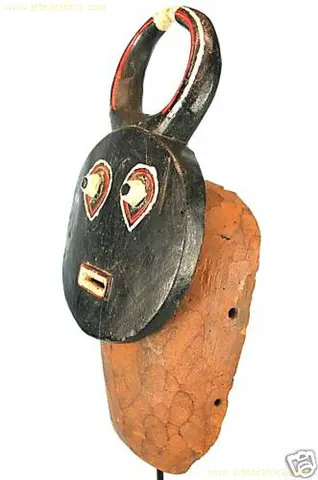
The Kple Kple mask is a Goli mask.
MFAZ-59
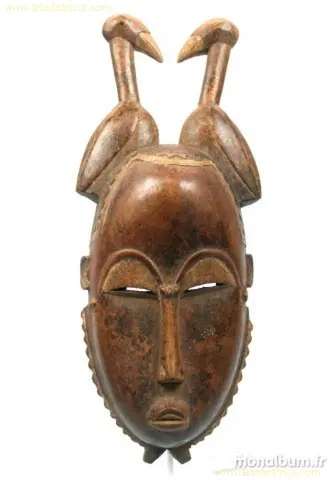
Anoman mask that faithfully and finely represents the artistic canons of the Yauré.
MFAZ-61
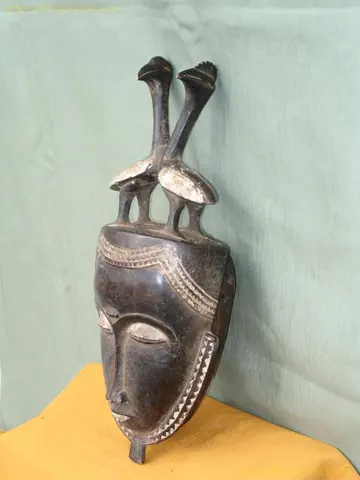
It's the masks that are topped by one or two birds. Anoman means bird.
MFAZ-62
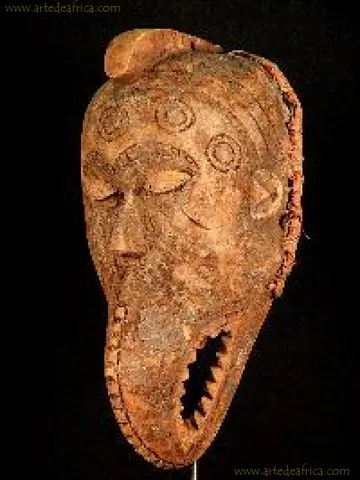
Curious anthropozoomorphic mask with bird beak-shaped mouth, with teeth.
MFAZ-65
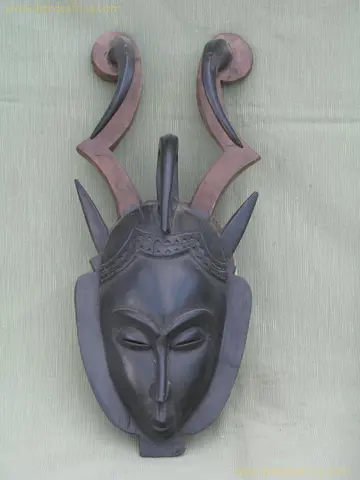
They represent spiritual power or “Yu”. Their artistic canons are quite similar to those of their neighbors.
MFAZ-68
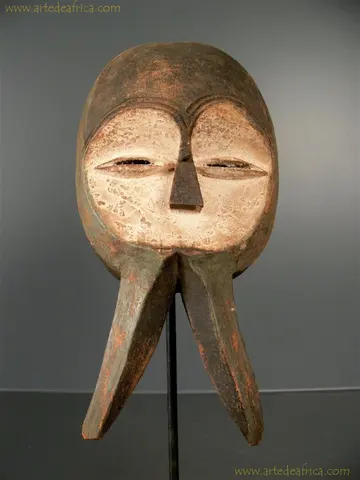
Related to the Kota They live in the north of the People's Republic of Congo.
MFAZ-70
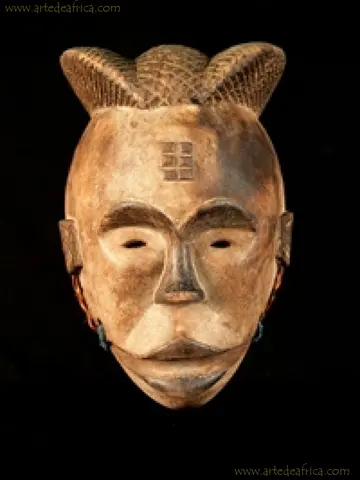
The Ogoniabout 500 thousand people live like many other ethnic groups in the fertile lands of the Niger Delta, in southern Nigeria,…
MFANT-71
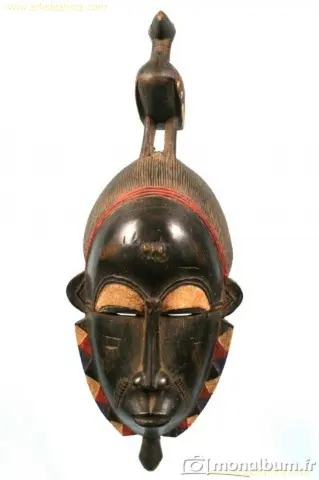
They represent spiritual power or “Yu”. Their artistic canons are quite similar to those of their neighbors.
MFAZ-72
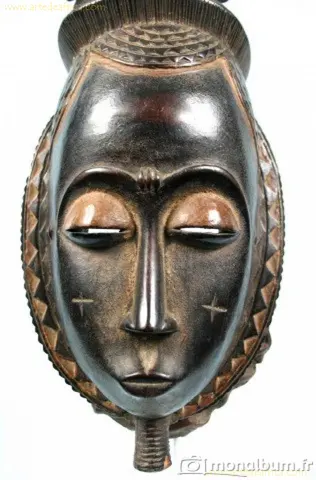
They represent spiritual power or “Yu”. Their artistic canons are quite similar to those of their neighbors.
MFAZ-73
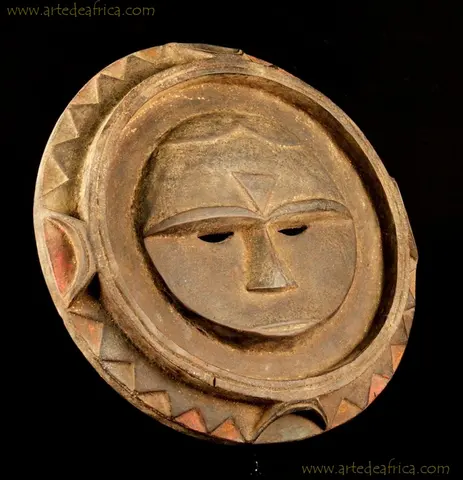
Like the ibibio and other peoples, they also have a secret society. ekpoduring whose ceremonies they use their circular masks, such as…
MFANT-74
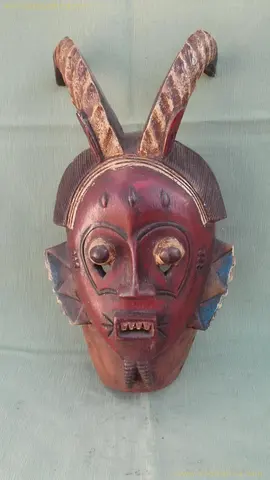
Human face with antelope horns. They represent an important event overcame a member of the clan.
MFAZ-75
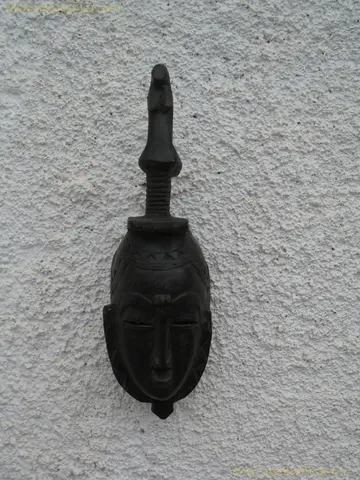
Mask of the purest stylus, with refined lines that later served to inspire the Baule art.
MFANT-76


