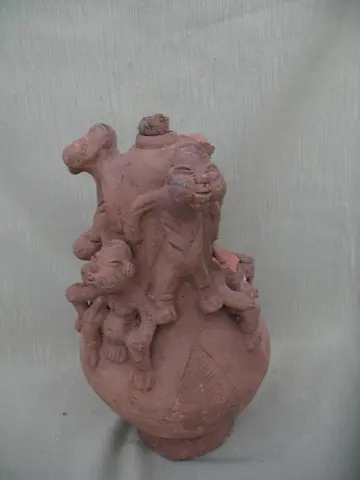
Oil Lamp
Large size oil lamp decorated with various characters. Two heads absent, restored.
TRRC-71

Text of the original catalogue
The people Tikar, of Bantu origin, is a village of Grassland, it is formed by 300000 individuals, established in different population centres in central and north-western Cameroon, mainly in Adamawa province. With their relatives they limit the Bamun by the west and with the Mambila in the northeast, among the most important neighbors. Administratively they are distributed in chiefdoms that correspond more or less to the ancient small kingdoms and groups of notables or ministers with well-defined functions. Many of them have embraced Islam or Christianity in animistic tradition, which makes them live in practice in syncretist religions, in which the universe occupies a central place. In their ceremonies they worship the land and ancestors by pouring corn beer on the ground and on the tombs, as a regenerating element of life. They are known for their production of small statues of hard cooked soil that symbolize fertility and abundance in ethnicity TikarThey represent Pygmy forest geniuses and at the same time are mocking figures. They were used to ask for the protection of homes and the family, especially children. These figures have a gap intended to introduce magical substances into them. They are used in childbirths and receive libations formed by an oily potion in which they have macerated medicinal plants. The rings they present and other objects of the statuettes are part of the magical instrument.
28 objects · page 2 of 2
Large size oil lamp decorated with various characters. Two heads absent, restored.
TRRC-71
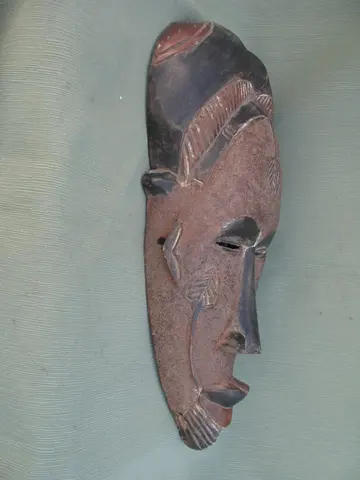
Tikar mask, stylized and pointed chin. Eyes torn under arched eyebrows and elongated and straight nose.
MFANT-200
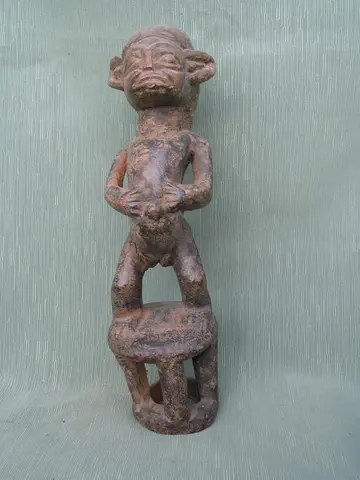
Curious and rare protective figure TikarCurious for its expression, a woman with a large belly and an androgynous appearance raised to a…
-26
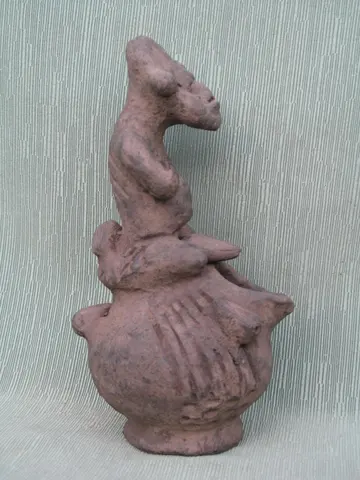
Small container from western Cameroon. Tikar are a small Pygmy village that stands out for its practices of magic, especially its women.
MYA-38


