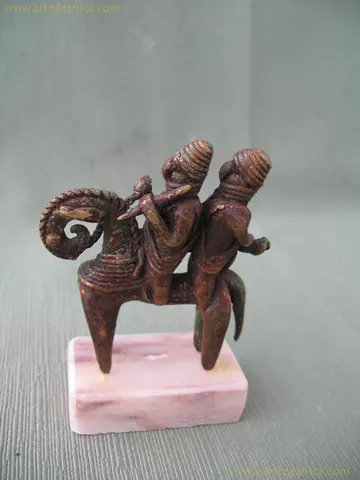
Knight Targui With Prisoner
These little equestrian figures, called bronzes Saowhich appear in the Tchad, in the territories formerly occupied by the Sao In fact, they…
FEC-5

Text of the original catalogue
Civilization Sao spread for almost a millennium of the fifth centuries before Christ to the century XVI mainly in Chad in an area bordering Cameroon and Nigeria. The Sao they are not an ethnic group, but a civilization extended over several centuries by the Tchad, Cameroon and Nigeria. In fact, the Sao they are not any ethnic group, but the name given to these populations before their conversion to Islam. With the arrival of Islam many Saos were reduced to slavery, others had to disperse leaving their lands and homes. Although they are still called SaoIn fact, the survivors were absorbed by the Sokoto, an ethnic group that currently occupies their own territories. Of the Sao The apogee of this civilization took place during the XCII centuries and XIII but according to C.14 From the 5th century B.C. the first vestiges with zoomorphous forms begin to appear, and from the 10th century B.C.E. the first figures with human anatomical forms, little modeled and with crudely sculpted faces. The bronze figurines, elaborated by the blacksmiths of Lake Tchad basin, with the technique of lost wax are much later and made by the Kotoko, an ethnic group that currently occupies the same territories. These small figures were made to honor the ancestors. They are also given a protective power, as a talisman, against diseases. These figures were also carried by women, in the form of jewels, which, in addition to their therapeutic virtues, were particularly effective during the possession crises. Its ceramic and metallurgical productions are abundant mainly those coming from the centuries XIV a XVI. Numerous human and animal figures have appeared in about a thousand explorations, most in Mdaga and Daima. Mostly small terracottas, between 10 and 35 centimetres, made of fine-grained clay that have a great diversity of nuances, some quite realistic, even show scarifications, although they are usually quite rough. Much of the figures appear in the burials. The Sao practically disappear in the century XVIannihilated and absorbed by the Kotoko.
11 objects · page 1 of 1
These little equestrian figures, called bronzes Saowhich appear in the Tchad, in the territories formerly occupied by the Sao In fact, they…
FEC-5
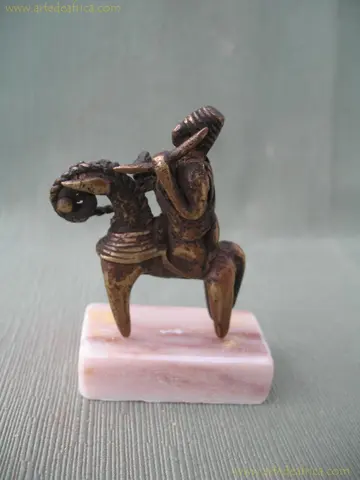
These little equestrian figures, called bronzes Saowhich appear in the Tchad, in the territories formerly occupied by the Sao In fact, they…
FEC-7
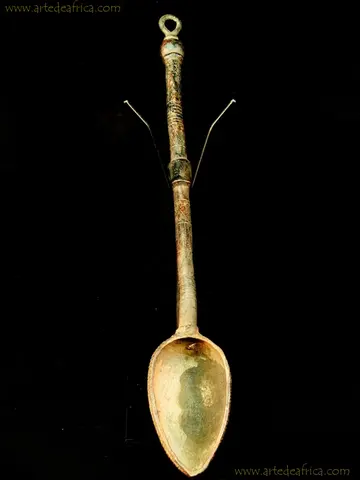
Spoon of prestige used by the woman of a remarkable as an element that exalts her dignity.
CHR-6
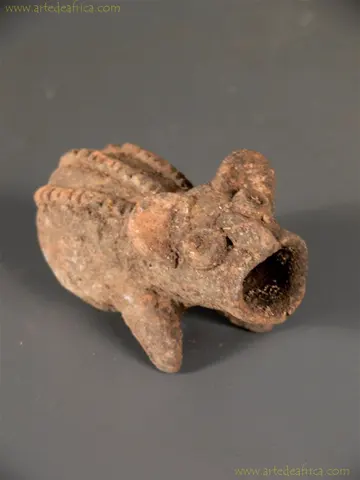
Civilization Sao spread for almost a millennium of the fifth centuries before Christ to the century XVI mainly in Chad in an…
TRRC-49
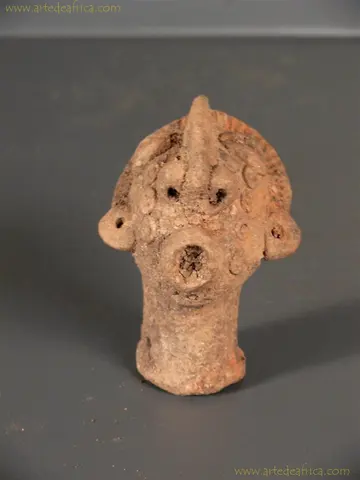
Small anthropomorphic head with a granular aspect. It can represent an ancestor and be the object of worship in family altars.
TRRC-50
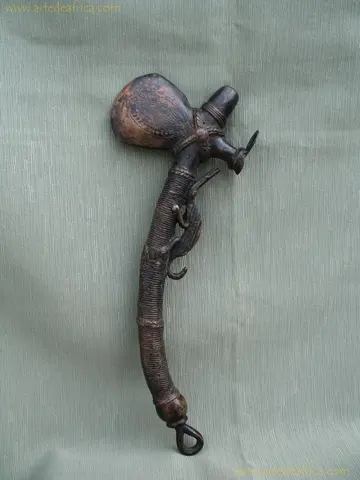
Bronze axe that imitates prehistoric stone axes, used in ceremonies as a symbol of prestige.
BST-15
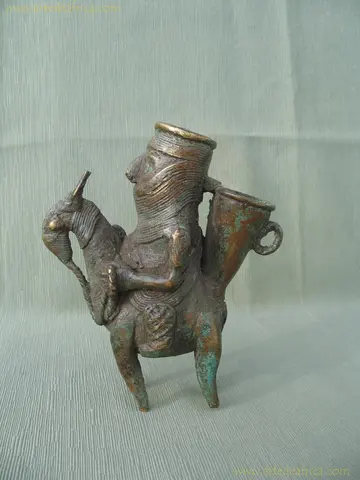
Artistica pipe cazoleta, bronze, representing a gentleman Sao Holding the reins of his horse.
PIP-15
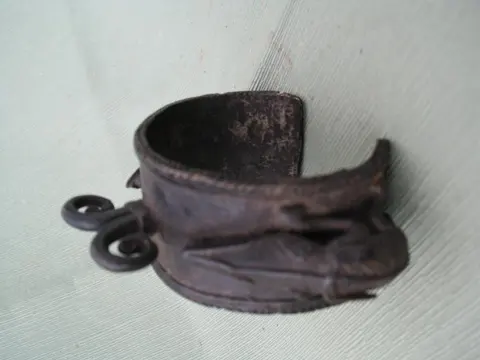
Bracelet adorned with two embossed animals that seem to represent the chameleon.
PYB-39
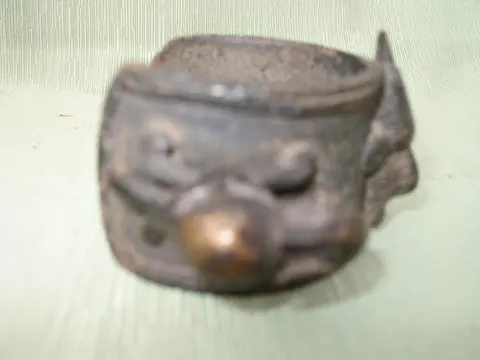
Open bracelet decorated with a head in the middle and two strange animals that seem to be between the chameleon and a…
PYB-42
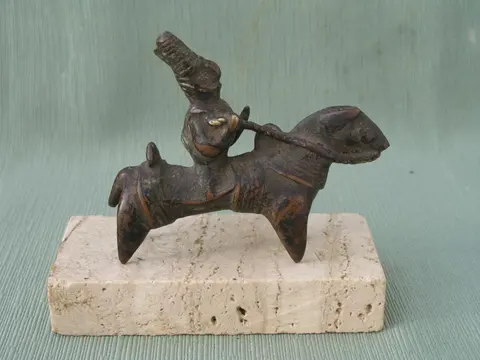
Figures Sao In fact, they were made by their descendants the Sokoto, established mainly in the Lake Tchad basin, who inherited from…
BRN-135
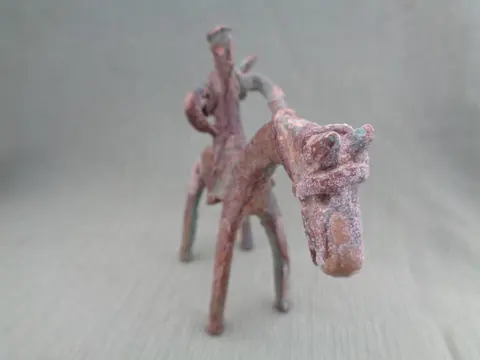
Figures Sao In fact, they were made by their descendants the Sokoto, established mainly in the Lake Tchad basin, who inherited from…
BRN-149


