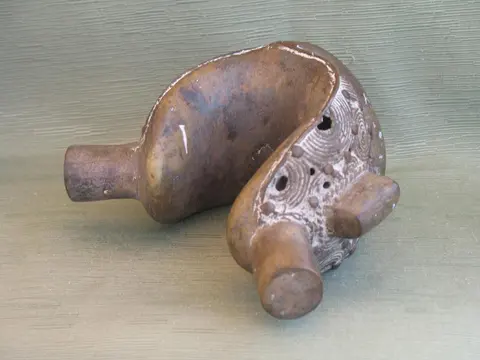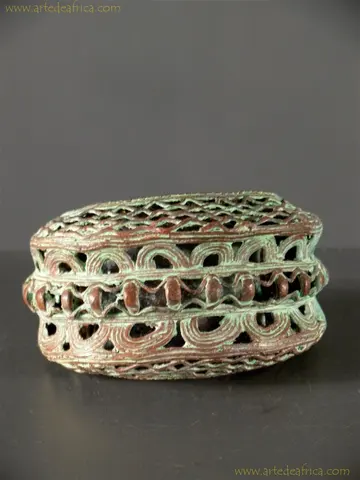
Bracelet
Normally the Kapsiki are classified as Kirdi, is a term used by the Peul to designate non-Muslim pagans.
PYB-3

Text of the original catalogue
In addition to oral tradition, there are few sources available for the study of Kapsiki. Normally the Kapsiki are classified as Kirdi, is a term used by the Peul to designate non-Muslim pagans, for among them they are called margui, i.e. non-Muslim. They are mainly engaged in cattle raising and grazing, cattle that play an important role in their traditional customs and rites. They also grow cassava, potato and millet. The north of its region is rich in iron and traditionally its currency was small iron ingots, cast in Sukura and Ula, as in other areas of Africa. They live on a high plateau of the Mandara Mountains, sticking to the border of Nigeria, in round adobe huts covered with reeds of cane panels, with conical roofs of braided cane and vegetable fibers, which free them from heat and mosquitoes. These huts are grouped in sarees, a traditional form of these areas of Cameroon that bring together the different huts of a family, joined by a wall and its whole also protected by a wall. The villages are autonomous, each has its own culture and its rites differ from one village to another, both those destined for the cult of ancestors and those of initiation or of the different age classes. There are also variations in their dialects, especially between the most western group and the one that they say descended from Gudur. The latter practice a ritual against grasshoppers, to avoid the devastation of their crops. Many rites and sacrifices are practiced in Gudur. They are known mainly for their bronze bracelets.
2 objects · page 1 of 1