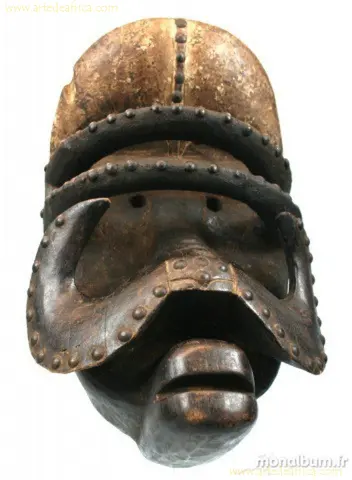
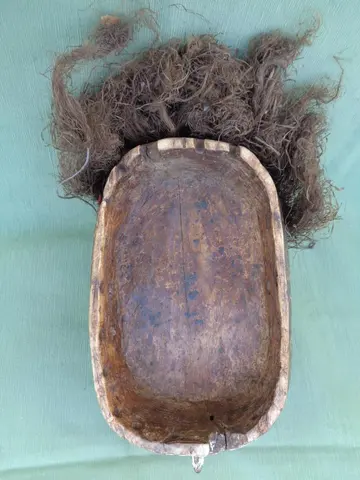
Debloahigla mask
The beté masks, in general, have a certain analogy with the guerées.
MFAZ-8

Text of the original catalogue
The Bethé live in western Ivory Coast, with Gagnoa, Daloa and Sobré being their most important cities. They occupy much of a forest area that extends between the center and the west, areas between the Bandama and Sassandra rivers, especially rich in cocoa farms, of which Ivory Coast is one of the most important producers worldwide. The Bethé people constitute one of the most important ethnic groups in the country. In times past, it was a hunter's village. They are currently engaged in cocoa and coffee cultivation. Having been, by historical circumstances, a bellicose people, most of their masks were originally masks of war, destined to enkindle their warriors for combat and cause dread to the enemy with its terrifying appearance. Very few beté statues are known, most of them female, and the known male statues are very few. Krou is one of the oldest towns in the country. Beté masks have a social function. They usually carry a relief median line that goes down from the top of the forehead to the nose as well as some masks DanTraditionally, they were masks of war designed to frighten the enemy and make its fighters hot. At present they participate in playful ceremonies. Their features are exaggerated, eye bumps, wide nasal fins, superimposed by thick wooden semicircles or concentric horns as if they were thick spider legs that are touched. Currently these last masks are called a spider mask. The Bethé live in western Ivory Coast, with Gagnoa, Daloa and Sobré being their most important cities. They occupy much of a forest area of the richest in cocoa. The Bethé people constitute one of the most important ethnic groups in the country. In times past, it was a hunter's village. They are currently engaged in cocoa and coffee cultivation. Having been, by historical circumstances, a bellicose people, most of their masks were originally masks of war, destined to enkindle their warriors for combat and cause dread to the enemy with its terrifying appearance. Very few beté statues are known, most of them female, and the known male statues are very few.
13 objects · page 1 of 1
The beté masks, in general, have a certain analogy with the guerées.
MFAZ-8
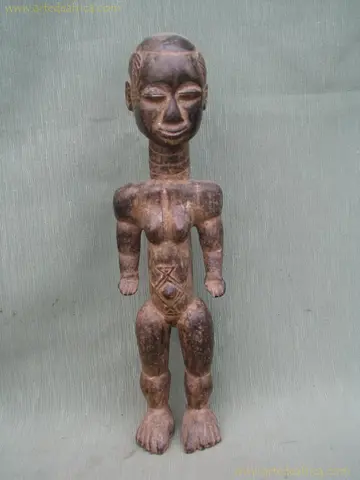
The Bethé live in western Ivory Coast, with Gagnoa, Daloa and Sobré being their most important cities.
EFM-33
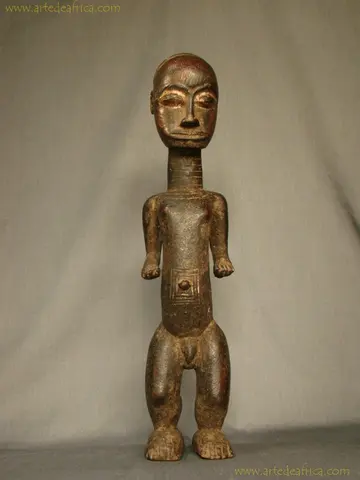
This statue forms a pair with the female statue and is the only couple of this ethnic group of which I have…
EMS-41
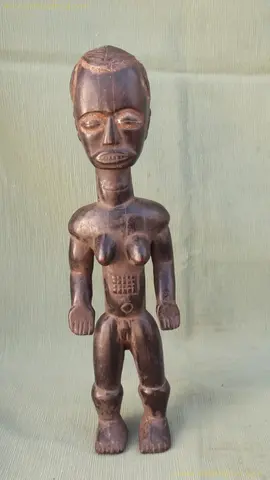
The Bethé live in western Ivory Coast, with Gagnoa, Daloa and Sobré being their most important cities.
EFM-63
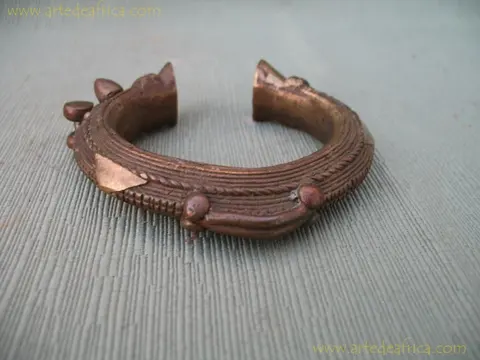
Small, heavy and artistic beté bracelet. Striated body and lace forming.
PYB-24
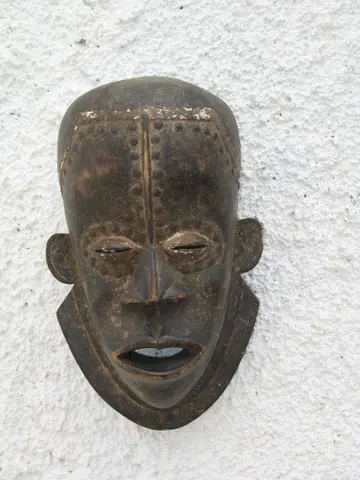
The beté masks, in general, have a certain analogy with the guerées.
MFANT-181
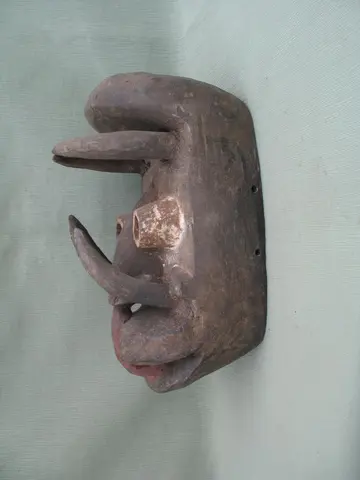
Mask of griot who can go sing to all the clans. Accompany the griot when travelling.
MFAZ-91
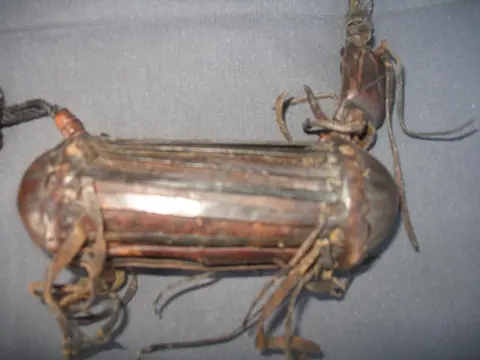
Gri-gri or hunter amulet of a great rarity, formed by a leather cylinder decorated with thin sheets of the same material. is…
MYA-39
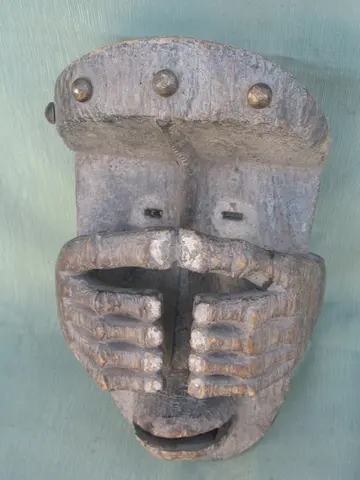
The Beté masks were tradicionally war masks intended to frighten the enemy and enkindle its fighters, they also appeared to establish peace.
MFAZ-108
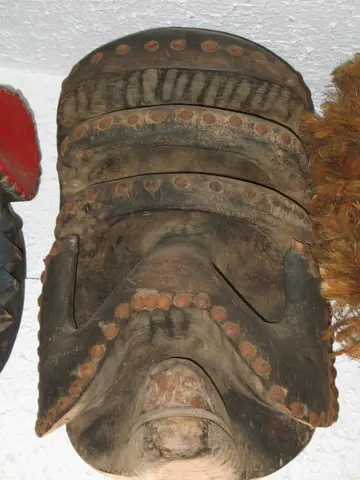
The beté masks, in general, have a certain analogy with the guerées.
MFANT-213
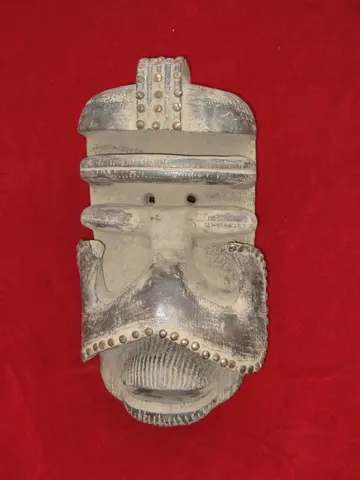
The beté masks, in general, have a certain analogy with the guerées.
MFANT-214
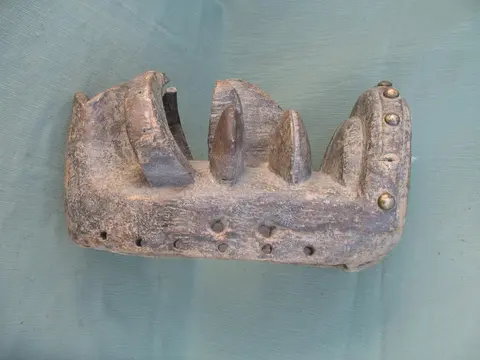
The beté masks, in general, have a certain analogy with the guerées.
MFAZ-109
Mask used by the sorcerer during magical or divinatory rites.
MFC-12


