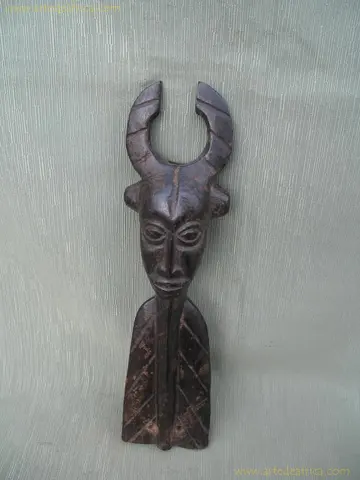
Hunter’s whistle
Hardwood flute or whistle, used especially by hunters bamum and bamillele From Fumbam, in the west of the Cameroon.
INM-3

Text of the original catalogue
Also the Bamún, like the Bamileké and the TikarIt's a town implanted in the Cameroonian Grassland. Years after the death of King Bamileké Ndéh, his youngest son Ncharé went down to the plains of Nun and founded the Bamun country, establishing himself first in Djimom, which became the first capital of the kingdom and after new conquests founded his capital in Fumbam. The monarch is assisted by a council of seven notables who participated as cosignatories in the enthronement of the king, called the seven companions of Kom. Later, with the eleventh monarch, Mboumbouo Mandú, the kingdom knows an important expansion. But the true heyday of the Bamun kingdom takes place with King Njoya, the sixteenth king of Fumbam, who enters the throne with 19 years in the 1876. When converting to Islam the title of Sultan was attributed. So far there has been 19 monarchs in the dynasty. Separated from the court Gbetnkom, first great officer with his father, rebels against his new sovereign. The young monarch resorts to the Peul for his defense and thanks to the cavalry and its armament the insurrection is reduced, which makes Njoya think that the god of the Peul He is more powerful than his, so he embraces Islam and builds a mosque. Later, in 1902, after the colonization of the Germans recognizes the power of Christianity to which he converts, commands to destroy the mosque and takes the name Ibrahim in honor of the patriarch Abraham. The First World War broke out, the English, in whose army they had Nigerian Muslim soldiers, beat the Germans, a victory that is attributed to the power of the god of the Islamists by which Islam again embraces. However, both the precepts of Islam and those of Christianity are made uphill. The alcoholless life preached by Islam and the polygamy preached by Christianity push him to create a new religion, religion to his own measure. A syncretism between these two religions and animism by taking from them what is more favorable to them. He left a written treatise on this new religion. Man eager to learn questioned how many scholars stood by him and especially the elders. He made great innovations in all fields. In the military he created his own furnaces and forges to make his weapons, even a cannon that did not work. In agriculture, it introduced new plantations, which also made it easier to increase trade. He set up a museum and workshops for lost wax and favored the arts and lyrics being in the latter area in which he obtained a great resonance. Having known important books written in Arabic, he wrote several works, including a pharmacopoeia, among which stands out the History of the Laws and Customs of the Bamún, for which I believe his own writing, in a beginning of more than five hundred signs that after several changes were reduced to eighty-three. He opened schools to teach this writing and established it in the courts and in all official establishments. His writing was maintained as the official language for several years, as he was able to maintain good relations with the German colonizer. Defeated by the Germans, the French administration fearing his influence accused him of being an ally of the Germans and suppressed his privileges and implanted the French language, eventually banishing him, in the 1931Yaoundé where he died two years later. The Bamún have an important artistic production, mainly dedicated to the court. Numerous pipes and small masks to lost wax. They are experts in pearl art that apply it to statues and thrones. Cover the wood pieces with a fabric on which rows of multicolored beads are sewn. Carved columns and beautiful door frames. They have masks and drums of great sizes. The uncommunal is a characteristic bamún, as well as its huge wooden masks of fat flyers and jumping eyes, and many of them with a laughful, almost burlesque look. i.- THE BAMUN SCHOOL (Cameroon) The capital of the Bamuns is in Fumbam. Its characteristic production consists of masks and statues in which its tendency to exaggerate certain parts is manifested. Sometimes there is talk of satirical art. The same characteristics are found in bronze sculptures. The classic example is a head with huge, swollen and hanging cheeks. In a general way the realistic tendency of an object is visually seen. In this case the artist reflects the image that he himself forges of the object. He knows that the cheeks are rarely so disproportionate, but he thinks that in this way he conveys their true significance. The search for shapes and color is practically non-existent, it seems something secondary. The most important thing is to achieve the greatest possible expression power, provided that there is a certain relationship with aesthetics. Expressionism opposes realistic art for its greater freedom and boldness. The artist gives free course to his genius. The African artist often finds his inspiration in dreams. He is obsessed with his dream visions. The greatest merit of expressionist art is that it manages to represent the human face regardless of any realistic vestige.
28 objects · page 1 of 2
Hardwood flute or whistle, used especially by hunters bamum and bamillele From Fumbam, in the west of the Cameroon.
INM-3
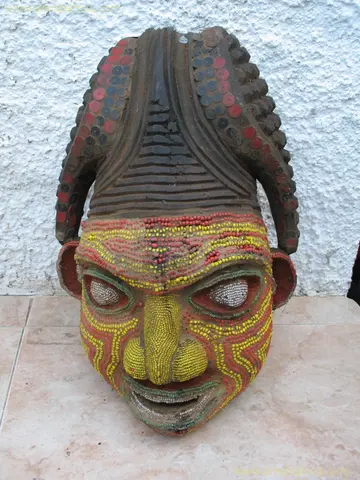
Mask, from western Cameroon.
FPR-3
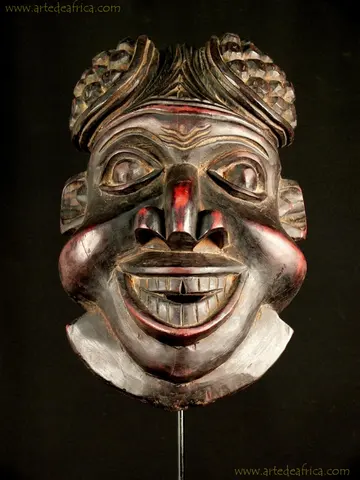
It belongs to the secret troh society, presided over by a council of nine notables.
MFANT-47
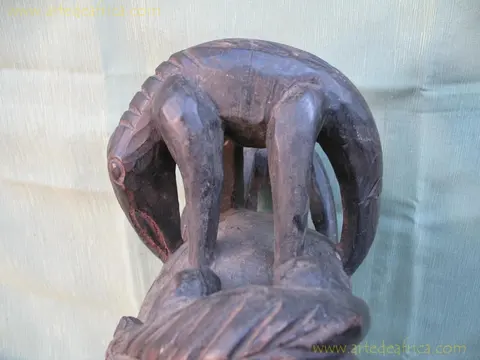
Bamun masks have a great resemblance to bamileke, jumping eyes, thick nose and big mouth.
112
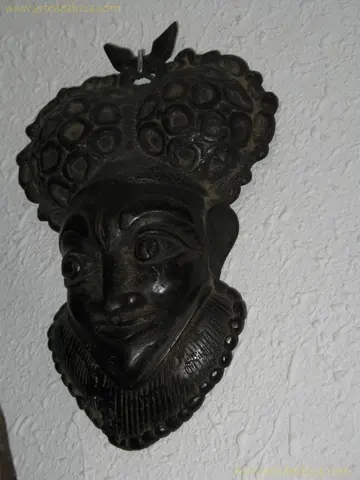
This type of mask called Kam was used in the small kingdoms and chiefdoms of the Cameroonian Grassland during funeral ceremonies held…
BR-10
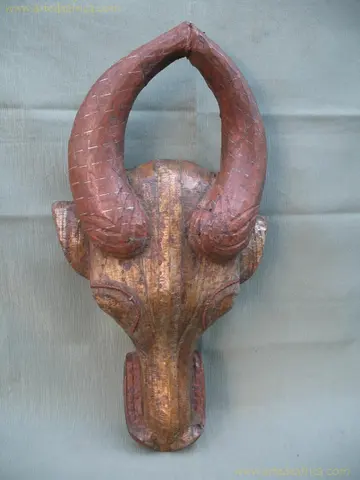
Red wood mask covered with brass plates called tsenya or tsepfeliExaggerated teeth show the aggressiveness of the animal.
MFZ-21
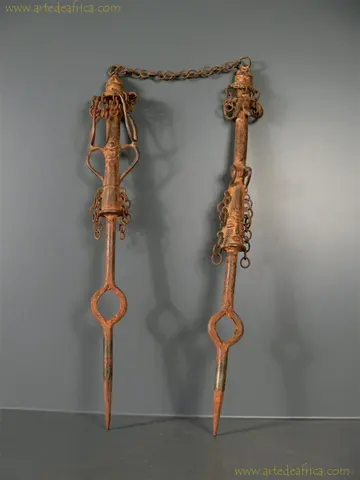
African art object that means the last love bond between two people.
BRN-63
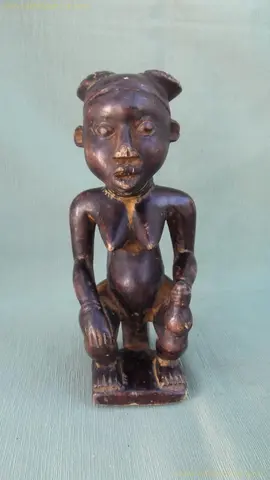
The woman who is expecting a child is considered a maternity.
MTR-26
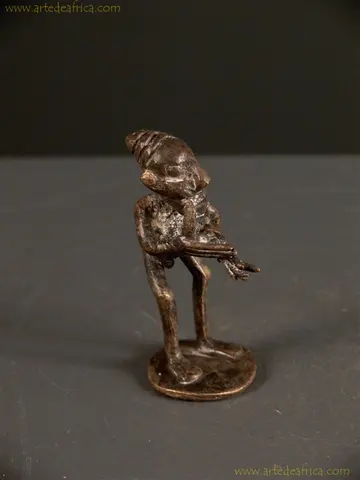
Small butsonage smoking a pipe, made by the procedure of lost wax.
BRN-68
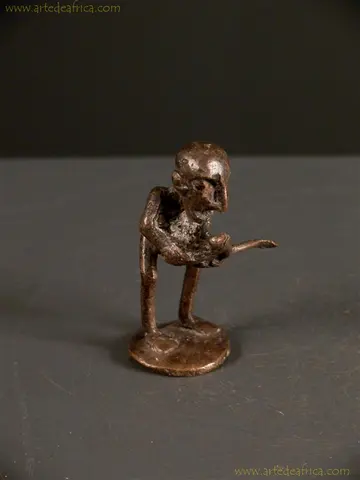
Little character playing a music instrument. Figure elaborated by the procedure of lost wax.
BRN-69
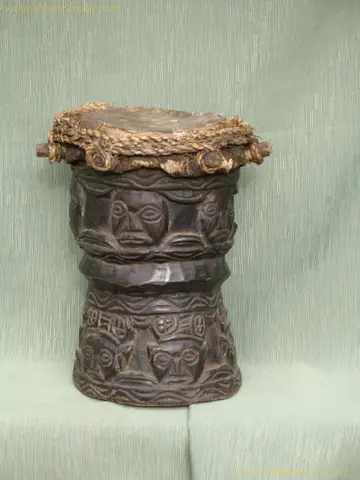
Small drum that is used in different types of ceremonies both playful and funeral.
IDIOF-3
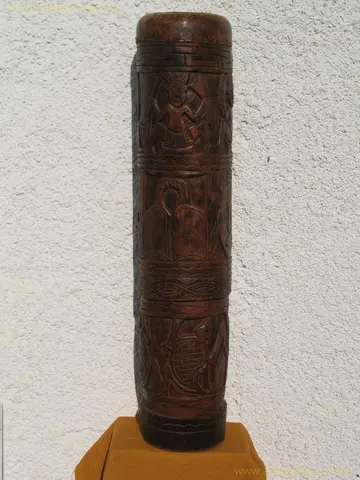
Tam elongated tam, honey color, with engravings of animals, turtle and elephant, and warriors throughout its perimeter.
IDIOF-5
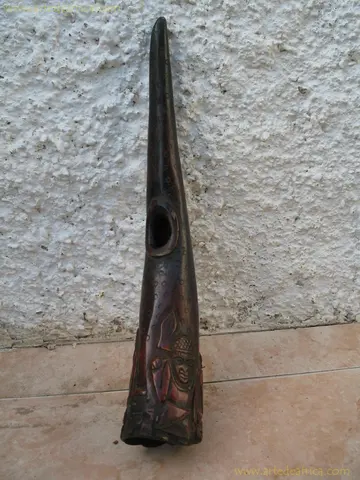
Little buffalo horn tube sculpted with warrior figures.
AER-3
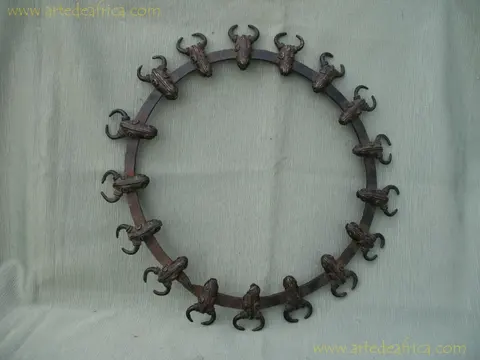
Head enthronement collar formed by seventeen buffalo heads, a bamun symbol, which are inserted at equal distances in the circular bronze plate.
COLL-2
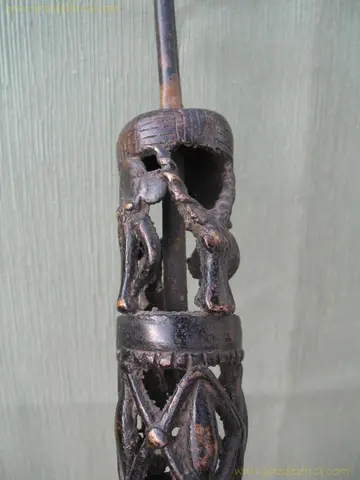
This category of pipes is called real pipes.
PIP-9
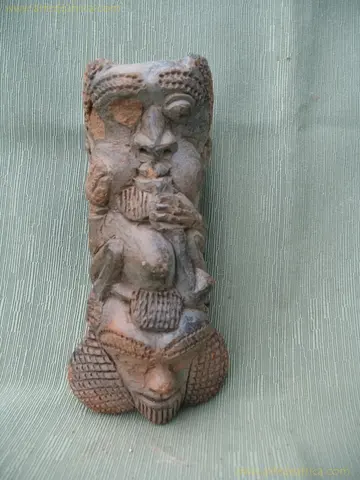
Terracotta pipe bowl used by the chiefs in court ceremonies.
PIP-10
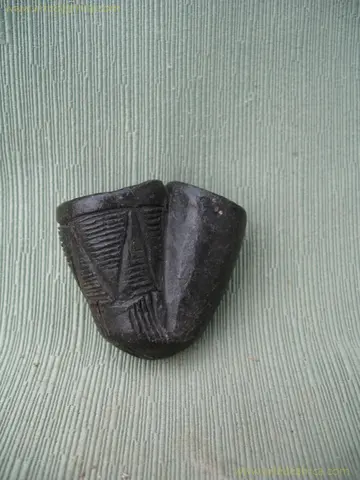
Small and simple pipe oven for use, with geometric drawings.
PIP-11
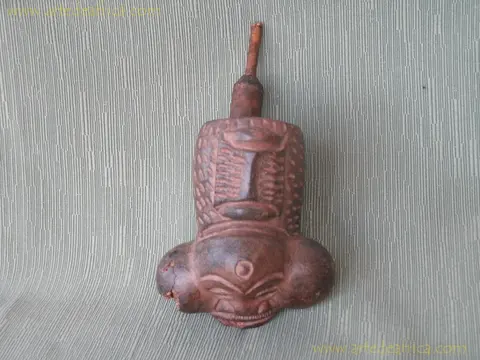
Pipe used by the bosses in ceremonies. It's a prestigious pipe and it's not meant to smoke in it.
PIP-13
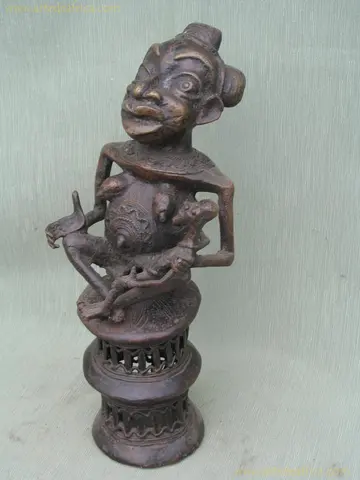
Numerous details in this motherhood with artistically scarified belly.
MTR-39
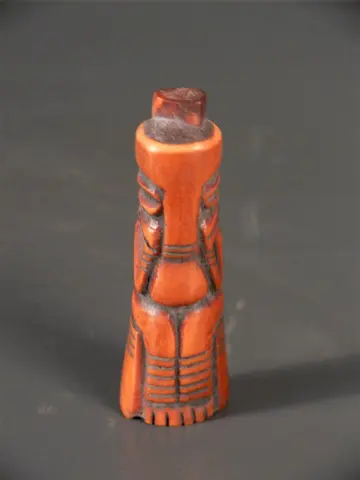
Fetish from the Fumban region in western Cameroon.
FET-84
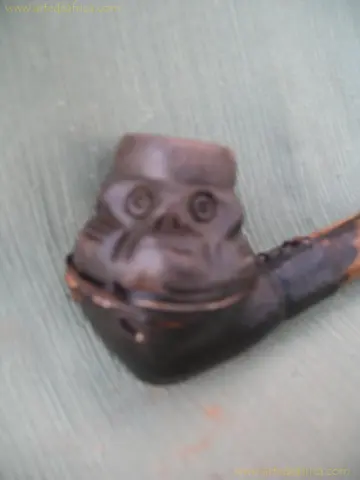
Long rod pipe, its furnace represents an anthropomorphic head.
PIP-20
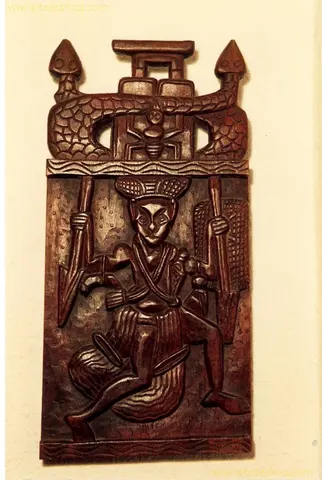
African kings have always been fascinated by sumptuousness as one of the symbols of their power.
ARC-8
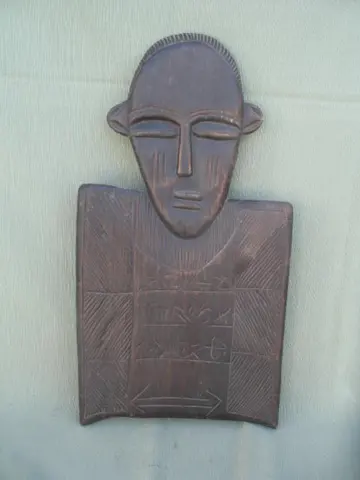
By means of this table the fortune teller consults the spirits whose answers will help him to know and solve multiple problems…
MYA-33

By means of this table the fortune teller consults the spirits whose answers will help him to know and solve multiple problems…
MYA-34


