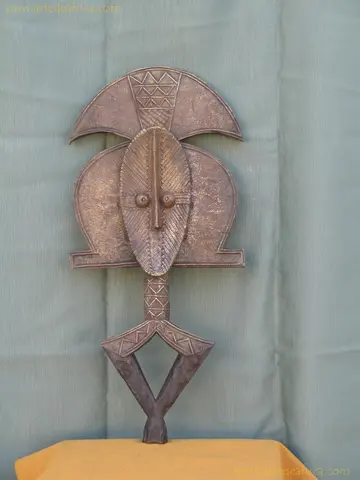
Reliquary Kota
The Mahongwelocated in eastern Gabon, in the regions of Makotu and Mekambo, achieved a high degree of stylization, reducing the body to…
RLC-36

Text of the original catalogue
Together with the Mahongwes are the best known manifestations of the reliquaries Kota. Like its northern neighbours, its use by the Obamba can come from the 10th century approximately, developing from the century onwards. XV with the first contact with Europeans, which facilitate the provisioning in brass and copper. These metals, yellow and red, were symbols of wealth and their employment seemed appropriate to honor the dead. They are characterized mainly by a kind of “croisant” that crowns the hairstyle, with large ears or lateral fins of which hang a kind of pendant. His body is formed by a rhombus parallel to his face. These lockets are named after Ngulu-Mbulu and have only one face.
8 objects · page 1 of 1
The Mahongwelocated in eastern Gabon, in the regions of Makotu and Mekambo, achieved a high degree of stylization, reducing the body to…
RLC-36
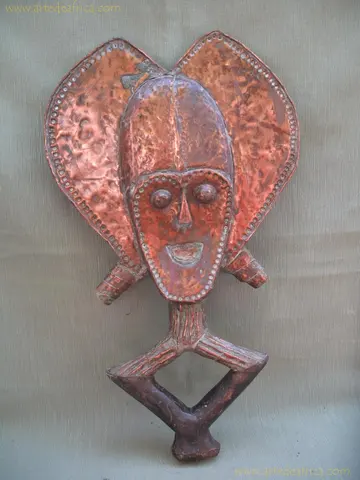
Together with the Mahongwes are the best known manifestations of the reliquaries Kota.
RLC-1
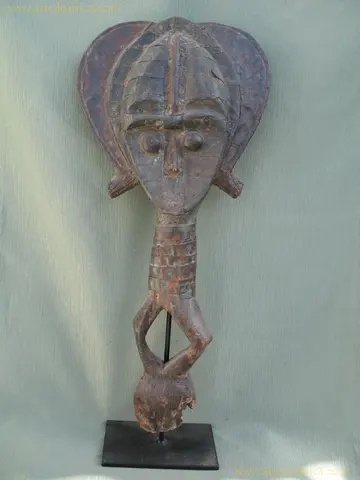
Together with the Mahongwes are the best known manifestations of the reliquaries Kota.
RLC-2
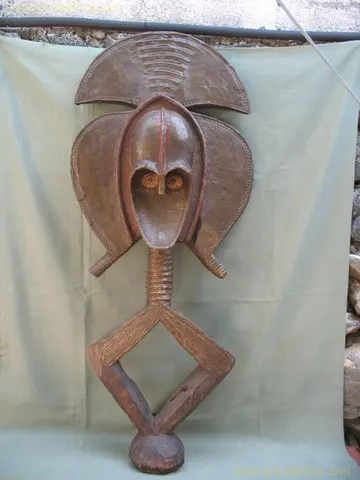
Together with the Mahongwes are the best known manifestations of the reliquaries Kota.
RLC-5
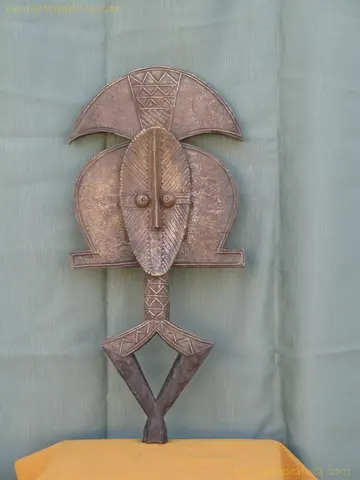
Together with the Mahongwes are the best known manifestations of the reliquaries Kota.
RLC-12
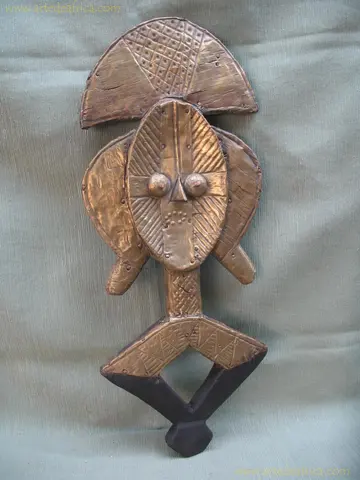
Reliquary Kota Obamba of the so-called sub-style Shamaye, in which the lateral fins appear more discreetly with the tips slightly outward-facing.
RLC-32
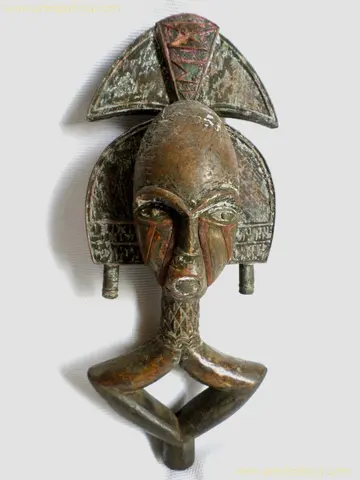
The guardians of reliquary kota obamna sr characterise an almondd but more tuned face at the bottom, surrounded by a headdress of…
RLC-43
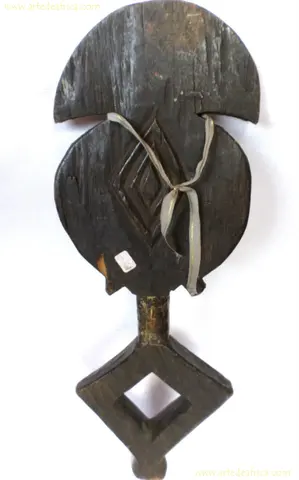
Together with the Mahongwes are the best known manifestations of the reliquaries Kota.
RLC-44


