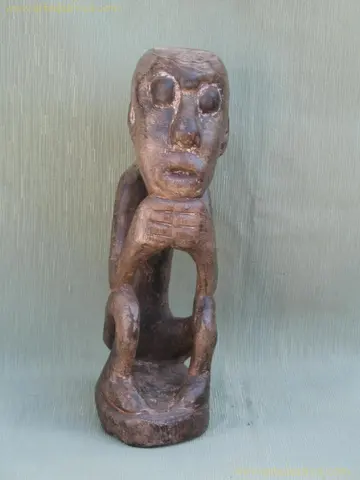
Soothsayer
Few examples of Chamba statuary are known; the figures are usually simple and without ornamentation.
FET-3

Text of the original catalogue
The ancient kingdom of Kongo It is now divided between the People's and Democratic Republics of the Congo and Angola. It was made up of six provinces, this kingdom would form over the centuries. XIII or XIV And before he became Islam, with the arrival of the Portuguese, he became Christianity during the reign of Nzinga to Koumu, which would leave a fairly deep imprint on many of the artistic achievements of the different ethnicities that make up this great people. Among the great variety of objects known, the MINKISI (NKISSI plural) should be highlighted. The NKiSSI is the material support of the ancestor's spirit. It can be the small wooden statue, the package of magic substances, shells, nails, horns, etc. Often these objects hang from the statue, like small statuettes, as amulets. Two main types of minkissi are known, the nkissi destined for divination that does not usually exceed twenty centimetres and the nkissi destined for personal protection, usually a larger statue with an abdominal cavity or excretion or on the head destined to receive the magical or bilong load that is usually closed by a cauri or a piece of mirror. The mirror indicates the passage to the other world and can steal the soul of the one who is reflected in it, but the Nganga can see reflected in the mirror the solution of the problem. Both minkissi can be used for therapeutic purposes. Nganga manufactures bilongo and keeps the secret of its composition and will only acquire its strength when it activates it by means of the appropriate magic-religious formulas. In the category of Nkissa protectors, destined for healing or magic, we have the Nkonde, a word that means alliance. Partnership between a person and the Nganga to achieve the resolution of a problem or conflict. The Nganga is the professional able to dominate or come into contact with the hidden forces, it is to see, priest, fortune teller and healer. He's the officer in charge of preparing the bilongo. The greater their preparation and knowledge, the more effective the nkissi nkondi will be. Nkissi nkondi, in spite of sometimes terrifying appearance, whether anthropomorphic with an arm raised carrying a spear or knife in threatening or zoomorphic gesture, both covered with nails or metal sheets, exert a benefactor action. When the Nganga is consulted, it inserts a nail or sheet of iron into the body of the fetish to indicate that a deal has been concluded between him and his client. If the desired end is not obtained, the Nganga must remove it by leaving a hole that will be a symbol of its failure. Nails, foils, or locks that can be seen in these statues mean cases that are resolved favorably, whether they are individual diseases or disputes, community problems or consultations or actions on epidemics or wars. The effectiveness of the result depends on the Nanga's ability to awaken and channel the energy of the bilongo carrying the nkissa nkondi.
40 objects · page 1 of 2
Few examples of Chamba statuary are known; the figures are usually simple and without ornamentation.
FET-3
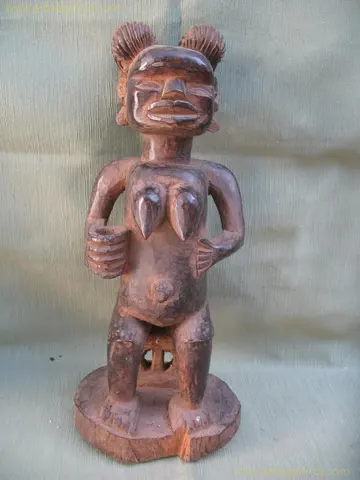
Curious figure of hard and heavy wood bakongo woman.
EFM-16
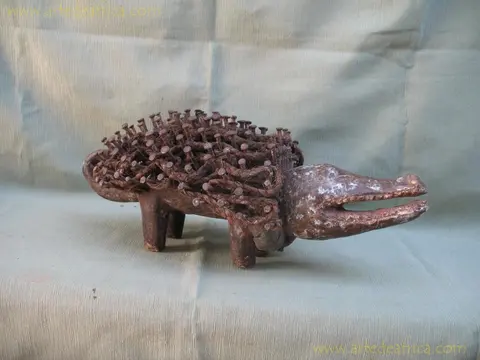
Fetish intended for divinatory practices. Covered with nails as well as Koso dogs.
FET-14
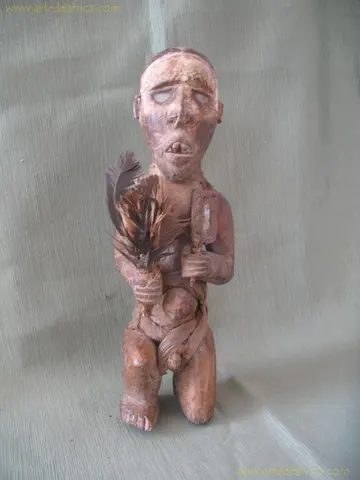
Fetish with a mirror on the left hand and a bouquet of feathers on the right.
FET-15
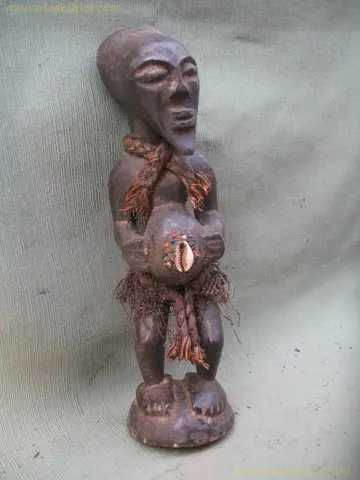
Fetish with a tiny magical load on the belly covered with a cauri and small colored beads, sack collar on the neck…
FET-18
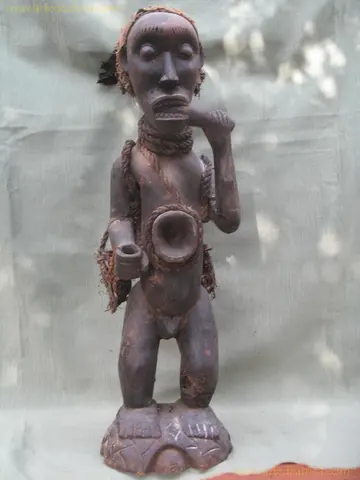
Sorcerer eating a root of the hallucinogenic plant “iboga”.
MYA-3
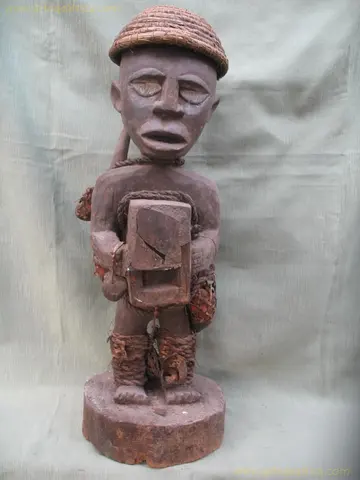
Fetish with glass eyes, straw cap. Shell carrier and many amulets.
FET-21
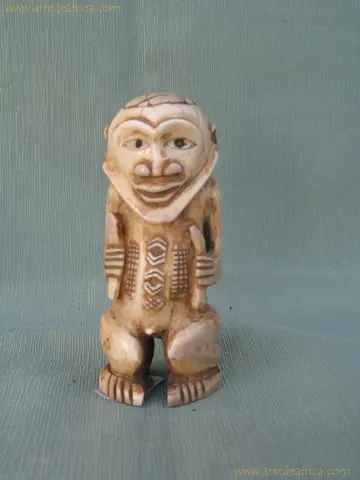
An ancestor with the attributes that characterized his rank during his life.Numerous ventral geometric scarifications.
MRF-7
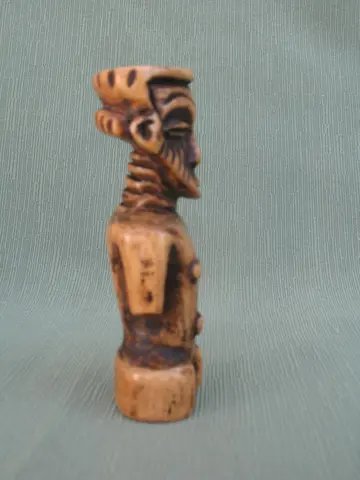
Small figure intended to be used in divinatory rites.
MRF-22
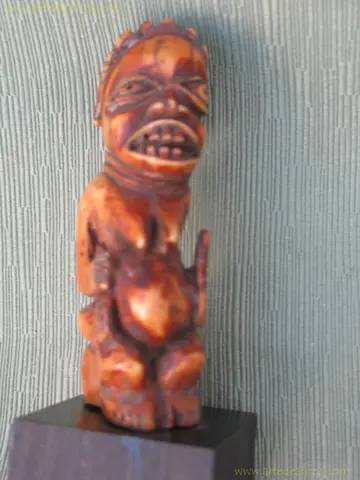
Figure of woman, no doubt sorcerer, taking into account the small containers in his hands intended to contain his magic ointments.
MRF-12
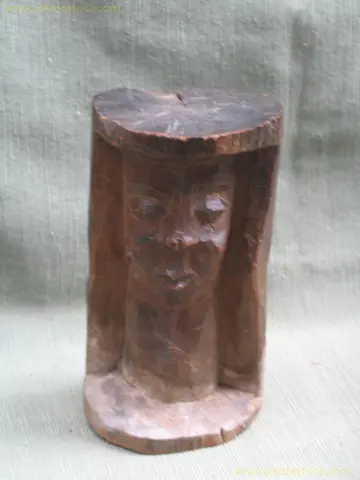
Small and old reclineheads intended, probably given their small size, to be used in displacements.
TAB-3
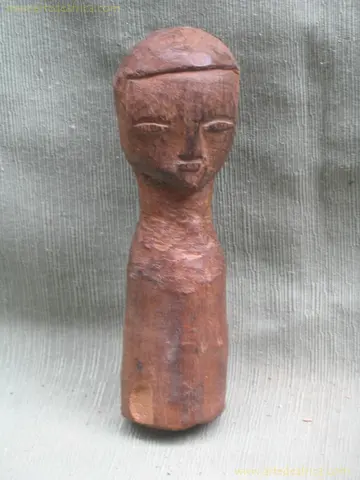
Small pylon for household use intended to stack small amounts of cereal.
VAR-1
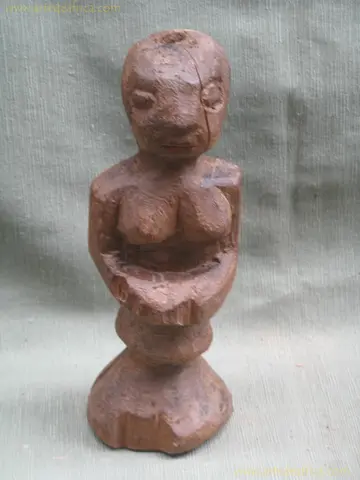
Little commemorative figure. These figures that embody the soul of an ancestor are the object of family cults.
EFM-46
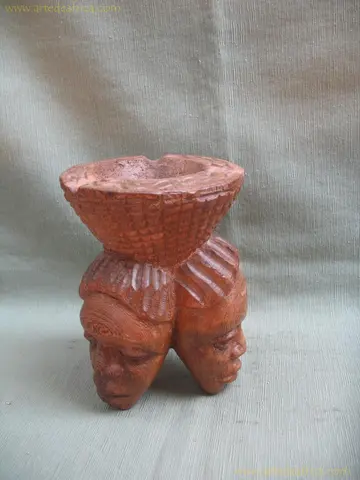
Mid-century ashtray XX destined without a doubt to the colonial population.
VAR-2
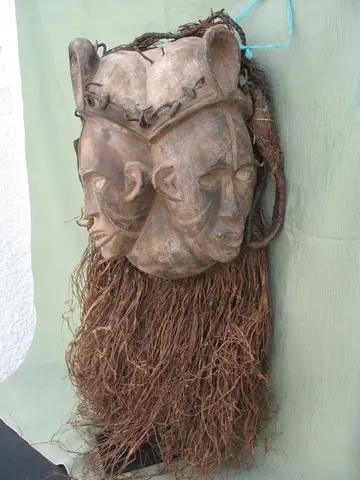
Impressive mask meant to honor gemality.
GML-26
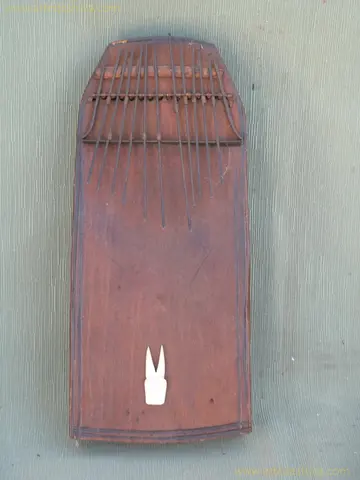
There was God, and also the imagination, who was asleep in a corner of his head...
CORD-2
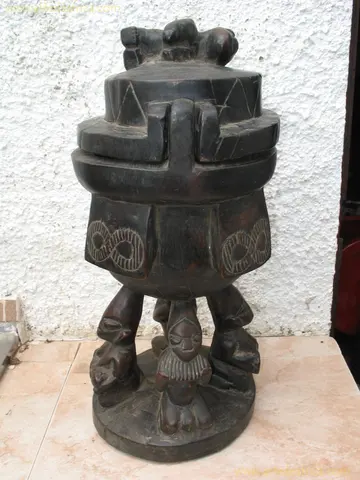
Funeral urn supported by four cariatids.
RCPT-18
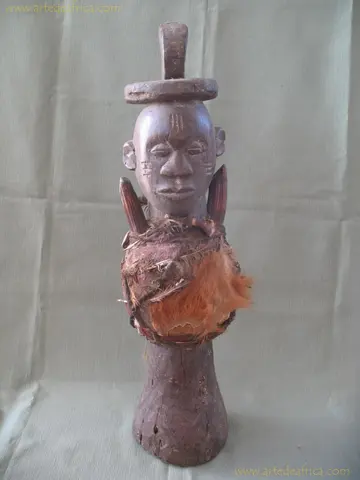
The statues Minkissi ( sing.: Nkissi) of the Kongolike all the Nkissi, are protective figures that acquire their strength and power after…
FET-53
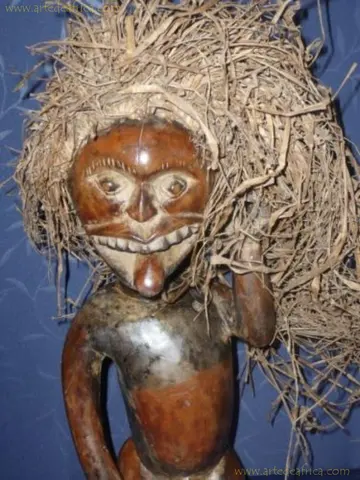
Figure used in rites intended for procreation and stimulation of male fertiliser power.
FRT-34
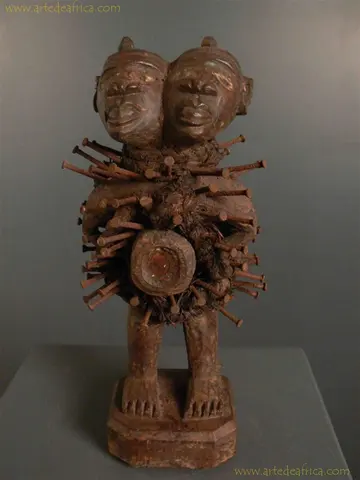
The statues Minkissi ( sing.: Nkissi) of the Kongolike all the Nkissi, are protective figures that acquire their strength and power after…
FET-57
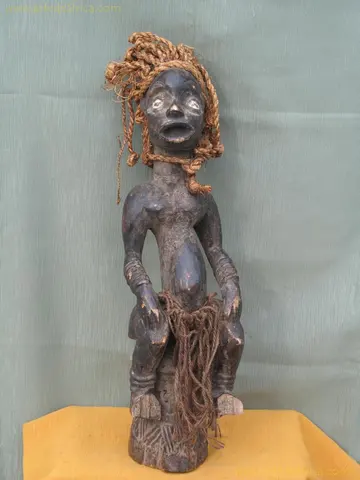
The sacerodotise, like the diviner and the healer or the sorcerer, is responsible for establishing contact with the spiritual forces and beings…
MYA-23
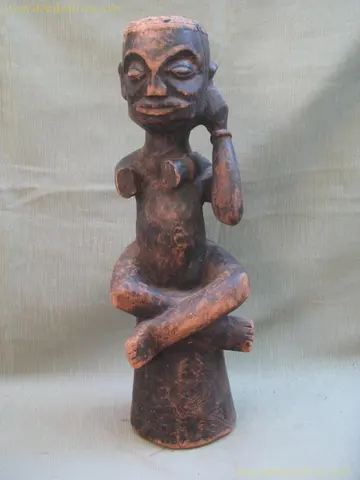
There is no doubt that this wooden statuette has been inspired by the famous mintadi.
EMS-71
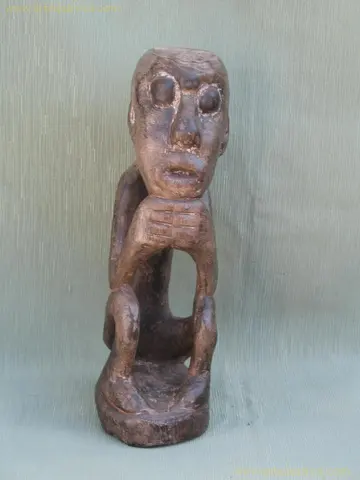
For animistic peoples, most things, especially the elements of nature, have a spirit or a soul.
MYA-25
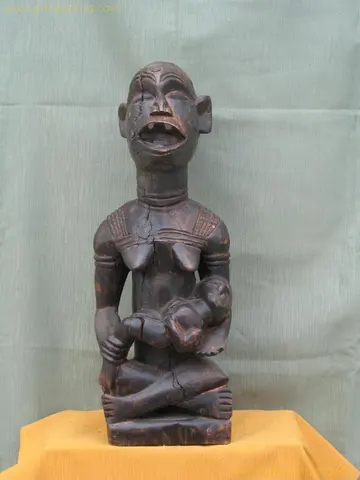
The figure of motherhood is one of the oldest and most representative in Africa.
MTR-49


