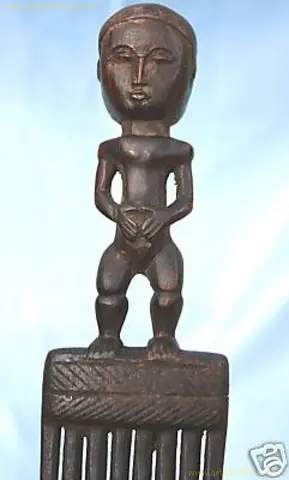
Woman
Eight-toothed comb whose handle represents a woman with developing breasts and her hands on her belly.
PNS-11

2,936 objects · page 51 of 123
Eight-toothed comb whose handle represents a woman with developing breasts and her hands on her belly.
PNS-11
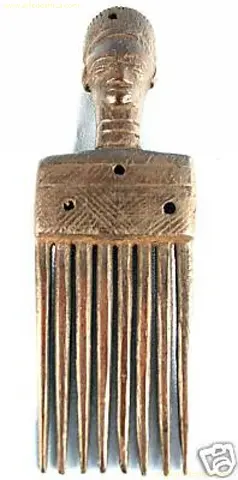
The comb handle is topped with a Janus-like double head. Patina from use.
PNS-12
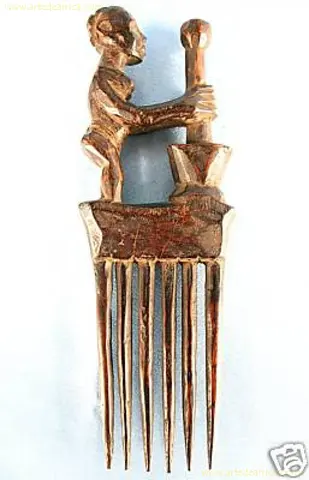
This comb is topped with a man piling up grain in a mortar. Object carved in a single piece.
PNS-13
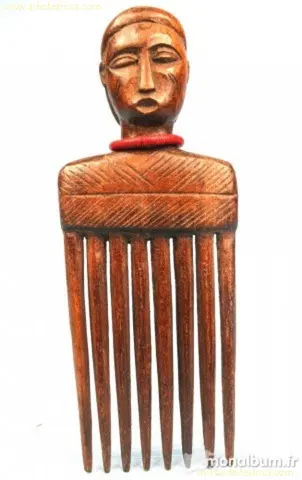
Eight-toothed comb whose handle represents a woman’s head, with a red necklace around her neck.
PNS-14
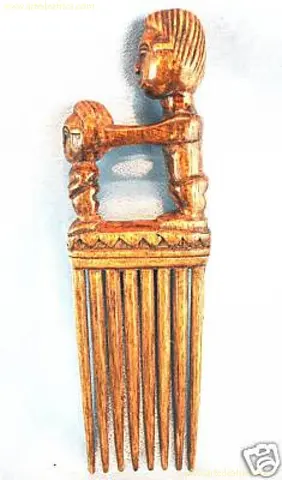
The handle depicts a crudely made man with his son. Light-coloured wood.
PNS-15
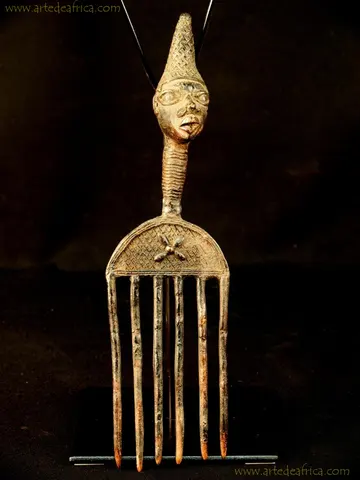
PRESTIGE COMB WITH THE EFFIGY OF A QUEEN MOTHER.
PNS-16
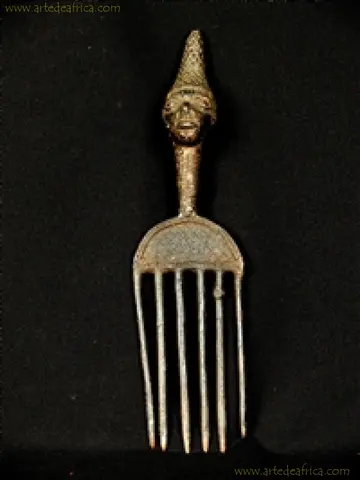
Prestige comb featuring the head of a queen mother. Old solder repair on one tooth.
PNS-17
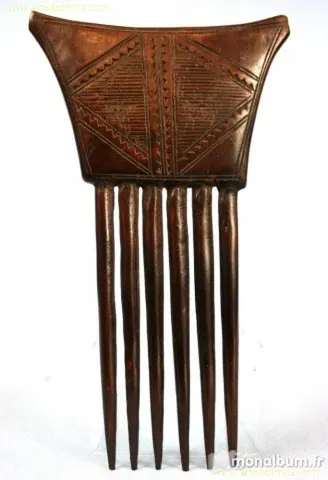
Comb carved on both sides with motifs typical of the Akan group.
PNS-18
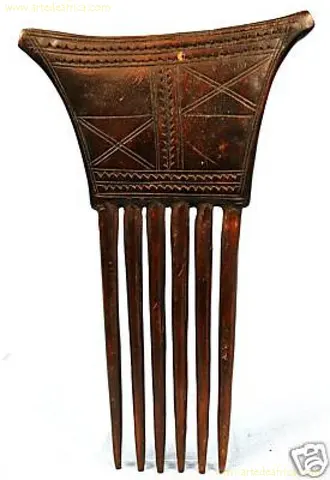
Comb carved on both sides with the ethnic group’s geometric designs.
PNS-19
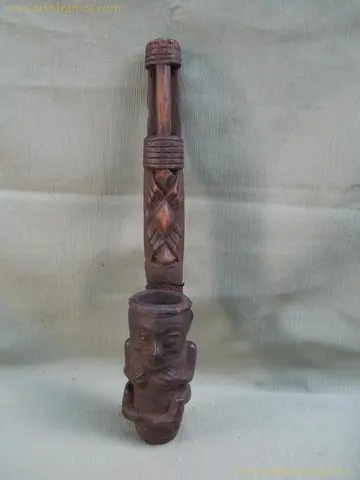
Ceremony pipe. It is a pipe of apparatus, not intended to smoke in it but is a sign of notability.
PIP-7
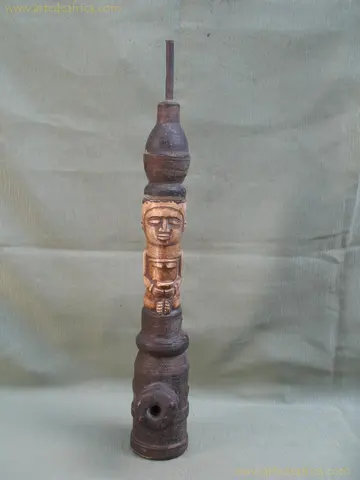
This pipe represents a woman sitting in prayerful attitude, which proves the ceremonial character of this object.
PIP-8
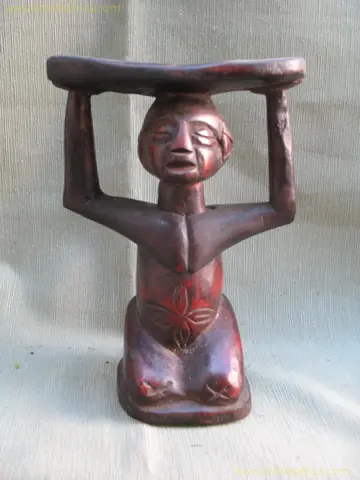
Kneeling female caryatid supporting the seat. Dark, reddish patina from use.
RECL-3
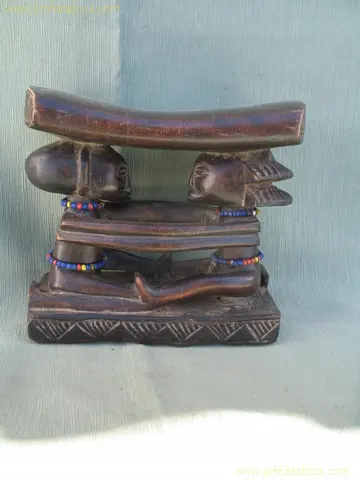
Headrest supported by female caryatids with typical Luba hairstyles, one of the type called cascading.
RECL-4
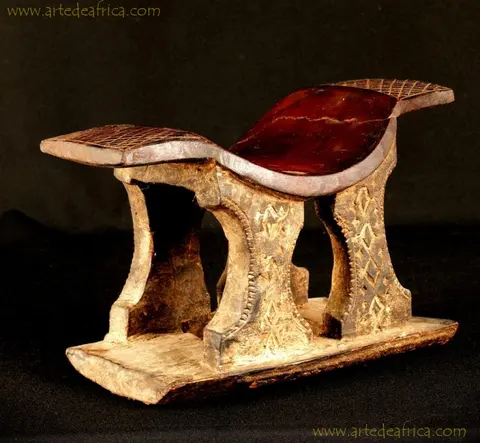
Headrests with a beautiful patina for use.The legs are decorated with rhombuses and pointed on the edges.
RECL-5
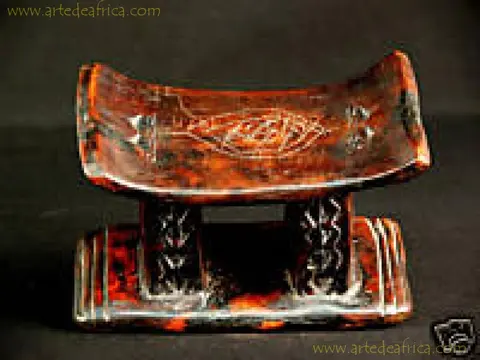
Headrest characteristic of the Ashanti group. Beautiful patina from use.
RECL-6
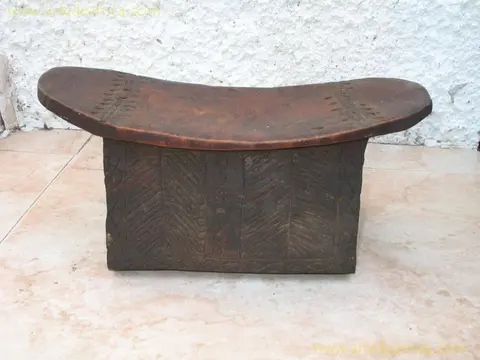
Simple, solid headrest of the Tikar people, with geometric herringbone designs on the base.
RECL-7
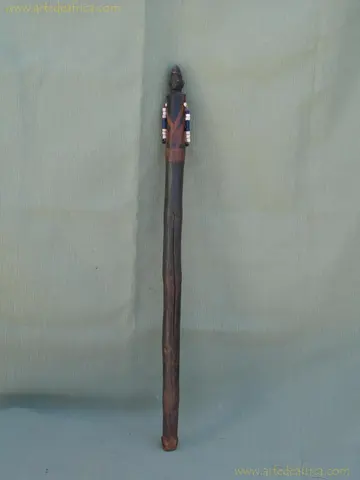
Staff of authority of a Yoruba notable. Such staffs symbolize authority and are also used in divination.
BST-3
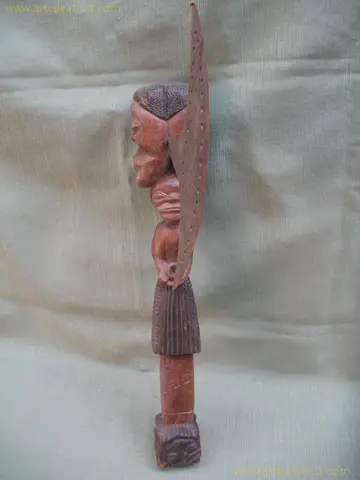
Ceremonial axe with two heads placed back to back, Janus-style, resting on two figures set back to back.
-13
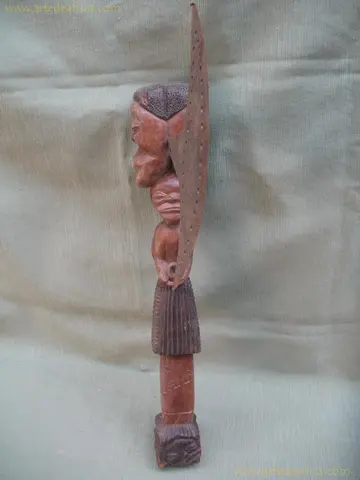
Ceremonial axe with two heads placed back to back, Janus-style, one with large teeth and the other with its mouth closed.
BST-4
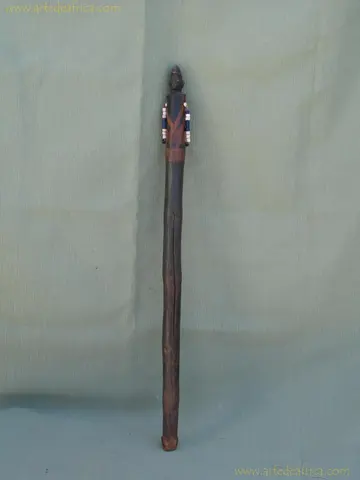
Staff of authority of a Yoruba notable. Used in divination, such staffs also symbolize authority.
BST-5
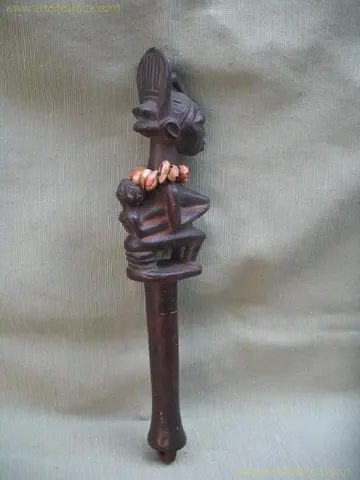
This staff, used in ceremonial dances, depicts a mother with her child on her back in the African manner.
BST-6
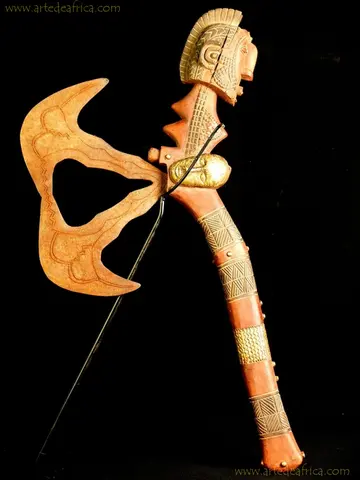
Double-bladed ceremonial axe, topped with the head of a nimba mask, with a small bronze mask at the intersection of the blades.
BST-7
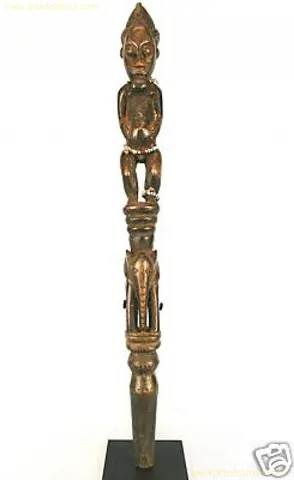
Artistic carving of a spirit husband, or blolo bian, on an elephant, the country’s symbol.
BST-8
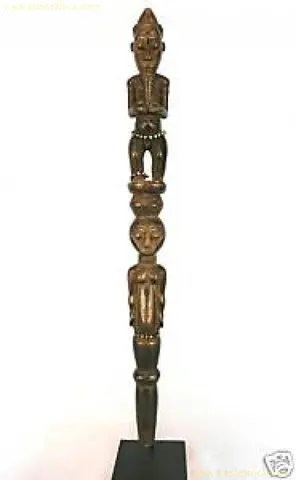
Staff of office used by notables at important ceremonies. Fine, detailed carving of an Asié Usu wife and husband.
BST-9


