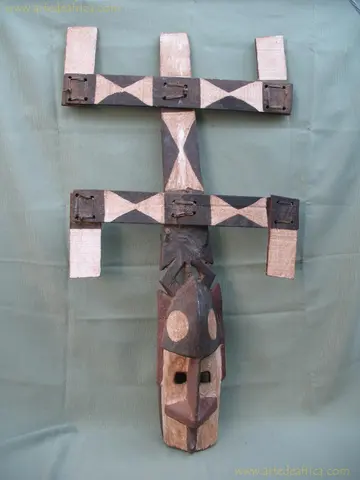
Kanaga mask
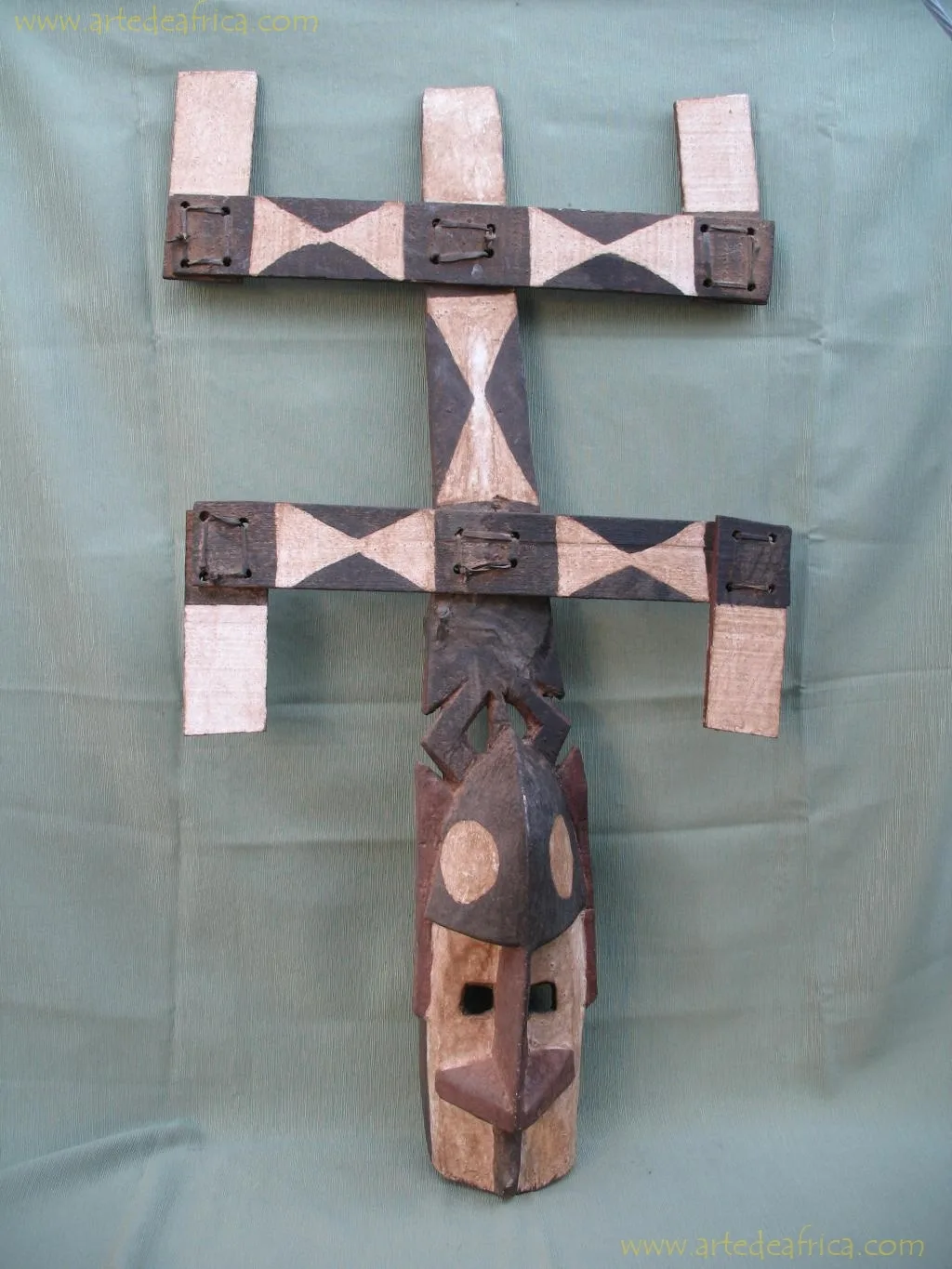
The mask called Kanaga has its face and forehead carved into windbreaks.
MFG-2

Documented paths
Kanaga records MFG-2, MFG-3 and MFG-4 allow one catalogue designation to be explored through different photographs. Satimbe and Sirige extend the comparison. These objects come from records attributed to the Dogon in the family catalogue; this guide neither replaces their names nor establishes a new classification.
Full photographs and detail views are best read together. Arrimadas’s texts connect particular forms with narratives and uses. Keeping document, reference and image alongside one another makes it possible to distinguish an individual catalogue account from the broader cultural context.
The Smithsonian’s bibliographic record of Germaine Dieterlen’s study connects Dogon masks with dama, a ceremony marking the end of mourning. It highlights performance, narratives and rhythms as vehicles of meaning alongside the carved object.
Smithsonian Libraries · Masks and mythology among the Dogon
Original historical document in Spanish
La máscara llamada Kanaga tiene su rostro y su frente tallados en cortavientos.
Jesús Arrimadas Saavedra · original catalogue · MFG-2
This quotation retains the archive’s wording. Editorial context and comparative sources do not certify the objects’ attribution, age or provenance.
The mask called Kanaga has its face and forehead carved into windbreaks.
MFG-2
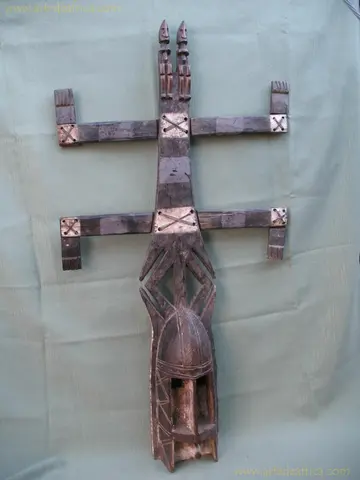
The mask called Kanaga has its face and forehead carved into windbreaks.
MFG-3
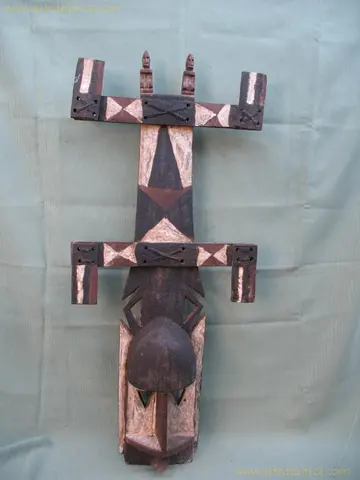
The mask called Kanaga has its face and forehead carved into windbreaks.
MFG-4
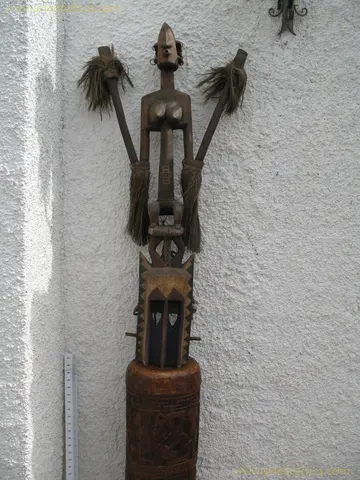
On a rectangular head, similar to that of the mask Kanaga, stands the elevated silhouette of a woman with arms raised, folded…
MFG-9
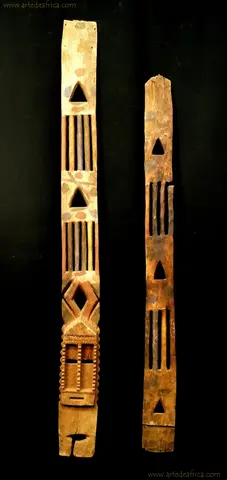
It's one of the big dogon masks, known as the "story house." The facial part of this mask resembles that of the…
MFG-10
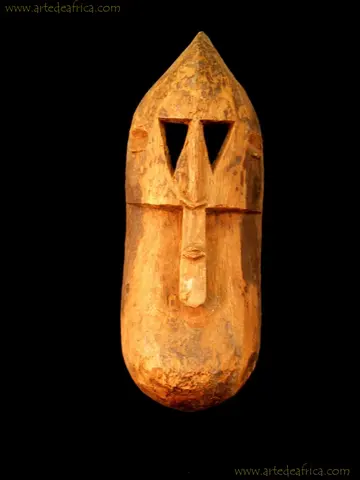
It is part of the hunter masks, probably from the Ibi Babongo region.
MFANT-51
An editorial reading of the collection; complete documents remain in the object records.
Browse records for this culture · Dogon


