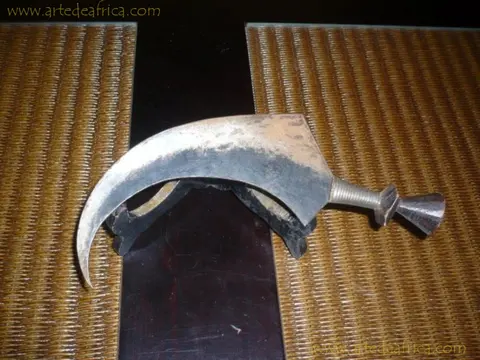
Circuit Knife
A knife called circumcision, which is also used for the excision suffered by young men and women at the end of the…
ARM-1

List of the historical catalogue
Text and organisation of the original catalogue · Jesús Arrimadas Saavedra
Ceremony weapons, as well as scepters and batons of command, are symbols of power and authority that denote the rank of the person who holds them. They are not weapons of combat, which is the same as weapons, but as their name indicates they are destined to be carried in ceremonies and official acts. They are copies or imitations of real weapons, which have the same appearance but not the same effectiveness, although they are usually more decorated and presented with a more attractive appearance. Mazes, swords, daggers and axes are the most used ceremonial weapons by kings, chiefs and dignitaries in traditional Africa. As for weapons of use, the most widely used is undoubtedly the machete, weapon and tool at the same time, an inseparable element of the African that travels through the jungle or the savannah. It has also been used and combats and body struggles, along with the protective shield. The spear, at a time a handgun and thrower, has been used in fighting and hunting large mammals. The throwing knives have been used mainly in Central Africa. The firearms entered later. They are famous for their “traite rifles”, so called for being used during the slave trade. These rifles are handmade, usually manufactured by the blacksmith from any type of tube and cause numerous accidents by resisting very few pressure bars. Some spark rifles have been manufactured, although most are percussion rifles. Gunpowder is made from sulfur and charcoal powder. The manufacturing of pistons is still ingenious: The ends of sticks of about three or four centimeters are covered with some fine skin, rabbit or small antelopes and fastened with a fine rope. Let dry, cut the leftover skin, just enough so that the capsule so manufactured settles well in the chimney of the rifle. They made a paste with the heads of the old scratch matches and filled the bottom of the capsule with it. It was enough to let her dry up to be operational. What the author of these lines attests to, witness to their manufacture on numerous occasions. For the ammunition, the old lead tubes of toothpaste and bitumen, which were left by the whites or any piece of lead that fell into their hands, were melted. In the worst case round pebbles and for the hunting of large mammals he used an arrow or small calibrated spear that entered the canyon just. Ingenuity is the heritage of the African.
49 objects · page 1 of 3
A knife called circumcision, which is also used for the excision suffered by young men and women at the end of the…
ARM-1
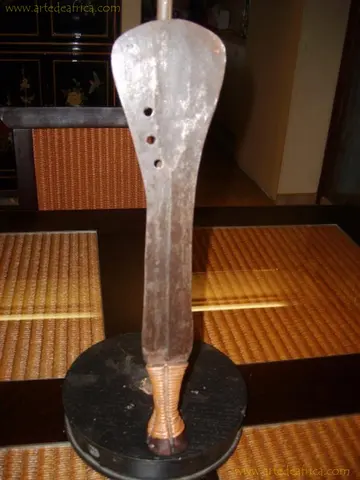
Work tool and at the same time combat machete.
ARM-5
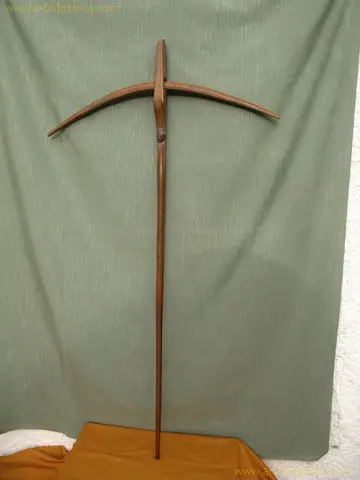
A clear and hard wood whale used by the Pygmies of Angola and Namibia for hunting and defence.
ARM-6
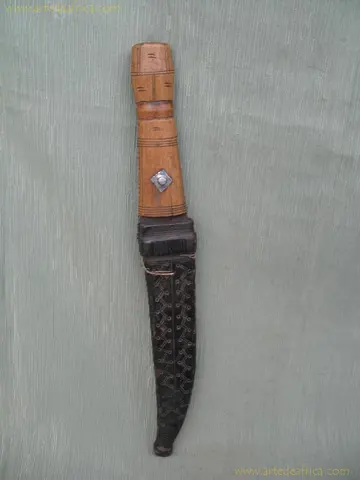
Knife with blade forged in hot hammers and leather cover with geometric drawings.
ARM-8
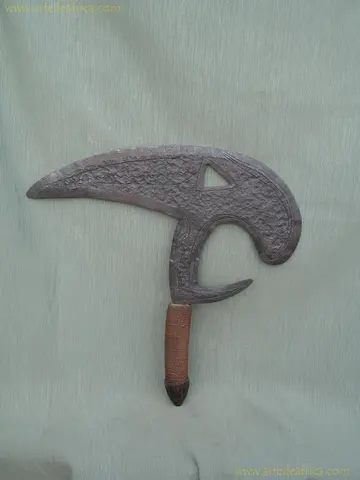
Because of geographical circumstances, the Bakota had to perfect the art of war, which was often a matter of hand-to-hand struggle.
ARM-10
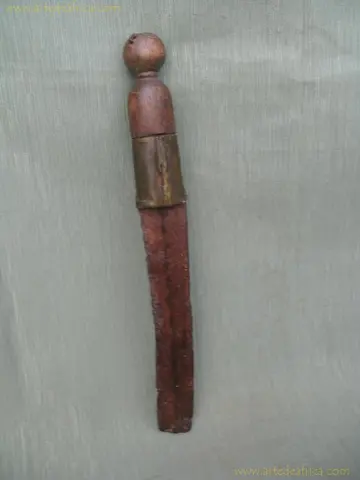
Knife for current use.
ARM-11
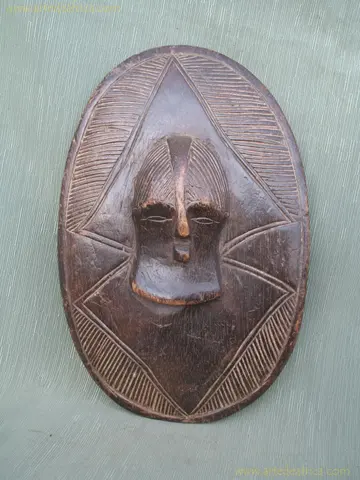
Old child's shield, with beautiful dark patina, which reproduces the combat shields of the adults in which the mask appears kifwébé,…
ARM-12
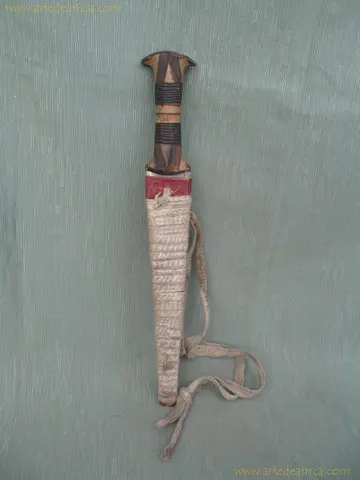
Haussa knife from the Katsiki region in northern Cameroon.
ARM-13
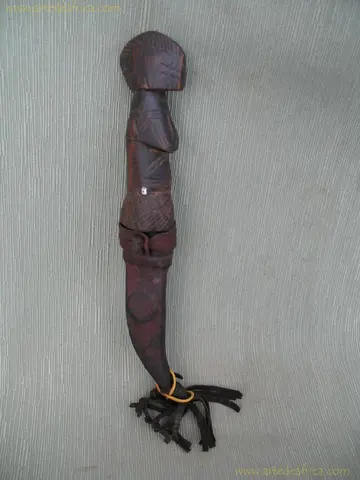
Small knife between clothes. Its handle represents a Biiga fertility doll.
ARM-14
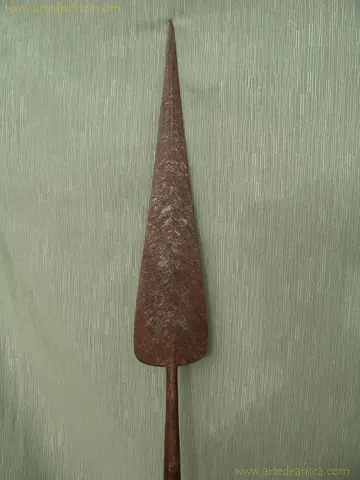
Spear with clear and strong wood astile. The tip of the lance, it carries geometrical filigranas engraved in the sleeve.
ARM-15
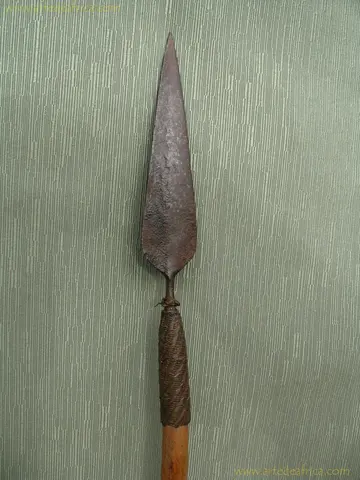
Astile spear in light and hard wood.
ARM-16
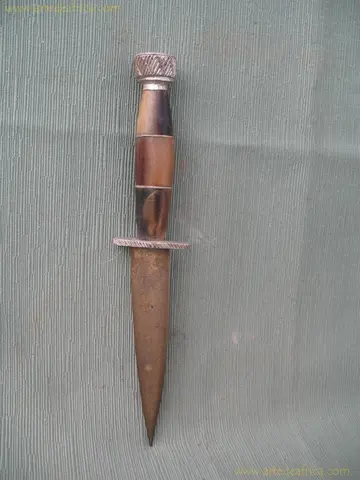
Little defense dagger to be concealed in the dress. Handle and guard in aluminum with horn mounts.
ARM-17
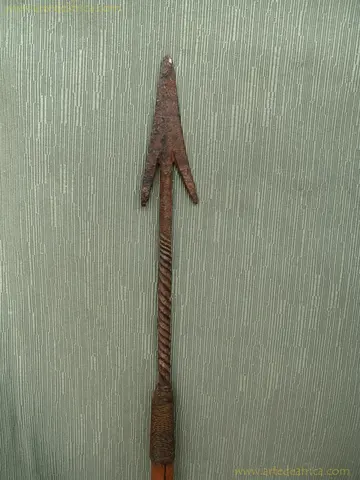
Astile spear in light and hard wood.
ARM-18
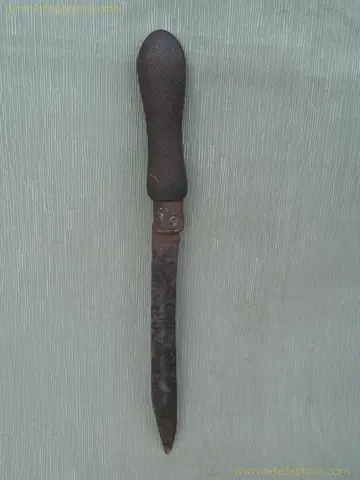
Knife intended for the slaughter of animals but also used for other uses.
ARM-19
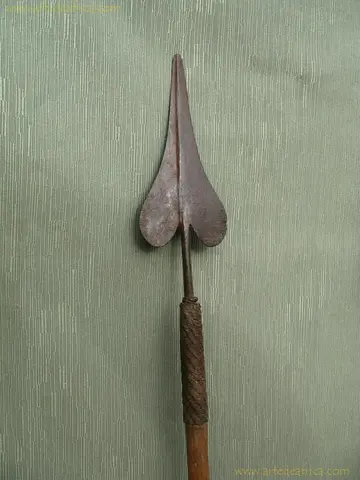
The spearpole in light and hard wood. Its iron tip is pointed heart-shaped.
ARM-20
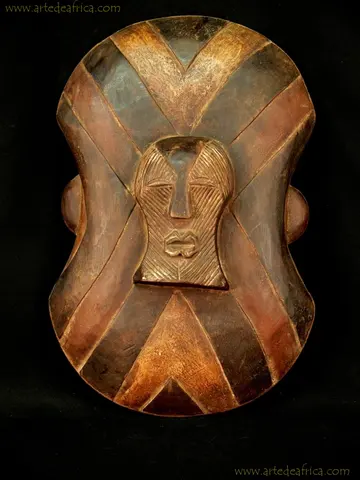
Old child's shield, with beautiful dark patina, which reproduces the combat shields of the adults in which the mask appears kifwébécharacteristic…
ARM-22
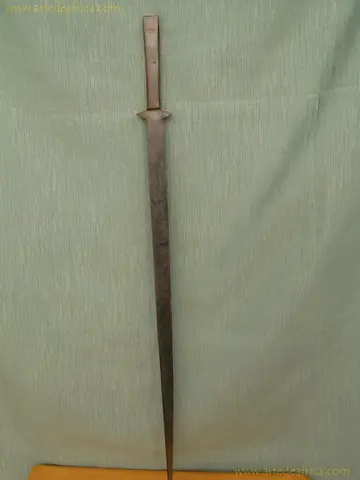
Sword defense. Copper handle.
ARM-24
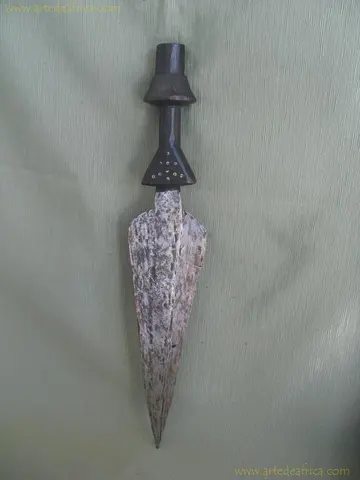
Wide alveolated blade, with embossed lines. Black handle with thick rear edge for better grip of the weapon.
ARM-26
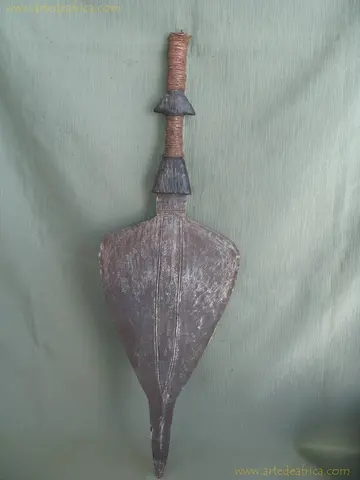
Very wide blade knife that confers the appearance of the rayfish.
ARM-27
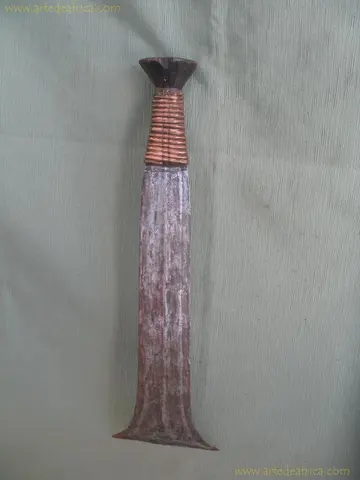
Rectangular leaf quite elongated and flat with light relief stretch marks.
ARM-28
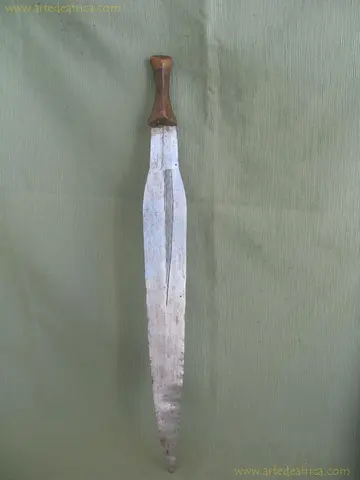
Machete with very thin blade and small grip handle, wood color, diamond cut.
ARM-29
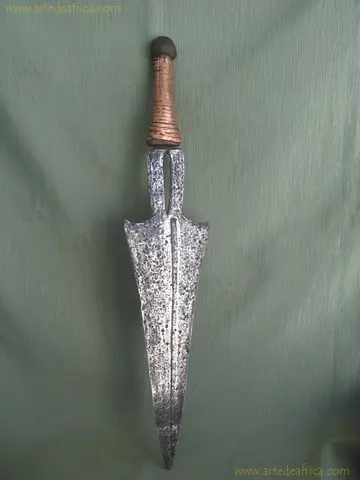
Solid stripe of elongated triangular leaf with a narrower, non-sharp and ribbed part in its center, next to the wooden handle covered…
ARM-30
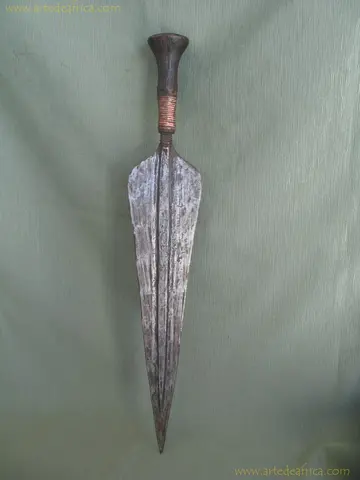
Leaf lanceolate and rounded in the grip area. A thick central stretcher runs it up and down.
ARM-31
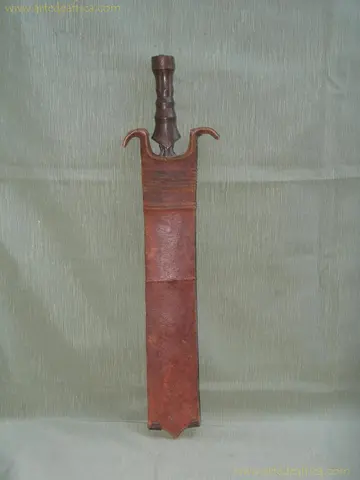
Typical sword of the Salampasu of the South, which have been influenced by the Songyé and of Luba.
ARM-33


