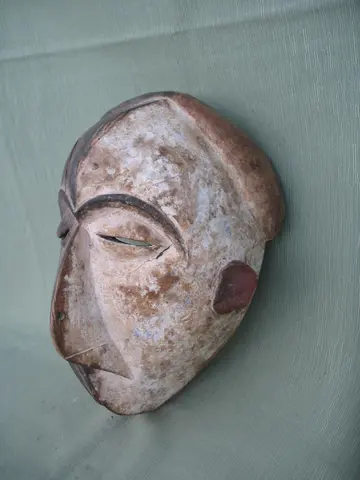
Mbangu illness face mask
This is the name given in the Congo to this mask of illness or of a sick person.
MFE-3

Documented paths
MFE-1, MFE-2, MFE-3 and MFE-4 share a reference to illness in their catalogue titles. A chief’s mask and another named Mboyo provide different entries into the repertoire attributed to the Pende. All six records retain their names, measurements, materials and photographs.
The Mbangu description in MFE-3 connects facial expression with a historical reading of illness and health. It is presented here as a catalogue interpretation, rather than a diagnosis. The different views and complete text allow that account to be compared with the individual objects.
The Met describes mbuya masks and raffia costumes in Pende performances that can entertain and inspire fear. It notes that these performances also express social and power relationships. This broadens the context without assigning every mask the same character or use.
The Metropolitan Museum of Art · Gikhokho (pendant mask)
Original historical document in Spanish
La bicromía, blanco y negro, hace referencia a la dualidad “enfermedad – salud”.
Jesús Arrimadas Saavedra · original catalogue · MFE-3
This quotation retains the archive’s wording. Editorial context and comparative sources do not certify the objects’ attribution, age or provenance.
This is the name given in the Congo to this mask of illness or of a sick person.
MFE-3
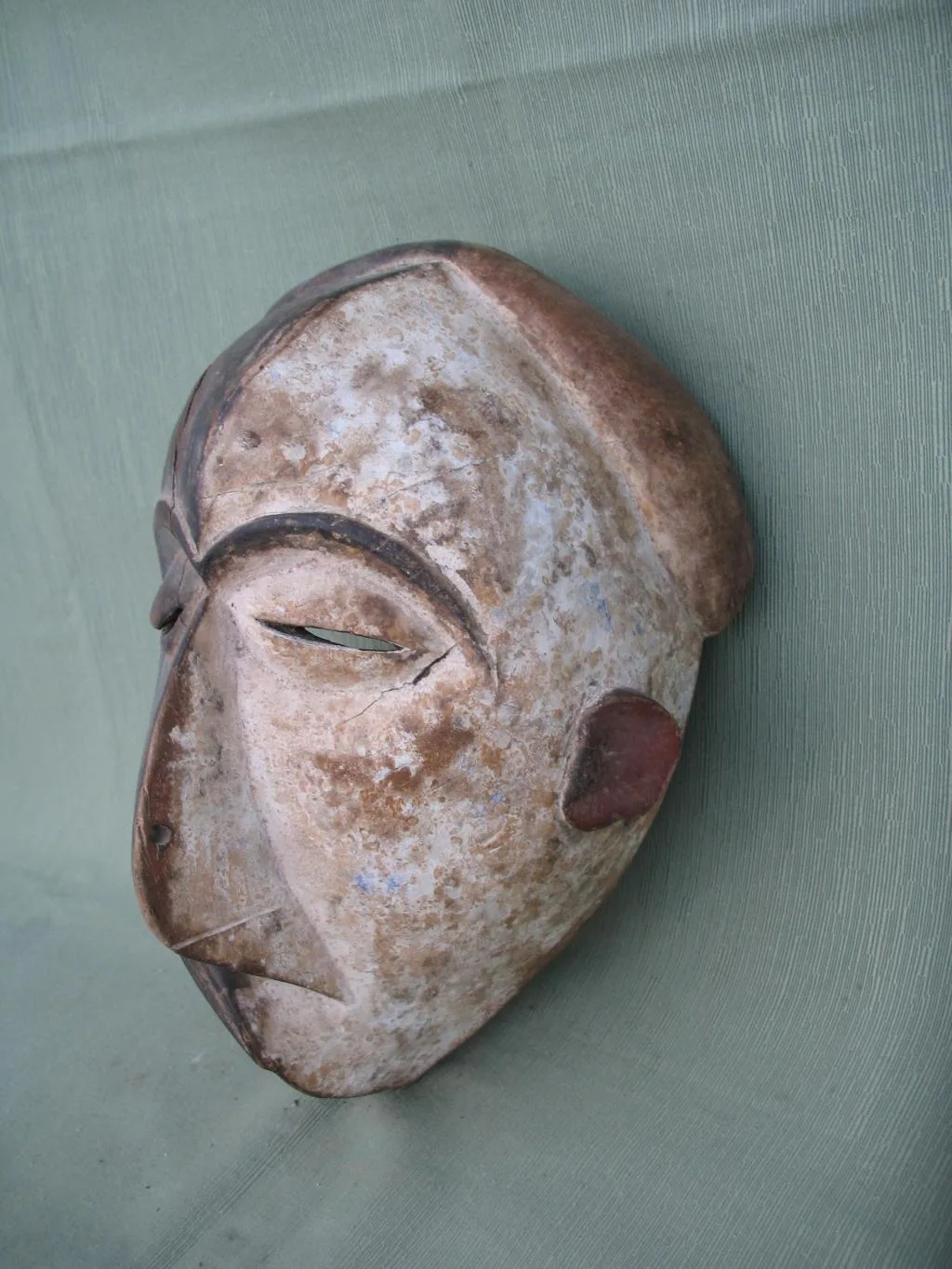
Face mask with ochre tones with the usual symbology of this category of masks.
MFE-1
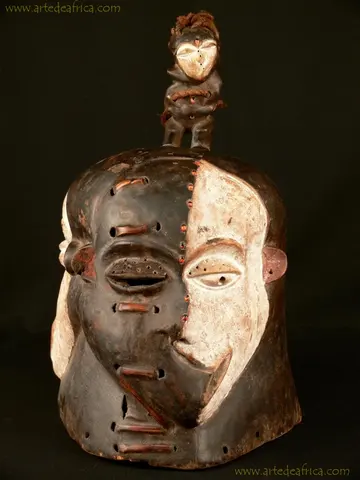
It has the same symbolism as the mask. Mbangu.
MFE-2
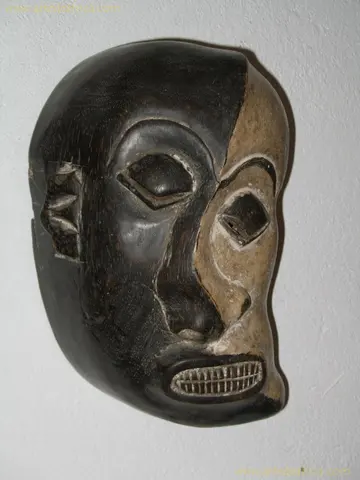
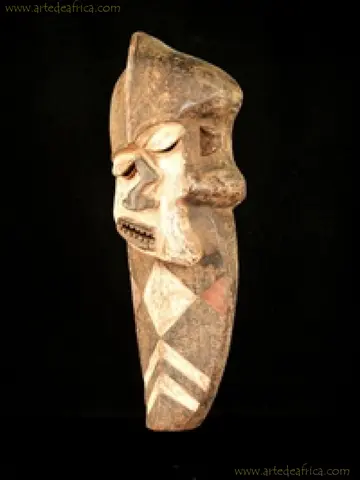
Several peoples use their masks to express an aesthetic of deformity and ugliness, as in this mask depicting a face disfigured by…
MFE-4
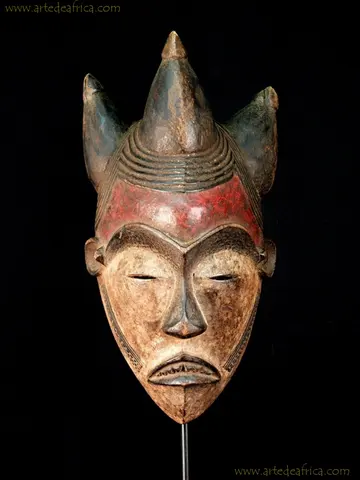
Mbuya masks are characterized by their triangular face. Highlights the polychrome, red, black and white.
MFANT-4
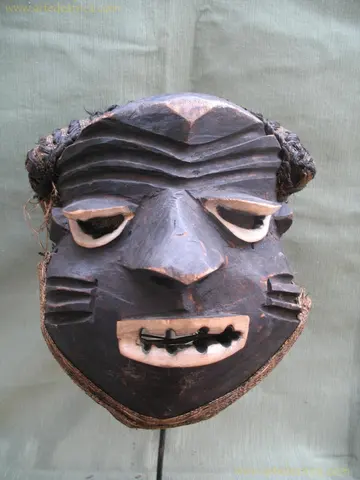
Black female mask.
MFANT-7
An editorial reading of the collection; complete documents remain in the object records.
Browse records for this culture · Pende


