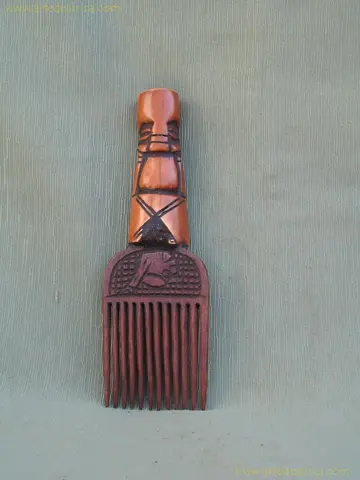
Comb
Comb from the Bafusam region, made of hippopotamus bone. They are ornament combs, of prestige rather than of use.
PNS-1

List of the historical catalogue
Text and organisation of the original catalogue · Jesús Arrimadas Saavedra
The comb is one of the prestigious objects of African women. The beauty of its lines indicates the range of its carrier. In Africa, wearing a comb over the head means that it is a major woman freed from certain household chores. Wife of a remarkable or rich man, because the comb prevents him from carrying a load on his head. The comb, like the hairstyle, indicates whether a woman is married or unmarried. It is part of the royalties. The hairstyles of the African woman range from a simple curly hair to the most varied, artistic and laborious forms, which have required for its preservation the manufacture of numerous and showy reclineheads. Hairstyles such as those of Luba women that required up to more than two days for their elaboration and that thanks to the reclineheads could last up to several months. Among these hairstyles stand out the so-called cascade, with platforms that overlap from major to minor and from bottom to top and also the hairstyles on cross on the back of the head. Others such as Ekoi or Ejagam women were made up of artistic braided and interlaced tails forming elegant combinations. The hairstyle in the woman, like the scarifications, describes her bearer, indicating whether she is unmarried, married, widowed or committed, the social class to which she belongs or if she is a member of a certain secret society, the latter being only noticeable by the initiate members of the same society. In addition the hairstyle embellishes the woman and makes her more desirable. Royalties are the material symbols representative of the head’s authority. They are the main symbols of power and dignity and can only be carried and possessed by those who wield power. Ceremony swords, flyflies, scepters and command sticks are part of the royalties. Only kings can carry scepters and batons of command. The scepter is, par excellence, the symbol of royal power, to such an extent that even in the absence of the king honors and pleitesy. They are usually delicately sculpted and richly decorated, whether made of wood, bronze or covered with gold foil as in the Akan country.
36 objects · page 1 of 2
Comb from the Bafusam region, made of hippopotamus bone. They are ornament combs, of prestige rather than of use.
PNS-1
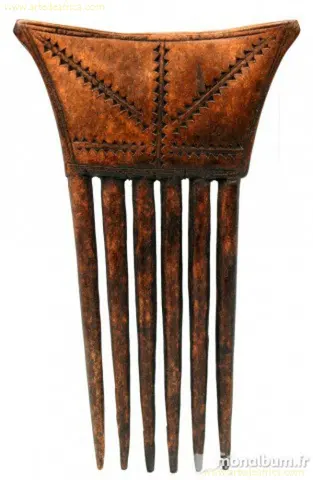
Comb with sculpted motifs characteristic of the group AkanTime skate.
PNS-6
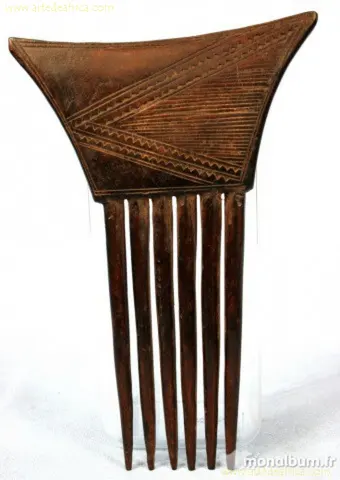
Comb vcon motifs characteristic of the group AkanTime skate.
PNS-7
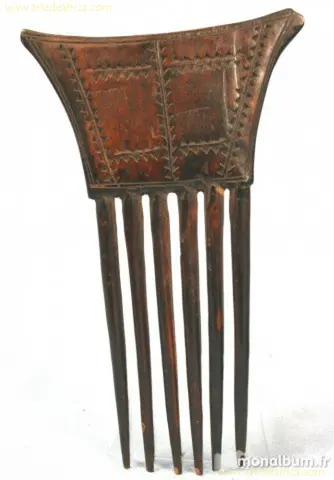
AKAN USE PEINE WITH TRIBAL GROUNDS SCULPTED IN BIG FACE. BELLA PATINIA FOR USE COLOR MARRON.
PNS-8
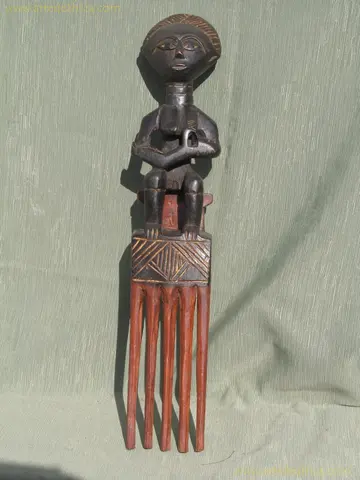
The comb in Africa is a sign of distinction and the range of its carrier, because in fact, the comb prevents carrying…
PNS-9
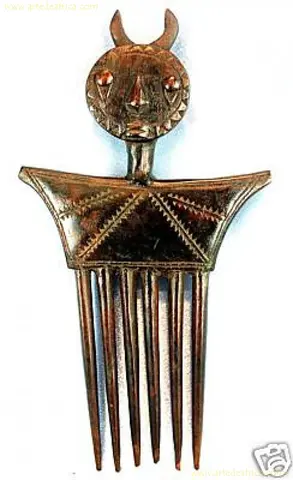
Cut into a single piece of this comb whose handle represents a Goli mask.
PNS-10
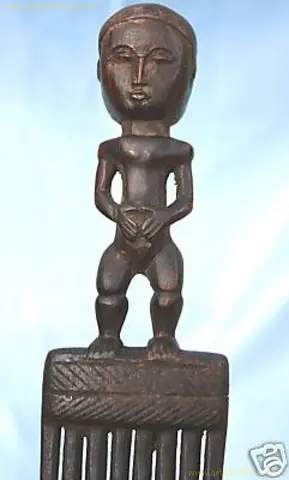
Eight-barbed comb whose handle is made up of a woman with incipient breasts with her hands on her belly.
PNS-11
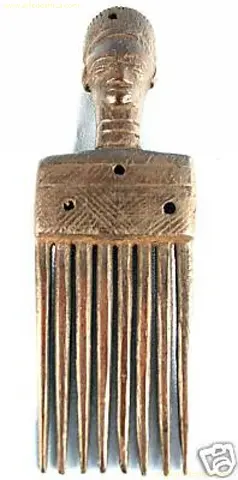
The comb handle is topped by a double Jano head. Patina for use.
PNS-12
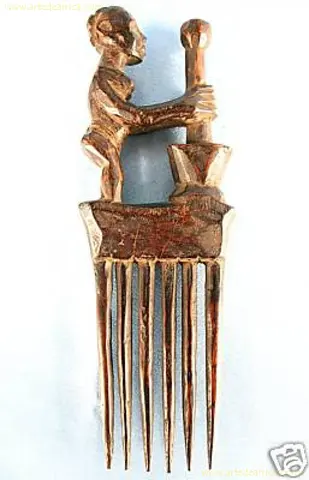
This comb is topped by a man stacking grain in a mortar. Item carved in one piece.
PNS-13
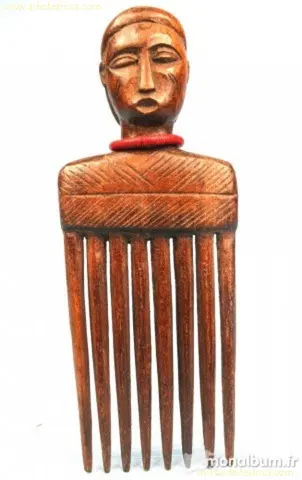
Eight-pointed peibe whose handle represents a woman's wig, with a red collar on her neck.
PNS-14
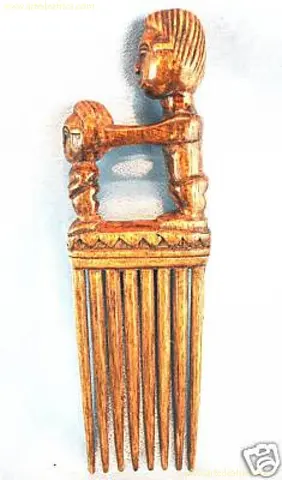
The mango figures a man with his son crudely realized. Clear wood.
PNS-15
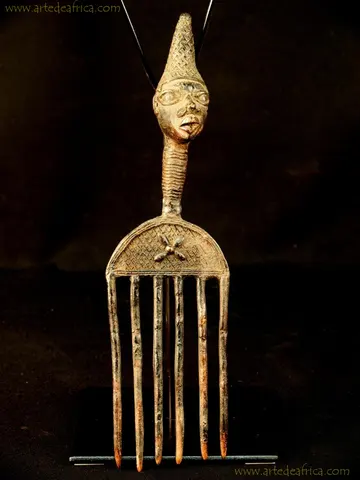
PINE DE RESIGIO WITH THE EFIGIE OF A MOTHER QUEEN.
PNS-16
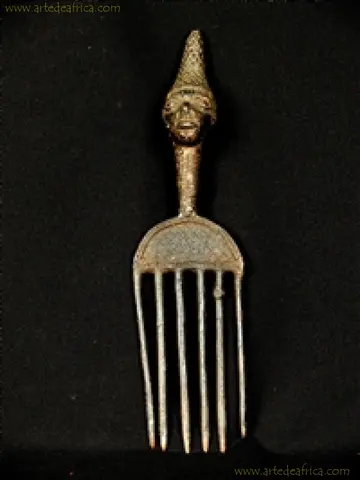
A prestigious comb with the head of a queen mother. Old weld on a spike.
PNS-17
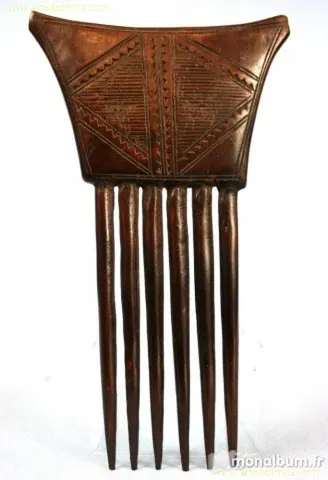
Comb carved on both sides with motifs typical of the Akan group.
PNS-18
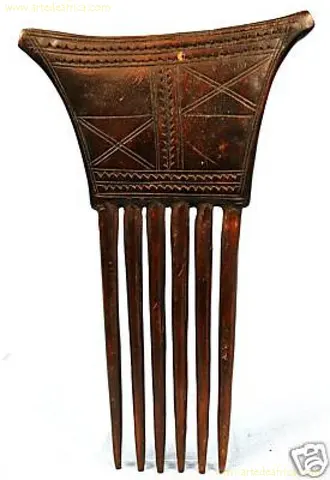
Comb carved on both sides with geometric drawings of the ethnic group.
PNS-19
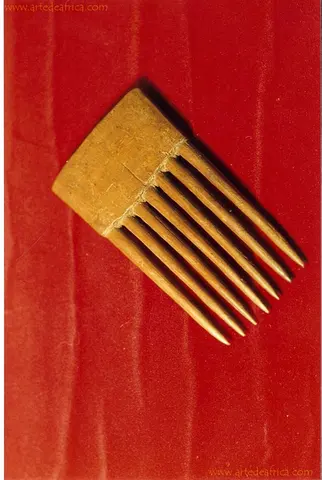
Plain comb of seven barbeds of usual use to hold the hair of notable women of the akan group.
PNS-20
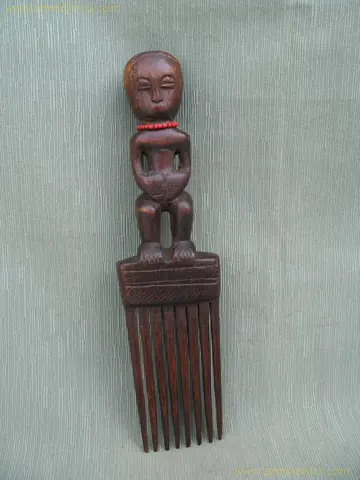
A seven-point comb depicting a young baulé, with a red beaded necklace around her neck.
PNS-21
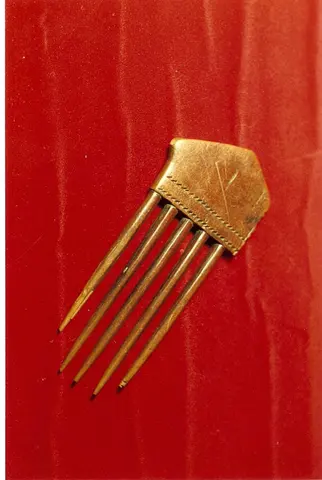
Comb commonly used by notable women to hold hair. He's got one end of it and a tooth or pick.
PNS-22
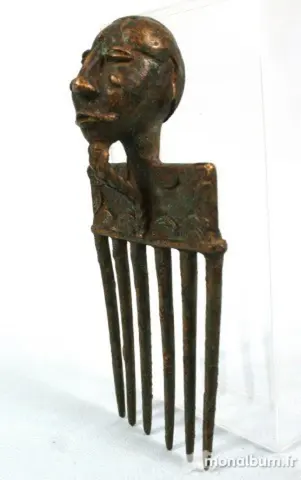
Comb Akan topped with a male head, with fine braided knob. Rectangular comb body, decorated on its edges with overlapping concentric semicircles.
PNS-23
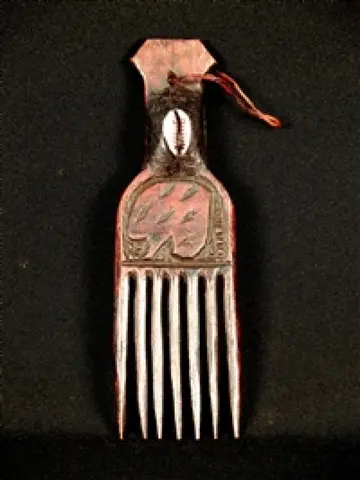
Comb decorated with a cauri, symbol of female fertility. The comb's body is decorated with drawings whose significance we don't know.
PNS-24
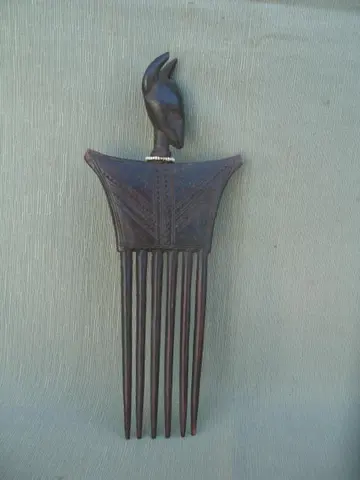
Delicate comb garro topped with a small antelope head presented as if it were a human head.
PNS-25
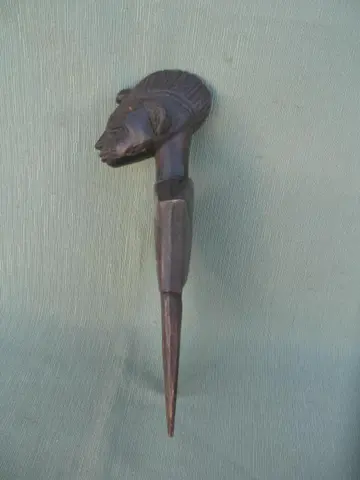
The comb of the comb has a big fish and a ma topped with a female head from whose corners of the…
PNS-26
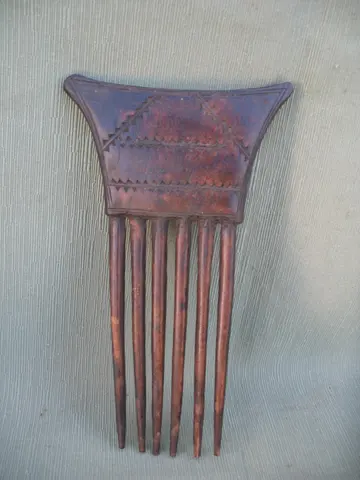
Six-point comb finely made with geometric recordings that perfectly responds to the aesthetic canons of the ethnic group.
PNS-27
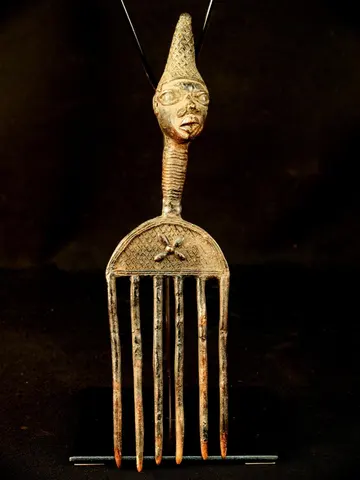
Prestigious comb representing a queen mother of Benin.
RGL-1


